
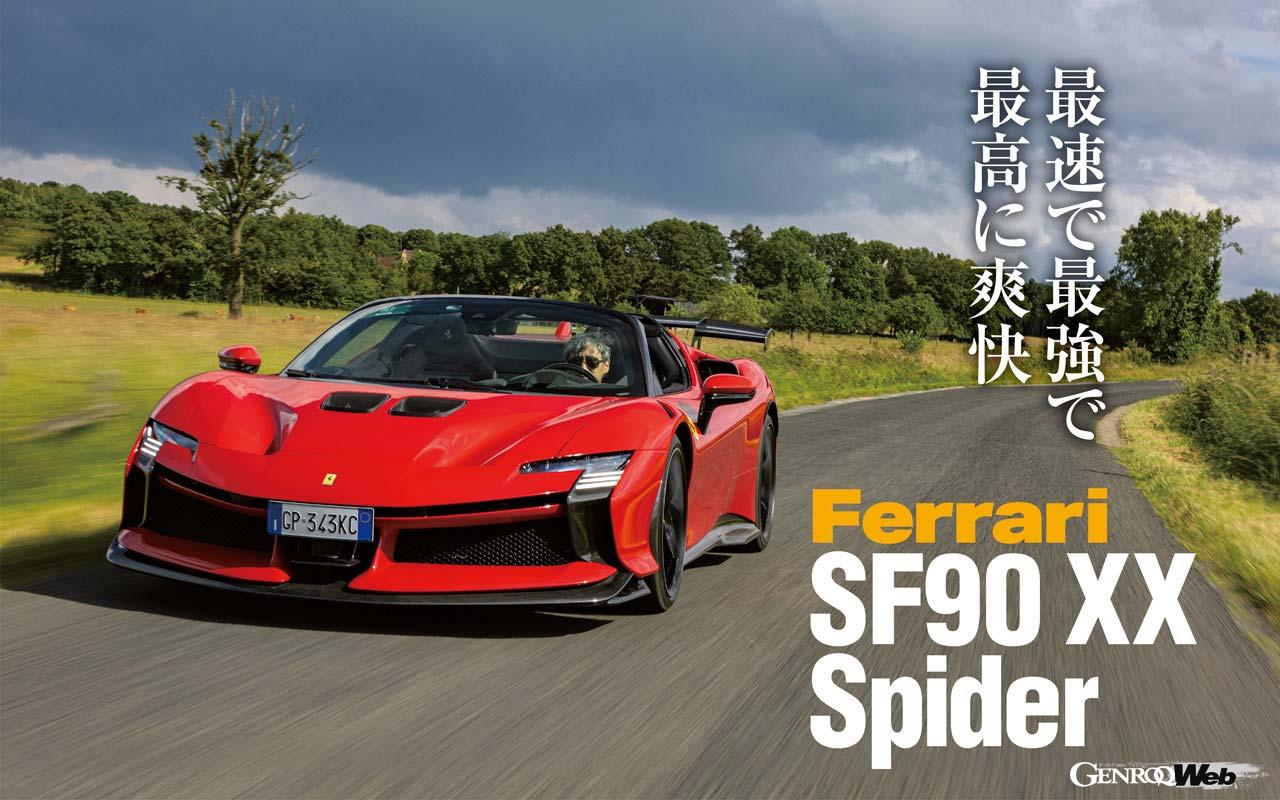
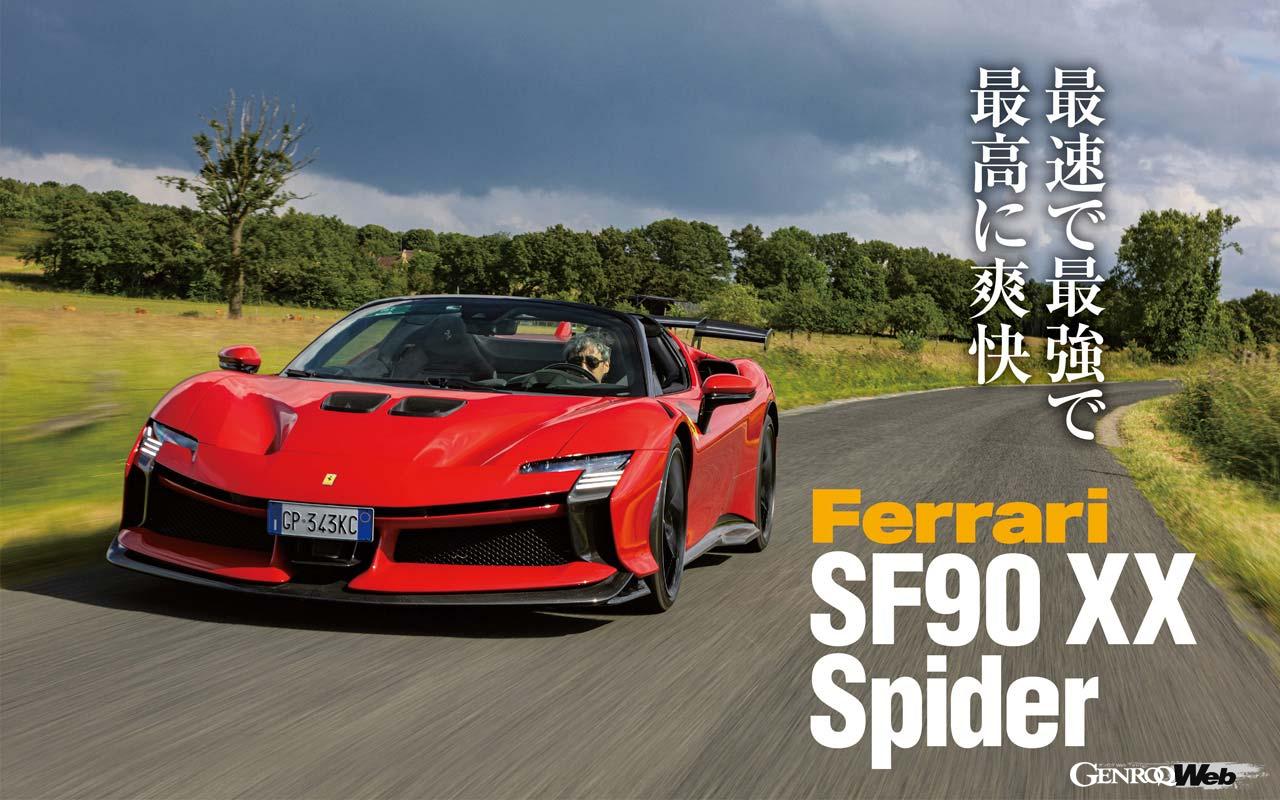
Ferrari SF90 XX Spider
More than just a monumental unicorn
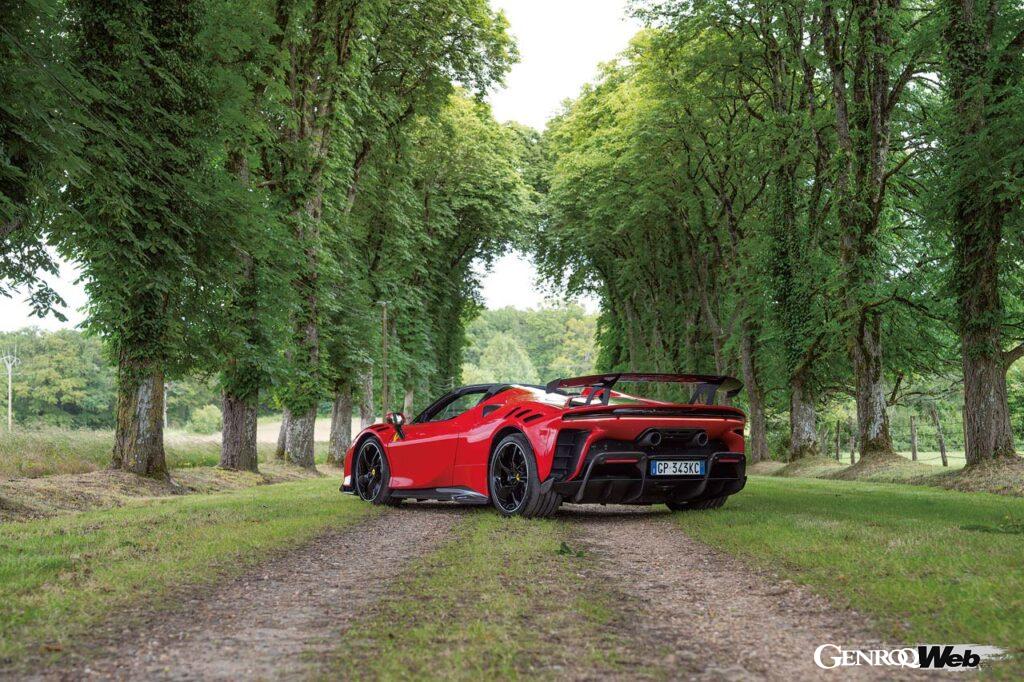
We test drove the fastest open-top Ferrari, the SF90 XX Spider.
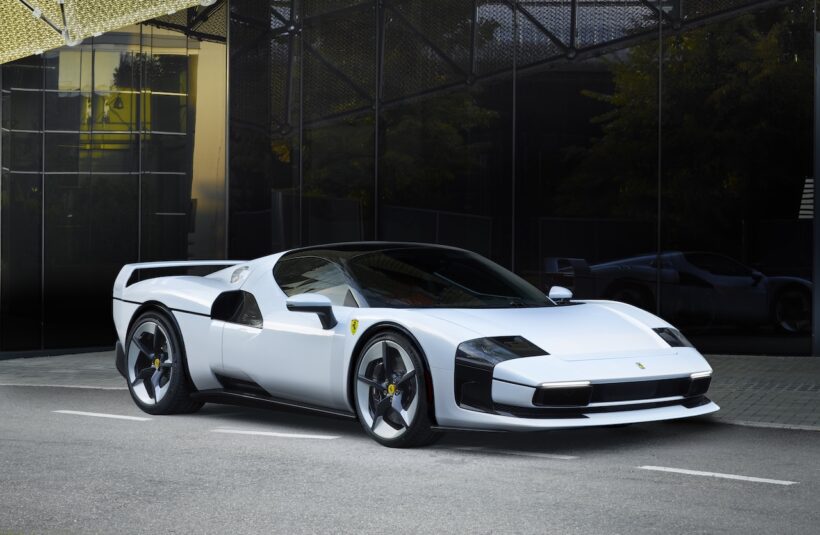
The SF90XX delivers performance on par with, or even surpassing, a racing car, yet still allows you to travel to the circuit in comfort, enjoy sporty driving, and then leisurely return home. This is what you get with the SF90XX. Based on the SF90, Ferrari’s first mass-produced plug-in hybrid (PHV), this special edition is tailored for racing.
Only 799 units of the coupe-bodied SF90XX Stradale were produced, while the SF90XX Spider, which allows for open-air driving, was produced in an even smaller number of units, 599. Both were already sold out at the time of their announcement last year, but we were able to test drive the rarer Spider model in the French countryside.
In fact, I was blown away by the high performance and fun of driving the SF90XX Stradale when I tried out the Manettino at a test drive event held in Fiorano, even down to the CT off. With its four-digit power output and robust, precise handling, it’s not just a monumental unicorn, but also a terrifyingly obedient racehorse, making it my current favorite model.
The mid-mounted 4.0-liter V8 twin-turbo engine has been upgraded from the SF90’s F154FA to the F154FB, which achieves 797 PS, a 17 PS increase, thanks to improvements to the intake and exhaust manifolds and pistons. The three motors—two independently mounted on the left and right front axles, plus one positioned between the mid-mounted engine and the 8-speed DCT—produce a total maximum output of 233 PS, a 13 PS increase. As a result, the AWD super sports car’s maximum system output is now 1030 PS, a 30 PS increase from 1000 PS. In motorsports, where power output is limited by regulations, even maximum output is significantly reduced, even in categories like the GT3, which are based on production cars, so 1000 PS is literally an order of magnitude greater. In that sense, the SF90XX can be considered a free-wheeling racehorse, free of the saddle required for weight adjustment.
The fastest, strongest and most refreshing
[1]

[2]
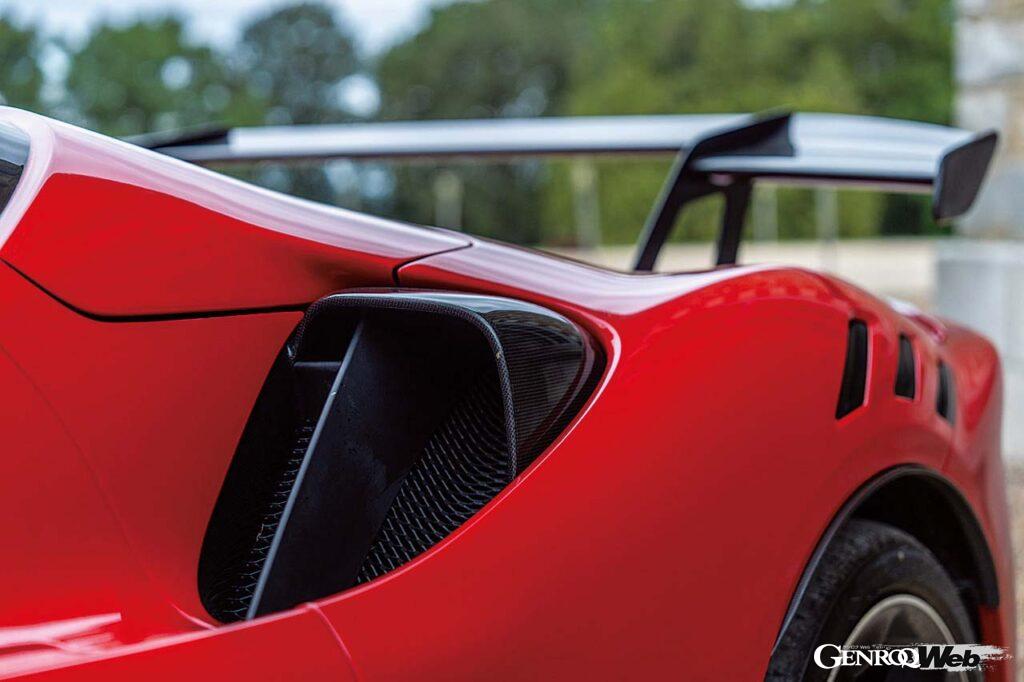
[1] The fixed rear wing is shut off. Gurney is said to generate 315 kg of downforce at 250 km/h in high downforce mode. [2] The e-Manettino is located below and to the left of the horn pad in the center of the steering wheel. 1030 PS can be generated in “Qualifying” mode.
The test drive route was about 100km, an hour’s drive on public roads, including highways, in the western suburbs of France. However, it’s easy to imagine that the Spider model would add the exhilarating open-air drive with the retractable hardtop open to the performance mentioned above. As you’d expect from a race-oriented speciale, the SF90XX has been lightened in every area, and its dry weight is 10kg lighter than the base SF90. Considering the equipment used to improve driving performance, such as the large rear wing, it’s easy to imagine that a painstaking effort was put into reducing the weight. However, when comparing the coupe and Spider, the dry weight of the Spider is 1660kg, 100kg heavier. This is due to the electrically retractable roof.
Open the door, sit on the thin seat, and immediately lower the retractable roof to enjoy the open-air drive. The roof can be opened or closed in approximately 14 seconds at speeds below 45 km/h, just like the standard model. Spider models are generally popular for these super sports cars, and this makes it easy to understand their appeal. The engine sound pouring down from above, something you can’t get just by opening the side windows, is truly a thrill. This is especially true in the case of the SF90XX, where the improved intake plenum tubes make the sound even more stimulating. Some veteran Ferrari fans say that Ferrari’s turbo engines have made the exhaust sound less appealing, but the sound of this 4.0-liter V8 twin-turbo unit is plenty exciting as the engine revs up.
Enjoy electrification to the fullest
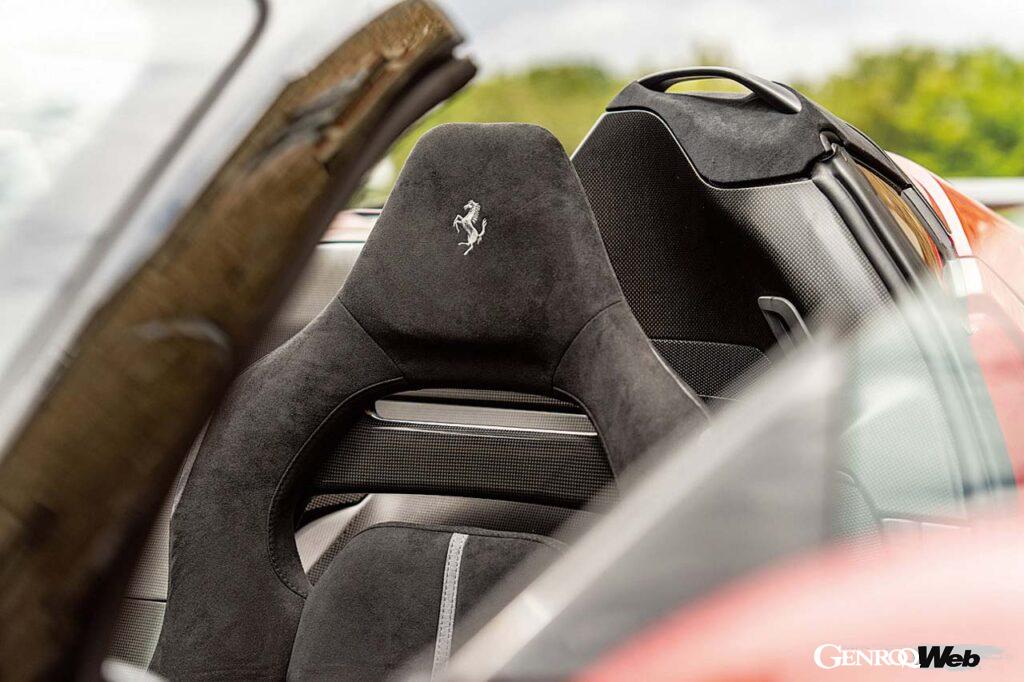
The lightweight bucket seats are comfortable and hold well. The reclining hinges are covered with trim for a smooth finish.
It’s impossible to fully utilize the 1030 PS on public roads, so the ultimate pleasure is to quietly drive this beast of incredible performance, with the engine and motor operating smoothly and in perfect balance.
To get the most out of your electrified Ferrari, it’s best to actively operate the e-Manettino. While a conventional Manettino adjusts the dampers, engine, transmission, etc., the e-Manettino changes the control of the hybrid powertrain. The trick to driving a PHV super sports car comfortably on public roads is simple: make full use of electric driving at low speeds such as in urban areas, and make full use of the engine on highways and suburban B-roads, enjoying the sound while charging. The same 7.9kWh lithium-ion battery as the SF90 allows for 25km of EV driving, so actively select EV mode the moment you enter traffic jams or residential areas. The top speed of 135km/h in EV driving is also the same as the SF90.
It’s also a pleasant ride on regular roads, but the robust AWD feel I felt on the circuit is toned down on regular roads. Meanwhile, behind the excellent handling, I imagine the two motors on the front axle control the drive force on both sides, seamlessly enhancing turning ability. But what surprised me most was the ride comfort. I’ve test-driven a standard SF90 in Japan, but that was with the Assetto Fiorano spec, so there’s no comparison. However, it felt just as comfortable as the standard 296GTB, and in fact, it was quite comfortable.
Due to the limited number of test drive opportunities, it is difficult to verify whether this comfortable ride is the result of the 100kg heavier spider body. Alternatively, the high average speed at the test drive location may have also had an effect. The reason I think so is because I considered the positive effect of the increased downforce provided by the S-duct below the two air vents on the hood and the large fixed rear spoiler, the first for a road-going model since the 1995 F50.
What an incredibly obedient racehorse.


In any case, when the 296 was released as the latest plug-in hybrid, industry veterans commented that it was more refined than the SF90, and as a contrarian by nature, the incredible versatility of the evolved 1000PS + AWD model with its somehow deep driving feel was deeply engraved in my mind.
Ferrari always provides products that exceed the performance expectations of its fans, but if the opportunity arose, I would like to try out an electric super sports car like this with a manual transmission. Currently, various super sports cars are beginning to return to manual transmissions. Naturally, it cannot match DCT in terms of pure speed, but the sense of accomplishment when you drive well is overwhelming with a manual transmission. Perhaps it would be better to have a manual transmission, especially for road models that are not competing for time like racing cars.
REPORT/Takuro YOSHIOKA
PHOTO/Ferrari SpA
MAGAZINE/ GENROQ November 2024 issue
SPECIFICATIONS
Ferrari SF90 XX Spider
Body size: Total length 4850mm, total width 2014mm, total height 1225mm
Wheelbase: 2650mm
Dry weight: 1660kg
Engine: V8 DOHC turbo
Compression ratio: 9.54:1
Total displacement: 3990cc
Maximum output: 586kW (797PS) / 7900rpm
Maximum torque: 804Nm (82.0kgm) / 6250rpm
Maximum motor output: 171kW (233PS)
Battery capacity: 7.9kWh
Transmission: 8-speed DCT
Drive system: AWD
Suspension type: Front double wishbone, rear multi-link
Brakes: Front and rear ventilated disc Tire
size (rim width): Front 255/35ZR20, rear 315/30ZR20
Top speed: 320km/h
0-100km/h acceleration: 2.3 seconds
[Official website]
Ferrari Japan
https://www.ferrari.com/ja-JP