
![The Eve of the Birth of Porsche’s First Mid-Engine Sports Model, the Type 356 [Porsche Chronicles]](https://wheelfeed.com/wp-content/uploads/2024/11/4218-1761208779849.jpg)
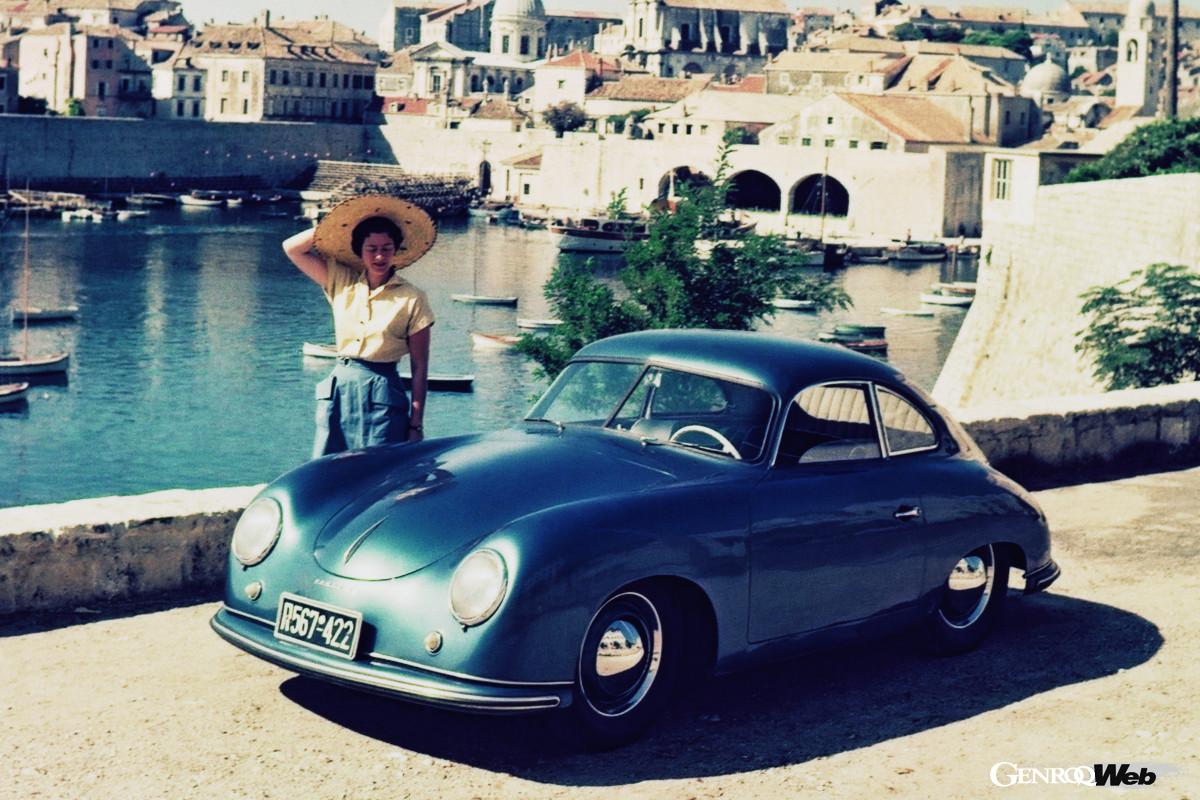
356 (1948-1965)
Unveiled at the 1949 Geneva Motor Show
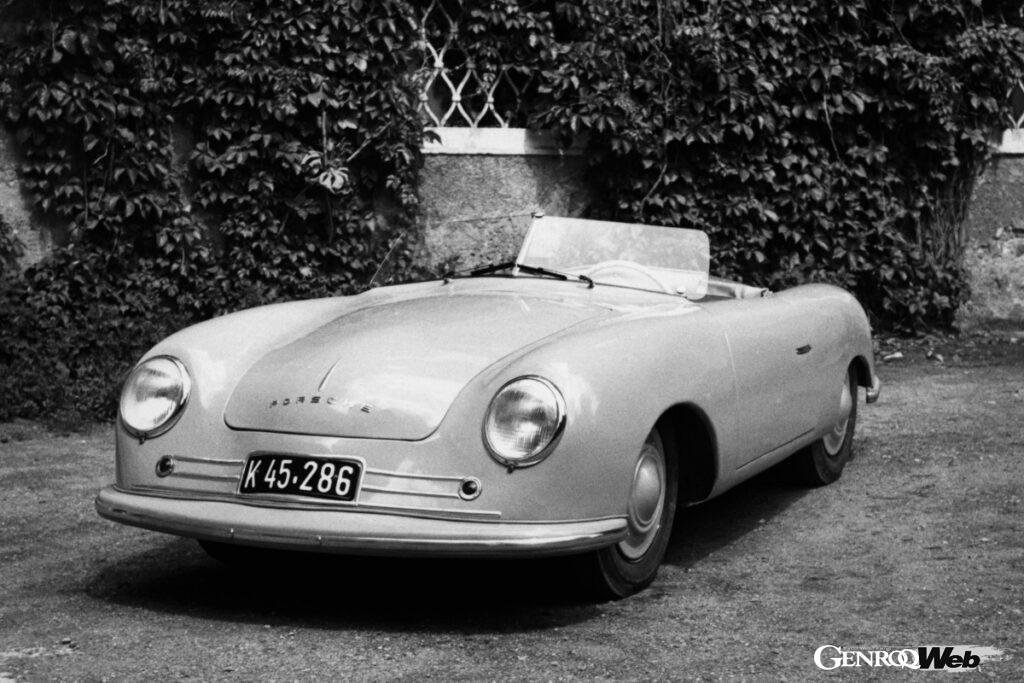
356-001
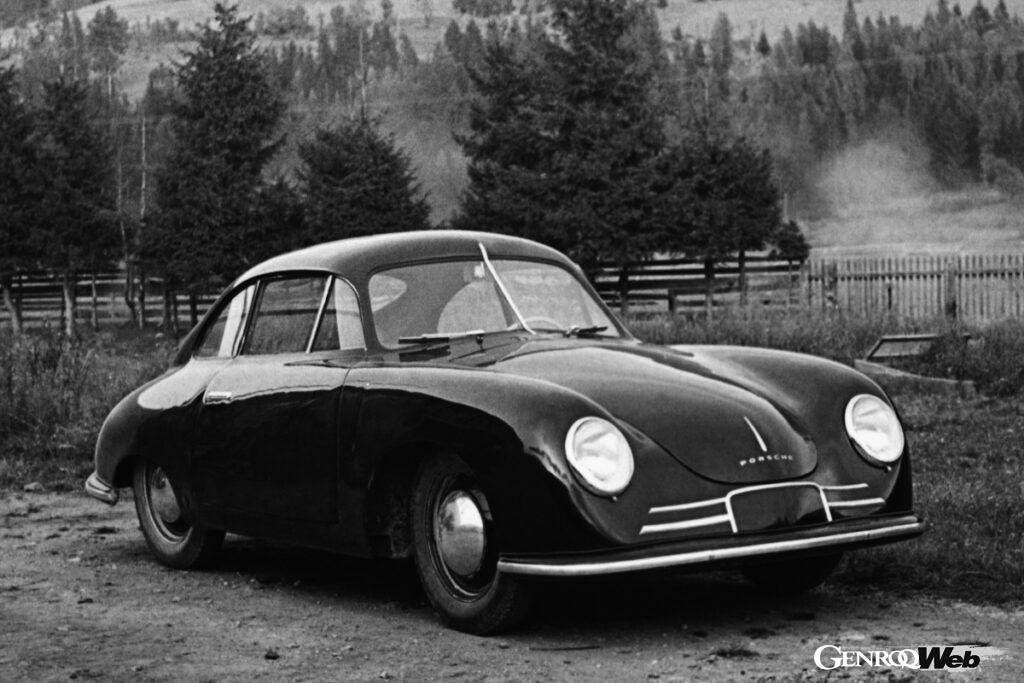
Gmünd Coupe
After World War II, the Porsche design office, led by Ferry Porsche and restarted in Gmünd, Austria, was commissioned by Cisitalia, Italy, to design a Grand Prix car in order to raise bail for Dr. Ferdinand Porsche, who was in custody. During several trips to Italy, Ferry was inspired by the sports cars that used Fiat components, and proposed to Volkswagen that they create a sports model based on the Beetle.
Although Volkswagen, which was still recovering, showed no interest, new investors emerged and development began as an in-house project. The Type 356.001, a unique mid-engine, two-seater open-top car for the time, was completed in March 1948, featuring a steel-tube space frame chassis and an air-cooled flat-four engine from the VW Beetle.
Porsche also began developing a more realistic second car. In July of the same year, the basic framework was completed: a steel floor pan, a rear-wheel-drive layout with an engine, front and rear axles, and gearbox borrowed from a VW Beetle. At this point, Porsche signed a dealership agreement with Swiss businessman Bernhard Frank. Production began using used Beetle parts collected from all over Switzerland. At the 1949 Geneva Motor Show, a coupe with a homemade aluminum body and a Beudler-built cabriolet were officially unveiled as the “Porsche 356.”
4-speed MT employs “Porsche Synchro”
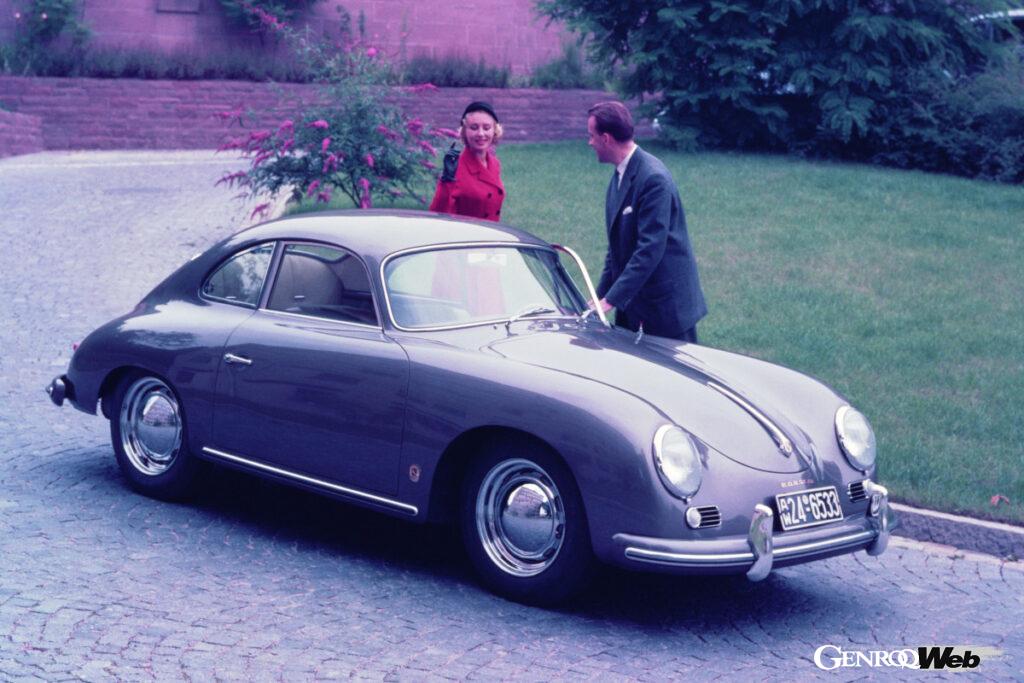
356 A
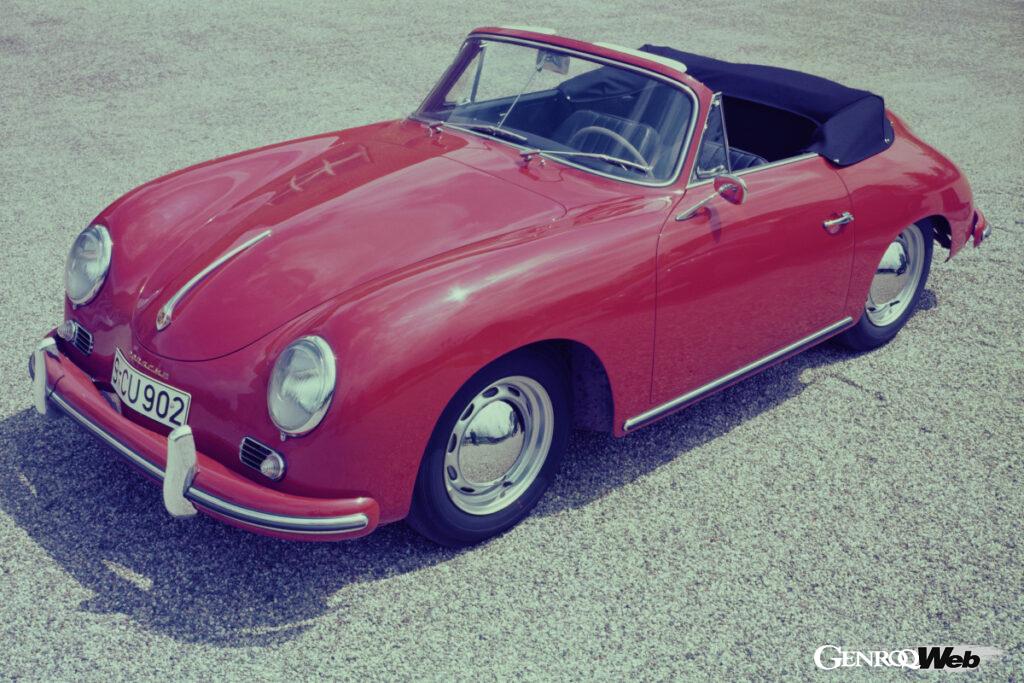
356 A Cabriolet
Porsche then negotiated with VW, successfully securing a supply of new parts and permanent royalties from the Beetle, and returned to its original base in Stuttgart, Germany, to begin full-scale production.
At this time, body manufacturing for both the coupe and convertible was entrusted to Reuter, who switched from aluminum to more productive steel. The engine initially remained the Beetle’s 1.1-liter air-cooled flat-four OHV, but from 1949 it adopted a cylinder head designed in-house. From 1951, it was switched to two engines, 1.3-liter and 1.5-liter, and in 1954 the crankcase was also custom designed, marking a unique evolution. In addition, from 1952 the gearbox was replaced by a Porsche-made 4-speed manual transmission using “Porsche synchro”.
Incidentally, the model produced in Stuttgart between 1950 and 1955 is called “Pre-A,” and the number of units produced was 10,466. It is said that 52 Gmünd-built 356s, including prototypes, were produced before that.
Stars like Steve McQueen also flocked to the event.
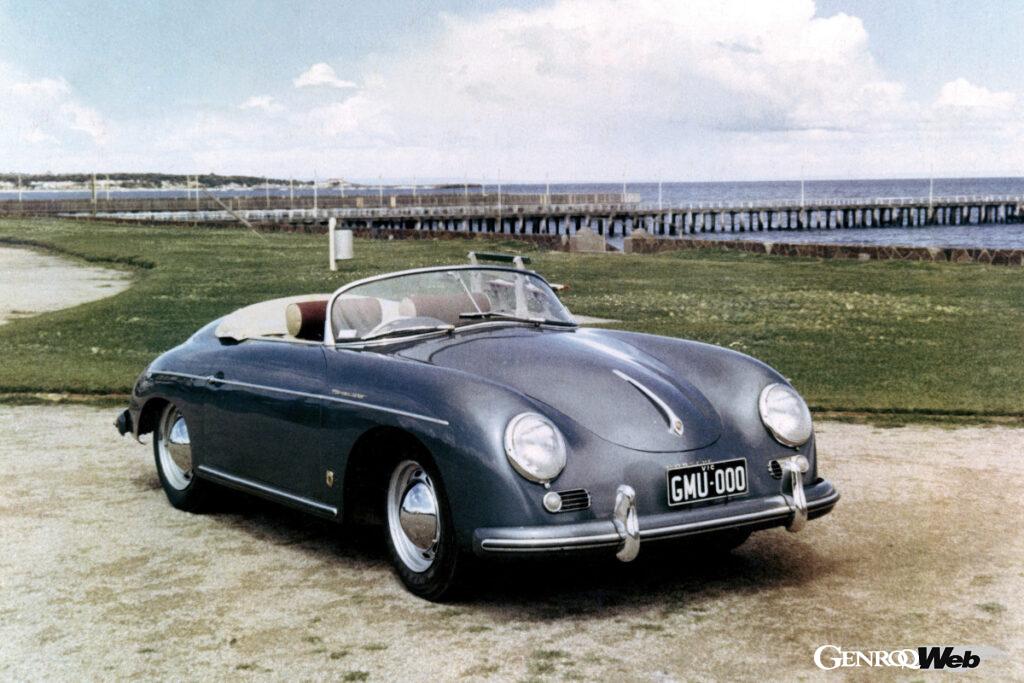
356 A Speedster
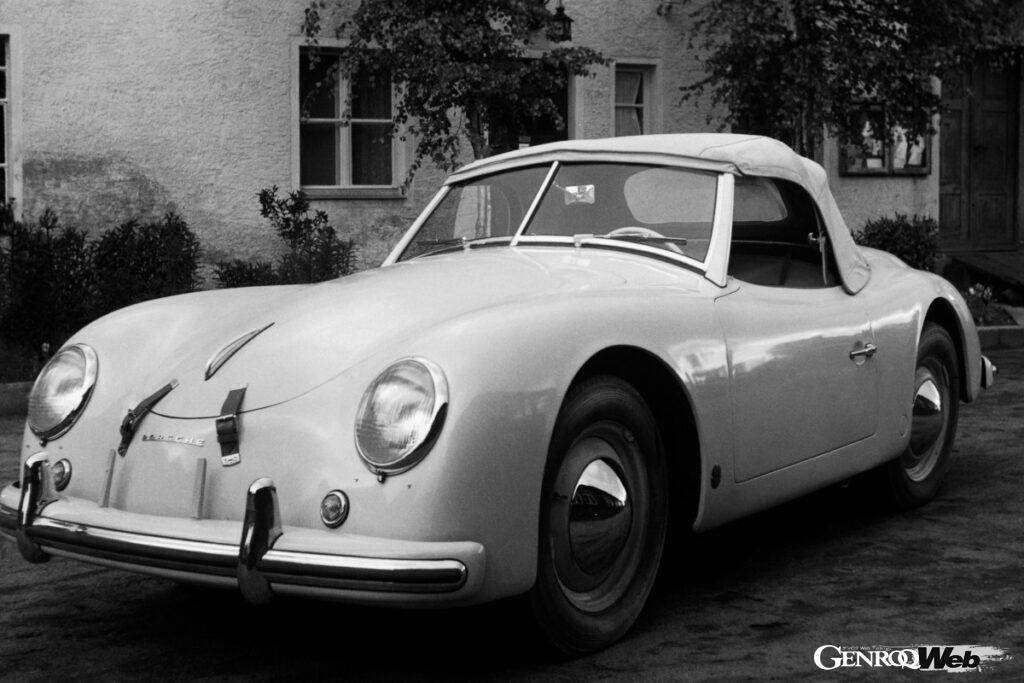
356 America Roadster
In 1955, Porsche released the 356A, a car that was dramatically modernized, featuring a significantly refined T1 body with a rounded windshield, 15-inch tires, and a dashboard interior with cushion padding. Two engines were available, a 1.3-liter and a 1.6-liter, each with a high-powered S (Super) version. The suspension, which featured twin front trailing arms and a single rear trailing arm inherited from the Beetle, also featured unique modifications, such as the addition of a stabilizer bar to the front.
In 1954, the 356 was offered with a third body variation: the Speedster. This was an evolution of the aluminum-bodied American Roadster, of which only 16 were produced in 1952, in response to a request from New York importer Max Hoffman for an “affordable, spartan open-top model that could compete with the British lightweight sports cars.” Based on the Cabriolet, it featured a low windshield and special body panels. The side windows and rear seats were also removed, bringing the car’s weight down to 760 kg.
It also attracted attention with stars such as Steve McQueen and James Dean on its owner list, but sales were poor and it was replaced by the Convertible D in August 1958, which had a larger windshield and improved interior comfort. Also appearing in 1955 was the homologation model “Carrera,” equipped with a 101 PS 1.5-liter flat-4 DOHC engine, a detuned version of the 550 Spider.
The final model will feature four-wheel disc brakes
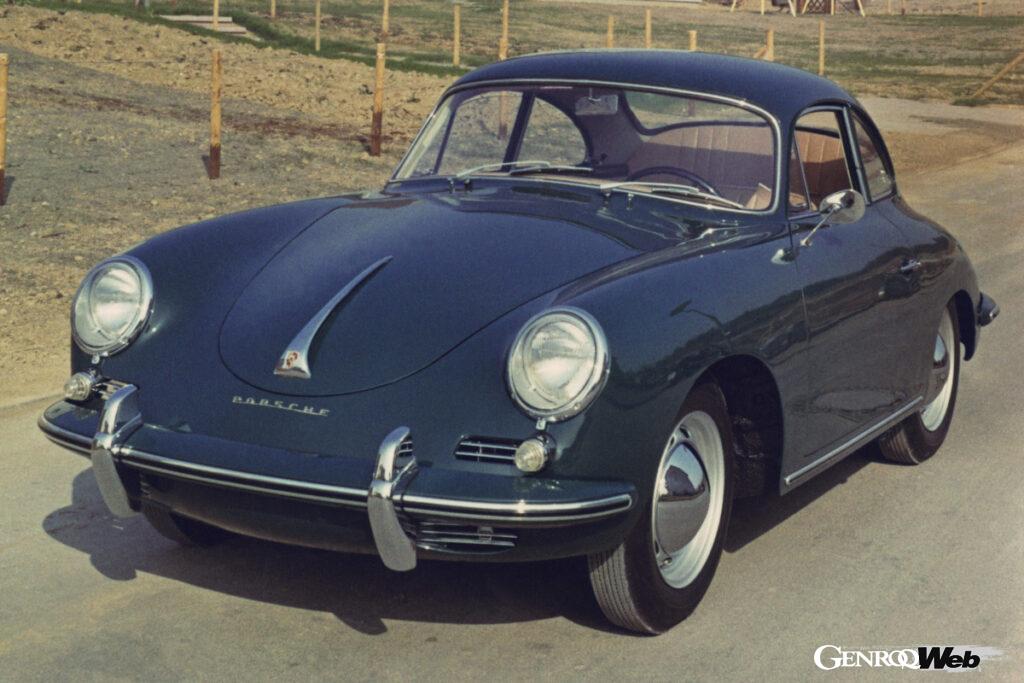
356 B
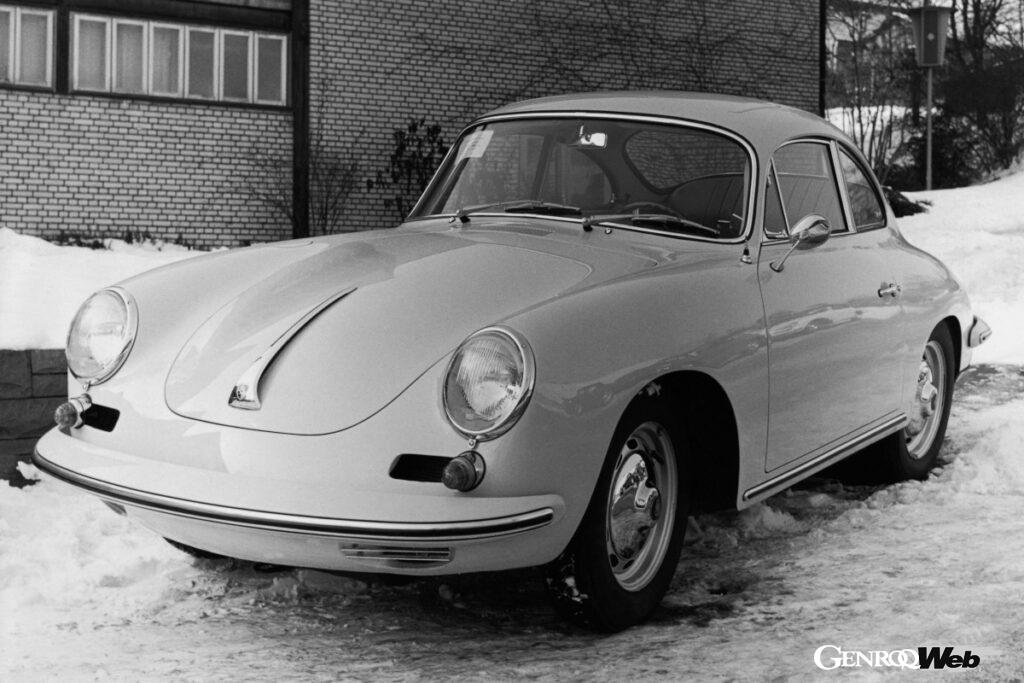
356 B Carrera 2
In August 1959, the 356B was released, featuring a T5 body with safety features such as higher headlight positions and larger front and rear bumpers, and improved comfort with triangular windows. The high-powered “Super 90” version, which produced 91 PS, was also added, featuring improvements such as two Solex 40PII-4 carburetors and ferrule-machined aluminum cylinders.
In 1961, the car evolved into the T6 body, which featured more practical features such as larger front and rear windshields, a two-part engine grille, and a fuel filler cap on the right front fender. At the same time, the Roadster, which replaced the Convertible D, was discontinued, and the notchback coupe Karmann Hardtop was added. The homologation model Carrera also evolved into the “Carrera 2,” a 2.0-liter flat-4 DOHC engine producing 131 PS, in line with GT racing regulations.
The final model, the 356C, was released in 1963, when the 911 was released. A total of 79,250 356s were produced until 1965.













![The S-Type, widely regarded as Bentley’s masterpiece post-war saloon [Bentley 100 Years of Car History]](https://wheelfeed.com/wp-content/uploads/2025/11/4703-1762127546348.jpg)