
![Inside the Renault Emblem hydrogen fuel cell concept car: the key to achieving carbon neutrality [Video]](https://wheelfeed.com/wp-content/uploads/2024/11/4210-1761208662557.jpg)
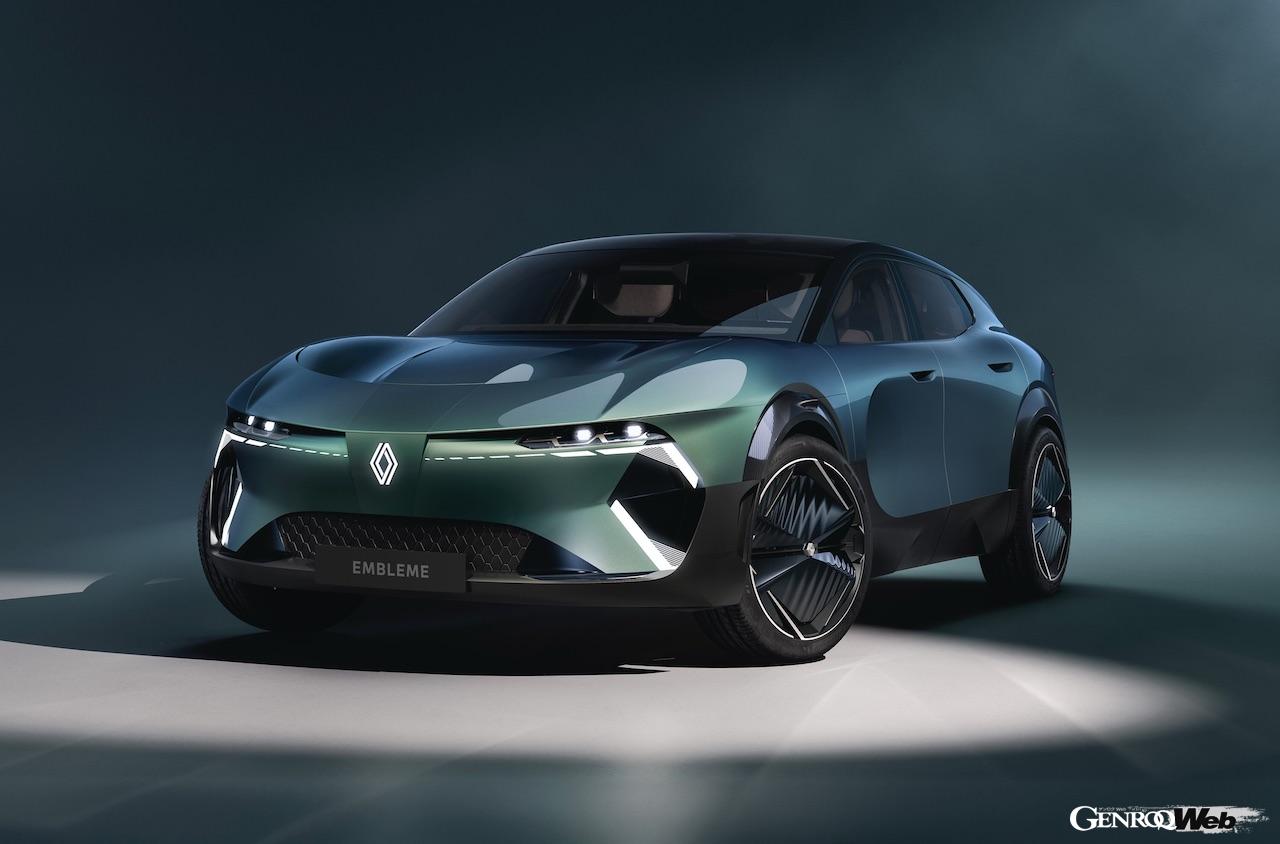
Renault Emblème
Development was handled by Ampere, a Renault subsidiary
The emblem was developed by Ampere, the EV division of the Renault Group, and all possibilities were considered to achieve “carbon neutrality” – zero CO2 emissions.
The Renault Group has set a goal of achieving carbon neutrality in Europe by 2040 and worldwide by 2050. The key to achieving this ambitious goal is Ampere, the company responsible for the development and research of fully electric models within the Renault Group.
At the Paris Motor Show, Ampere unveiled the Emblem, a concept car equipped with a hydrogen fuel cell system. The Emblem combines a 30kW fuel cell with a 40kWh nickel-manganese-cobalt (NMC) battery, running on battery power for everyday use and the fuel cell for long-distance driving. The aim is to reduce CO2 emissions over the entire vehicle lifecycle by 90% compared to conventional ICE vehicles and 80% compared to BEVs.
The Emblem has adopted a new approach to respond to changes in the automotive industry. Renault, its subsidiaries including Ampere, its affiliates, and its partner companies have all cooperated comprehensively to adopt a new development approach. Ampere, which has played a central role in the development, believes that technological innovation is the key to a sustainable future and has therefore adopted many new initiatives.
Decarbonization efforts cannot be implemented in isolation, and in the case of automobiles, the entire life cycle must be divided into five areas. Carbon neutrality can be achieved through eco-conscious “vehicle development,” appropriate “resource selection,” “manufacturing process,” and “usage environment,” including “disposal.”
Almost all materials used are recyclable
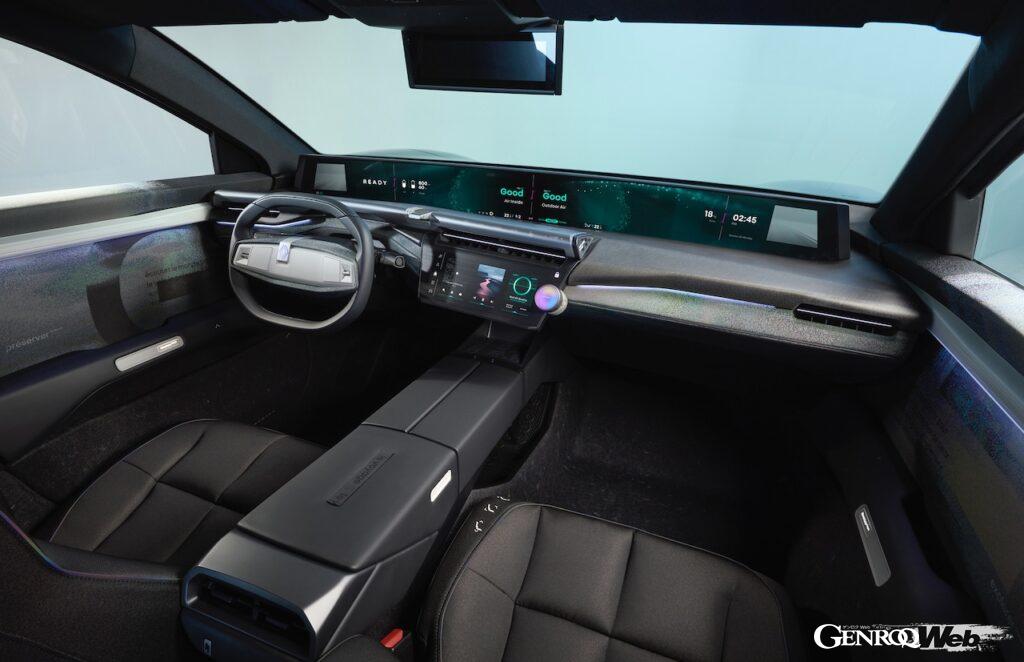
To achieve carbon neutrality, almost all of the materials used in the interior and exterior of the Renault emblem are recyclable.
Ampere and Renault have set new development guidelines since the concept car “Scénic Vision” unveiled in 2022, and some of the results have been incorporated into the emblem. Every possibility is being considered, with the aim of taking decarbonization to a new level while at the same time realizing a family car with a spacious interior for future commercialization.
The emblem was created with an intelligent, reliable and feasible combination of materials, particularly in terms of resource production, use and recovery after disposal. This has resulted in a 70% reduction in the carbon footprint of the part, and 50% of the overall material is made from recycled materials. Almost all of the materials used can be recycled at the end of their useful life.
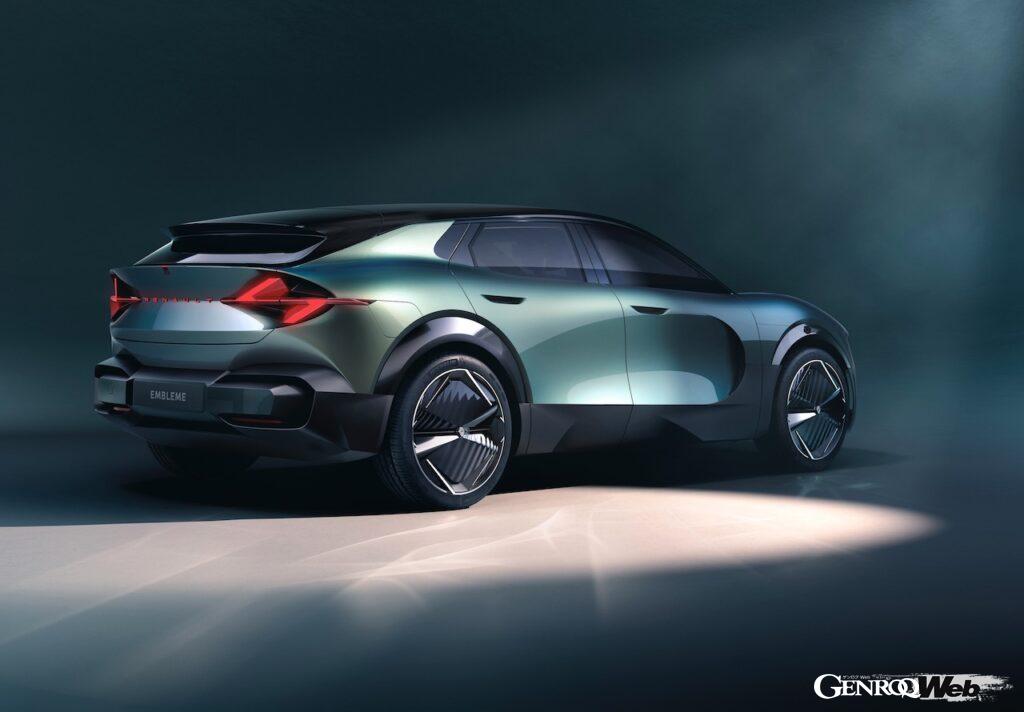
The interior and exterior design was a collaboration between engineers and designers, with a focus on aerodynamics and efficiency. A beautiful shooting brake that combines beautiful styling with a spacious interior space was completed. Luca de Meo, CEO of Ampere, explained the emblem as follows:
“The emblem embodies our stance of building a sustainable future through technological innovation. It expresses our strong desire that automobiles continue to evolve and that we never lose our passion. The emblem also expresses the future design language of the Renault brand, ‘La Nouvelle Vague’ (New Wave). An average internal combustion engine vehicle generates an environmental impact of 50 tonnes over its life cycle, but the emblem generates only 5 tonnes over its life cycle. This is truly a breakthrough.”