
![As electrification advances, supercars will become increasingly bespoke, but what about SUVs? [2025 Automotive Predictions]](https://wheelfeed.com/wp-content/uploads/2025/01/3957-1761202351526.jpg)
Popularization of BEVs is difficult amid the economic downturn
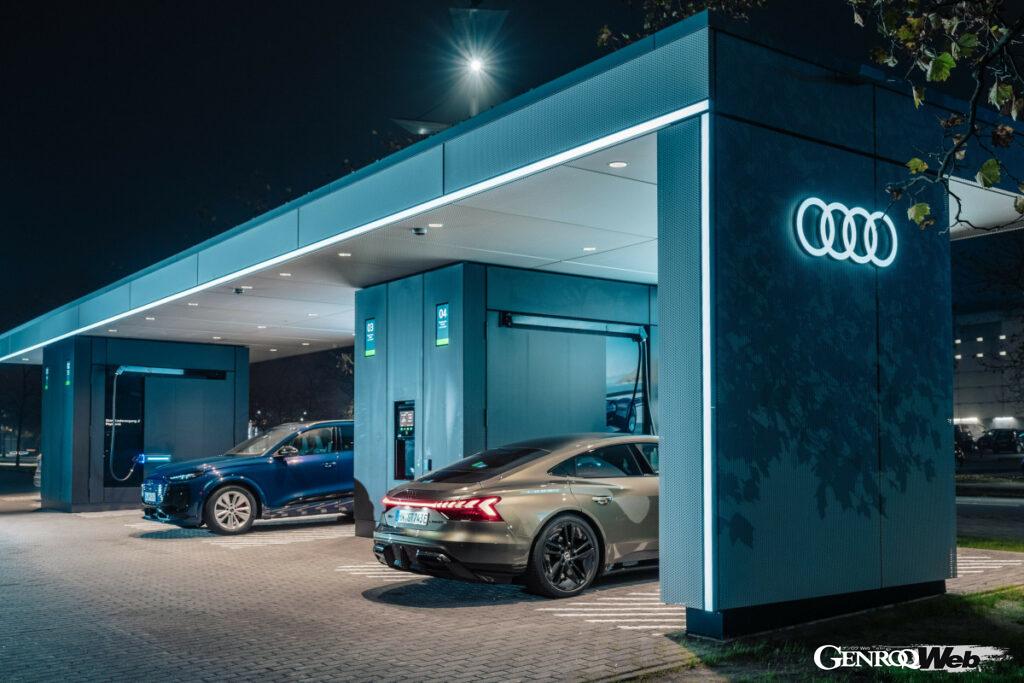
Audi’s urban charging facility proposal
Happy New Year! We look forward to your continued support of Genroku Web in 2025.
The year 2024 has been a turbulent one for the automotive industry, with talks of a partnership between Honda and Nissan and a change in the president of Stellantis, which was formed as a result of a series of mergers and acquisitions. Looking back, I’m sure I’m not the only one who feels like we’re returning to the days of the 1990s, when it was said that “if you weren’t in the 4 million unit club, you couldn’t survive.”
What is common to both eras is the global turmoil caused by war and economic downturn. In the 1990s, Iraq’s invasion of Kuwait sparked the Gulf War, in which the United States participated as part of a multinational force. Today, Russia’s invasion of Ukraine and NATO’s support for it are similar. Another commonality is the economic downturn caused by unstable energy supplies. Then, in the 2000s, China’s accession to the WTO progressed, and the global economy appeared to be developing at first glance. However, a strategy that viewed China as a huge market resulted in the formation of an authoritarian superpower rather than a democratic nation, creating new sources of conflict.
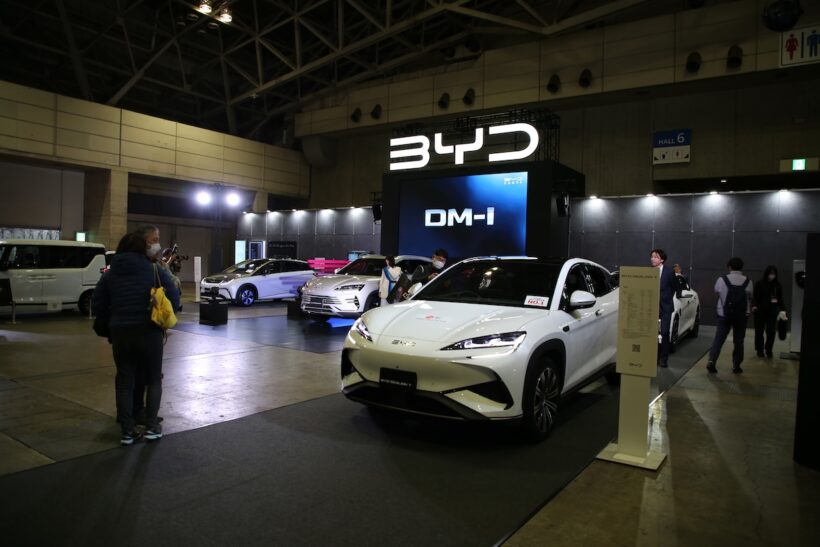
Against this backdrop, how will the automotive industry change in the future, as will alliances and other developments? It’s still fresh in our memory that in recent years, several manufacturers have pledged to go fully electric by 2035, only to quickly reverse their plans. This trend may not stop even after the ongoing wars and conflicts are resolved. However, with the economy continuing to stagnate, it will not be easy to popularize BEVs, which require large-scale investments.
The original purpose of mobility is freedom of movement.

Porsche Panamera Turbo E-Hybrid

Mercedes-AMG GT 63 SE Performance
Leaving aside the gloomy outlook, I would like to focus on the immediate future, 2025. The current stalled push for electrification was a welcome relief for the old guard. Unless innovative batteries emerge, current expensive batteries will face numerous challenges. The invasion of Ukraine exposed Europe’s fragile energy supply system, dependent on Russian natural gas, and the days of cheap electricity are now a thing of the past.
Furthermore, even if inexpensive batteries are developed, the issue of short driving range still needs to be resolved. Even if charging at home is possible, it only involves filling a bucket with water at the beginning, and if there are limitations on water supply (charging) when out and about, further driving becomes unreliable. This is nothing but a disappointment to the very essence of mobility, which is freedom of movement. In addition, considering that the limited charging facilities are currently monopolized by PHEVs, it seems that the dawn of BEVs in Japan is still a long way off.
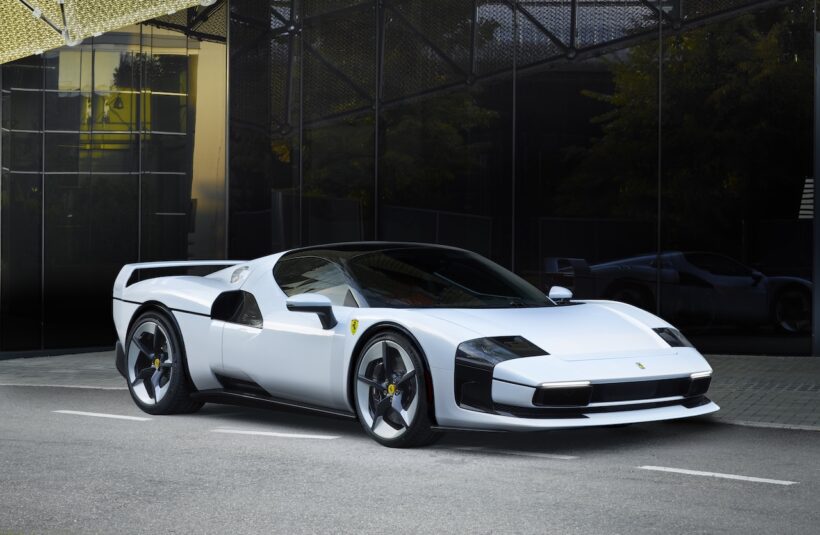
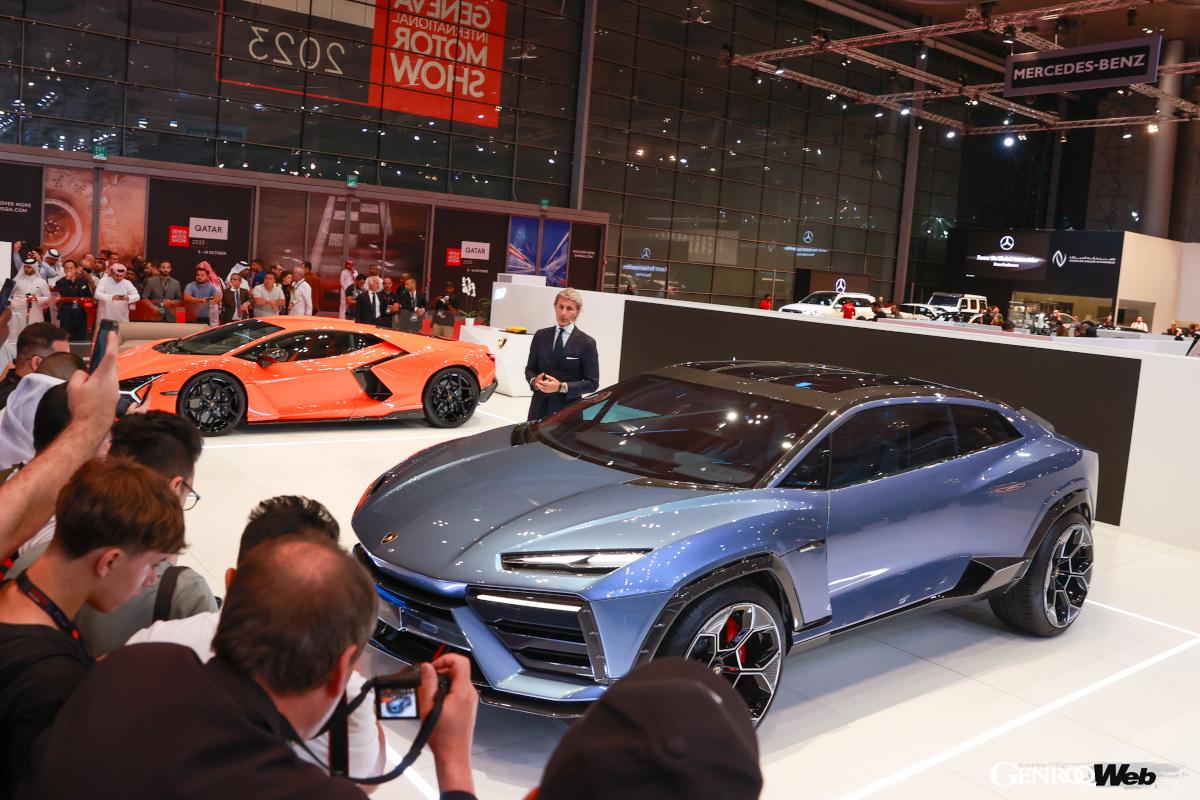
Amid this uncertain situation, Genroku Web, which provides information focusing on supercars and luxury cars, will make predictions about the future of the automotive industry and consider what will happen in 2025. First, while it’s not a prediction, we expect to see the introduction of BEVs from Ferrari and Lamborghini. Last year, Ferrari unveiled a new facility called the e-Building in Maranello, which is scheduled to begin full operation this year. At that time, the company announced the introduction of fully electric vehicles. Meanwhile, Lamborghini is working to hybridize its main models, unveiling the 2+2 GT concept “Lanzador” at Monterey in 2023 and declaring the introduction of BEVs between 2026 and 2030. These are not predictions as they have already been officially announced, but they are facts that should be recognized.
Like the coachbuilders of old

Ferrari e-Building
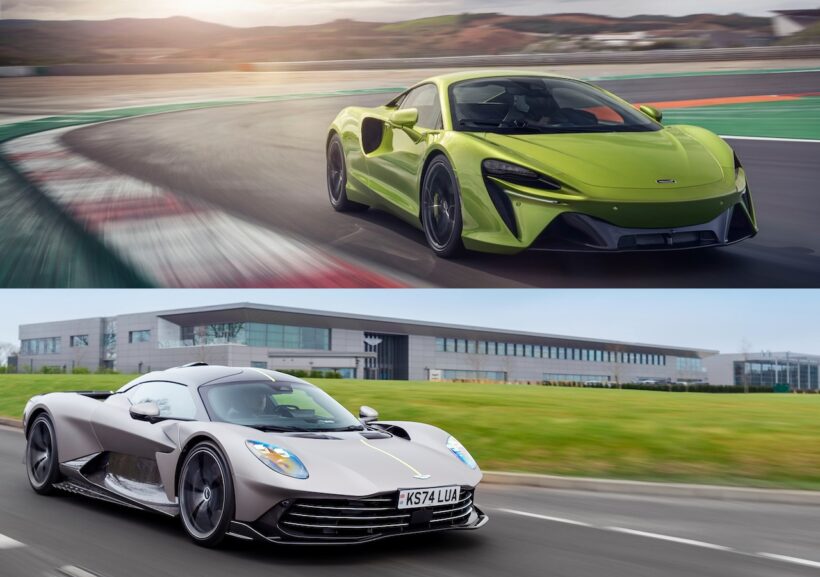
However, given the current unstable situation, it is unclear whether the launch will go ahead as planned, or whether sales may even be canceled altogether. Meanwhile, differences in the philosophies of each manufacturer will become clear as they adapt battery management to different applications. In fact, super sports cars vary widely, from vehicles equipped with extremely small-capacity batteries of 2-4kWh (Ferrari F80, McLaren W1, Lamborghini Temerario) to vehicles equipped with small-capacity batteries of 7-8kWh (Ferrari 296GTB, McLaren Artura). Meanwhile, electric vehicles with a wide range of power capacities have already appeared, including SUVs and sedans equipped with medium-capacity batteries of 15-30kWh (Mercedes-AMG P3 Hybrid, Porsche Turbo E-Hybrid, Bentley Ultra Performance Hybrid).
All of the aforementioned super sports cars are produced in small quantities, so in a sense they can be developed specifically for bespoke purposes. On the other hand, the latter, such as SUVs, are produced in a certain volume (and thus need to secure profits), so development efficiency is required, and common platforms are likely to become more common. Supercars, which tend to be produced on a small scale, can quickly change direction in line with market and customer trends, but with SUVs, we may see a movement to differentiate through body design, even while using the same platform, like the coachbuilders of the past. As a conservative, I hope that even with such commonality, each manufacturer will continue to put in effort, propose new value, and continue to build cars that bring out the inherent appeal of the car.