
![Why the 930-type “Porsche 911” was saved from extinction [Porsche Chronicles]](https://wheelfeed.com/wp-content/uploads/2024/11/3034-1761207154297.jpg)
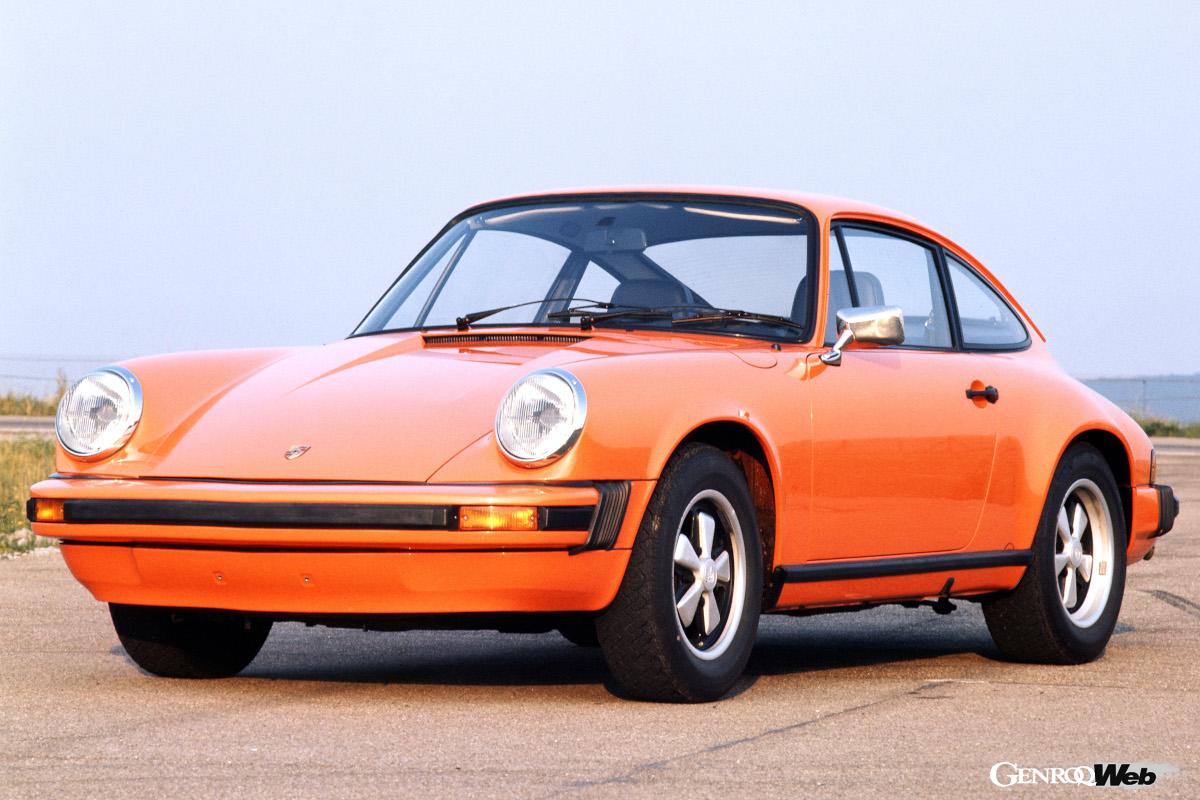
911 2.7 / 911 SC / 911 Carrera 3.2 (1974-1989)
The birth of the G series

911 Targa

911

911 2.7
The 911 reached a state of perfection with the 911 2.4, which was released in 1972 as a 2+2 GT with a rear-wheel drive layout, but as the 1970s began, there was growing pressure to comply with collision safety measures and exhaust gas regulations.
So in August 1973, Porsche announced a new 911 called the G Series. This model was fitted with large 5-mile bumpers on the front and rear to comply with the new crash safety standards of the US Federal Motor Vehicle Safety Standards (FMVSS), and was nicknamed the “Big Bumper” in contrast to the previous “Narrow” bumpers. Incidentally, the European version had a shrinkable steel tube inside the bumper, while the North American version had a hydraulic damper built in to absorb impacts.
As a result, the front horn grille and turn signal lenses were eliminated and replaced with a design integrated into the bumper. While rivals struggled with the styling of their rugged 5-mile bumpers, the Toyota succeeded in modernizing the styling. Another topic of discussion was the practical improvements made to the car, such as improved sound insulation for the 1975 model and the use of zinc-coated steel for improved rust prevention from the 1976 model.
On the other hand, the displacement of the air-cooled flat-six SOHC engine was increased to 2687cc to address power loss due to exhaust gas countermeasures. Initially, only the North American 911 and 911S were equipped with the Bosch K-Jetronic mechanical fuel injection system, but it was later expanded to all models. As a result of other improvements to the exhaust system, power output fell relatively.
Vehicle model changed to 930 type
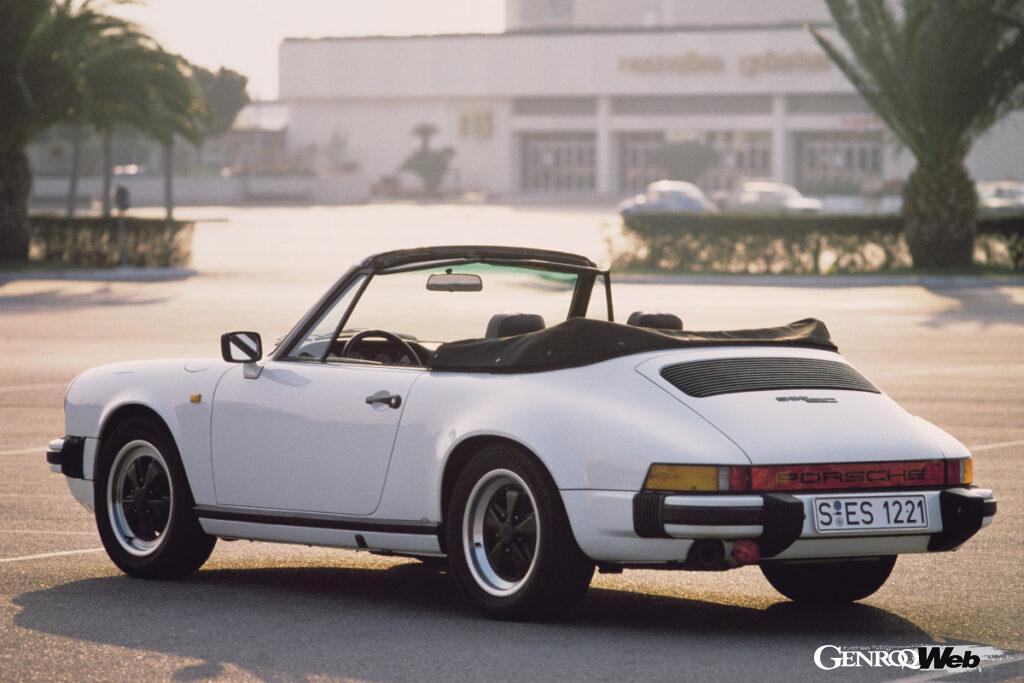
911 SC Cabriolet

911 SC
In 1974, the Carrera RS 3.0, equipped with a 230 PS 2994 cc unit, was released in a limited run of 106 units to obtain homologation for Group 3. In 1976, the Carrera 3.0, equipped with a 200 PS 2994 cc flat-six engine based on the 930 Turbo engine, replaced the 911S and joined the lineup.
In 1978, Porsche revised the 911 lineup and standardized it into the “911 SC,” equipped with a 2994cc air-cooled flat-six SOHC 930-type unit based on the turbo. It had the same wide body as the Carrera, and the 915-type 5-speed manual transmission became standard equipment, and the vehicle model was changed from 911 to 930.
The 911SC was originally supposed to mark the end of the 911’s life, with the baton being passed on to the flagship 928 and then the 924. However, sales of both cars were poor and Porsche’s own financial situation was deteriorating. Peter Schütz, who replaced Ernst Fuhrmann as president in 1981, decided to extend the life of the 911, which was still selling well. He also actively promoted the development of new technologies such as AWD, which had been frozen for a time, and unveiled the AWD and fully open 911 Turbo Cabrio Study at the Frankfurt Motor Show that same year. In the end, it would take some time for the AWD 911 to be commercially available, but the 911 SC Cabriolet, which was added to the regular model lineup in October 1983, was a hit, especially in the North American market, and Porsche’s performance began to recover.
Then, from the 1984 model, the 911 Carrera 3.2 was introduced, replacing the 911 SC, with an increased displacement of 3164cc and improved cold starting performance thanks to the adoption of the Bosch Motronic engine management system.
The revived two-seater “Speedster”

911 3.2 Cabriolet
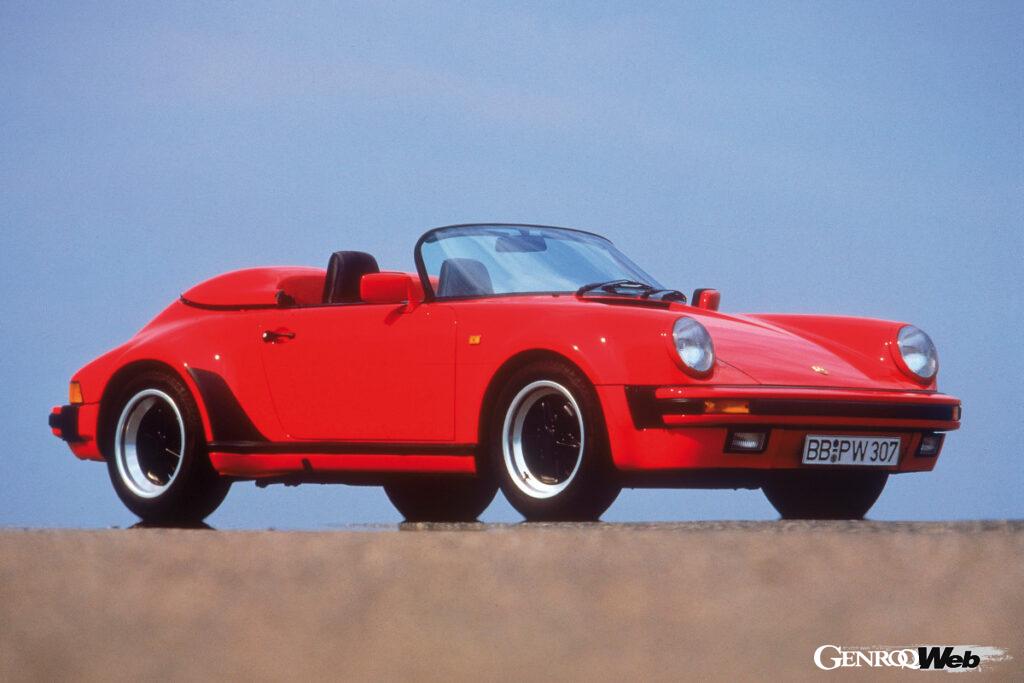
911 Speedster
This Carrera 3.2 was originally equipped with a 915-type 5-speed manual transmission, but from the 1987 model, it adopted a Getrag G50-type 5-speed manual transmission with Borg-Warner synchro. Not only did the gearbox capacity increase, but the shift feel was also greatly improved.
In addition, in 1984, in order to obtain Group B homologation, a limited run of 20 “911 SC/RS” was produced, featuring a turbo wide body with a 270 PS 3.0-liter flat-6 engine and extensive use of aluminum panels to reduce weight in various parts.
Starting with the 1985 model, a “Turbo Look” was available for both the coupe and convertible, and in 1987 the “911 Carrera Clubsport” was released, which was lighter and had no comfort features.
Towards the end of the model’s life in 1989, the two-seater “Speedster” was relaunched, featuring a low windscreen and hard tonneau cover. Ultimately, 2,065 units were sold, bringing the long history of the “Big Bumper” to a close.













![The S-Type, widely regarded as Bentley’s masterpiece post-war saloon [Bentley 100 Years of Car History]](https://wheelfeed.com/wp-content/uploads/2025/11/4703-1762127546348.jpg)