
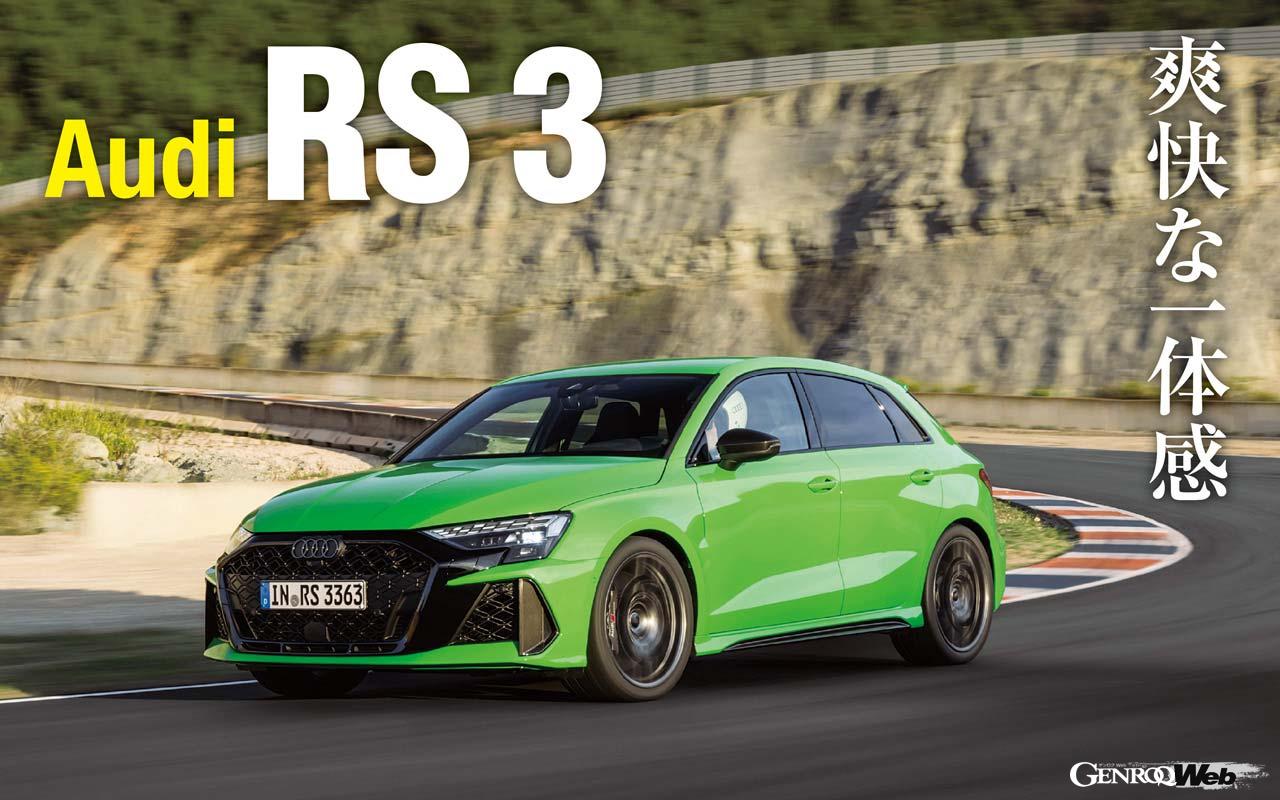
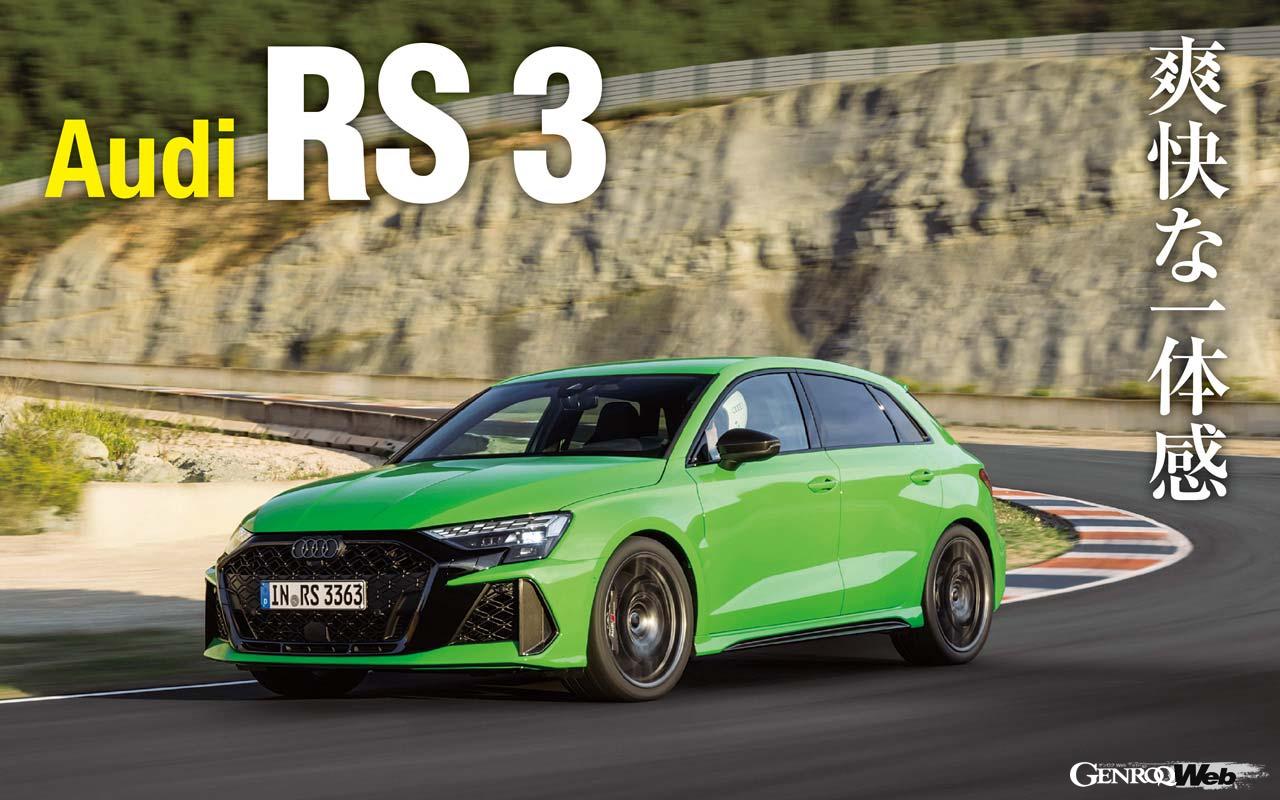
Audi RS 3
Evolved into a more impactful look
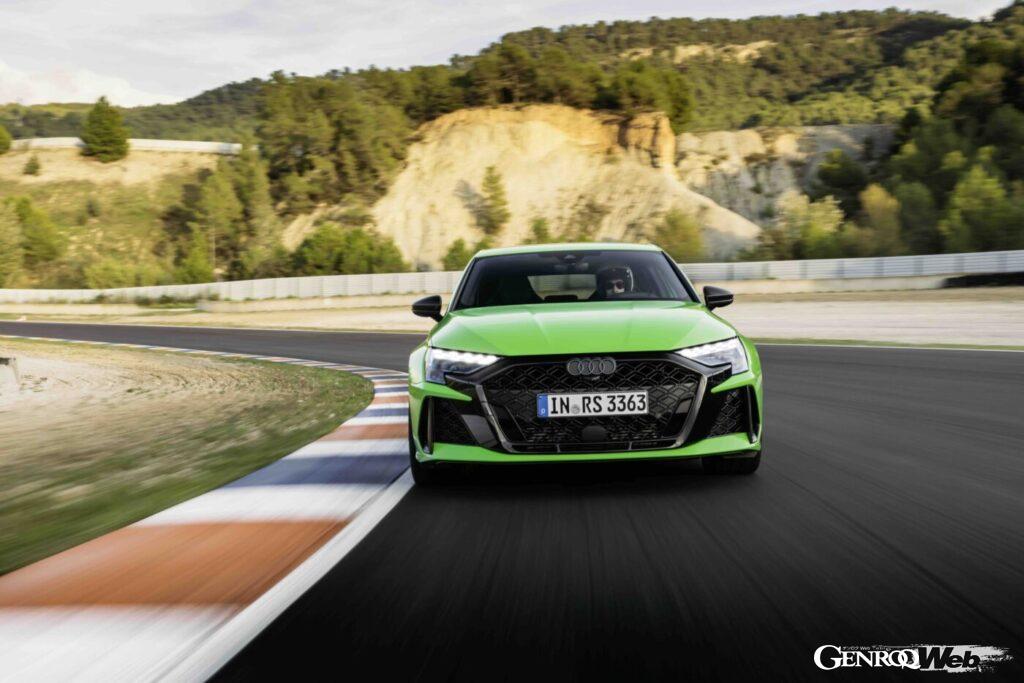
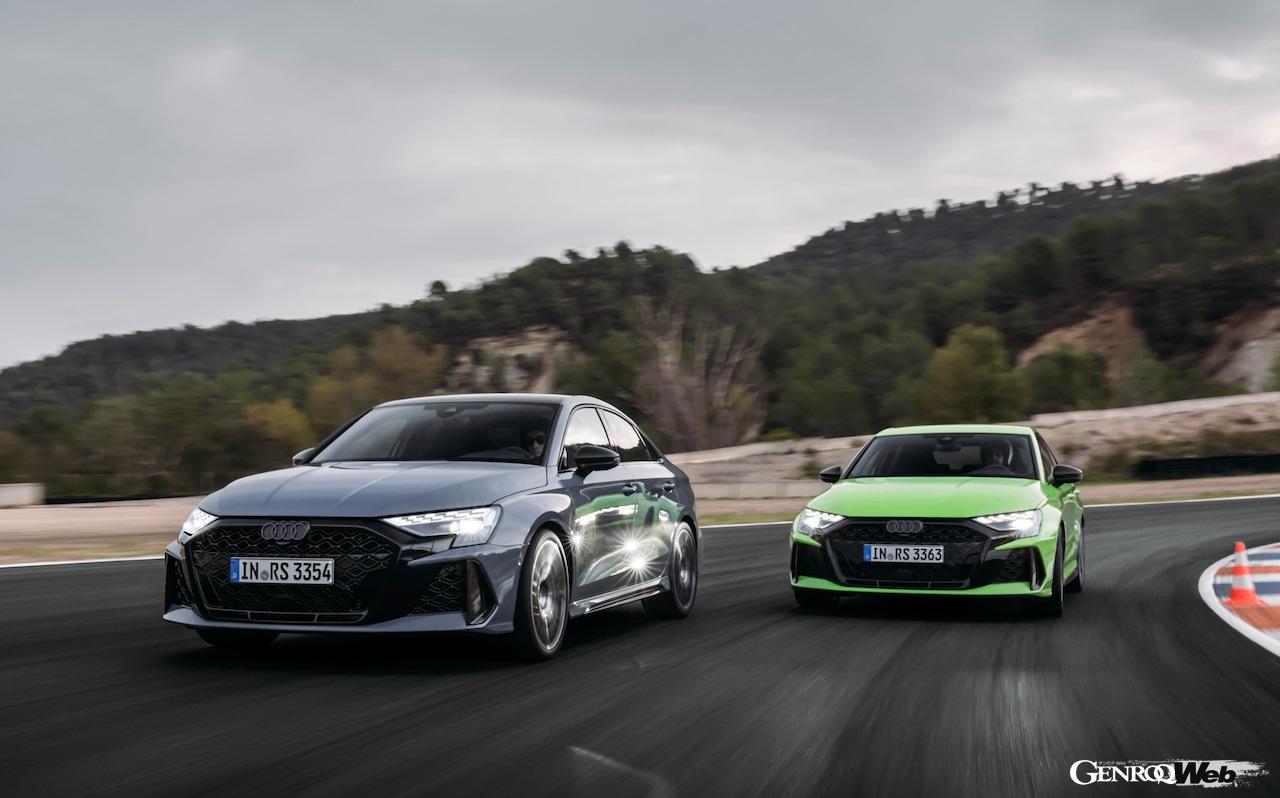
This minor change has resulted in the adoption of a sharper hexagonal single frame grille and LEDs with a special signature, giving the car a more masculine look.
We test drove the facelifted Audi RS 3, which was announced in Germany in August, on public roads and a circuit near Barcelona, Spain. As Audi continues to promote electrification, it’s rumored that the current generation will be the last model to feature a five-cylinder turbo, but we wonder just how much of an improvement has been made with this latest update.
The new RS 3 will be available in both sedan and sportback versions, as before. The exterior has been given a more dynamic look with a more edgy hexagonal single frame, a newly designed front bumper with side air intakes featuring vertical blades on both sides, new LED headlights with RS-specific signature, newly designed rear combination lamps, and a large rear diffuser with an integrated design that incorporates oval-shaped tailpipes.
The interior has also been given an even sportier feel with a new flat steering wheel with a red marker at the 12 o’clock position, carbon fiber panels, and RS bucket seats. The 12.3-inch Audi Virtual Cockpit Plus now features a rev counter, as well as displays for power, torque, G-force, acceleration, and lap times. The 6-speed manual transmission model also features a racing-car style shift indicator that lights up in green, yellow, and red, adding to the fun factor.
Nordschleife 7 minutes 33.123 seconds
[1]

[1]
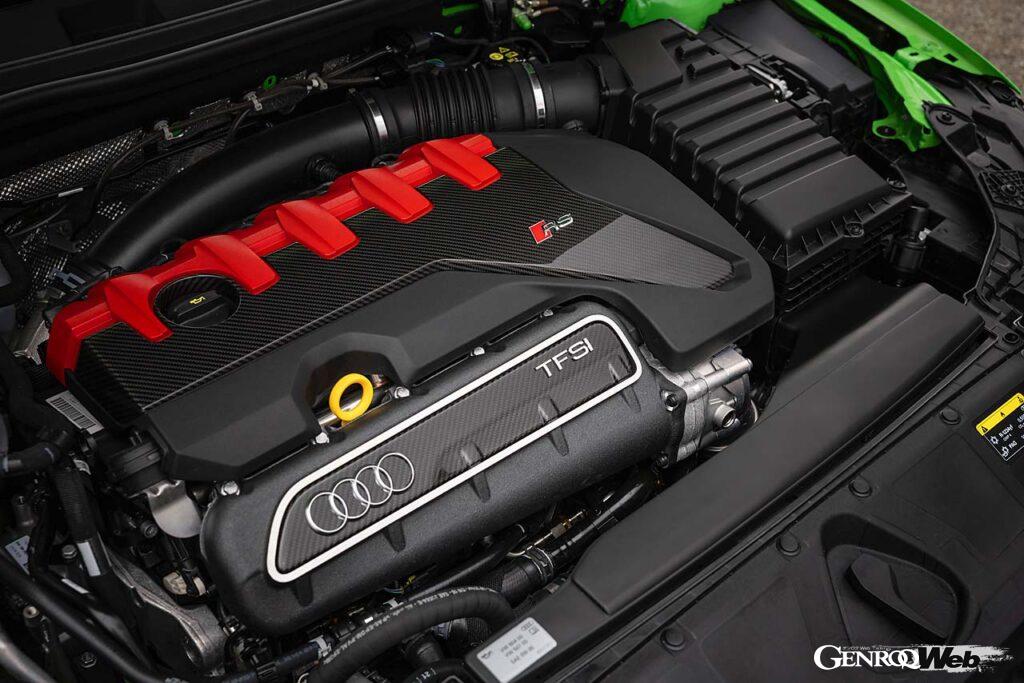
[1] It is equipped with the familiar 2.5-liter inline 5-cylinder turbo engine that produces 400 PS/500 Nm. The tires are high-grip Pirelli P Zero R.
The traditional 2.5-liter inline-five turbo engine still produces 400 PS and 500 Nm of torque, but the flap control of the exhaust system has been optimized to produce a more emotional sound. The biggest advancement is in the chassis. The new model features brake torque vectoring, a torque splitter that optimally distributes drive torque between the left and right rear wheels, electronic stability control, and integrated control of the adaptive dampers of the RS sports suspension.
This has improved the cornering performance of the new model. By reducing understeer at the beginning of cornering, it is possible to approach the apex at a more ideal angle and with greater vehicle speed, and corner exit speed has also improved. As a result, the new model recorded a lap time of 7 minutes 33.123 seconds on the Nordschleife, 7 seconds faster than the previous model, and reclaimed the fastest time in its class.
Unfortunately, it was raining during the test drive, so I can’t say anything definitive, but one thing I can say for sure is that the wet grip performance of the newly added optional tire (Pirelli P Zero R) is extremely high. Even in conditions where rivers form on the road surface, it demonstrates excellent drainage performance, allowing me to drive on winding roads with confidence.
A cockpit that lets you concentrate on driving

[2]

[2]
[2] It features a new steering wheel with a flat top and bottom, and RS bucket seats that appear to provide excellent holding power.
And on the circuit, I could clearly feel the benefits of the new chassis integrated control. The Parc Motul Castellori, located in the mountains on the outskirts of Barcelona, where I drove, has steep ups and downs and several corners, including a descending S-curve, that are prone to understeer. However, even when entering a corner at a fairly aggressive speed, the nose of the car turns sharply inward in proportion to the amount of steering, allowing me to smoothly catch the apex. There is certainly some understeer, but it is kept to an absolute minimum, giving the impression of being very close to neutral steering.
Furthermore, by turning the steering wheel deeply, it is now possible to easily bring the car into an oversteer state, giving it greater freedom of handling than ever before. The sheer speed is appealing, but the car is also more fun to drive.
The difference between a hatchback and a sedan

As before, the body types will be a sedan and a sportback.
There is almost no difference in the driving performance between the Sportback and the sedan. There may be subtle differences in the rigidity around the rear and the center of gravity, but only a very keen driver would notice. In fact, both vehicles weigh 1,565 kg, and they accelerate from 0 to 100 km/h in 3.8 seconds, with a top speed of 290 km/h.
Prices in Germany, including 19% VAT, are 66,000 euros (approximately 10.9 million yen) for the Sportback and 2,000 euros (approximately 330,000 yen) more for the Sedan. This may seem a little high, but considering its performance, it is quite reasonable.
REPORT/Toshimi TAKEHANA
PHOTO/AUDI AG.
MAGAZINE/ GENROQ January 2025 issue
SPECIFICATIONS
Audi RS 3 Sportback
Body size: Length 4390, Width 1850, Height 1435mm
Wheelbase: 2630mm
Vehicle weight: 1565kg
Engine: Inline 5-cylinder DOHC
Total displacement: 2480cc
Maximum output: 294kW (400PS) / 5600-7000rpm
Maximum torque: 500Nm (51.0kgm) / 2250-5600rpm
Transmission: 7-speed AT
Drive system: AWD
Suspension type: Front MacPherson strut, rear multi-link
Brakes: Front and rear ventilated discs
Tire size: Front 265/30ZR19, rear 245/35ZR19
0-100km/h acceleration: 3.8 seconds
Top speed: 250km/h
Vehicle price: 8.3 million yen
[Inquiries]
Audi Communication Center
TEL 0120-598-106
https://www.audi.co.jp/