
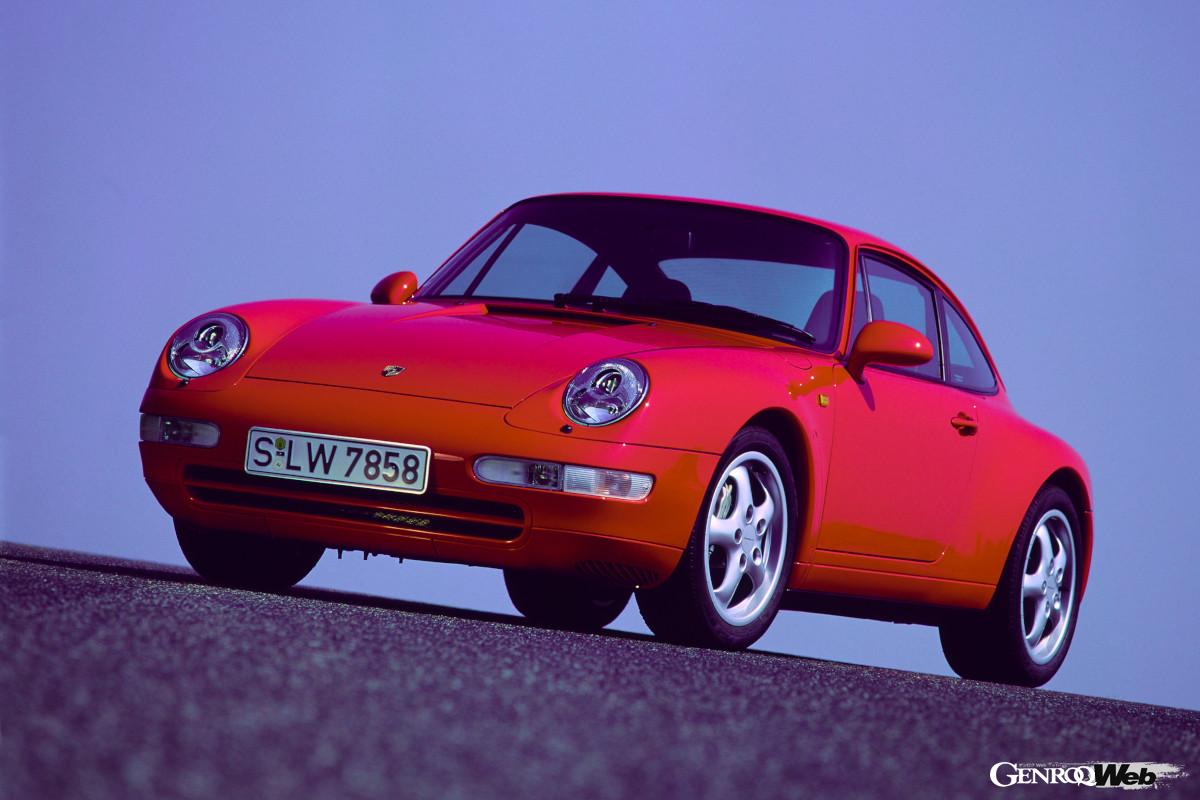
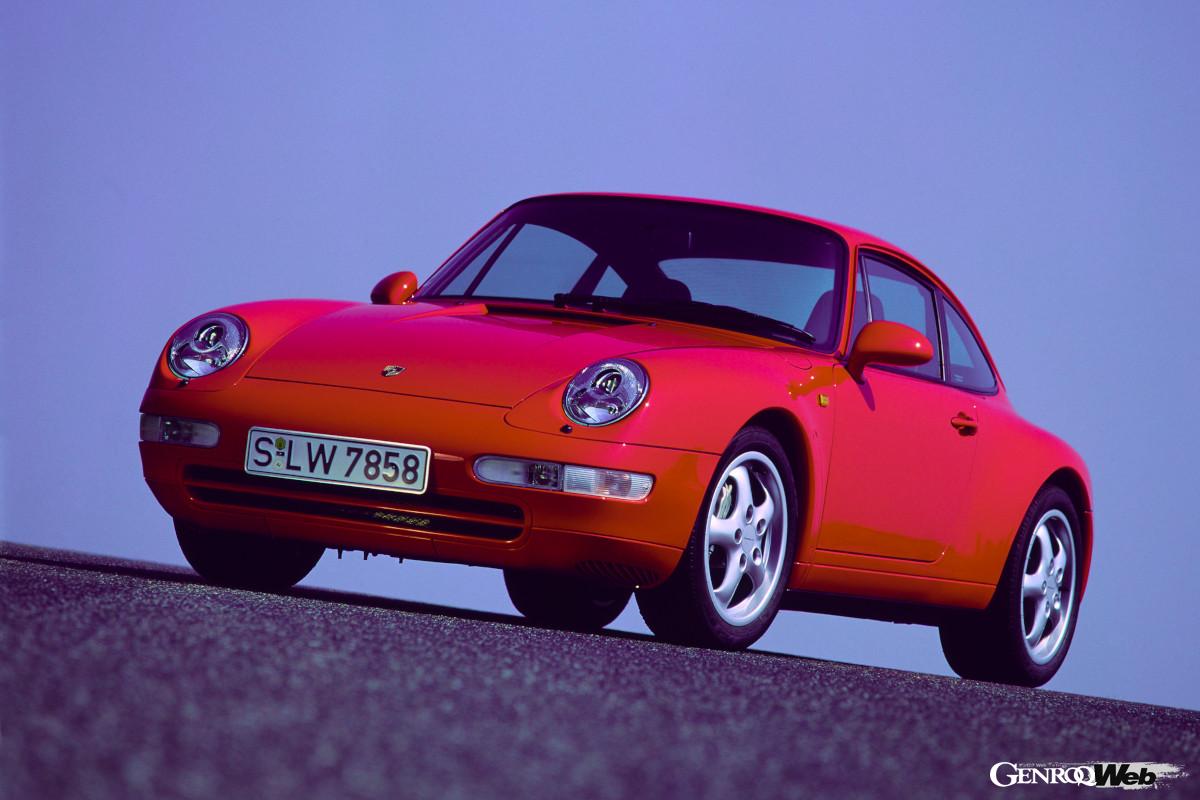
911 (Type 993) Carrera 2 / Carrera S / Carrera 4 / Carrera 4S / Carrera RS / Turbo / Turbo S / GT2 (1993-1998)
Wiedeking, the new CEO
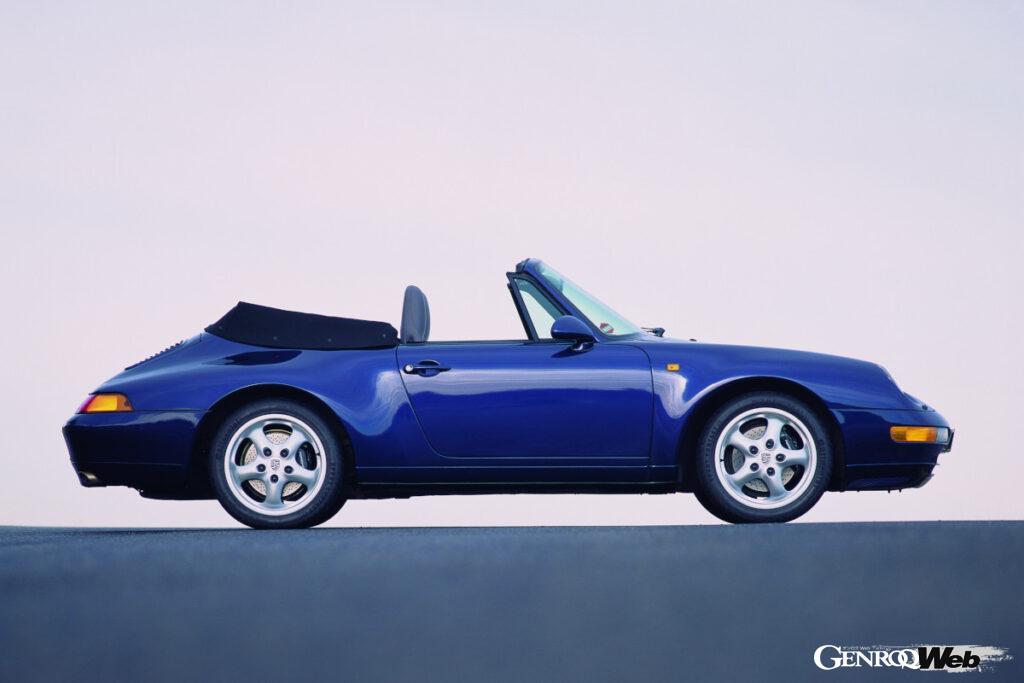
Cabriolet
In the late 1980s, Porsche was facing a serious management crisis, but with the introduction of the 964 911, which introduced a number of innovative features such as full-time AWD, an automatic transmission with manual mode, and a 3.6-liter twin-plug flat-six engine, and various management reorganizations, the company was gradually escaping the crisis. It was in the midst of this that Wendelin Wiedeking was appointed as the new CEO of Porsche in October 1992.
While implementing various rationalization measures, such as introducing a production system modeled after Toyota, Wiedeking also ordered the development of a new 911 to replace the 964, as well as a new generation 911 that looked even further ahead. As a result, the fourth generation 911, the 993, was announced in December 1993 as the successor to the 964.
Multi-link rear suspension
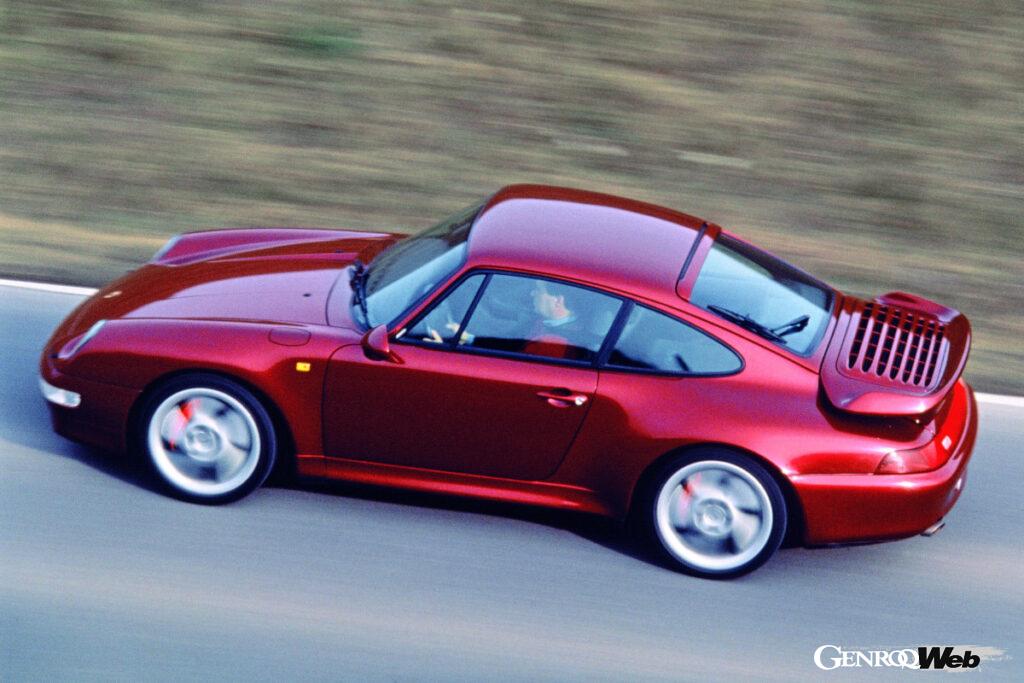
turbo

Carrera S
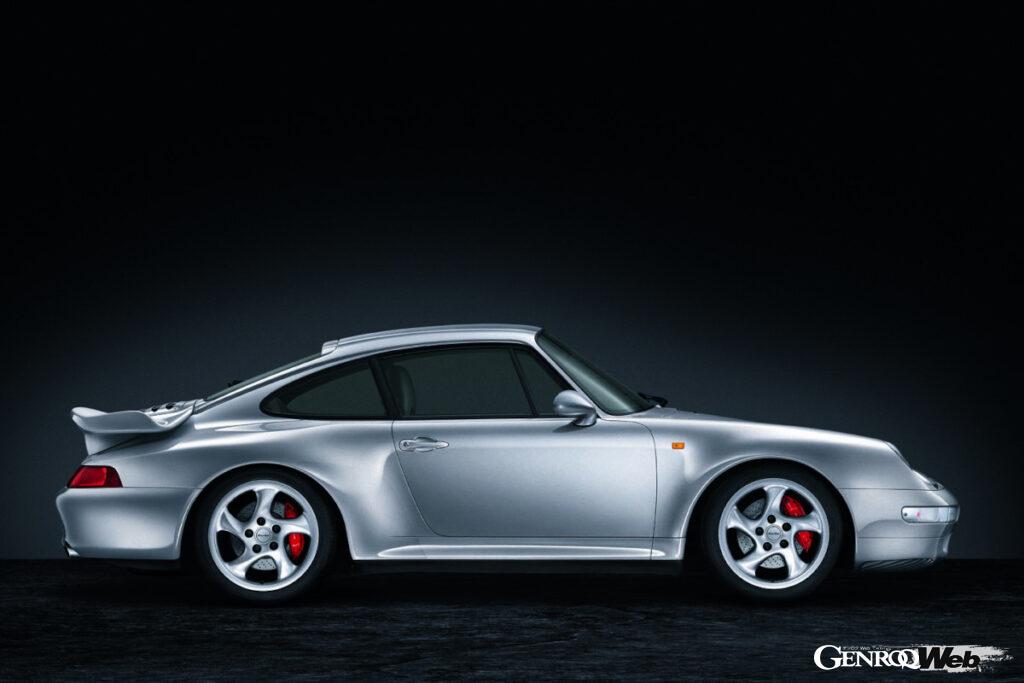
turbo
Here, the development team in Weissach introduced the multi-link rear suspension that had been developed for the four-door prototype “989.” The front and rear treads were also widened to improve handling stability. The design department also made significant changes to the body design under the direction of Harm Lagaay. The new design featured sloping headlights and a tail end with a raised bumper line, which were also used in the 959 and the Panamericana concept car.
The rear-mounted air-cooled flat-six engine employs newly designed lightweight pistons, reinforced connecting rods, hydraulic tappets, etc. Thanks to the multi-link rear suspension, the left and right exhaust pipes are of equal length and the muffler capacity has been increased, so while the displacement remains the same at 3600cc, maximum power output has increased to 275PS and maximum torque to 300Nm.
Initially, only the rear-engine, rear-wheel drive Carrera 2 Coupe and Cabriolet were available, but in 1995 the Carrera 4 was added, which was significantly lighter than the 964 by 30 kg thanks to the adoption of a viscous coupling full-time 4WD system.
“Carrera RS” and “Club Sport”

Carrera RS Clubsport (back) and Carrera RS
Targa
In 1995, the “Carrera RS” was announced, featuring a flat-six engine that bored out the 964 Carrera RS engine to 3764cc, and adopted the “Varioram” variable intake system and large-diameter intake and exhaust valves to produce a maximum output of 304PS and a maximum torque of 355Nm. The “Club Sport” was also available, equipped with a large front spoiler and two-stage rear wing, and weight reductions such as power windows and door trim were implemented to achieve a weight of 1279kg, 100kg lighter than the Carrera 2, for use in racing.
The “Turbo” model, featuring a twin-turbocharged 3.6-liter M64 engine, was also revived in 1995. To handle the immense power of 413 PS and 540 Nm of torque, the 911 Turbo was also unique in that it featured an AWD drivetrain with a viscous coupling, a first for the 911 Turbo (torque distribution to the front was set at 5-20%).
Furthermore, for the GT2 class of the BPR Global GT Series, the “911 GT2” was introduced, equipped with a 3.6-liter twin-turbo engine tuned to 430 PS, and equipped with a wide body and a large GT2 wing. A very small number of road versions were released, and the race version continued to evolve more radically, with the “GT2 Revolution” producing 600 PS and the “GT1” monster, which was mid-engine with the front and cabin parts reused.
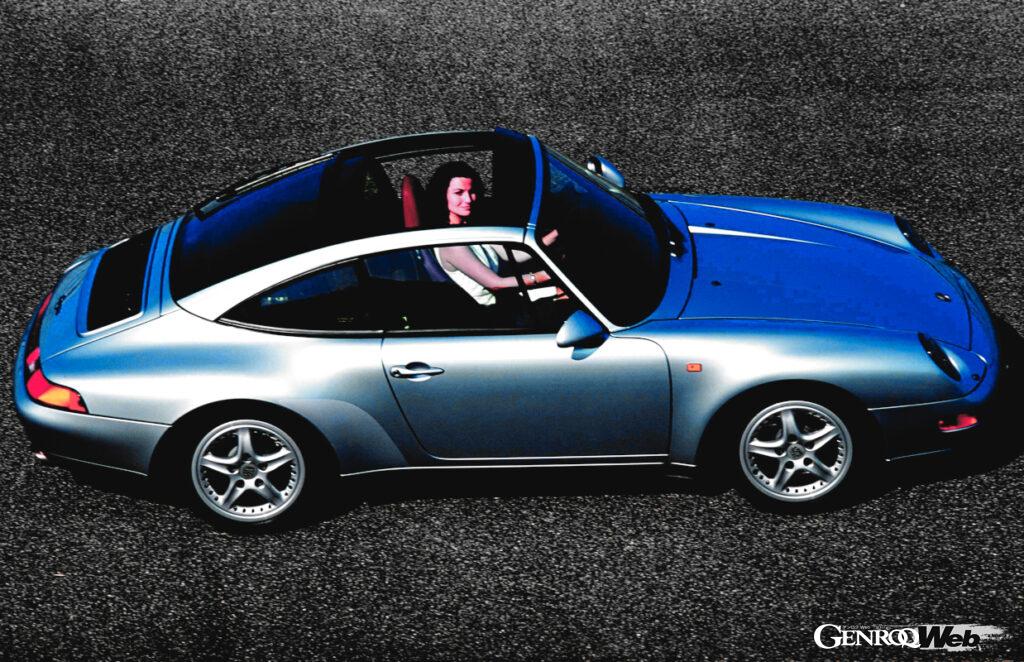
Meanwhile, from the 1996 model, the standard 993 also adopted Vario Cam and large-diameter intake and exhaust valves. Maximum output increased to 289 PS and maximum torque to 340 Nm, while fuel economy and exhaust gas emissions were also improved. In addition, the Targa, which had been absent from the lineup since the 964, rejoined the lineup, but underwent a major change: it was transformed into a fastback coupe with an electrically operated glass roof using insulated glass, rather than the previous rollover bar style.
A stepping stone to revival

Carrera RS
In addition, the “Carrera 4S” has been released, a high-performance version of the Carrera 4, equipped with a wingless turbo wide body, turbo brakes, and suspension. The Turbo S has also been added, equipped with a 3.6-liter twin-turbo engine that produces 430 PS, inherited from the GT2, and equipped with a low two-stage rear wing and intakes on the rear fenders.
1997年には993最後のバリエーションとして、ターボ用ワイドボディをまとったRRの「カレラS」が登場した一方で、この年に水冷フラット6を搭載する“次世代の911”である「996」がデビュー。ターボとカレラ4のみ1998年まで生産が続けられたものの、ここで1948年以来続いてきた空冷ポルシェの生産は終了となった。しかしながら993シリーズが商業的な成功を収めたことで、ポルシェは復活への大きな足掛かりを掴むことになった。













![The S-Type, widely regarded as Bentley’s masterpiece post-war saloon [Bentley 100 Years of Car History]](https://wheelfeed.com/wp-content/uploads/2025/11/4703-1762127546348.jpg)