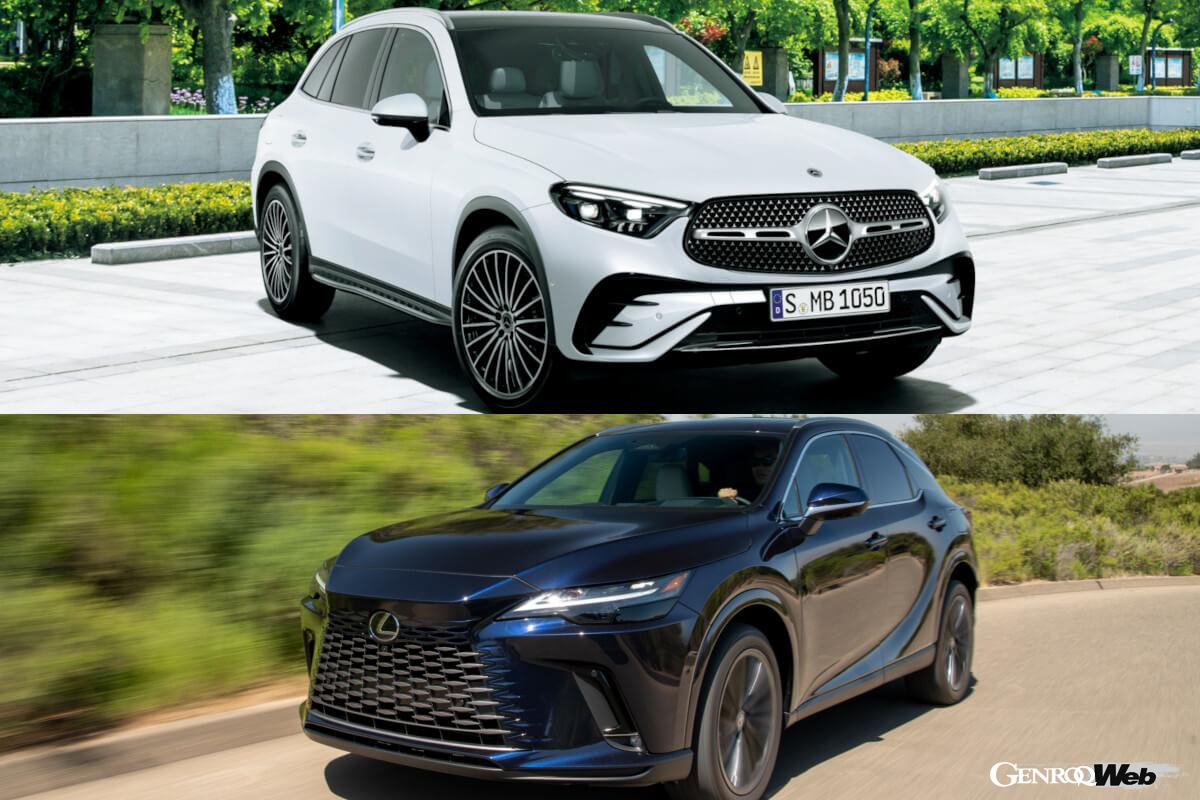

![The legendary Porsche LMP 2000 prototype, revived after 25 years, takes to the track [Video]](https://wheelfeed.com/wp-content/uploads/2024/12/2748-1761203710178.jpg)
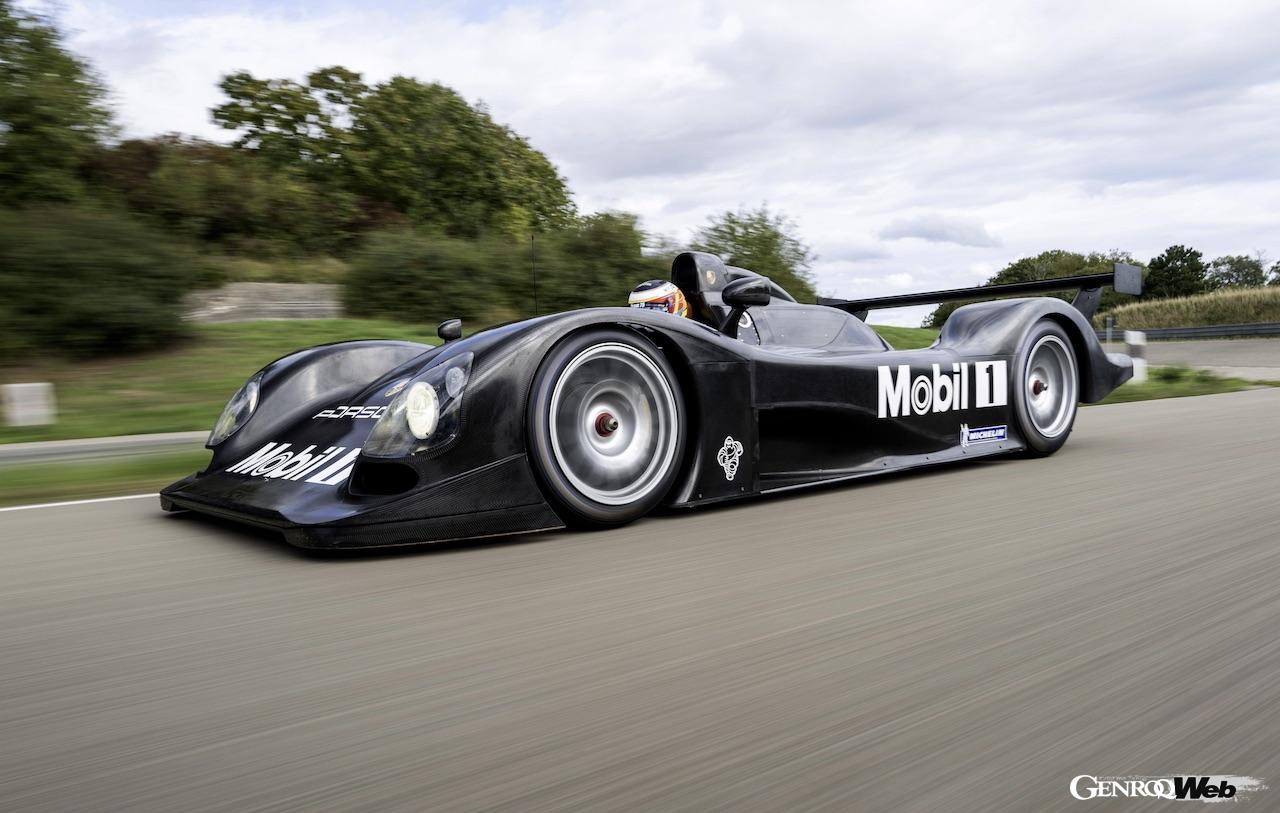
Porsche LMP 2000
A project close to my heart for 25 years
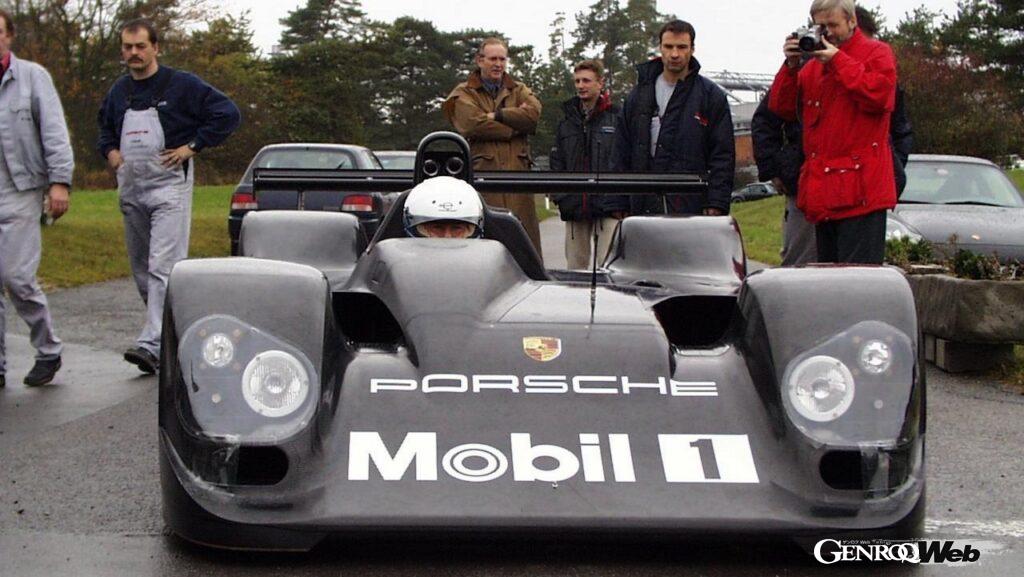
After the car was completed in 1999, the Porsche LMP 2000 was shelved due to budgetary constraints, but the staff involved in its development in Weissach never forgot about it.
The Porsche LMP 2000 was originally designed and developed with the goal of winning the 24 Hours of Le Mans in the 2000 season. However, due to budgetary reasons, the project was canceled after the car was completed in 1999. After a test run of just 78 km, the car was covered and left unused for over 20 years.
Until the restoration team at Porsche Heritage & Museum brought the LMP 2000 back to life, there was much speculation and legend surrounding its existence. Now, in 2024, 25 years after development was halted, the LMP 2000 will lap the circuit with test driver Allan McNish at the wheel, just as he did in 1999. This will be a reunion for many of the people who took part in the development program at the time.
When talking about the LMP 2000 at the development center in Weissach, the phrase “A project close to our heart” is often heard: a car that has never driven a single lap in a race, but which has never left the thoughts of those who built it for the past 25 years.
Mileage less than 80km
The LMP 2000 was developed with the aim of winning the 24 Hours of Le Mans in 2000. Allan McNish, who was in charge of the shakedown at the time and drove about 80km, was at the wheel again this time.
To mark the 25th anniversary of the rollout test that took place on November 2nd and 3rd, 1999, Porsche Heritage & Museum has decided to put the car back on the road.
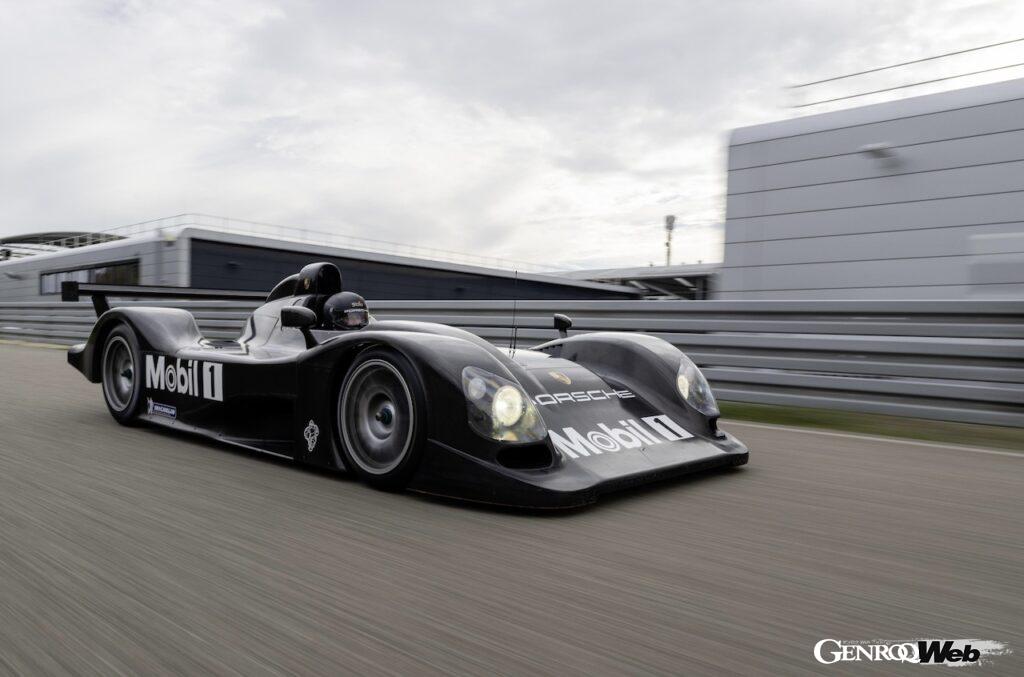
At the wheel was Allan McNish, who last drove this racing car in 1999. As the 54-year-old McNish circled the 2.88km Weissach test course, members of the development team that worked on the project known as the “9R3” a quarter of a century ago watched.
Participating in the first run in 25 years are a distinguished group of people, including Norbert Singer, who was at the center of development at the time, Herbert Amppeller, who was head of the racing department, Armin Burger, historical motorsport coordinator, Traugott Brecht, historical motorsport technical advisor, Timo Bernhard, Le Mans winner and current brand ambassador, Steffen Wolf, engine management engineer, and Alexander E. Klein, head of Heritage Operations & Communications.
For them, the LMP 2000 is more than just a car. It’s a project they’ll never forget, the story of a racing car that never raced. It’s not a success story, and it has less than 80km on the clock. Developed for the LMP900 Le Mans Prototype class, the LMP 2000 was equipped with a 5.5-liter V10 naturally aspirated engine that produced over 600PS, with the aim of winning the 2000 24 Hours of Le Mans.
Bernhard drives the car of his dreams
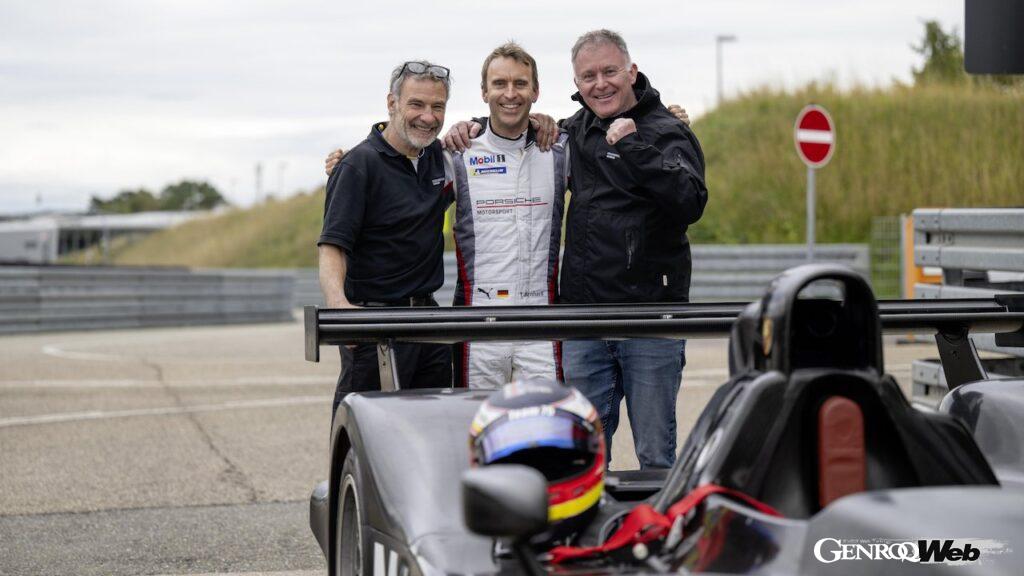
Alongside McNish, Porsche ambassador Timo Bernhard (center) will be driving the LMP 2000. This marks his first time behind the wheel of the car he has dreamed of since he was 18 years old.
“It was amazing! It was like going back 25 years. And the smiles on the faces of the people watching me drive were just as memorable as the sound of the engine roaring behind me on the long straights,” said an excited Le Mans 24 Hours winner as he stepped out of the car.
McNish, a Porsche works driver, drove an LMP 2000 for the first time on November 3, 1999 (at the age of 29) in conditions of 8.6°C temperature and 68% humidity. Despite tires not suited to the low road temperature, he recorded a top speed of 302km/h and covered 60km, including the lap record. The day before, Bob Wollek, who passed away in 2001, was in charge of the shakedown, and McNish and Wollek drove 78km over two days.
“Bob must be here today watching,” McNish says with a nostalgic smile.
Meanwhile, Timo Bernhard, who was just 18 years old at the time, looked ahead to the LMP 2000 and said, “I saw this car in a magazine and imagined that one day I’d be able to drive it.”
“I’m incredibly proud that 25 years later I was able to get behind the wheel of my dream race car and do a few test laps. It felt like I was part of a story. The V10 engine felt as soft as butter, the car was agile and the downforce was amazing. The power delivery was linear and the sound was amazing.”
First engine restart since 1999
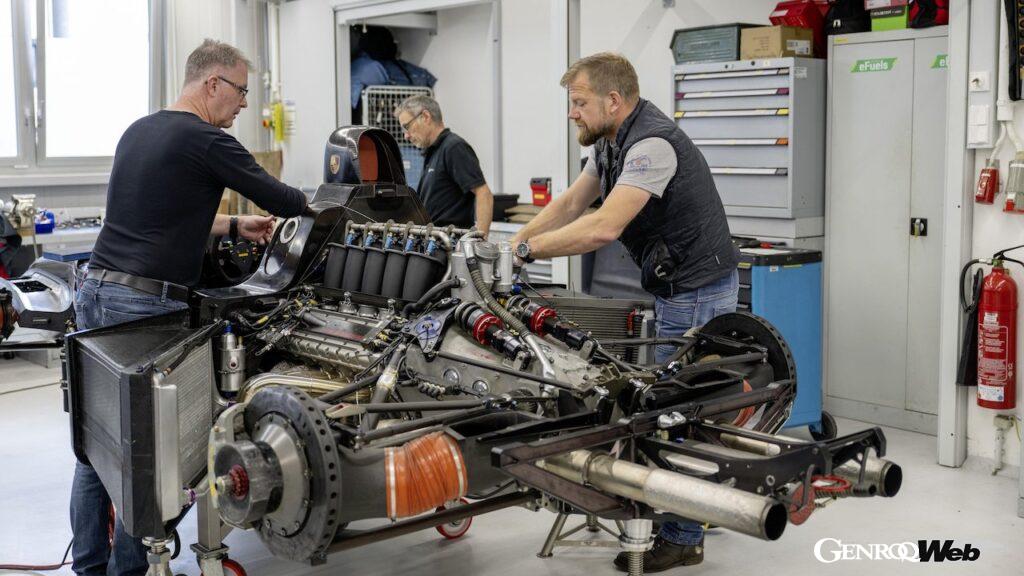
The restoration work at the Porsche Heritage & Museum was carried out with the utmost care, as is typical of a delicate racing car.
Restoration of the LMP 2000 took several years. For Porsche Heritage & Museum, the restoration was not just about tracing Porsche’s history, but also a technical project to get a historic car running again, despite the current state of technology.
“Every time I saw the LMP 2000 covered up in the museum storeroom, I thought back to the rollout in 1999,” Armin Burger reveals.
“I’ve heard so many stories about this car since I joined Porsche in 2012. It was only a few years later that I saw it in the warehouse, carefully covered in cream silk cloth. It’s an indescribable emotion to see it running again,” said Burger.
“Ultimately, we decided to revive this race car to coincide with the anniversary of its rollout 25 years ago. Many people have asked us, ‘Does the legendary LMP car really exist? If so, where is it?'” added Alexander E. Klein.
Led by Traugott Brecht, work began at the Weissach factory by removing the bodywork from the black racing car. “We proceeded very carefully, including restoring the engine, and then we went ahead and started it up again. The first start-up was really exciting, with all ten cylinders running perfectly,” recalls Burger.
Restoring a gearbox after a difficult process

Because it was difficult to fully restore the paddle shift system that was originally installed, the restoration team sought cooperation from Bosch and others and used a control unit for Formula E.
The team then turned their attention to rebuilding the gearbox, a major challenge back in 1999. “Getting the gearbox running again was the biggest job we’ve had in the last few months,” Bürger shrugged.
“We found four control units developed for the LMP 2000 and tried to access them using an old computer,” recalls Steffen Wolf, an engine management engineer at Porsche Heritage & Museum. He used all the knowledge he gained from developing the 919 Hybrid to operate the V10, which was developed for competition.
“Anyone who has heard the sound of a V10 engine will remember the hairs standing on end. The muscular sound at idle, the touch of the throttle as the low flywheel quickly picks up revs…all of it gets people excited,” says Wolf.
Without the control unit description file, allocating and reading out the signals from the steering paddles would have been a very difficult task, Wolf explains.
“We needed a control unit that would respond to signals from the steering wheel paddles and operate the gearbox. It was impossible to recreate the paddle shifters as they were in the original system.”
The restoration team at Porsche Heritage & Museum worked intensively to find a solution: a Formula E control unit was installed to transmit the shift signals from the shift paddles to the gearbox.
“With this solution, I was able to start the engine, press the clutch with enough oil pressure, and pull the paddle to put the car in gear,” says Burger, who says that the moment the gears engaged, he knew he’d be “ready to drive soon.”
Shakedown after project cancellation
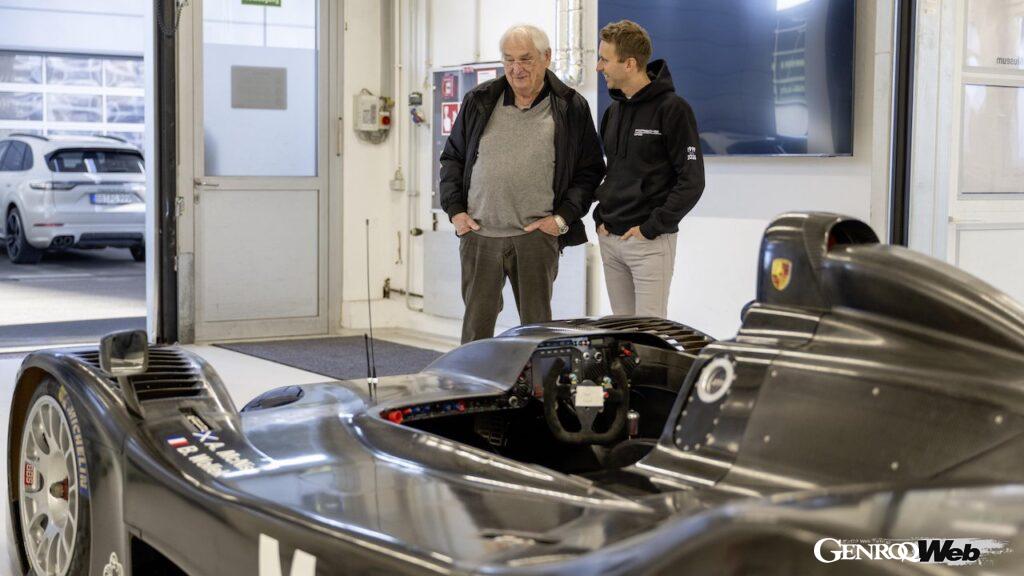
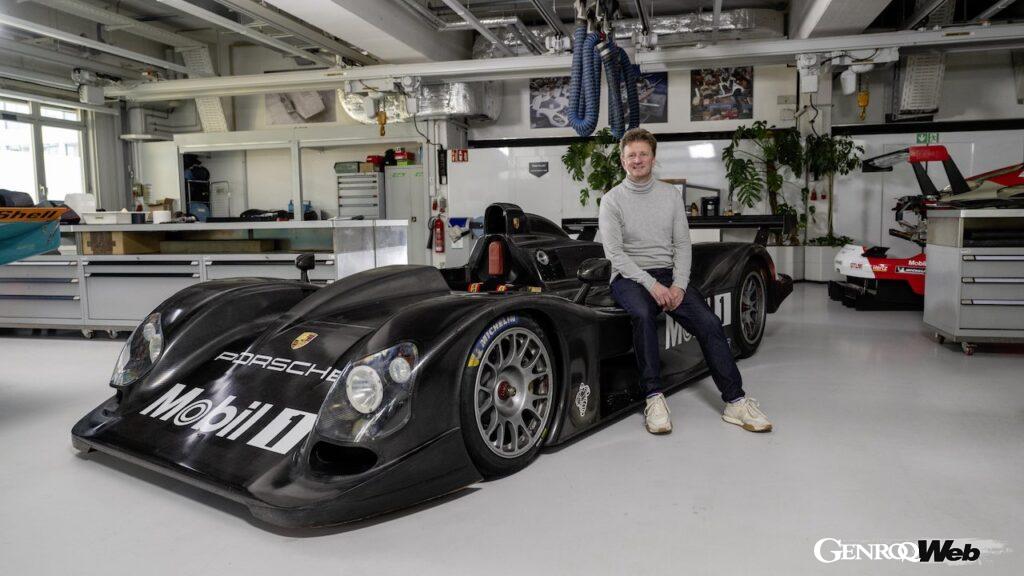
In August 1999, Porsche decided to cancel the project due to budgetary reasons. After the car was completed, only one shakedown was allowed. Norbert Singer (left) and Bernhard, who led the project at the time.
For Norbert Singer, the carbon-chassis LMP 2000 was an unforgettable project, and he harkens back to 1998, when the idea for the car was born. As an experienced racing engineer, he achieved a 1-2 finish in the 1998 24 Hours of Le Mans with a Porsche 911 GT1 ’98.
“In Weissach, we were considering whether to enter GT1 or LMP from the following year onwards,” says Singer, and Porsche decided on LMP, which offers better tyre wear, better fuel economy and allows triple stints instead of double stints.
“However, the development time for the 1999 season was too short, so we decided to run an LMP car in 2000. We chose a naturally aspirated V10 engine rather than a turbocharger, and for aerodynamic reasons we chose an open-top design to create more downforce,” said Szinger.
However, despite the team’s strong desire to win Le Mans, the project was cancelled in August 1999. Participation in the 24-hour race was ruled out for budgetary reasons, but then-CEO Wendelin Wiedeking still approved the car and gave the LMP 2000 a chance to undergo a shakedown.
“The initial rollout was a moment of both joy and farewell. We were filled with joy, but also with deep sadness and some regret,” the singer said, looking down.
Each person’s thoughts on the LMP 2000
At the time, motorsport director Herbert Amppeller was unable to attend the shakedown of the LMP 2000, so this was his first time witnessing it in action in 25 years.
The anniversary also held special significance for Herbert Amppeller, Porsche’s head of motorsport at the time, who was not present on the day of the 1999 rollout.
“This project is very special to me. I still vividly remember the phone call I received 25 years ago while on a business trip. ‘The LMP 2000 is running!’ We wanted to demonstrate what the LMP 2000 could do. Development took nearly 14 months. Today, 25 years later, I am thrilled to be able to see the LMP 2000 running for the first time with my own eyes.”
Thomas Rodenbach, now head of motorsport, was working as an application engineer at the time and also worked on the 1999 shakedown.
“I still remember clearly when Alan (McNish) got out of the car and said, ‘This car has great potential.'”
The LMP 2000’s 25th anniversary run was a time to celebrate not only the technical success of the restoration team, but also all the people who devoted their time, energy and passion to the car’s development. The process of restoring the LMP 2000 and the commemorative run have been documented in a documentary video on Porsche’s official YouTube channel.