
![The V-shaped recovery brought about by the modernized 996 911 with a water-cooled engine [Porsche Chronicles]](https://wheelfeed.com/wp-content/uploads/2024/12/2730-1761203467348.jpg)
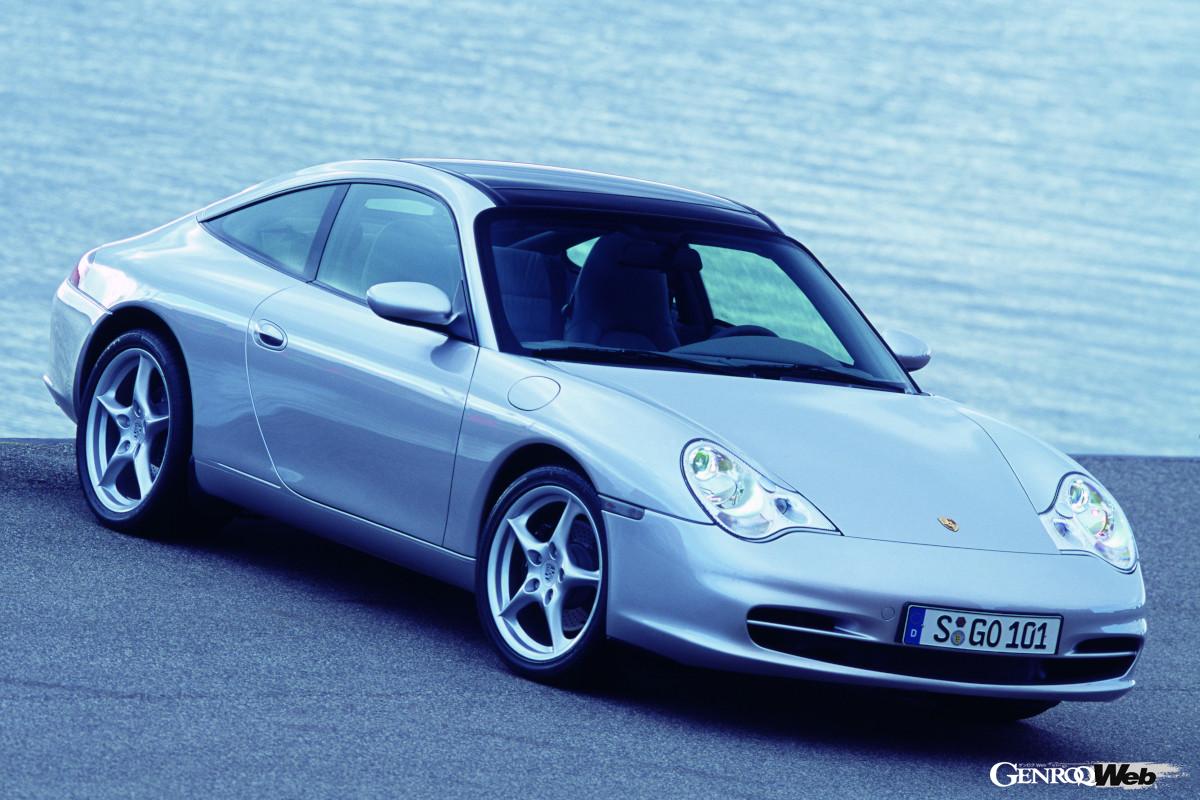
996 Carrera / Carrera 4 / Carrera 4S / Turbo / Turbo S / GT2 / GT3 / GT3 RS
Although it has become larger, it is 50kg lighter

Carrera
Since becoming CEO in 1992, Wendelin Wiedeking has streamlined the organization and production facilities, saving Porsche from the brink of bankruptcy.While he has accelerated improvements to the air-cooled 911, he has also pushed forward with the development of an entirely new 911 that would be low-cost, highly efficient to produce, address environmental concerns, and be accepted by a wider audience.
Wiedeking’s focus was on the Boxster prototype, which had been unveiled at the Detroit Motor Show in 1993 and attracted a lot of attention. He instructed the development team to share many parts with the Boxster and streamline the design. This resulted in the 996, which was unveiled at the Frankfurt Motor Show in 1997, two years after the Boxster.
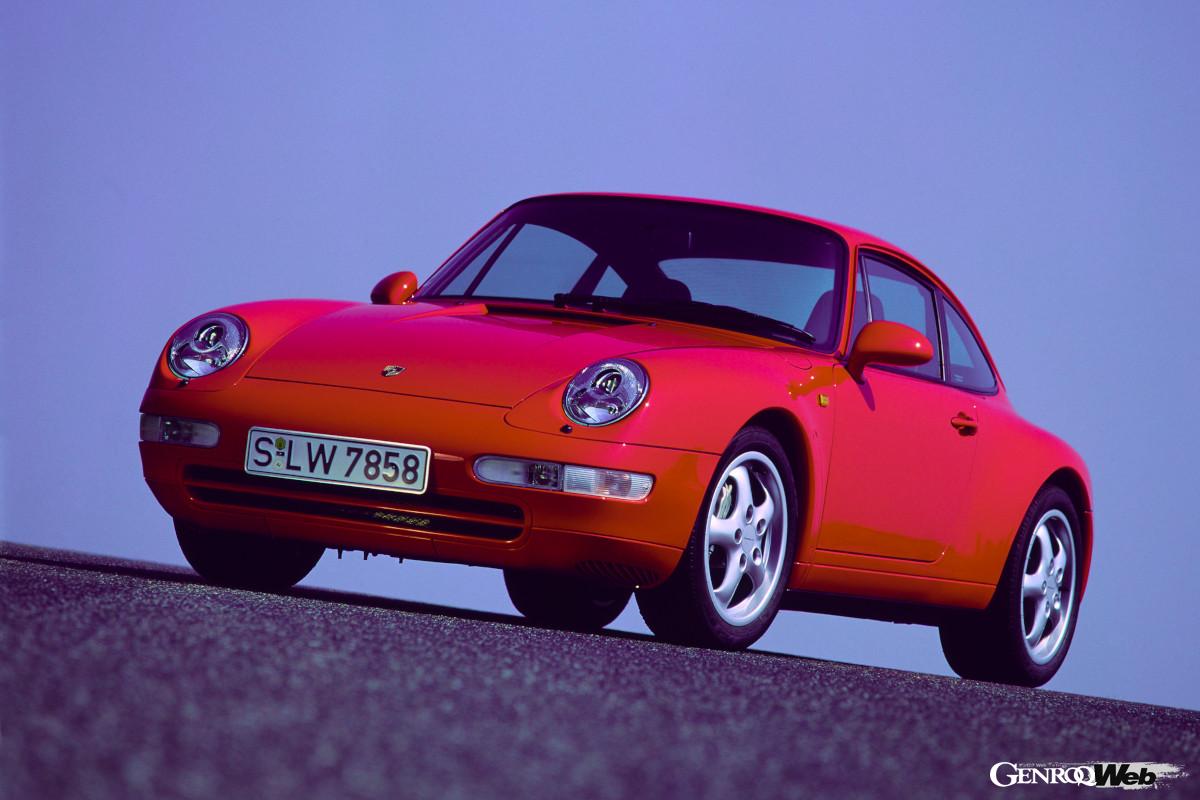
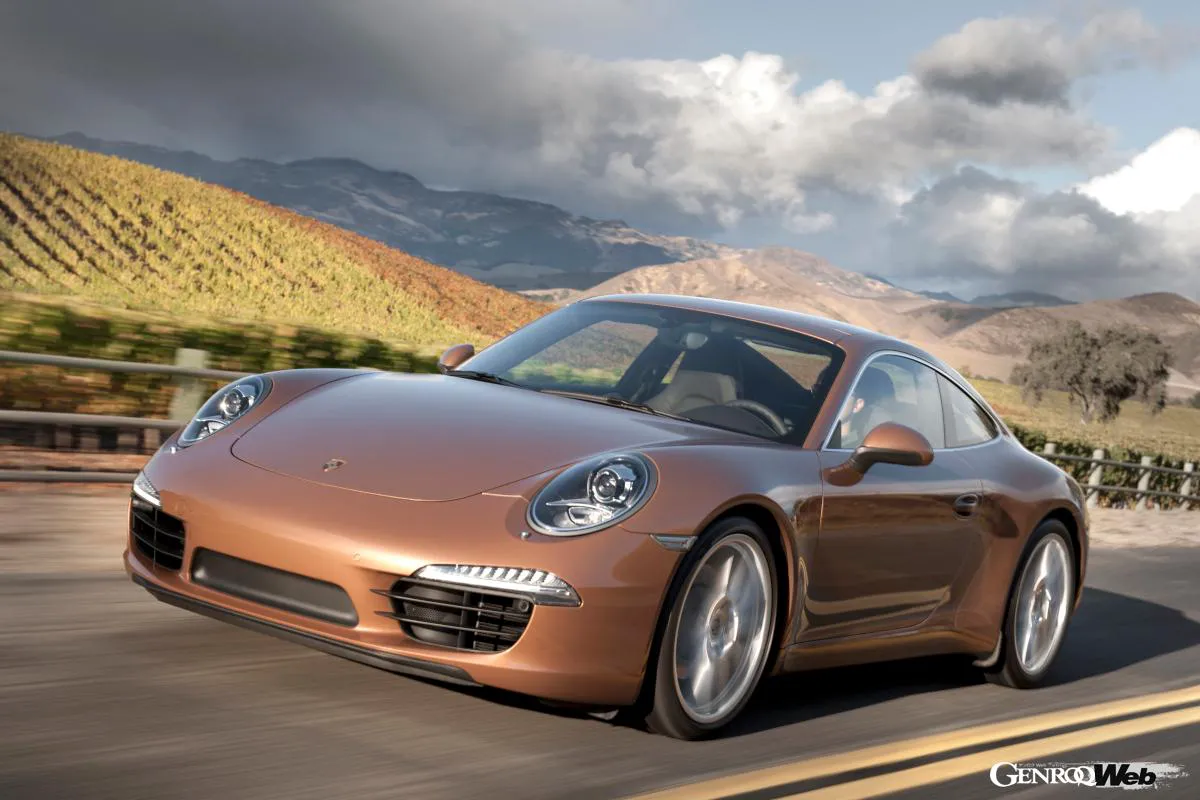
The body designed by Harm Lagaay has a shape that is characteristic of the 911, but the area before the A-pillar is basically the same as the Boxster. To ensure livability and safety, the body size is 4430mm in length, 1765mm in width, 1305mm in height, and 2350mm in wheelbase, which is more than one size larger than the 993. However, as a result of efforts to reduce weight in each part, the vehicle weight is about 50kg lighter than the 993.
Completely new water-cooled engine

Carrera Cabriolet

Carrera

turbo
The aerodynamics have also been thoroughly reviewed, including a flat floor, tilted windshield, and flush surfaces on various parts, reducing the Cd value to 0.30. High-tensile steel plates are used for 30% of the entire body, improving torsional rigidity by 45% and bending rigidity by 50%.
As you can see, not even a single screw is the same as the 993. The 996 is the biggest full model change in the history of the 911, and the biggest talking point about it is the adoption of an all-aluminum 3.4-liter water-cooled flat-six DOHC “M96/01 type” unit with a completely new design: VarioCam (variable valve mechanism) and variable intake mechanism (Varioram).
In its development, technology from the Group C car “962” was applied to the crankcase, which was integrated with the head, and many parts were shared with the Boxster, improving production efficiency and reducing costs. The engine itself also had a lower center of gravity and was more compact, contributing to improved chassis balance. Another major benefit of adopting a water-cooled engine was the improved quietness and reduced fuel consumption.
Circuit-oriented GT3 and GT2 models

GT3

GT3
Due to its ease of handling, the 996, along with the Boxster, was a huge hit, contributing to a V-shaped recovery for Porsche. Initially, only the rear-wheel drive coupe was sold, but in 1998 a new body variation, the Cabriolet, was added. The lineup also included the Carrera 4, which featured a special body with 49% improved torsional rigidity and 82% improved bending rigidity compared to the 993, as well as a 4WD system that eliminated the transaxle tube and repositioned the viscous coupling to improve front-to-rear weight distribution.
Then, in 1999, the GT3, the successor to the Carrera RS, was released, featuring a 360 PS 3.6-liter water-cooled flat-six DOHC M96/76 engine in a sturdy Carrera 4 bodyshell, with an air-cooled crankcase of the same basic design as the GT1. A Club Sport version for circuit racing, equipped with a roll cage and bucket seats, was also available as a no-cost option.
In 2000, the “Turbo” was released, based on the Carrera 4 chassis and equipped with a 3.6-liter flat-six twin-turbo M96/70 unit with an air-cooled crankcase and VarioCam Plus. In 2001, the “GT2″ was released, based on the Turbo, but with rear-wheel drive, the rear seats removed, and a lightweight chassis with ceramic brake discs, equipped with a 3.6-liter turbo M96/70S unit that produced 462 PS. The ”
Club Sport” was also released, which could be considered a race-spec version of this model.
After minor changes, it has become one big family

Carrera 4S

GT2

GT3 RS
Furthermore, this year the standard Carrera underwent a minor change. The engine was upgraded to a 3.6-liter unit equipped with VarioCam Plus and producing 320 PS, and the headlights, which were unpopular and shared with the Boxster, were changed to the same design as the 911 Turbo. The Carrera 4S, equipped with a naturally aspirated 3.6-liter unit in an AWD widebody for the turbo, was also added to the lineup.
Following that, in 2003, the “GT3” was released, equipped with a 3.6-liter engine with increased power to 381 PS and a large rear wing, and the “GT2” with a 483 PS turbo unit. In 2004, the model’s final year, the “GT3 RS” was released, limited to 200 units, but it eliminated comfort features and incorporated a roll cage and strengthened suspension, and the “Turbo S” was also added, increasing power to 450 PS, and the “Turbo Cabriolet” was also added, and the car grew into a large family.













![The S-Type, widely regarded as Bentley’s masterpiece post-war saloon [Bentley 100 Years of Car History]](https://wheelfeed.com/wp-content/uploads/2025/11/4703-1762127546348.jpg)