
![The 997 911 was more popular than the 996 and boasted a wide range of versatility. [Porsche Chronicles]](https://wheelfeed.com/wp-content/uploads/2024/12/2684-1761202790224.jpg)

997 Carrera / Carrera S / Carrera GTS / Carrera 4 / Carrera 4S / Turbo / Turbo S / GT2 / GT3 / GT3 RS / Speedster
80% of the body, excluding the roof, has been redesigned
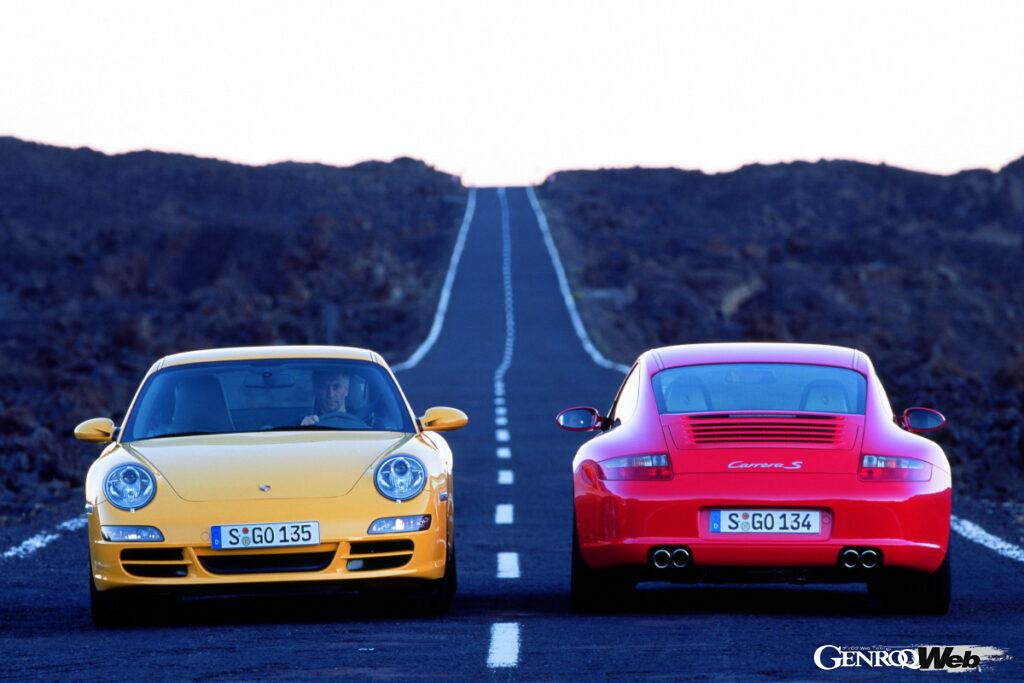
997-type 911
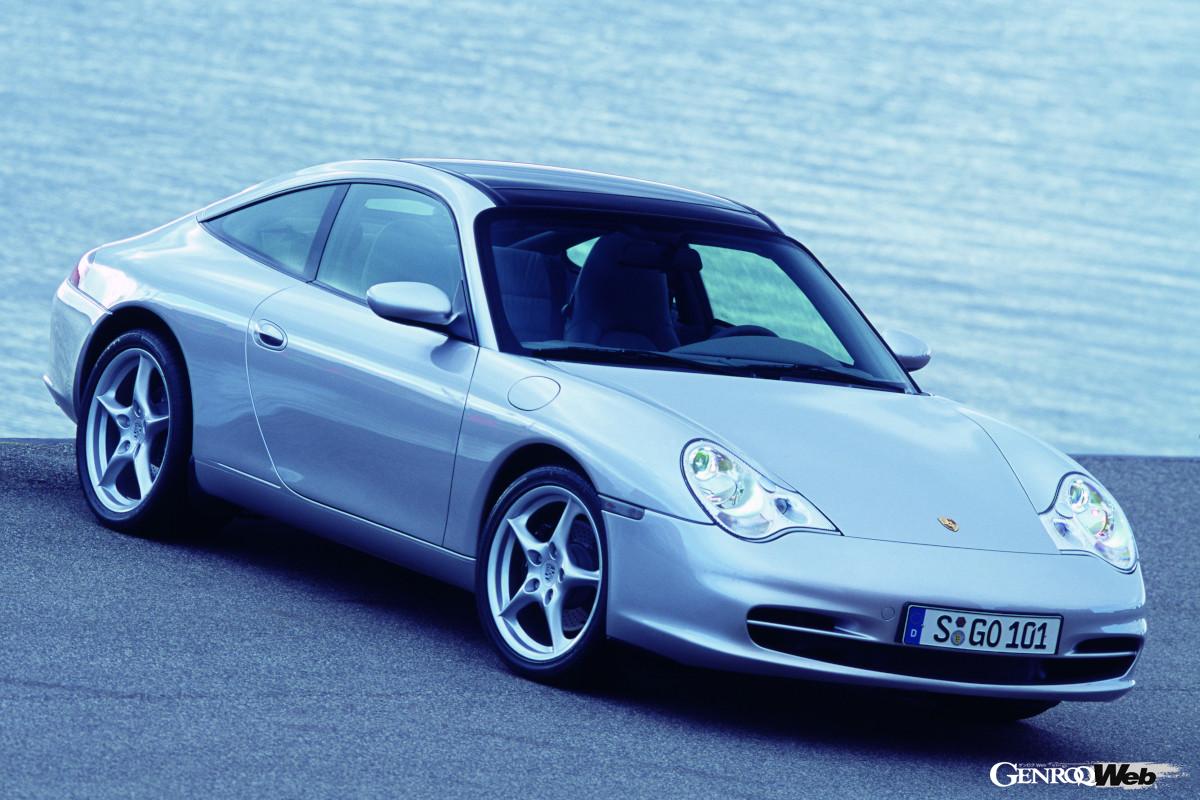
The 996 911 was a huge hit, with 175,262 units produced over a period of about eight years, something unimaginable for any previous 911, and it brought about an immediate turnaround in Porsche’s financial situation. However, it could not be denied that the large number of parts shared with the Boxster and the uncharacteristic front design of the 911 were a headwind for sales.
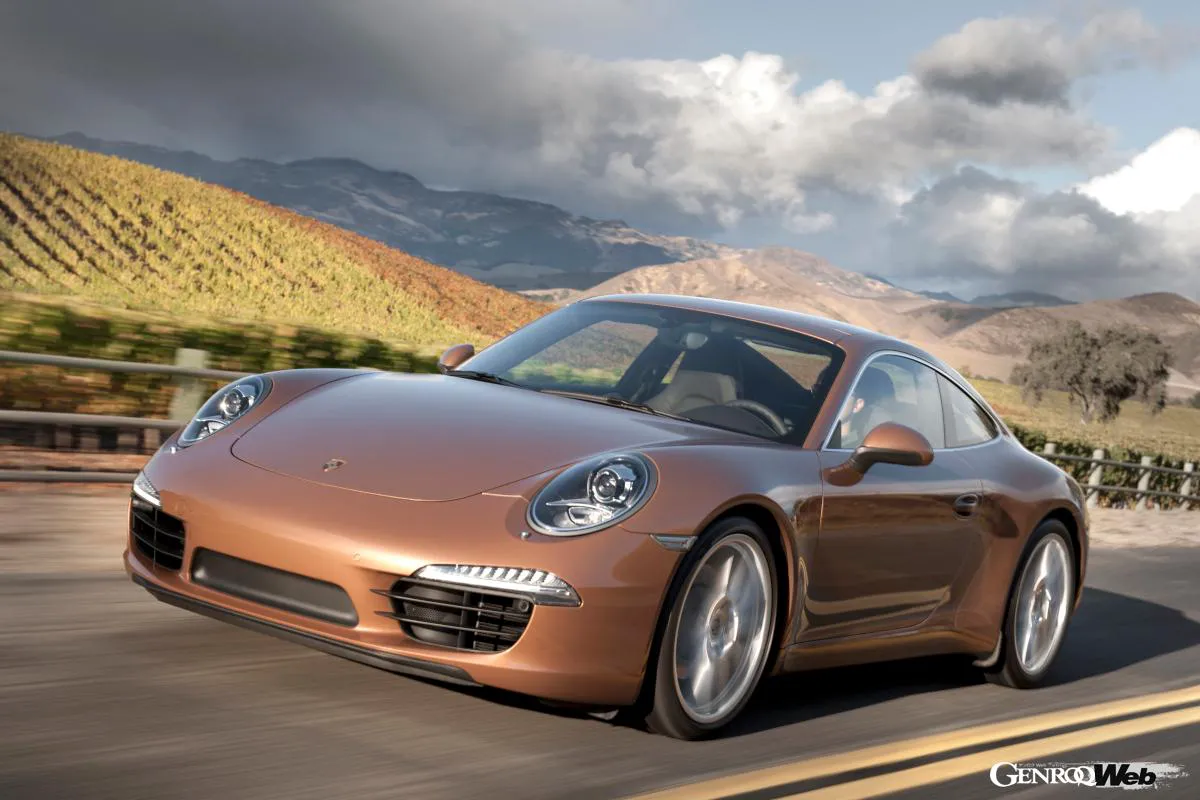
The 997, the sixth-generation 911, debuted in 2004 as a major minor change to the 996, but 80% of the body, excluding the roof, was completely redesigned. The body, reverting to the 911’s signature rounded design, featured wider front and rear tracks and a Coke bottle line to thin the door area. Furthermore, the aerodynamics of the inner body, including spoilers in the wheel wells, reflectors on the suspension arms, and a spoiler in the underbody, improved the car’s frontal projection area slightly, but reduced the Cd value from 0.30 to 0.28. The body structure, particularly the front, was significantly redesigned, with the main parts assembled with galvanized steel sheets using spot welding and adhesive, increasing torsional rigidity by 7% and bending rigidity by 44% compared to the 996. Side impact safety and increased foot space were also improved.
Electronic devices available as options

Carrera 4

3.8-liter flat-six M97/01 unit

GT3

Cabriolet
The interior has also been completely redesigned, with a significantly improved feel. The steering wheel is equipped with a tilt mechanism for the first time in the history of the 911, and in addition to a stopwatch on the dashboard, the Sport Chrono Package features a sport mode that changes the throttle and Tiptronic response, as well as optional electronic devices such as PSAM (electronically controlled variable dampers) and PSM (stability control).
The powertrain is basically a carryover from the 996, with the new high-powered “Carrera S” model equipped with a newly designed 3.8-liter flat-six M97/01 unit that produces 385 PS in addition to the conventional 3.6-liter flat-six. Three body styles are available: coupe, targa, and cabriolet, and in 2005 the wide-body 3.6-liter “Carrera 4” and 3.8-liter “Carrera 4S” equipped with an AWD system were added.
In 2006, the 911 Turbo was released, featuring a 480 PS 3.6-liter twin-turbo engine with a variable turbine geometry mechanism, which improved response at low rpm and further increased power, as well as electronically controlled active 4WD with a newly developed electromagnetic multi-plate clutch. Following the 996, the GT3, equipped with a 3.6-liter naturally aspirated flat-six engine with a GT1 crankcase, and the GT3 RS with a wider rear track were released one after another, and in 2007 the GT2, equipped with a 530 PS 3.6-liter twin-turbo engine, was also announced.
Adopted DCT in 2008 minor change

Late model

turbo
The 2008 minor change also saw a major overhaul of the powertrain. The flat-six engine was completely redesigned, with improvements including fewer parts, increased rigidity, lighter weight, and a lower center of gravity, and a direct fuel injection system was adopted. The exhaust system was also revised, resulting in a significant power increase of 345 PS for the 3.6-liter engine and 385 PS for the 3.8-liter engine, as well as significant improvements in fuel economy and CO2 emissions.
Another hot topic was the replacement of the torque converter automatic Tiptronic with a 7-speed PDK dual-clutch two-pedal manual transmission, which has been steadily developed since it was first installed in the Group C 962C in the 1980s.
In 2009, the Carrera 4 evolved into a later model, changing the 4WD center differential from a viscous coupling to an electromagnetic multi-plate clutch. Meanwhile, the GT3 retained the GT1 block water-cooled flat-six engine, but increased its displacement to 3.8 liters. Maximum output was also increased to 435 PS.
The next model, a 3.8-liter flat-six twin-turbocharged turbo was released in 2010, with a maximum output of over 500 PS. To handle this power, Porsche Torque Vectoring (PTV) was made available as an option, which also attracted a lot of attention.
“GT3 RS 4.0” expanded to 4.0 liters

GT3 RS 4.0
After that, special models were released in rapid succession, including the GT3RS, which featured a 3.8-liter flat-6 tuned to 450 PS and new innovations such as dynamic engine mounts; the GT2 RS, limited to 500 units, equipped with a 3.6-liter flat-6 twin-turbo engine producing 620 PS in a 1,370 kg body; the Speedster, based on a wide body equipped with a 3.8-liter flat-6 engine producing 408 PS and featuring a low windscreen; and the GT3 RS 4.0, limited to 600 units, which increased the displacement to 4.0 liters and raised the maximum output to 500 PS.
Then, in 2011, the high-end Carrera GTS, equipped with a wide body, a 3.8-liter flat-six engine fine-tuned to 408 PS, and a specially tuned suspension, was added to the Carrera and Carrera 4, and production of the 997 series came to an end. It was a huge hit, with a total of 213,004 units produced.













![The S-Type, widely regarded as Bentley’s masterpiece post-war saloon [Bentley 100 Years of Car History]](https://wheelfeed.com/wp-content/uploads/2025/11/4703-1762127546348.jpg)