

What does this integration mean?
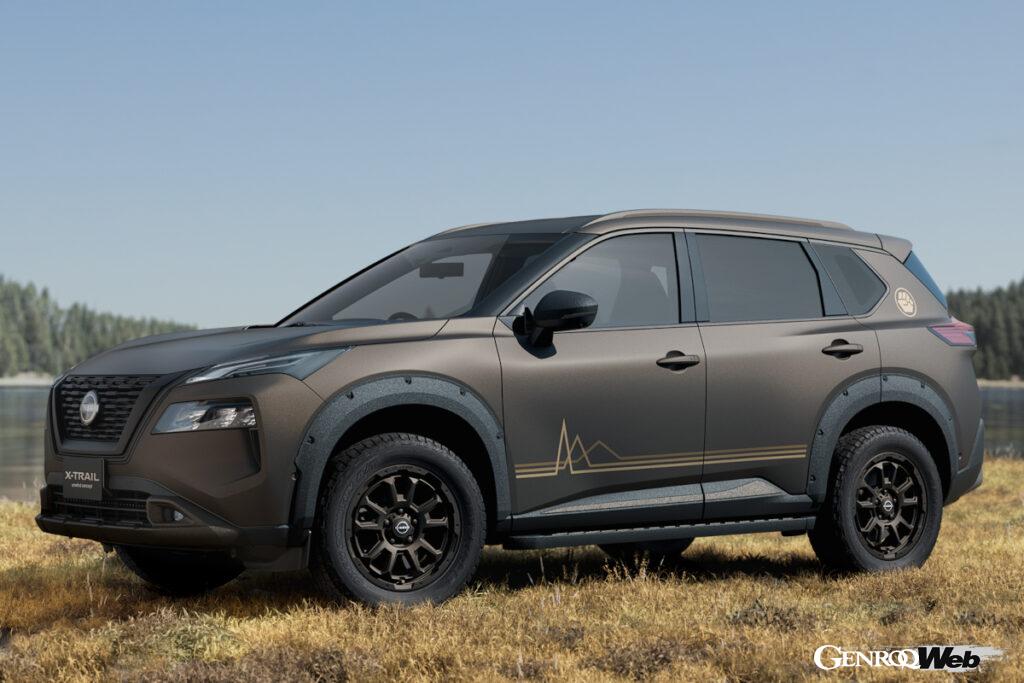
The “X-TRAIL unwind concept” unveiled at the 2025 Auto Salon. PHOTO / Nissan Motor Co., Ltd.
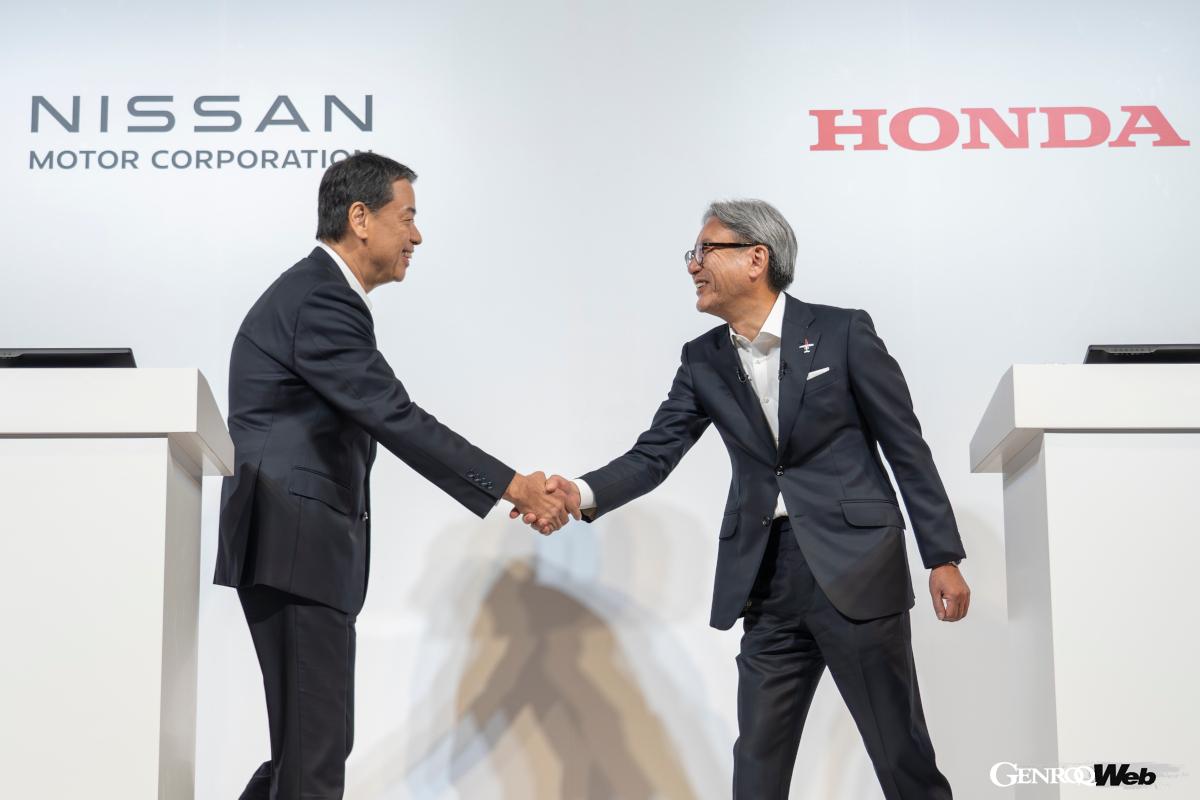
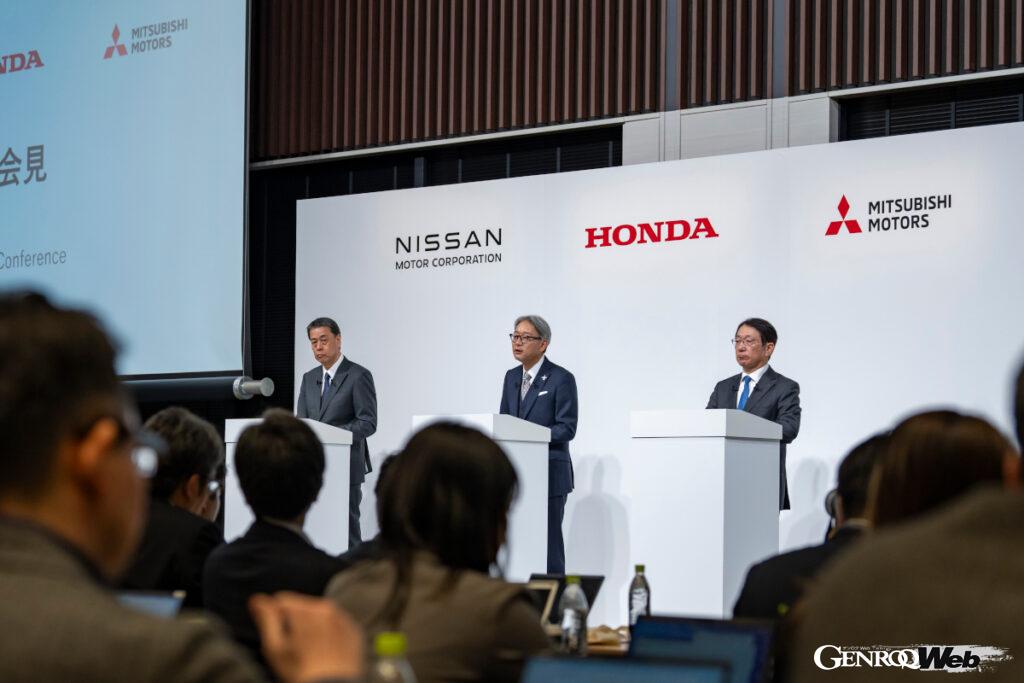
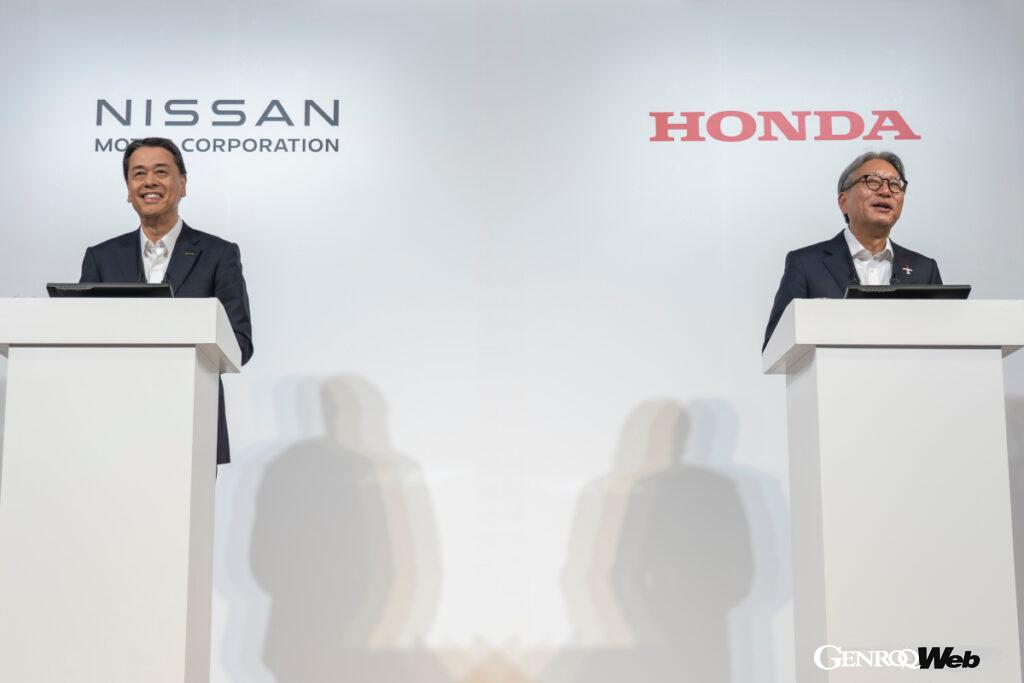
On December 23, 2024, it was announced that Honda and Nissan would officially enter into discussions toward a business merger. Various rumors and speculations have been circulating, including that Honda is bailing out Nissan, or that the Ministry of Economy, Trade and Industry has acted to thwart Hon Hai’s attempts to acquire Nissan. However, we would like to consider the significance of this merger based on the facts currently known.
First of all, there is a noticeable tone that Honda’s purpose is to rescue Nissan, which is in a management crisis, but at this press conference it was made clear that the purpose of the management integration is not to rescue Nissan, but that the premise for the integration is to rebuild Nissan’s business. In other words, if Nissan’s business remains in a state of decline, the integration will not occur. So what is the purpose of the integration? The materials at the press conference list the synergy effects that will result from the integration, but they are all very mundane and do not appear to have been specifically considered in detail. In other words, it is simply stated that “discussions toward integration have begun,” and it seems that the management of both companies do not yet have a clear vision for how the integration will proceed.
de facto choice
PHOTO/Nissan Motors
However, while Nissan is naturally in a management crisis, Honda, which is currently doing well, is undoubtedly also feeling anxious about the future. It’s said that cars will become increasingly electrified and intelligent, and while that trend is certainly on the way, the pace is completely unknown. A few years ago, it was predicted that most cars would be BEVs by the mid-2030s, but in just a few years, that outlook has become quite uncertain. It’s almost certain that for the time being, development of internal combustion engines, HEVs/PHEVs, and BEVs will all have to proceed in parallel, and the development of software to control ADAS and other systems in an integrated manner is also essential. This means that development requires enormous amounts of capital, and if they can’t do it, they won’t survive.
There are currently eight passenger car manufacturers in Japan, and Daihatsu, Subaru, Mazda, and Suzuki are all part of groups that have ties to Toyota, although the strength of these ties varies. In other words, Honda, Nissan, and Mitsubishi are the only ones that have no relationship with Toyota. Nissan and Mitsubishi have capital ties, so Honda is the only one that is completely independent. Honda is currently ranked seventh in the world with an annual production of just over 4 million units, but there is a clear gap between them and the top five companies (Toyota, Volkswagen Group, Hyundai Group, Stellantis, and GM).
Most manufacturers smaller than Honda are either premium brands or have partnerships with higher-ranking manufacturers. To survive as a mass brand, they have no choice but to seek larger scale, but they absolutely want to avoid becoming part of a larger group. If you think about it that way, there are very few options for partners. Excluding Chinese manufacturers, the only options for reasonably sized mass brand manufacturers are Nissan and Renault, and since Renault is a semi-state-owned French company, Nissan is effectively the only choice.
Is there a possibility of synergy?
PHOTO/HONDA
Nissan has finally been able to break free from the Renault curse, and even if there had been no financial crisis, it would clearly need a new partner. Honda and Nissan were in a position where they had no other choice. Mitsubishi, which is smaller, would also have no choice but to join the merger.
So, is it possible for synergies to emerge from a business merger between Honda and Nissan? Carlos Ghosn has commented that there is much overlap between the two companies and he does not believe it will be successful. Indeed, both companies share a common geographical similarity: they both have a majority share of North America and Japan, but are weak in Europe and China. They also share a common vehicle lineup, with compact to mid-size mass-produced cars accounting for the majority of their market share. Their production regions are also similar, with just under half in North America, around 20% in Japan and China each, and the rest in Asia. In that sense, Ghosn’s observation is correct. There is no regional complementarity like there is between Renault and Nissan.
However, it can also be said that each company is able to maintain a considerable number of sales in the same area. At least in Japan, it seems that Nissan fans and Honda fans have different preferences. Although the degree may differ, this tendency seems to be the case in areas where sales are high. If this is the case, if efficiency can be improved through platform integration and factory consolidation, both companies will likely benefit from the merger.
The key is differentiation
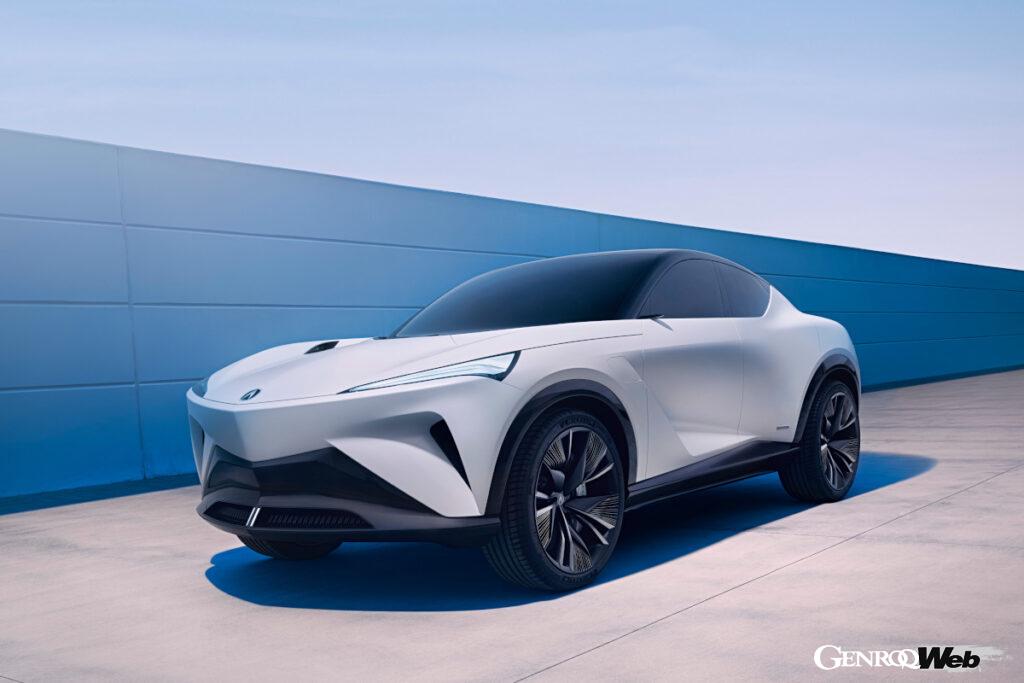
The Acura Performance EV Concept was unveiled at last year’s Monterey Car Week. PHOTO / Honda
The most important thing to avoid is the dilution of the individuality of the two brands. PSA, which merged Peugeot and Citroën, also promoted commonality, which led to the dilution of the individuality of the Citroën brand. Since commonality of platforms and drivetrains will inevitably increase, it will become difficult to differentiate technically. In that case, differentiation in the emotional realm, such as design and ride feel, will become crucial.
Honda and Nissan have both differentiated themselves through technology and been supported as brands, but going forward, differentiation through brand will become more important. I believe they need to build a brand strategy with a long-term perspective that considers what value they will provide to customers beyond performance and functionality.