
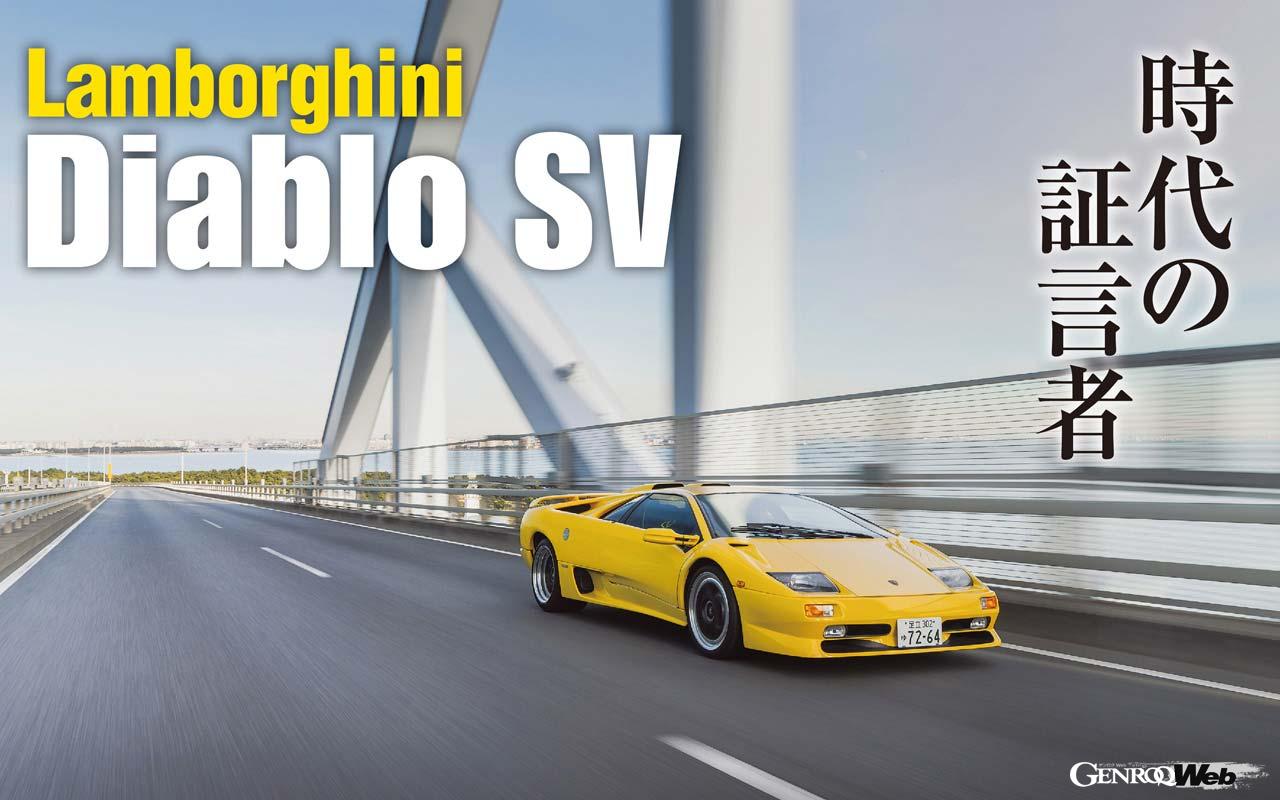
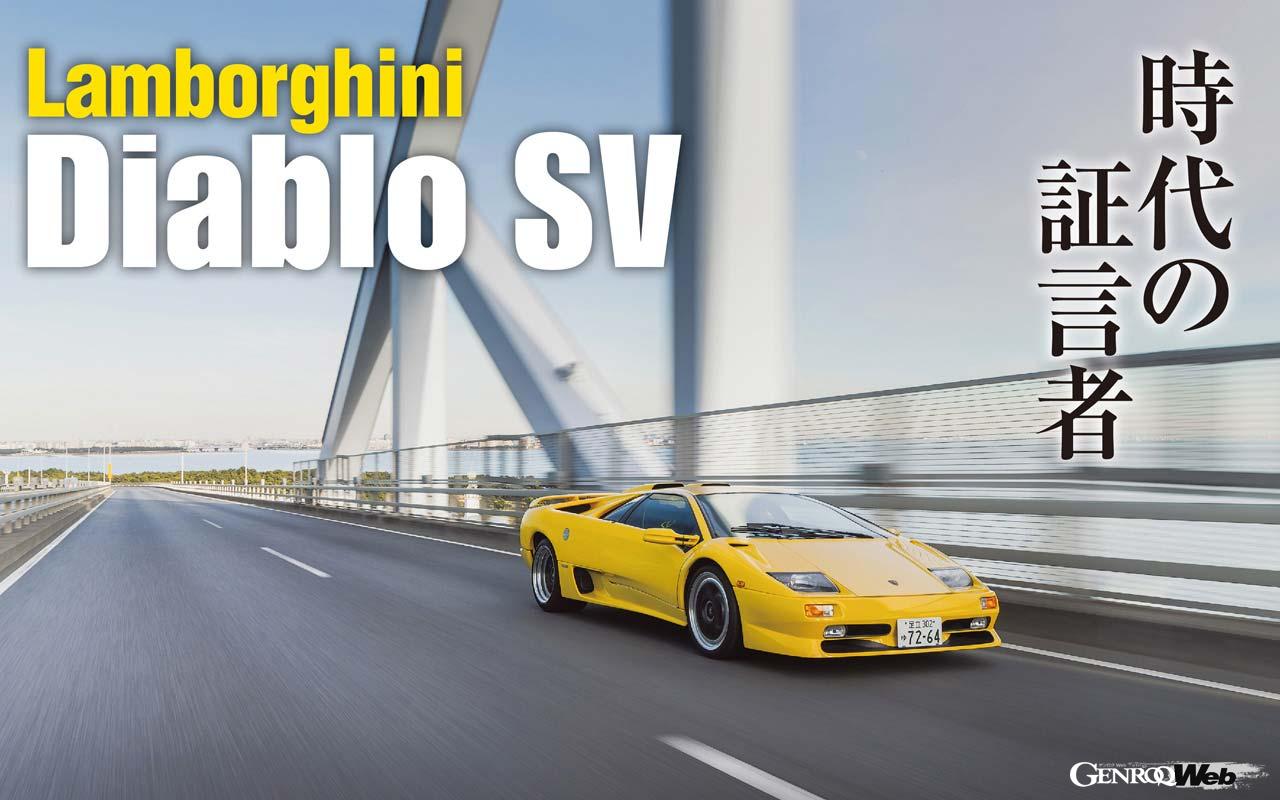
Lamborghini Diablo SV
Lamborghini’s only commercially available car at the time


The 5.7-liter V12 engine, based on the Countach Anniversary, looks significantly larger than modern models. Power was initially 492 PS, but increased to 535 PS for the SV. Retractable headlights were used, but from the 1999 model they were replaced with fixed headlights from the Fairlady Z (Z32). The front bumper design was also changed from the original.
Lamborghini may be on a roll these days, but the 1980s and 1990s were a “dark age.” The iconic Countach model had lost its freshness, the V8 mid-engine car developed to attract lower-class customers failed to produce the desired results, and the global oil crisis added to the damage. The company was essentially sold off, with parent companies changing frequently, leaving it in a state of complete confusion. Looking back, it was a miracle that the company was even able to continue at all.
It was in this context that the Diablo was released in 1990. It was a mid-engine V12 car positioned as the successor to the Countach, and in fact it was Lamborghini’s only commercially available car at the time, so its importance is easy to imagine. Designed by Gandini, it was only natural that it would inherit the technique established by the Countach, with the V12 engine mounted longitudinally in the mid-engine, reversed front to back.
The detailed finish clearly shows the careful craftsmanship
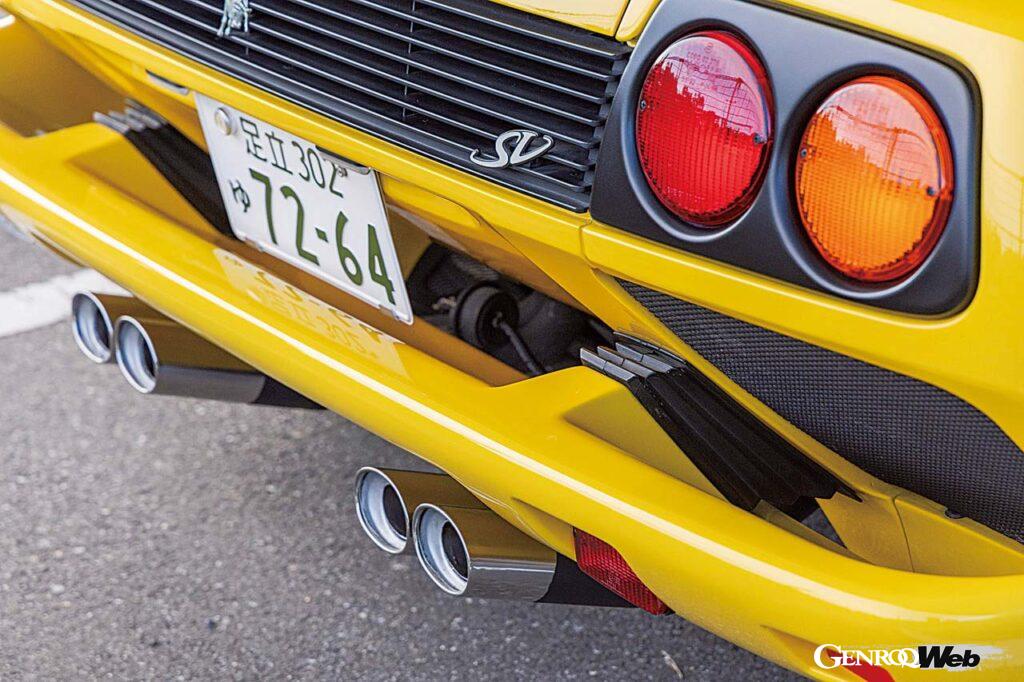
The bumper is raised from the body, presumably to create the effect of a diffuser.
I came face to face with this Diablo for the first time in a long time in Tokyo in early winter. It’s a 1999 model, the final “Diablo SV,” and features the fixed headlights of the Z32. The yellow body shines like a new car, and that’s no surprise, as it has only 250km on the odometer (!). According to Lamborghini Fukuoka, which currently owns the car, the original owner purchased it from Mitsuwa Motors, the official importer at the time, and has kept it stored in an air-conditioned room ever since. However, they say that they have performed basic maintenance diligently, and there are no problems that are common with low-mileage cars.
I never thought I’d see a brand new Diablo in the Reiwa era. I had imagined that Lamborghinis of this era would be roughly made, but the finish of the paint, the alignment of each panel, and the finish of the interior leather are all more precise than I’d imagined. However, the headlights, which were borrowed from a Z32, are clearly not at the right angle for the slope of the nose, and the air intake on the roof looks like it was added later. But strangely, it doesn’t look strange. The Countach was also subject to various modifications as the model year progressed, but there seems to be something about the supercars of this era that makes even modifications that seem slightly unbalanced seem somehow convincing.
The 5.7-liter V12 engine is quieter than I expected. It’s not the manufactured, dramatic sound that’s common in modern high-performance cars, but rather the perfectly tuned operation of the 12 pistons creates a sound that sounds like the heartbeat of a living organism, which is very pleasant. I wasn’t able to drive it this time, but judging from the way it shifted gears and accelerated, it seemed to be in very good condition.
The Diablo, the foundation of modern Lamborghini
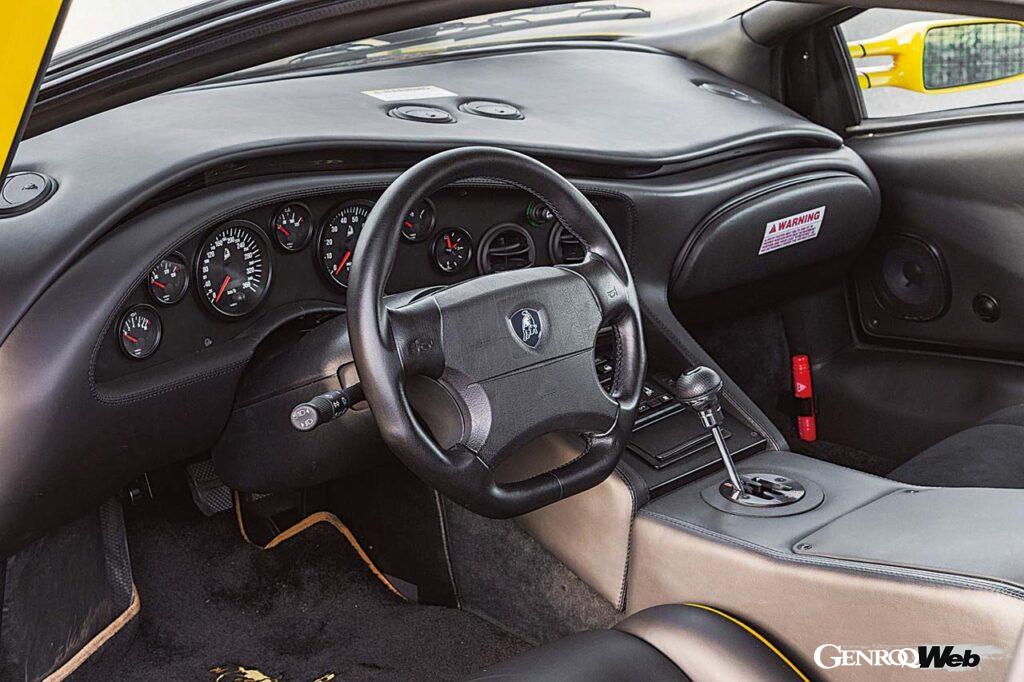
The design of the instrument panel has been changed midway through the process, improving forward visibility, and the VDO meter’s red zone starts at 7500 rpm.
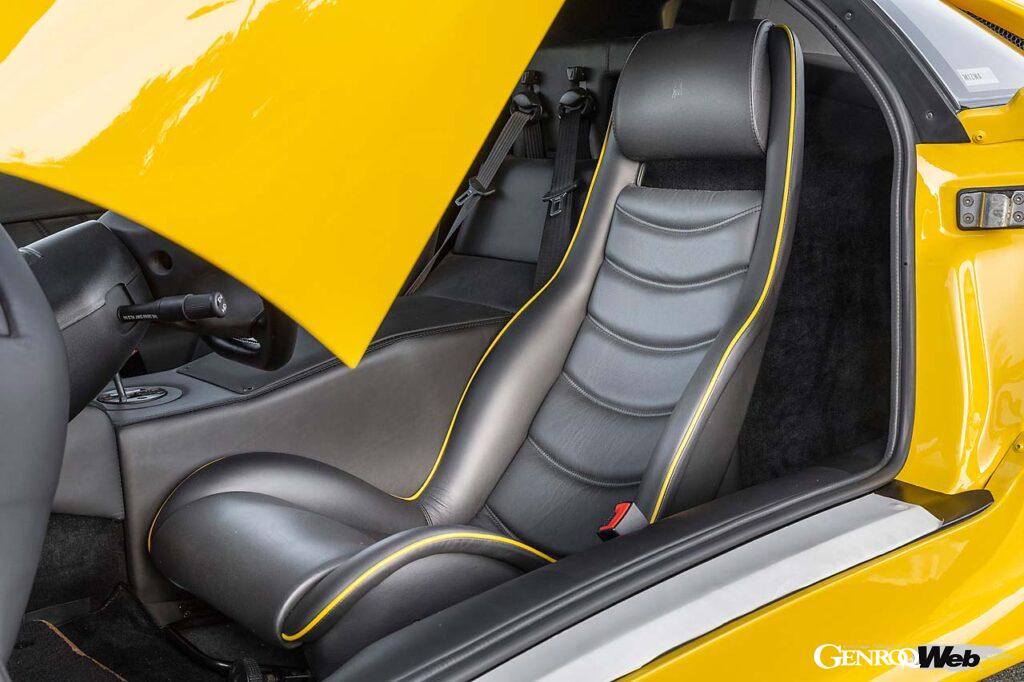

The full bucket seats are like new. There is a small space behind the seats where you can place some things. I miss the gated shift. The ashtray also gives a sense of the era.
Perhaps because it is a symbol of the “dark ages,” the Diablo doesn’t seem to receive much attention when Lamborghini talks about its history. However, the Diablo’s contribution to the development of the Countach’s design and engineering, as well as its proactive adoption of pioneering technologies such as AWD, is perhaps extremely significant, as it laid the foundation for Lamborghini’s future.
It’s true that since the Murcielago came under Audi’s umbrella, Lamborghini’s products have improved greatly in both perfection and reliability. But at the same time, it feels like they’ve lost the sense of danger that comes with supercars, which seek momentary pleasure over logic. Since coming under Audi’s umbrella in 1999, Lamborghini has transformed from a supercar to a super sports car. The Diablo is the last remaining witness to the old Lamborghini. It certainly has the scent of a true supercar that we’ve almost forgotten.
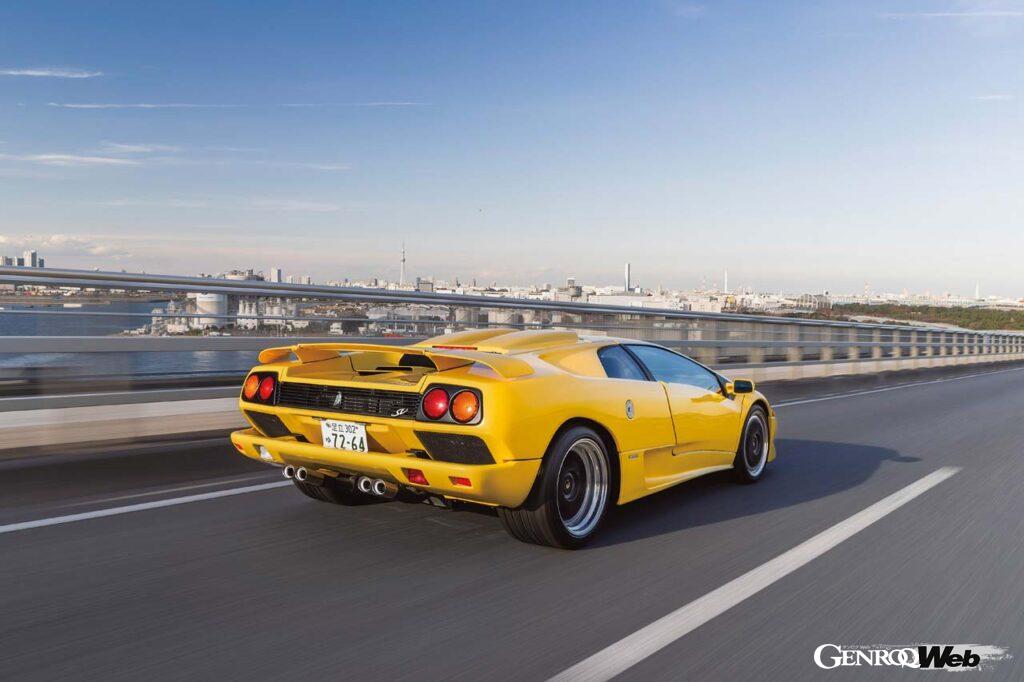
The Diablo SV has a powerful presence not found in current models. It can be said to be the last model that can be called a Supercar.
REPORT / Gensuke NAGATA
PHOTO / Koichi SHINOHARA
COOPERATION / Lamborghini Fukuoka, RPM Tokyo
MAGAZINE / GENROQ February 2025 issue
[Interview cooperation]
RPM Lamborghini Fukuoka Co., Ltd.
3-30-30 Matsushima, Higashi-ku, Fukuoka City, Fukuoka Prefecture, 813-0062
TEL 092-623-0400
RPM Tokyo
4-2-2 Rinkaicho, Edogawa-ku, Tokyo 134-0086
TEL 03-5679-7890