
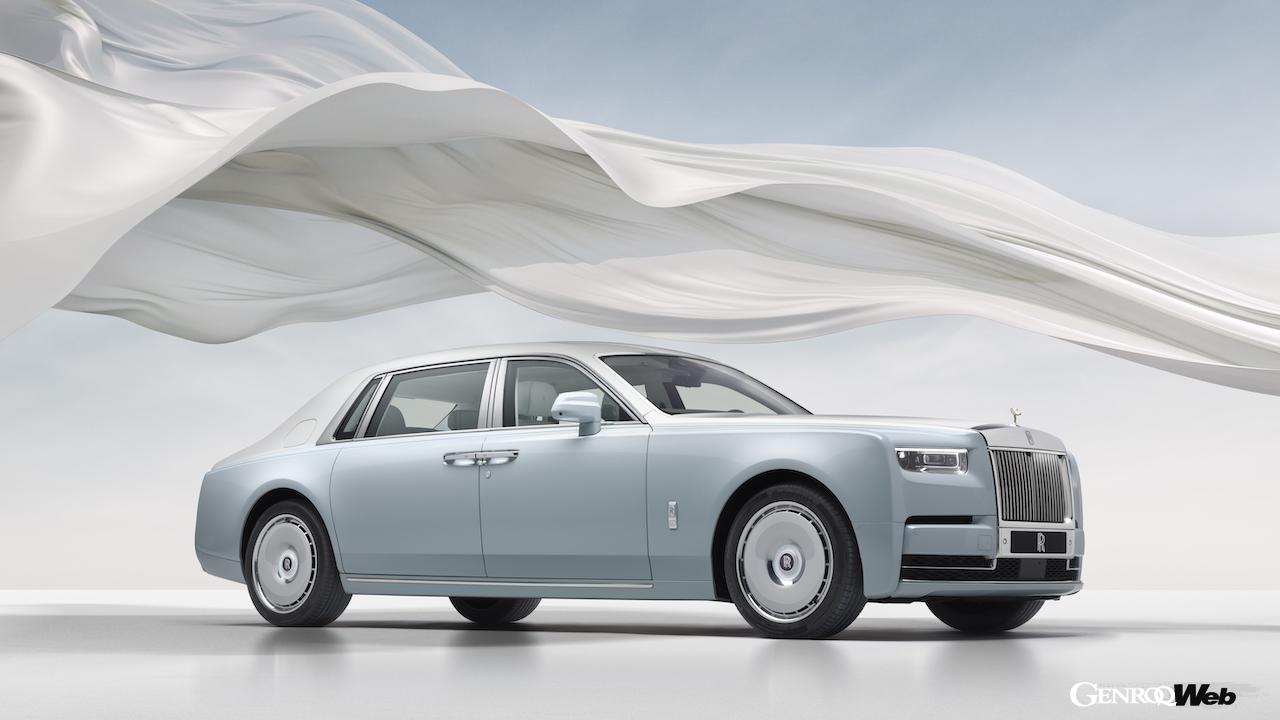

ROLLS-ROYCE Phantom
Reigning supreme for eight generations
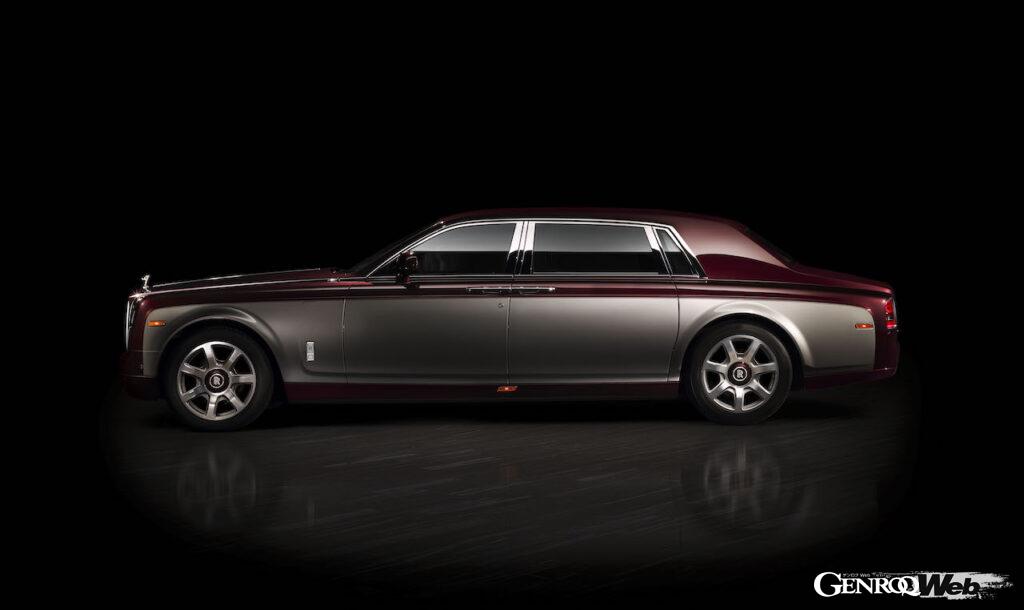
Since its introduction, the Rolls-Royce Phantom has always reigned as the pinnacle of Rolls-Royce, and up until the current eighth generation, it has continued to surpass its peak.
From the first generation Rolls-Royce Phantom to the current eighth generation, which is handcrafted at its home base in Goodwood, England, the car has constantly evolved in design, engineering, materials and technology.
Today, Phantom is also the ultimate bespoke canvas, allowing owners to use their imagination to realise their personal vision: its scale, elegance, presence and adaptability allow it to become anything its owner desires.
Recent inspirations include haute couture (Phantom Syntopia), famous movies (Phantom Goldfinger) and Chinese culture (Phantom Dragon). Chris Brownridge, CEO of Rolls-Royce Motor Cars, said of the Phantom’s centenary milestone:
“One hundred years ago, Rolls-Royce introduced the Phantom, the first car to bear one of the most groundbreaking and enduring nameplates in its history. Eight generations have passed since then, but the Phantom’s fundamental role as the pinnacle of Rolls-Royce motoring has always remained the same.”
“The story of Phantom is also the story of Rolls-Royce – always moving with the demands of the times and our customers’ needs, transcending fleeting trends and providing the most outstanding platform for craftsmanship and artistry, while resolutely never compromising its core engineering and design principles. We are proud to carry on this tradition of excellence, elegance and serenity into the next 100 years.”
1925: The name “Phantom” first appears

Rolls-Royce introduced the Phantom in 1925 as a new rolling chassis to replace the Silver Ghost. At this time, the nickname Silver Ghost, which had been used until then, became the official name.
Rolls-Royce first earned the accolade of “the world’s finest car” with the 40/50 HP, nicknamed the Silver Ghost, launched in 1906. The key to its legendary reputation was Henry Royce’s principle of constant technical improvement, which he carried out almost on a chassis-by-chassis basis.
In 1921, Henry Royce realised that the Silver Ghost had reached a stage where further development was impossible without compromising the smoothness and reliability that had become essential elements of Rolls-Royce’s character and legend, so he began work on a successor to the Silver Ghost.
The original advertisement from the May 2, 1925 edition of The Times reads:
“After extensive testing, Rolls-Royce is pleased to announce that a new chassis is now available for demonstration and ordering. The existing 40/50 HP chassis will continue to be sold as usual. To avoid confusion, the new chassis has been named ‘Phantom’ rather than ‘Silver Ghost’.”
The advert made history: it was the first time that Rolls-Royce publicly acknowledged that the current model would be officially called the “Silver Ghost” rather than just a nickname, and more importantly, it gave the new chassis the name “Phantom”.
The established reputation of Rolls-Royce

At the time, Rolls-Royce supplied rolling chassis and many coachbuilders mounted various bodies on them. The Phantom established Rolls-Royce’s reputation as a luxury car manufacturer.
The Times advertisement also assured readers that the new Phantom would maintain “the sweet driving feel expected of a Rolls-Royce product.” At this time, Rolls-Royce only supplied the rolling chassis, leaving the form, styling and appearance of the car to independent coachbuilders, who would create bespoke bodywork to the owner’s specification.
Rolls-Royce offered the new Phantom in both a long-wheelbase version suitable for formal saloons and limousines, and a short-wheelbase version ideal for owner-drivers seeking closed or open, sporty coachwork.
Then, as now, the Phantom’s generous proportions allowed owners to specify almost any detail or luxury they desired: some customers requested a stowable writing desk or swiveling occasional seats in their long-wheelbase limousines, while others requested a safe, dedicated space for storing golf clubs, or, famously, a secret compartment for transporting diamonds.
On May 8, 1925, Autocar magazine published a review of the new car.
“Few companies have as much reputation for making cars as Rolls-Royce. The name is now synonymous with luxury. Every novelist has a character who owns a Rolls-Royce to highlight his or her personality.”
The Rolls-Royce name was established with the Silver Ghost, and the Phantom not only maintained that reputation, but further enhanced it.
Henry Royce’s Phantom II
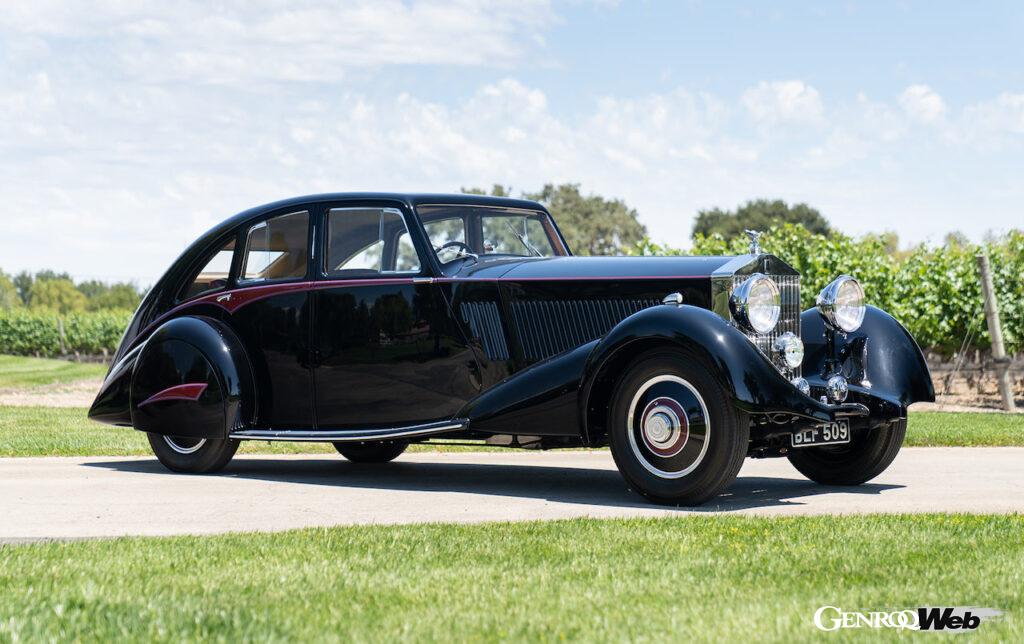
The Phantom II was introduced in 1929. Henry Royce’s desire for a more compact and sporty Phantom II Continental was met.
While undoubtedly flattering, such praise did not distract Henry Royce. The original Phantom’s design closely followed that of its predecessor, the Silver Ghost; in fact, some modern enthusiasts refer to it as the “Super Ghost.”
Henry Royce continued to refine the design, and in 1929 a new advertisement appeared in The Times announcing the arrival of the “Phantom II,” listing all the technical improvements and upgraded components that warranted its designation as an all-new model.
Ironically, Henry Royce himself thought even the short-wheelbase Phantom II was too large for personal use, so he instructed his engineers to create a more compact, sporty Phantom II that could be driven across France to his winter home at Le Canadel on the French Riviera.
Engineers built the 26EX (EX stands for Experimental) on a modified Phantom II chassis. Records show that neither Rolls-Royce’s sales department nor its factories were keen on the concept; in fact, it may never have been built had it not been intended as Henry Royce’s personal transport.
The resulting highly successful continental sales tour demonstrated a huge demand for a car capable of long-distance, high-speed touring on Europe’s smooth, straight roads. Rolls-Royce successfully met this demand with the Phantom II Continental, a car made possible by Henry Royce’s wishes. Perhaps the only pre-Goodwood Phantom in which weight, wind resistance and other performance-related factors were given equal consideration to passenger comfort.
Introduction of V12 engines instead of inline 6-cylinders
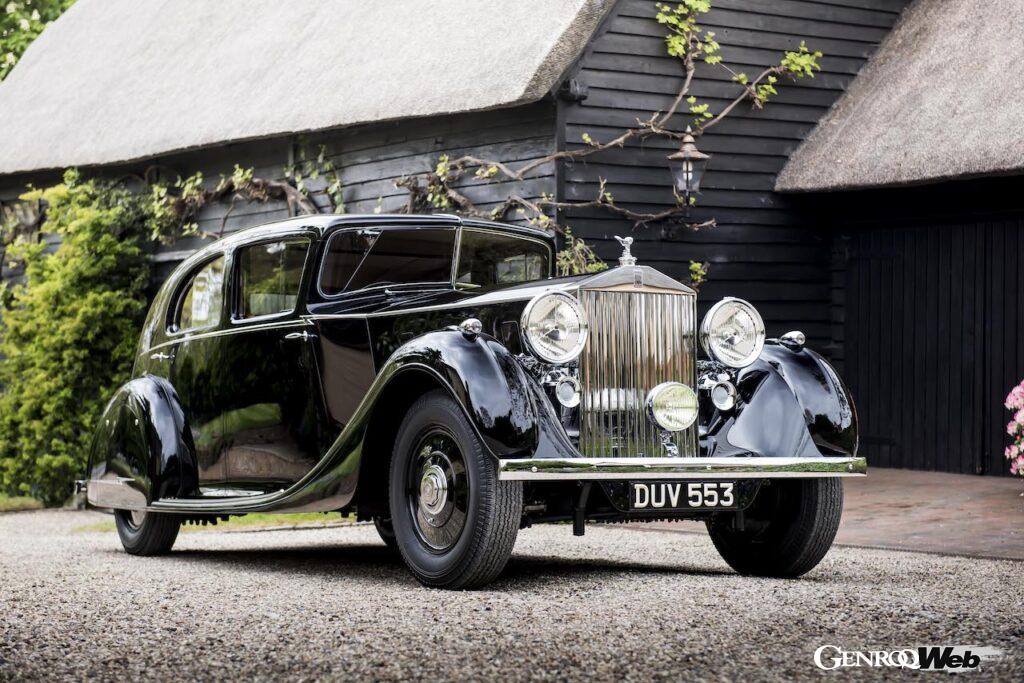
In 1936, Rolls-Royce debuted the Phantom III, which was equipped with a V12 engine instead of the previous inline-six.
In his later years, Henry Royce was well aware that luxury car customers wanted more power without sacrificing comfort. American competitors such as Cadillac, Lincoln and Packard were filling the demand with in-line eights, V12s and even V16s, and the high-powered in-line six-cylinder units that had long been Rolls-Royce’s hallmark were rapidly losing their appeal.
Given these commercial pressures, and Rolls-Royce’s proven experience in designing and building aero engines, it was inevitable that the next Phantom would be powered by a V12. In keeping with tradition, the debut of the Phantom III was announced in The Times in 1936, announcing to the public that “a number of distinctive features distinguish it from its predecessor, the Phantom II.”
The most notable of these was the new engine. The V12 engine was smoother, more flexible, quieter, and offered better acceleration. The new V12 was also more compact than the previous straight-six, allowing for a shorter bonnet and a larger passenger compartment. The Phantom III produced 167 PS, compared to 121 PS in the Phantom II, and subsequent models increased to 182 PS.
Comfort is further enhanced by independent front suspension, and the Phantom III’s new chassis frame means a wider, more comfortable rear seat. And it’s not just passengers who benefit: as the ad points out, the Phantom III also makes for a more relaxing drive for the owner-driver or driver.
The Times explains, “The gearshift and brake levers have been repositioned to make it easier to get in and out of the driver’s seat. Lighter steering and a shorter wheelbase also make it easier to maneuver.”
The Phantom III was available with all styles of coachwork and was suitable for both owner-drivers and chauffeurs. Though it couldn’t compete with its American rivals on price, Rolls-Royce’s reputation was strong and it remained the only choice for those who wanted to experience the utmost comfort and look like they were driving the best.
The end of the war and the “Silver Phantom”

After the end of World War II, the world was in a difficult economic situation, and demand for the Phantom dwindled. In response, Rolls-Royce produced the Silver Phantom, a limousine-bodied car with an in-line eight-cylinder engine instead of a V12. A royal carriage was also produced.
The Phantom name graced the world’s most prestigious cars for 14 years, spanning the entirety of World War II in 1939. When peace arrived in 1945, Rolls-Royce found itself in a very different world. Under the austerity of post-war finances, Rolls-Royce foresaw the need to make cars less complicated, easier to service, significantly reduce production costs and allow the use of common parts, while at the same time being determined that any compromise on quality must be avoided.
The solution was streamlining, and the Silver Wraith made its debut in 1946. The new inline-six engine seemed a step back from the Phantom III’s V12, but it suited the times. The Phantom seemed to have no place in modern society.
The Phantom’s story could have ended there, but two coincidences occurred.
As part of the streamlining measures, engineers built four experimental prototypes with in-line eight engines on a 229.5-inch chassis. One of these was fitted with a Park Ward limousine body and was officially named the “Silver Phantom” (unofficially known as the Big Bertha). A smaller, lighter saloon version was later introduced, known as the “Skulled Cat.”
At the same time, the British royal family was looking for a replacement for their aging Daimler, a car they had used since the invention of the automobile, but were not satisfied with the current lineup.
In 1950, Rolls-Royce was commissioned to provide the official limousine for the royal family. Rolls-Royce had long aspired to surpass Daimler in the royal limousine category, and produced a one-off inline-8 long-chassis limousine with coachwork by HJ Mulliner. During production, the car was given the codename “Maharaja,” and it remains in service today as the Royal Mews.
When other royals and heads of state subsequently requested similar cars, Rolls-Royce gladly obliged, deciding that the Phantom name should be revived for such a prestigious vehicle.
The end of the coachbuilding tradition
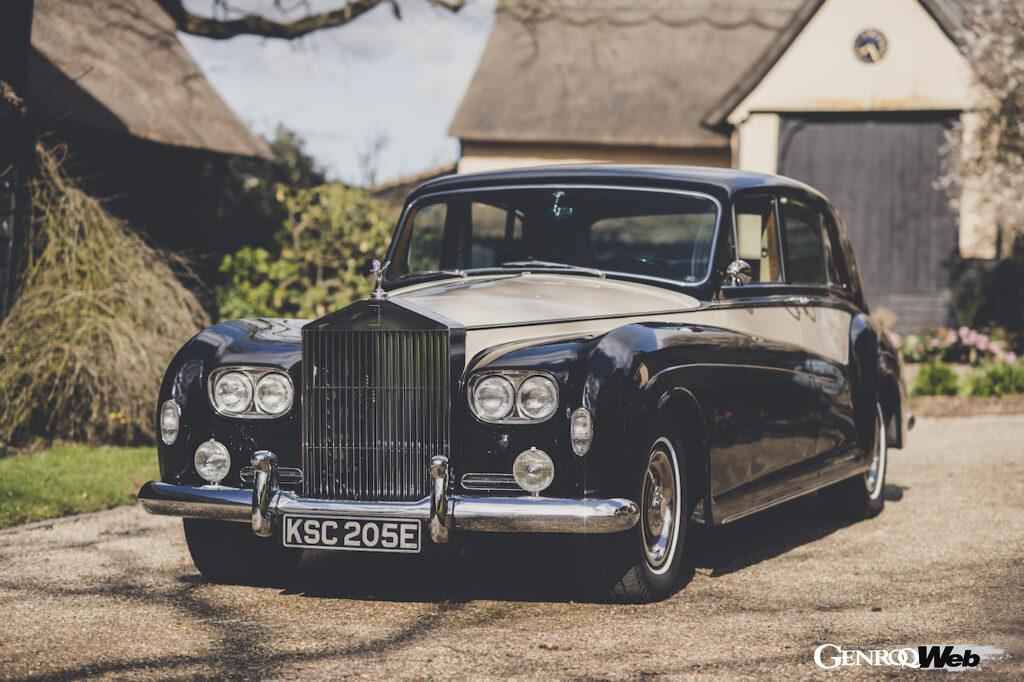
The Phantom V evolved into the Phantom VI, and was delivered to the British Royal Family and other royal families and dignitaries around the world. However, this marked the end of the Phantom’s history.
The Phantom V was a magnificent limousine, with coachwork by Rolls-Royce’s own coachbuilder, Park Ward, as well as independent companies such as James Young and HJ Mulliner (Rolls-Royce later acquired Park Ward and merged it with its own coachbuilders to form Mulliner Park Ward).
Known as Canberra I and Canberra II, two were built to serve the British Royal Family and featured a transparent Perspex cupola in the rear compartment with concealed lighting to improve visibility for the occupants on formal occasions.
The Phantom V was produced over 13 years, with 832 examples produced. The subsequent Phantom VI, like its predecessor, prioritized comfort, featuring separate front and rear air conditioning. Most of the 374 examples produced were limousines with in-house coachwork by Mulliner Park Ward or James Young, with the final Phantom VI Landlet delivered to the Sultan of Brunei in 1993.
The Phantom VI was the last body-on-chassis model produced by Rolls-Royce, and its discontinuation effectively ended the coachbuilt tradition until the return of the Sweptail at Goodwood in 2017.
The 7th generation Phantom is back
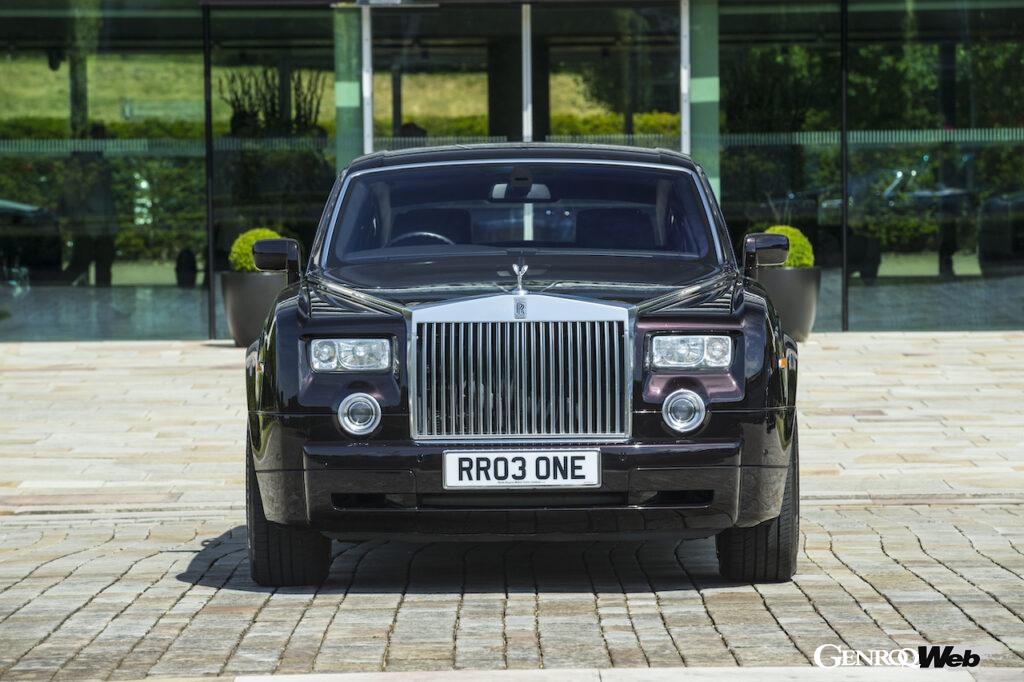
BMW acquired Rolls-Royce and Rolls-Royce Motor Cars was established in 1998. The seventh generation Phantom was announced as the first model.
BMW acquired Rolls-Royce from Vickers, and Rolls-Royce Motor Cars was established in 1998. When Rolls-Royce was relaunched at its new headquarters in Goodwood, it was only natural that the Phantom would be chosen as the first model.
The design concept, approved by legendary Rolls-Royce designer John Blatchley, included the signature elements of previous generations: a long wheelbase with the front wheels jutting out far forward, bodywork with minimal front overhang, a long bonnet with chrome trim along the sides, and door edges that rise into the pillars.
Ian Cameron, the first Design Director at Rolls-Royce Motor Cars during the Goodwood era, assembled a special team to design the interior of this much-anticipated new model, and they built on the ambience of previous Phantoms, expressing it in an entirely new way using traditional coachbuilt materials such as leather, wood and deep-pile carpeting.
At 12:01am on 1 January 2003, the first Phantom VII was handed over to its new owner. Unlike previous Phantoms, it was not coachbuilt, but rather built entirely in-house by Rolls-Royce Motor Cars, with spaceframe bodywork of a single design. Crucially, every car was handcrafted by a team of skilled craftsmen, maintaining a connection to its heritage.
The current Phantom VIII features a gallery
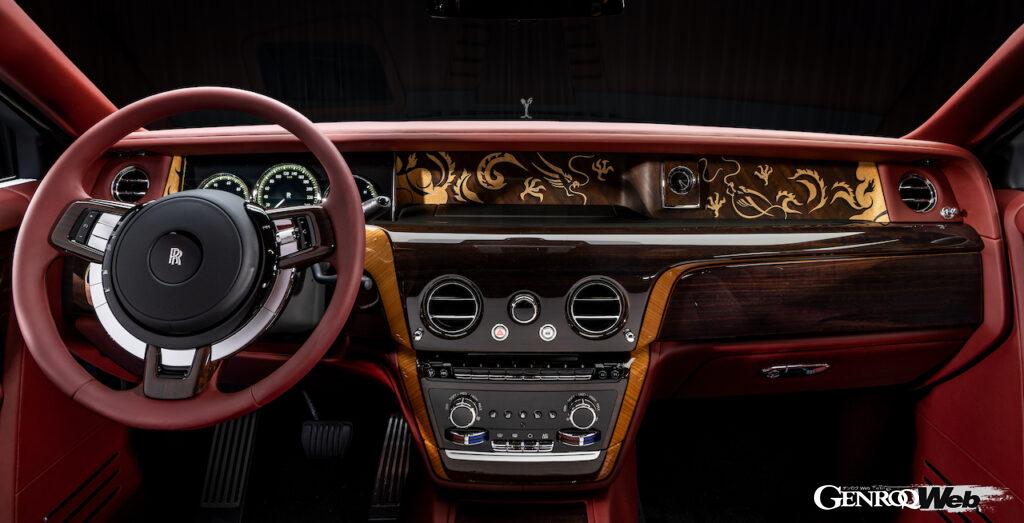
The Phantom evolved into its eighth generation in 2017. The photo shows the gallery and interior of the “Phantom Dragon,” which was announced in 2025 and pays homage to Chinese culture.
During its 13-year production run, the Phantom VII once again elevated Rolls-Royce to the top of the world’s ultra-luxury car industry, cementing its position as the pinnacle of excellence. But Rolls-Royce’s designers and engineers knew that perfection was a moving target, and the Phantom was never “finished.”
In 2017, Rolls-Royce introduced the Phantom VIII, the first Rolls-Royce to be developed based on the Architecture of Luxury, an evolution of the all-aluminium space frame used in the Phantom VII.
The Phantom VIII has been specially designed to be the ultimate ‘bespoke canvas’ and is therefore the only Rolls-Royce to feature a ‘Gallery’ – an uninterrupted section of glass across the full width of the fascia, behind which clients can display works of art or design.
From its unique perspective, the Phantom has been the subject of its most technically ambitious and challenging bespoke project to date, by a team of designers, engineers and specialist craftsmen, incorporating features, materials and technological innovations never before seen by Rolls-Royce, and never before seen by any other car manufacturer.
For 100 years, the Phantom name has held a unique place in the Rolls-Royce product family and story, always boasting the most magnificent, imposing and, above all, the most comfortable cabin of any car produced by Rolls-Royce at any time.
From the original Henry Royce-designed Phantom to the latest Phantom VIII, the essential purpose behind Phantom has always remained the same: to provide owner-driver and passengers with the most comfortable and satisfying experience available in the world – an experience of ultimate luxury.