
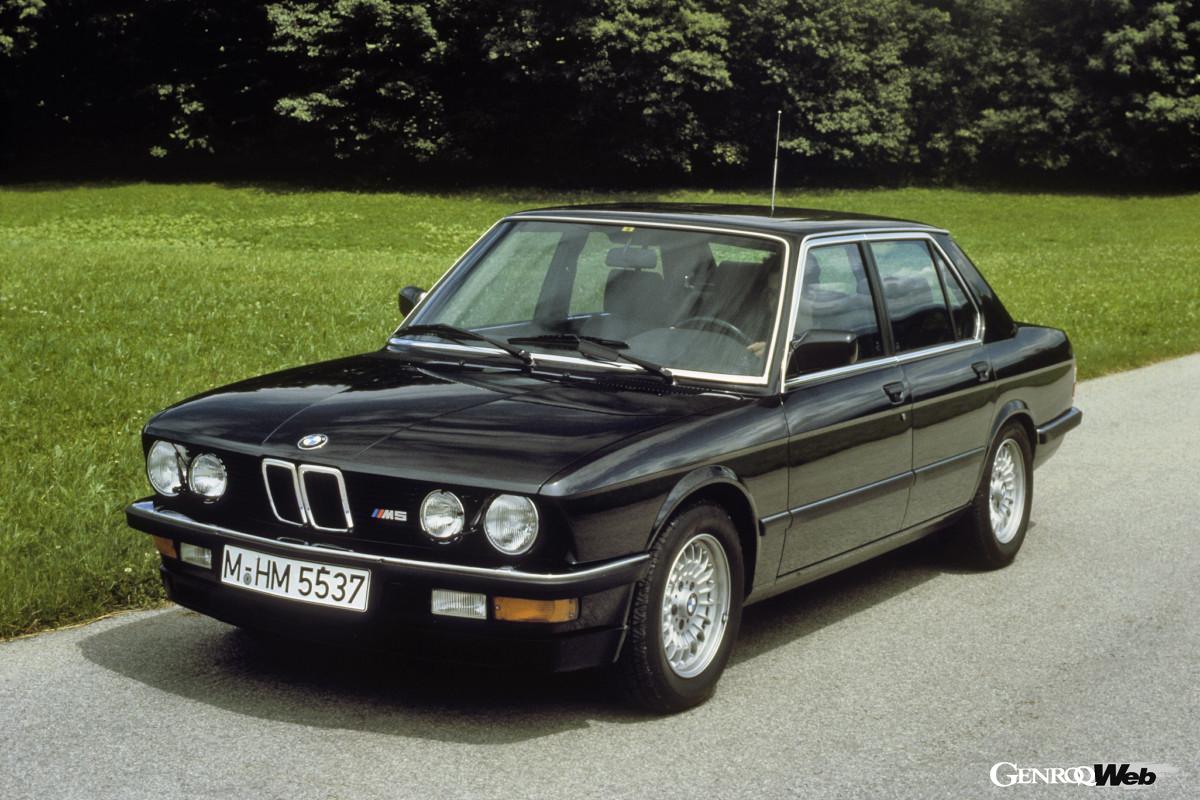
M5
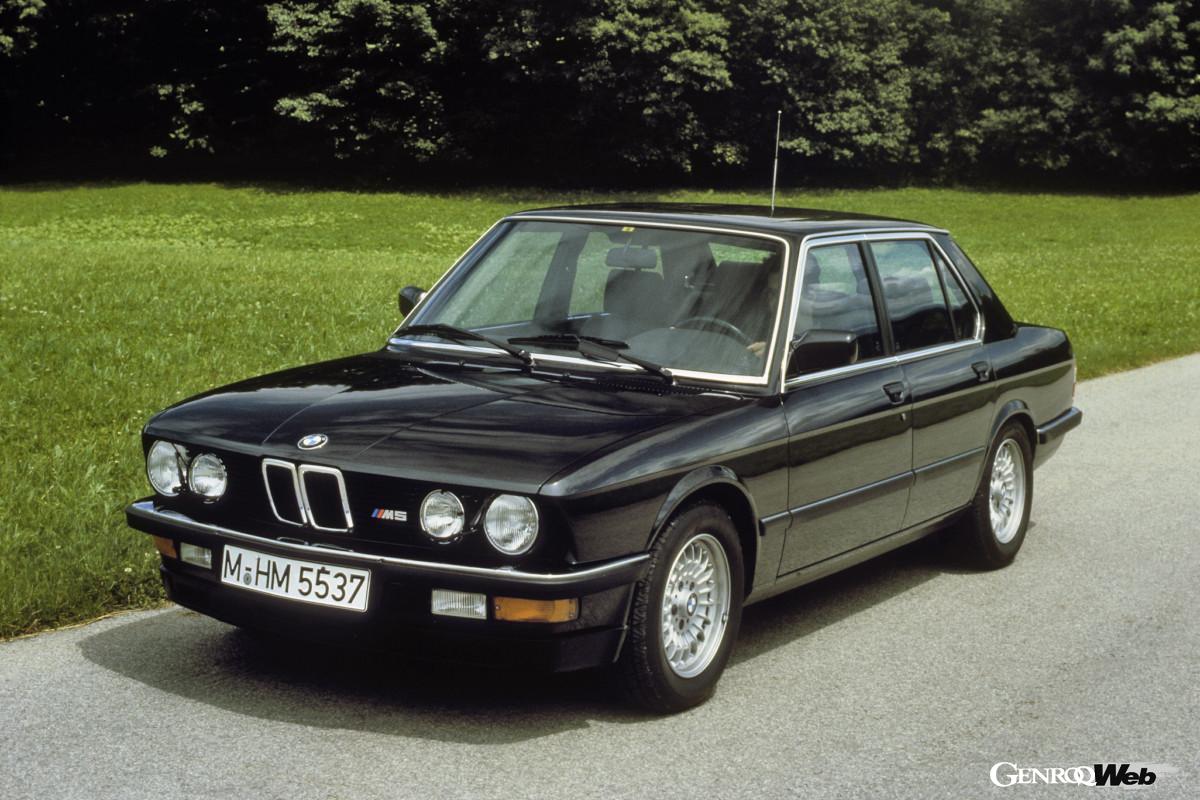
The first generation was released in January 1985.
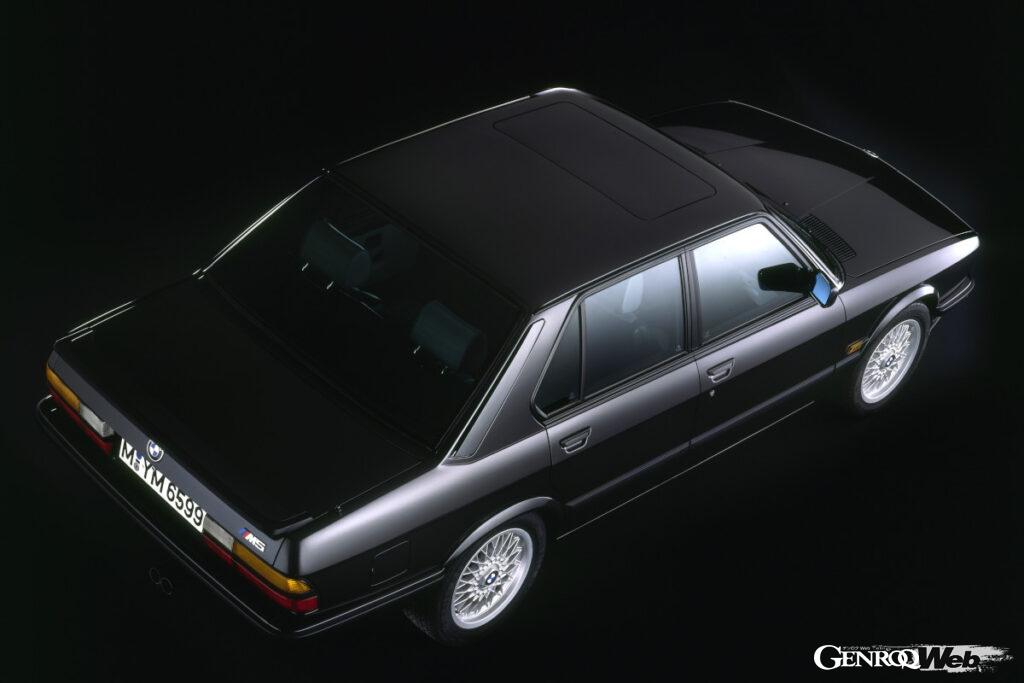
The chrome parts have been blacked out and special spoilers have been installed on the front and rear.
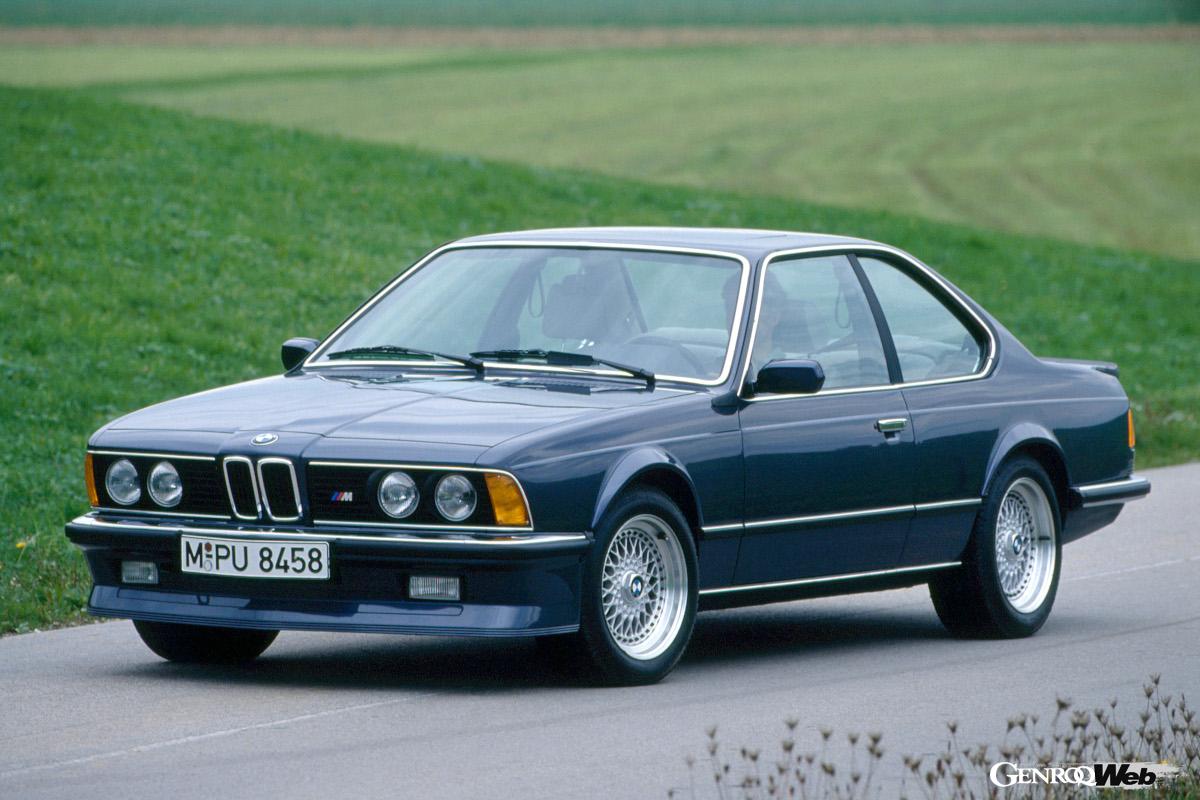
The M635 CSi, equipped with the 3.5-liter inline-6 DOHC M88/3 engine inherited from the M1, set the tone for BMW Motorsport’s complete cars. Following its success, development began in late 1984 based on the E28 5 Series, and the first-generation M5 was announced in January 1985.
It is true that the background to its creation was the market demand for a more powerful saloon, but there is also an anecdote that when then-president Eberhard von Kuhnheim was traveling in a specially designed turbocharged 745i, the 5 Series that was supposed to escort him was unable to accompany him (as the Cold War was still in full swing at the time, VIPs needed to travel quickly and safely), so he ordered the development of a more powerful 5 Series.
Only 0.1 seconds slower than the M635CSi
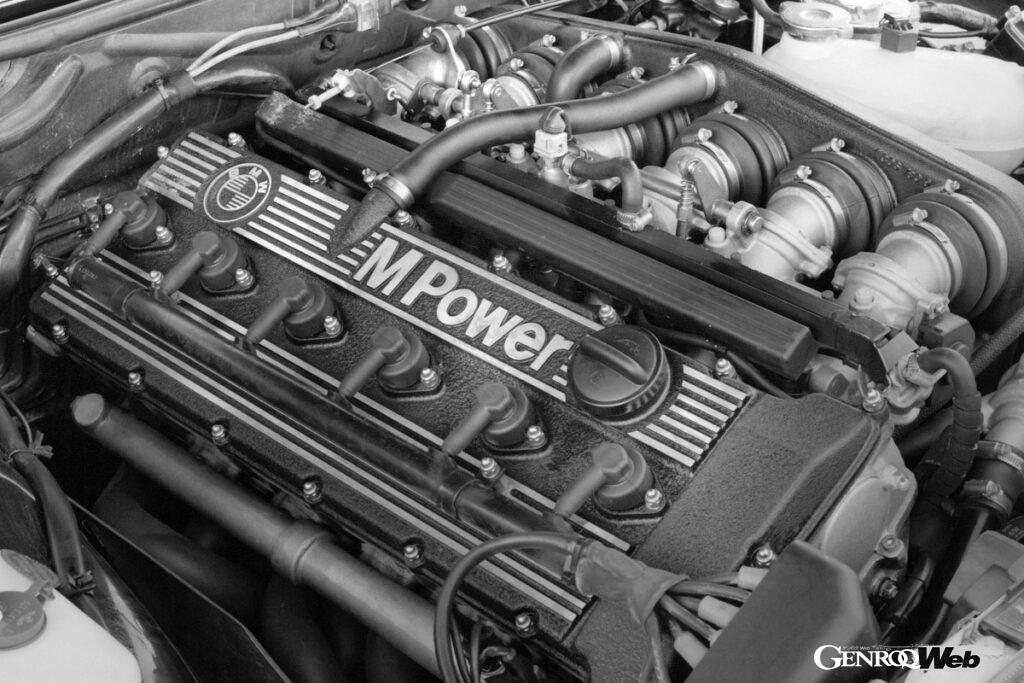
The 3.5-liter inline 6 DOHC 24-valve M88/3 unit has its roots in the M1.
The top grade of the E28 5 Series was the 535i, equipped with a 3.5-liter inline-6 SOHC 12-valve engine, but the engine installed in the M5 was the same as that of the M635CSi, the 3.5-liter inline-6 DOHC 24-valve M88/3 unit, which had its roots in the M1.
This engine, hand-built by BMW Motorsport, uses a simpler shim system, whereas the M88/1 unit for the M1 uses hydraulic tappets. The compression ratio has also been increased from 9.1 to 10.5, and the fuel injection system has been changed from a mechanical Kugelfischer to an electronically controlled Bosch Motronic, making it easier to use.
With a maximum output of 286 PS/6500 rpm and a maximum torque of 340 Nm/4000 rpm, the specs themselves were almost the same as the M1 (1 PS and 9.8 Nm more). Of course, being a saloon, the car weighed a heavy 1,430 kg, but with a top speed of 245 km/h and a 0-100 km/h time of 6.5 seconds, it delivered exceptional performance for the time, far exceeding the 218 PS 535i (MT)’s top speed of 230 km/h and 0-100 km/h time of 7.2 seconds. Incidentally, its 0-100 km/h acceleration was only 0.1 seconds slower than the M635CSi.
Design that highlights the sporty character
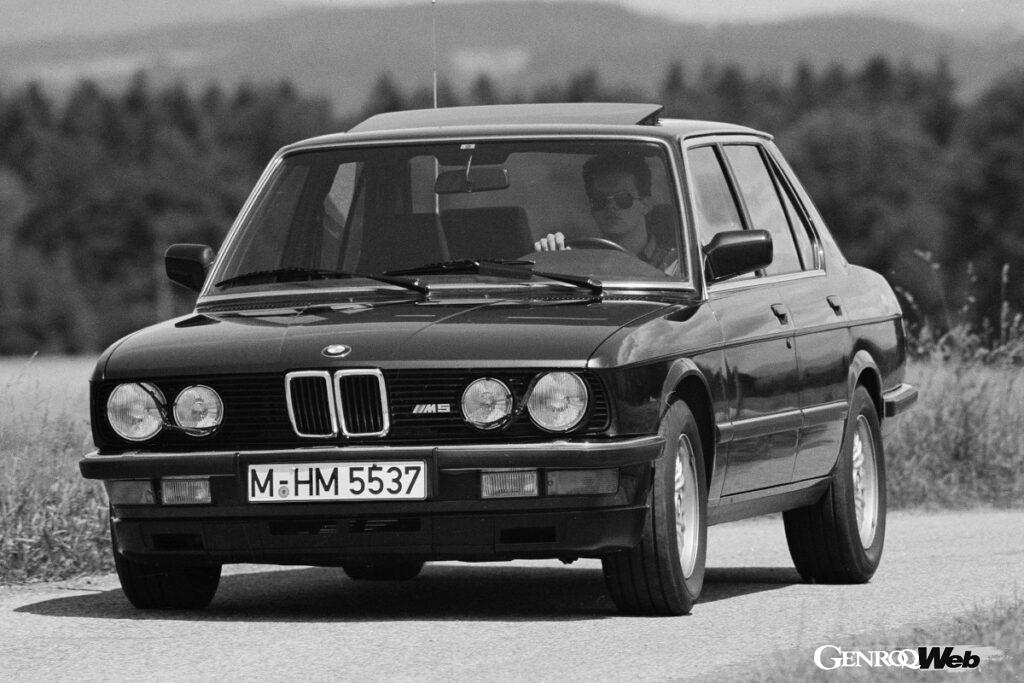
Reinforced stabilizers and Bilstein springs and dampers were used.
The chassis, meanwhile, had the same basic structure as the 5 Series, including a floorpan, front struts, and rear semi-trailing arm suspension, but with the increased power came a stronger stabilizer, Bilstein springs and dampers, an LSD, and stronger brakes.
Additionally, the chrome parts of the body have been blacked out, and special spoilers have been installed on the front and rear. M5 emblems have also been affixed to the front and rear, creating a sporty look that highlights the car’s character as an M model, without being overly emphatic. The tire size has also been changed to 220/55VR15. The wheels are made of BBS aluminum.
Optional sports seats
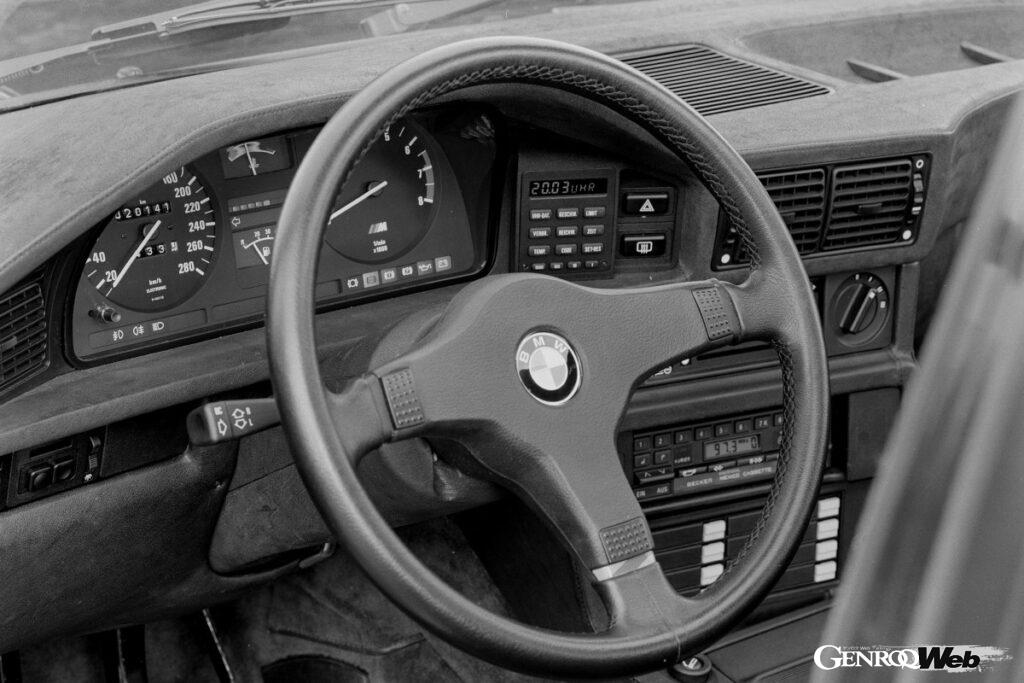

The only gearbox available is the exclusive M-Power 5-speed manual.
The interior is based on the E28 model, but is luxuriously tailored with extensive use of leather, and sports seats with M embroidery and electric adjustment are available as an option. The gearbox is only available with the exclusive M-Power 5-speed manual transmission.
Although the high specs meant that the car had some quirks, such as a heavy clutch, it was well received for its combination of high performance and practicality. The 5 Series was later upgraded to the E34 in 1988, and production of the E28 M5 was limited to just two years, but 2,145 units were produced during that time, making it a pioneering car that pioneered a new genre: the manufacturer-made super saloon.











![The S-Type, widely regarded as Bentley’s masterpiece post-war saloon [Bentley 100 Years of Car History]](https://wheelfeed.com/wp-content/uploads/2025/11/4703-1762127546348.jpg)