
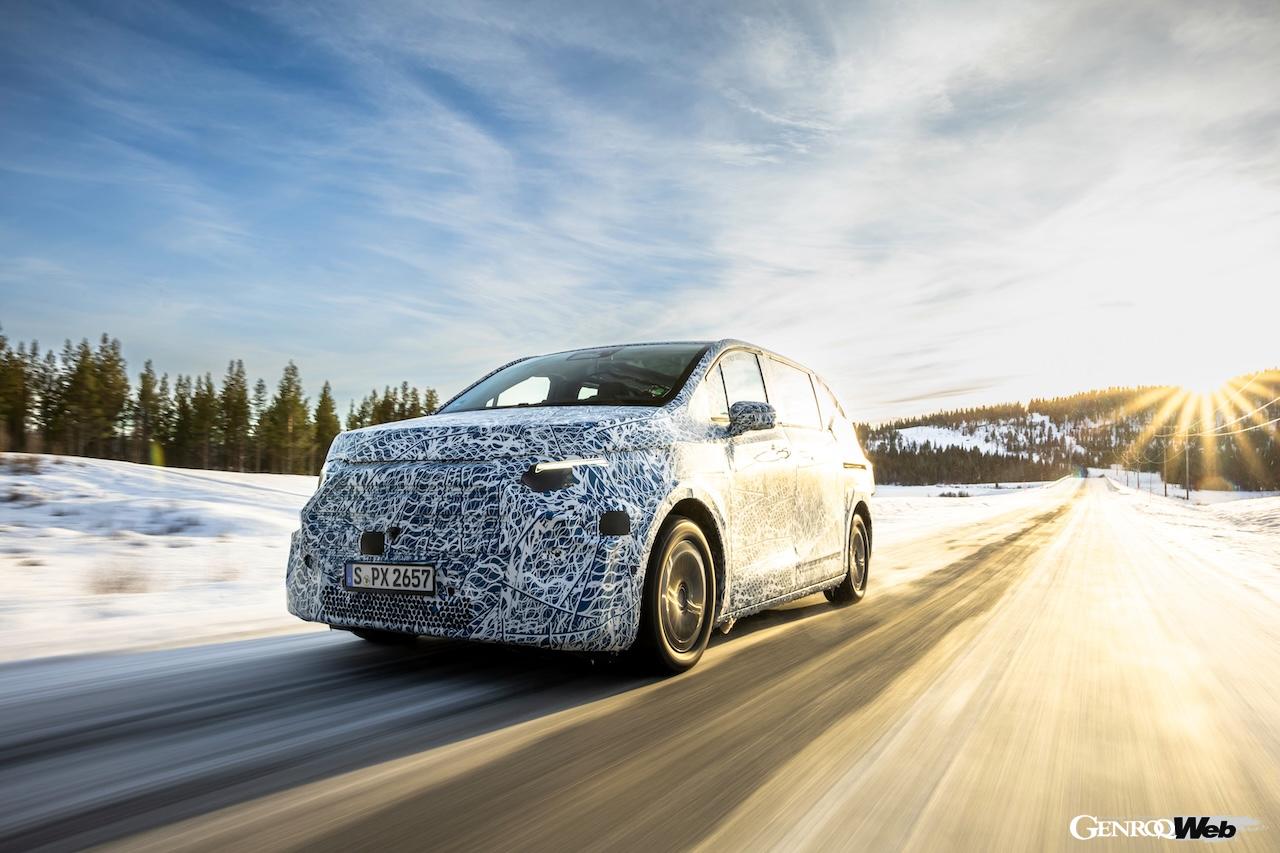
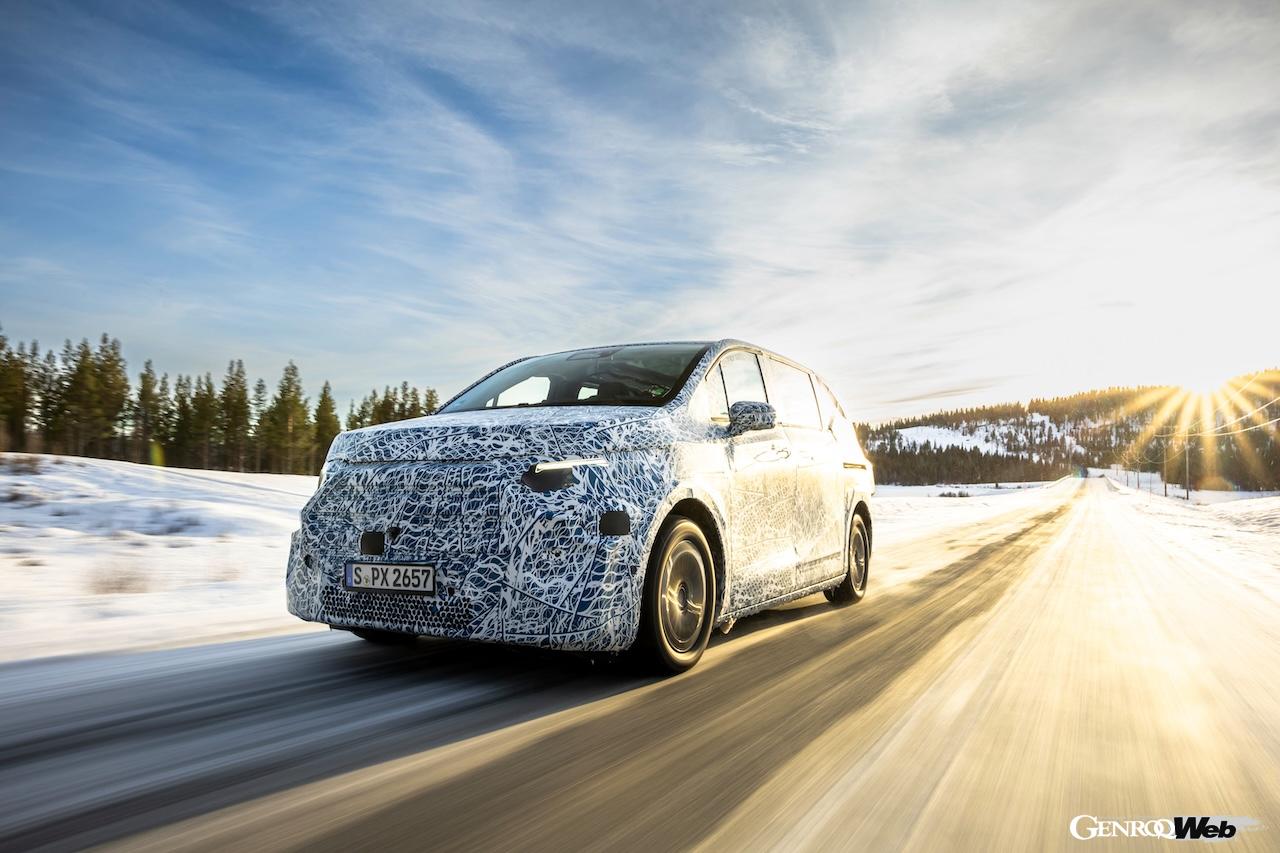
Mercedes‑Benz VAN.EA prototype
Following the fully electric model, an ICE version will also be introduced

Mercedes-Benz Vans plans to launch a fully electric van in 2026, followed by an ICE van based on a new internal combustion engine platform, VAN.CA.
In 2026, Mercedes-Benz Vans plans to introduce a fully electric van based on the VAN.EA (Van Electric Architecture), followed by an internal combustion engine (ICE) van based on the VAN.CA (Van Combustion Architecture).
These newly developed van architectures will enable clear differentiation between personal minivans for the luxury segment and commercial transporters for a wide range of uses. The private van lineup will span high-quality family vans, luxury VIP shuttles, and spacious luxury limousines.
The cold weather test for the next-generation multi-purpose van (MPV) was held in Arjeplog, Sweden, and mainly consisted of durability tests of the next-generation fully electric van under harsh weather conditions. Andreas Zeiger, Head of Development for Mercedes-Benz Vans at Mercedes-Benz AG, gave the following explanation about the test:
“The next-generation MPV will herald the arrival of a new era. It is a model that takes advantage of all the advances brought about by digitalization to achieve our ambitious development goals. In this test, the introduction of the Mission Control Center enabled us to optimize driving data in real time. This has enabled us to significantly shorten the on-road test period and significantly improve the maturity of the product efficiently.”
Checking the operation of various systems in cold regions

Mercedes Vans, which has brought the fully electric VAN.EA van to the Arctic Circle, is conducting a wide range of tests, including driving tests in slippery conditions and testing the operation of the charging system in low temperatures.
Mercedes-Benz Vans conducted the Arctic test as part of a comprehensive test program covering climate zones around the world. The test program was tailored to the specific characteristics of the new VAN.EA fully electric van, focusing on vehicle dynamics on slippery, icy and snowy roads, safety devices such as ESP, and ventilation and heating of the spacious interior.
The new fully electric van’s exterior was heavily camouflaged and it was driven intensively in the extreme cold to ensure that all components functioned properly. The data gained from the Arctic tests will be important knowledge for vehicle development.
Cold weather testing analyzes vehicle behavior on slippery road conditions. Grip levels on ice and snow are up to 90% lower than on dry roads, significantly affecting acceleration, stopping, and steering. The new van features rear-axle steering, significantly reducing the minimum turning radius. The lineup also includes a “4MATIC” all-wheel drive model with an additional motor on the front axle.
All grades are equipped with the latest version of the Mercedes-Benz Operating System (MB.OS), as well as an 800V DC charging system and a 22kW AC charger. The vehicle’s thermal management and cabin comfort were also meticulously checked during the test. The vehicle was further cooled in a cold room before the start of the journey, ensuring smooth operation of all systems, including charging, even in extremely cold conditions.