
TOYOTA ALPHARD EXECUTIVE LOUNGE PLUG-IN HYBRID
Al & Vert, a favorite among executives
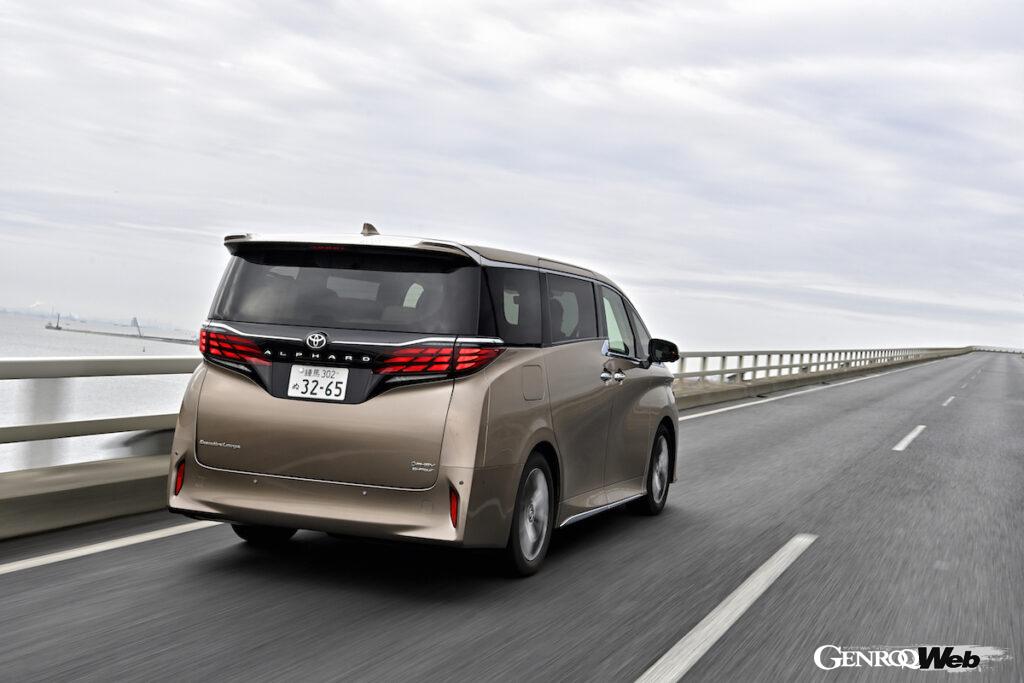
The motors have a combined power output of 236 PS, allowing the approximately 2.5 ton body to accelerate with ease.
The number one car that families today desire (and aspire to) is undoubtedly the Alphard or Vellfire. It boasts an overwhelming amount of interior space, luxurious amenities, a comfortable ride, and a bold, imposing look. Even the low price tag of 8 million yen seems to have boosted the brand’s appeal, so if you say, “I bought an Alphard because I had a baby,” you’ll undoubtedly be classified as a winning family in no time. It’s no exaggeration to say that its magical powers completely surpass even the Mercedes E-Class in some regions.
The current Alphard and Vellfire have been on the market for almost two years, but they are still a common sight on the streets. Their massive size is especially noticeable in urban areas, likely due to the fact that companies are purchasing them as chauffeur cars. The Alphard and Vellfire are also credited with getting Japanese executives to switch from sedans to minivans.
With the addition of the PHEV, there are now three powertrains

[1]

[2]

[3]
[4]
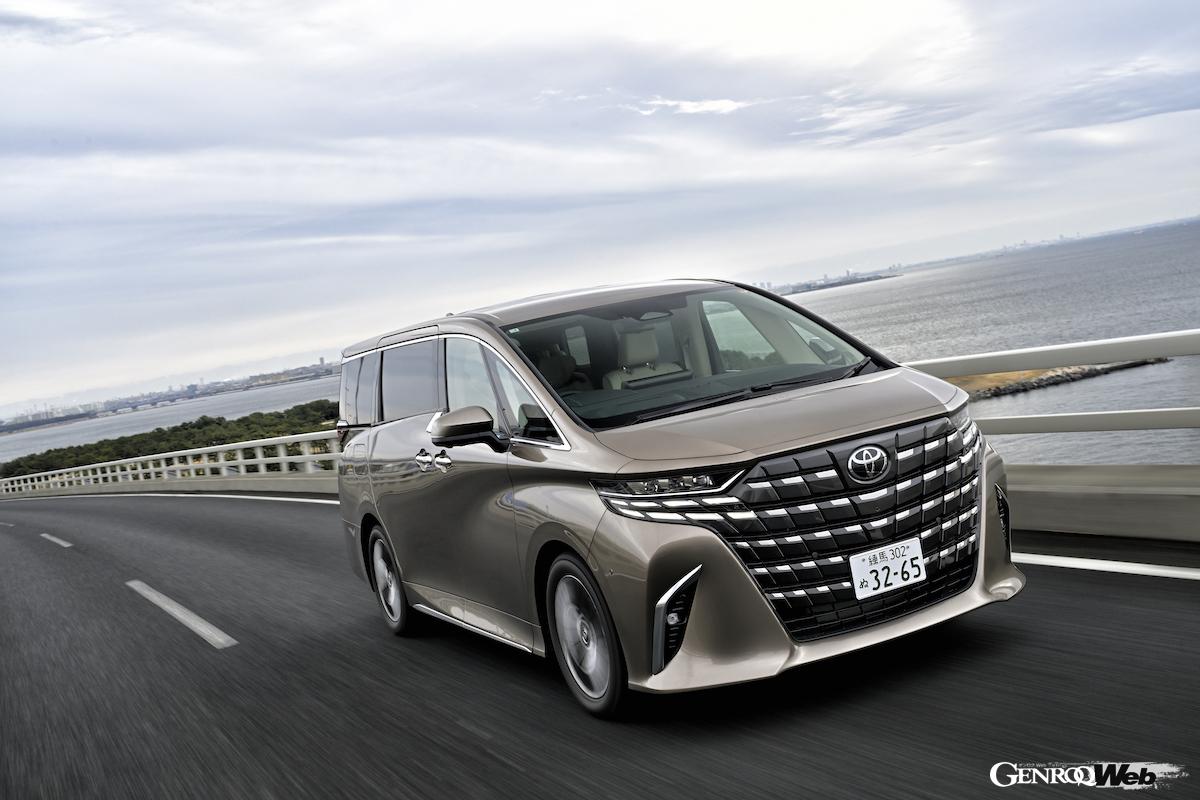
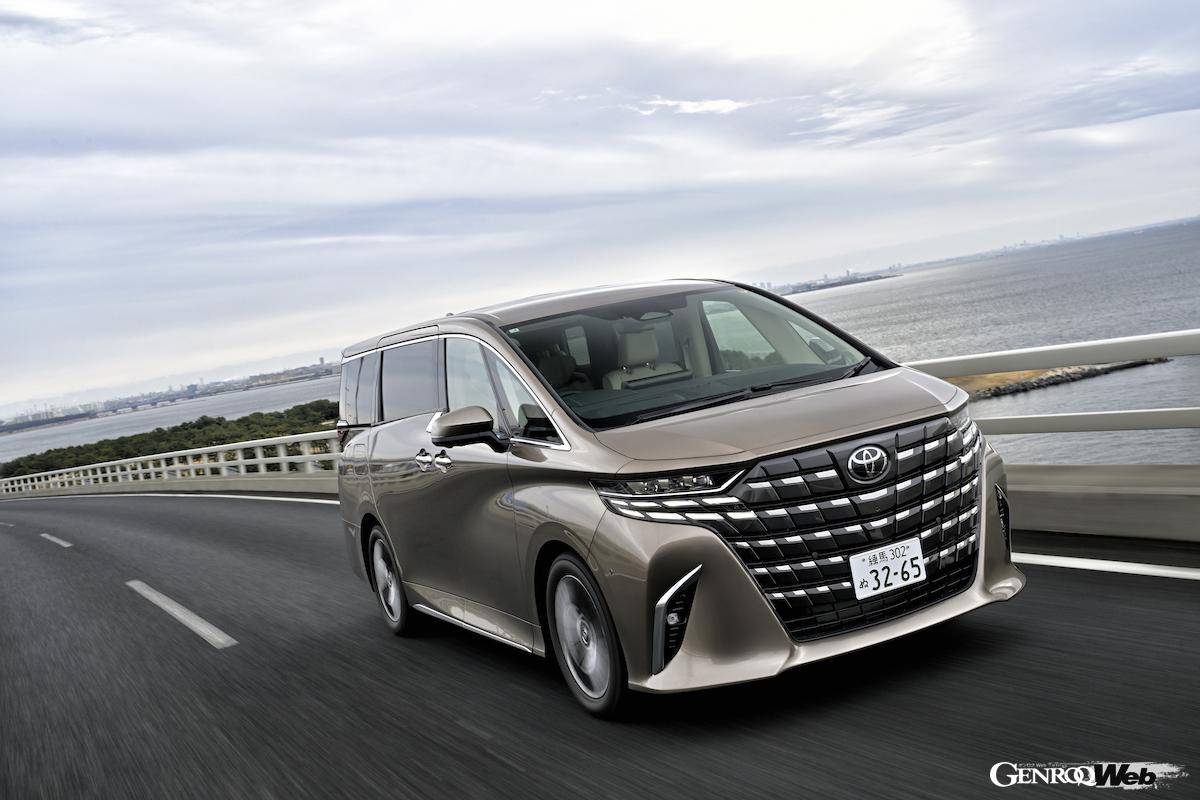
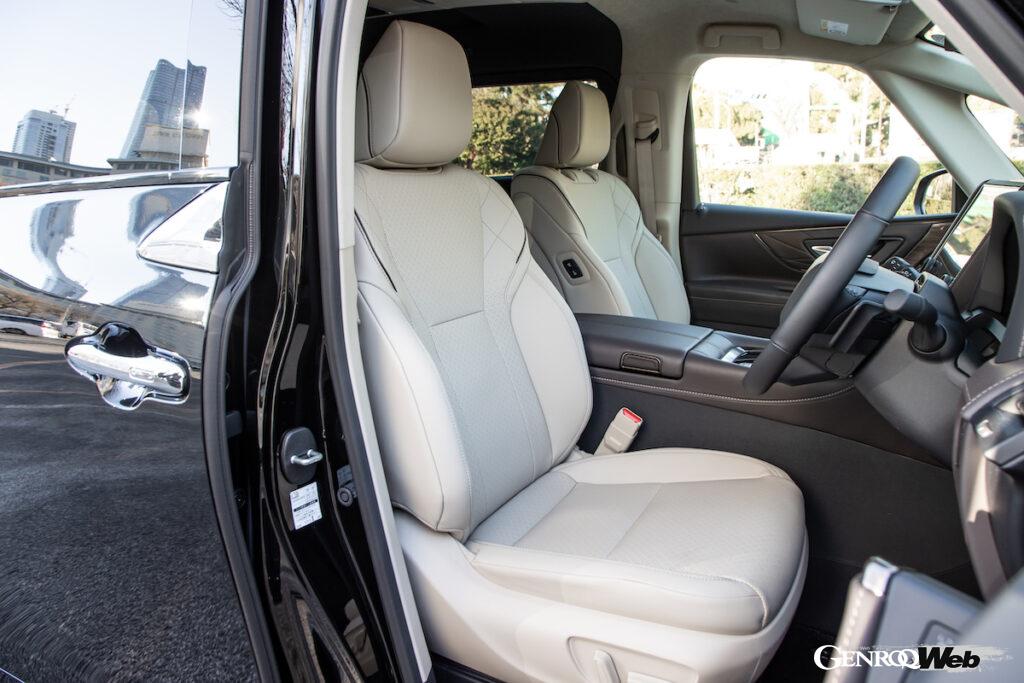
[1] The instrument panel is also covered in soft synthetic leather. The center monitor is 14 inches. [2] In the PHEV, the tachometer on the left side displays the electricity consumption, remaining battery power, and available driving range. [3] The second-row seats are separate seats with ottomans, and are very comfortable. The PHEV is only available with these six-seater executive round seats. [4] Premium nappa leather is standard. Of course, the seats are power seats.
Now, a plug-in hybrid (PHEV) has been added to the Alphard and Vellfire. The powertrain lineup now consists of three models: a 2.4-liter inline-four turbocharged pure engine, a 2.5-liter inline-four naturally aspirated hybrid, and a PHEV with the same 2.5-liter inline-four naturally aspirated engine. Incidentally, this is the first time a PHEV has been offered in a Japanese minivan.
A large lithium-ion battery is installed under the floor, allowing for an EV range of approximately 73km on a full charge. The weight of the battery has not been disclosed, but since the body weight is about 200kg heavier than the HV, it is safe to assume that most of this is due to the battery. This lowers the center of gravity by 35mm compared to the HV, resulting in even more stable driving. In addition to household AC power, the car is compatible with quick charging, in which case it can be charged to 80% in approximately 38 minutes (50kW).
It’s quite difficult to tell from the exterior that it’s a PHEV. The wheels are special 19-inch, but only a dealer would be able to tell. Once inside, you’re greeted by a luxurious space with a genuine wood steering wheel and suede-like ceiling. Located just in front of the shift knob is a switch to select between HV and EV, as well as a switch that automatically switches between the two, a feature unique to PHEVs. This automatic switching system is primarily focused on EV, but when setting a route in the navigation system, it also intelligently controls the car by actively using the engine on highways to conserve battery power and switching to EV in city areas.
The Alphard and Vellfire have different ride experiences
[1]

[2]

[3]
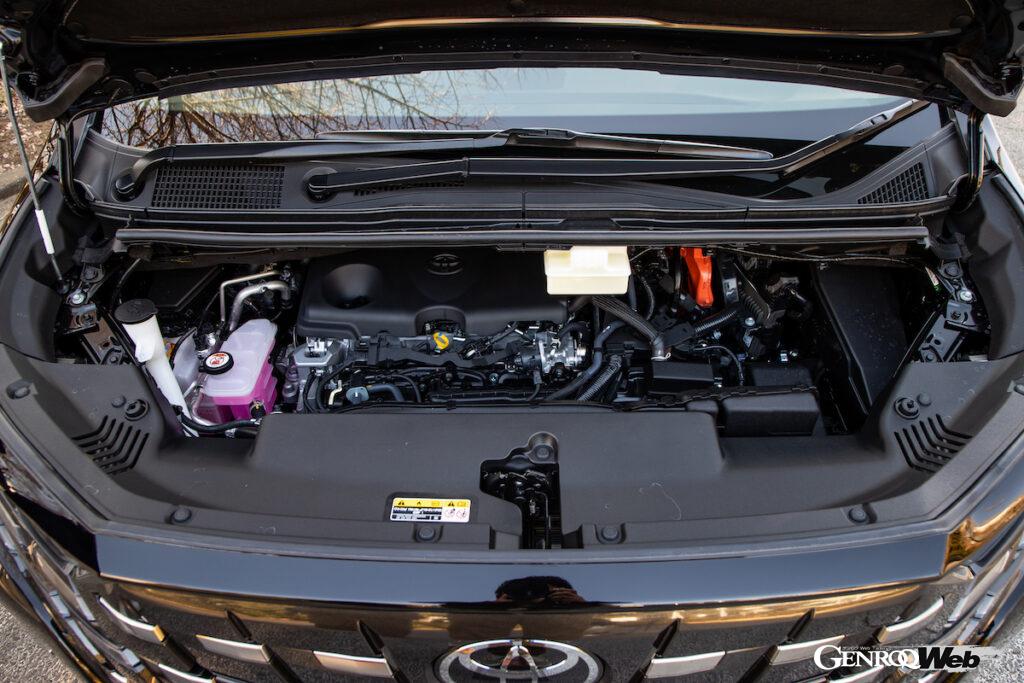
[1] Achieves fuel efficiency of 16.7km/L in WLTC mode. The PHEV is only available in AWD. [2] When the third row of seats is folded down, a considerable amount of luggage space can be secured. [3] This is the Vellfire. It features a horizontally-oriented chrome grille.
The driving experience in EV mode is truly smooth. The torque that effortlessly pushes the heavyweight body weighing over 2 tons is satisfying, but the controlled acceleration never results from relying solely on force, which is evident from the emphasis placed on comfort for rear seat passengers. If you press the accelerator firmly on the highway, the car accelerates quickly up to above the legal speed limit, but even then the engine almost never starts. When HV mode is selected, the engine starts quite frequently with slight acceleration, but even then there is no shock, and you can only hear a faint engine sound.
The increased weight around the floor seems to contribute to the ride comfort, providing a very solid ride. The suspension settings of the Alphard and Vellfire are slightly different; to put it simply, the Alphard has a slightly lighter and softer handling, while the Vellfire feels a bit heavier and more solid. Personally, I prefer the Vellfire, but this is a matter of preference, so I think anyone considering buying one should test drive both. In any case, it’s surprisingly comfortable for a large minivan, and it’s easy to see why it’s so popular with executives. According to the development staff, the benchmark was the Mercedes-Benz S-Class, and strangely, I was convinced that this was what they were looking at.
In addition to these impressive features and comfort, the Alphard and Vellfire also boast the quietness, power, and economy of an EV, and their evolution has solidified their place at the top of the popularity rankings. Even I, who am not particularly interested in minivans, have started to want one.
REPORT/Gensuke NAGATA
PHOTO/Satoshi KAMIMURA, Akio HIRANO
SPECIFICATIONS
Toyota Alphard Executive Lounge Plug-in Hybrid
Body size: Length: 4995mm x Width: 1850mm x Height: 1945mm
Wheelbase: 3000mm
Vehicle weight: 2470kg
Engine: Inline 4-cylinder DOHC
engine Total displacement: 2487cc
Maximum engine output: 130kW (177PS) / 5000rpm
Maximum engine torque: 219Nm (22.3kgm) / 3600rpm
Maximum motor output: F 134kW (182PS) / R 40kW (54PS)
Maximum motor torque: F 270Nm (27.5kgm) / R 121Nm (12.3kgm)
Transmission: Electric continuously variable
transmission Drive system: AWD
Suspension type: F MacPherson strut R double wishbone
Brakes: FR ventilated disc Tire
size: FR 225/55R19
Performance: Fuel economy 16.7km/L (WLTC)
Vehicle price (tax included): 10.65 million yen