

M Coupe/Roadster
As a high-performance model of the Z3
BMW M Roadster
Following the global success of the Eunos Roadster, many manufacturers began releasing two-seater open sports cars, and BMW also announced the Z3 in 1996. This was based on the E36/5 3 Series Compact, but its internal structure was the same as the E30 3 Series, with front strut and rear trailing arm suspension.
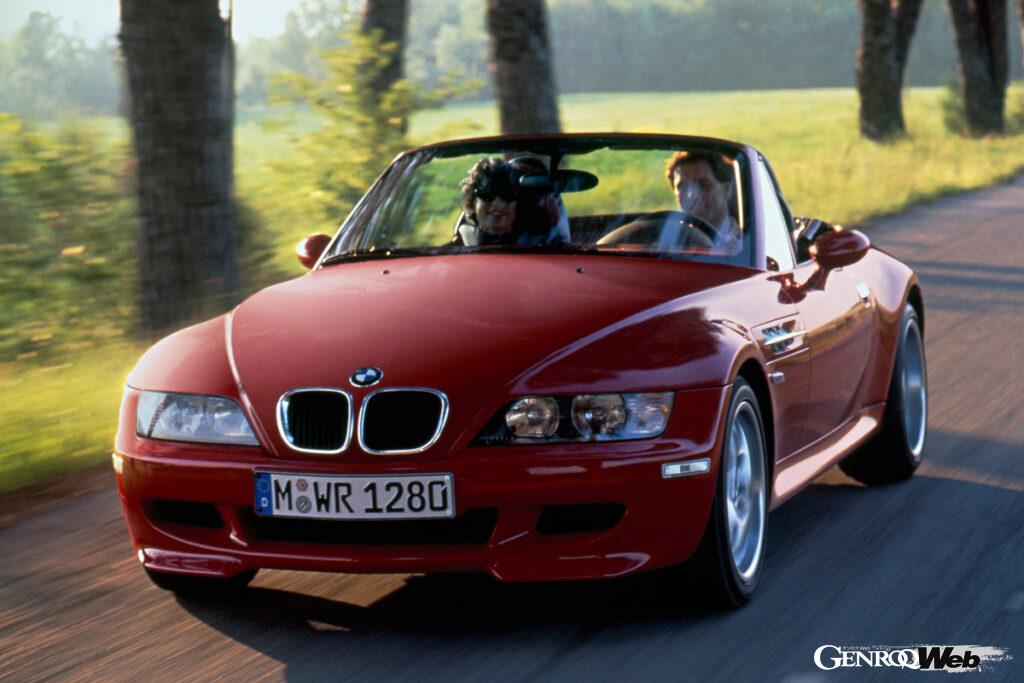
The “M Roadster” (E36/7) was announced in 1997 as a high-performance model of the Z3. The engine was a 3.2-liter inline-six DOHC 24-valve “S50” unit with double VANOS (double variable camshaft control), the same as the E36 “M3,” producing a maximum output of 321 PS and a maximum torque of 350 Nm (the North American model had a maximum output of 243 PS and a maximum torque of 305 Nm). The gearbox was only available as a 5-speed manual rather than a 6-speed, and an LSD was fitted as standard. The chassis had a 10 mm wider track both front and rear, and was lowered by 28 mm. Other modifications included the adoption of thicker anti-roll bars and a reinforced subframe.
The tire sizes were also changed to 225/45R17 in the front and 245/40R17 in the rear, and the brakes were the same as those on the E36 M3. To match these changes, the body also had a massive style with wide fenders.
Powerful blister fenders like those found on muscle cars
BMW M Coupe
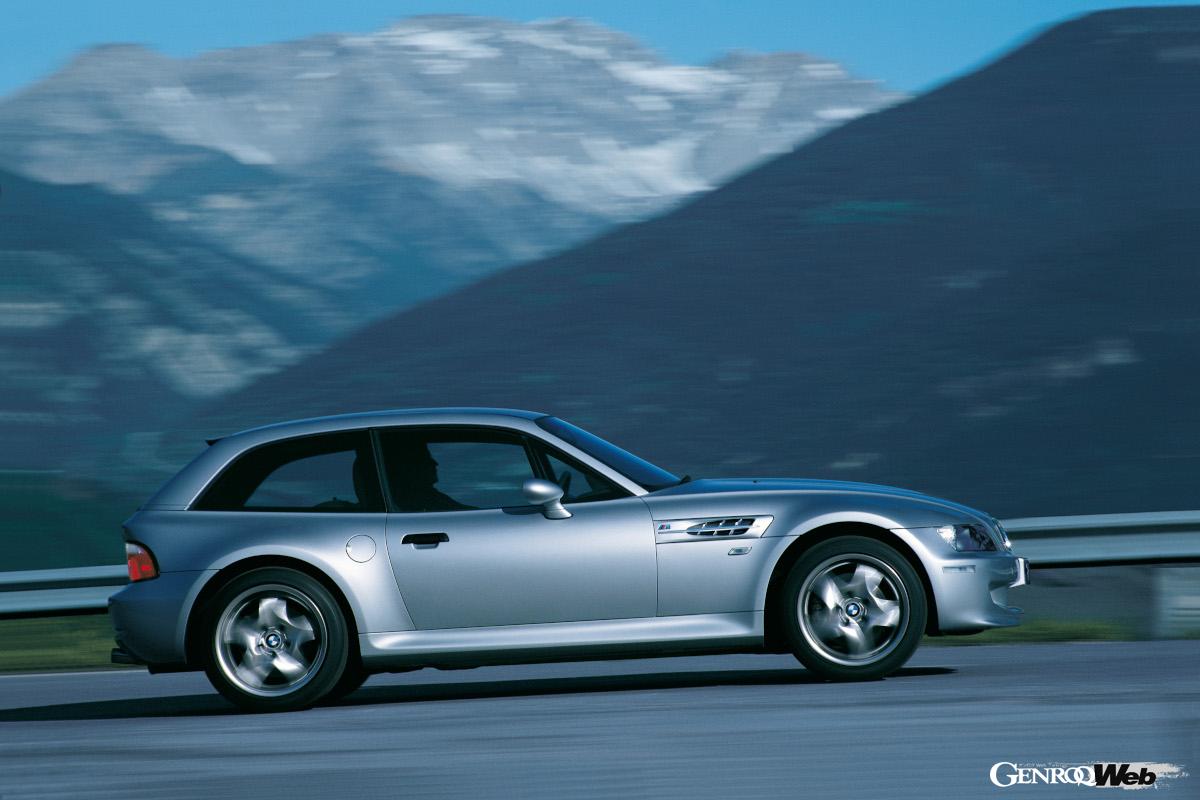
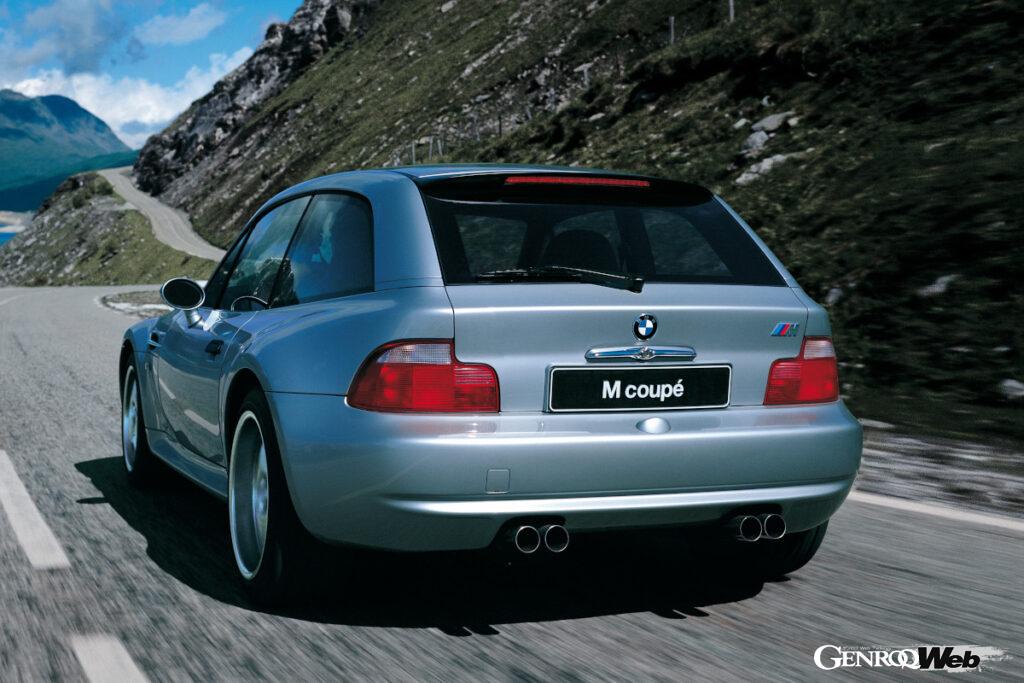
Furthermore, the “M Coupe” (E36/8) based on the M Roadster was also released in 1998. The Z3 coupe model was initially developed as an extracurricular project by Burkhard Goeschel, who was the director of the special model series, but it was proven that the body rigidity could be significantly improved by making it a coupe, and so it was decided to put it into production.
The M Coupe was a Z3 Coupe equipped with a 3.2-liter inline-6 DOHC 24-valve “S50” unit, and was basically the same as the M Roadster. Its special body with blister fenders was impressive enough to be called a muscle car, and both the M Roadster and the M Coupe achieved 0-100km/h acceleration in 5.4 seconds, outperforming the E36 M3.
In 2001, both the M Roadster and M Coupe were fitted with a 3.25-liter inline-six DOHC 24-valve “S54” engine, featuring low-friction rocker arms, electronic throttle butterfly control, and double VANOS, which was also featured in the E46 M3. However, to prevent competition with the E46 M3, the engine was detuned, with maximum output limited to 325 PS and maximum torque limited to 350 Nm. The gearbox was also limited to the previous 5-speed manual, rather than a 6-speed manual or 6-speed SMG.
As a result, the 0-100km/h acceleration time was slightly reduced to 5.3 seconds (top speed was 250km/h for both early and late models by gentleman’s agreement).
Nowadays it is a highly prized collector’s item.
BMW M Roadster interior
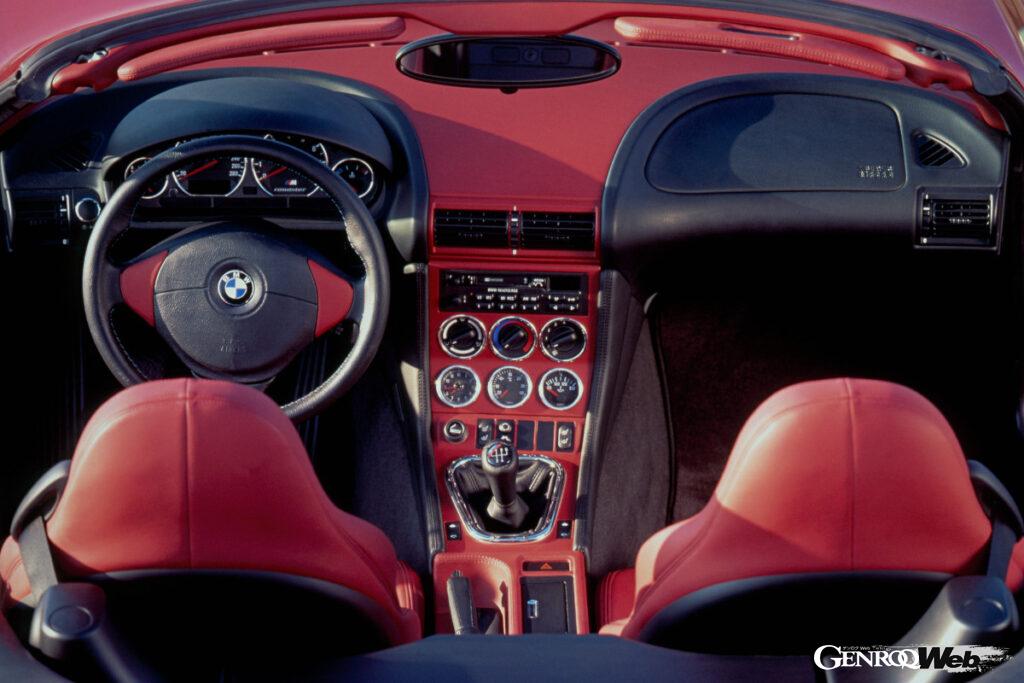
A total of 15,322 M Roadsters were produced, both pre- and post-facelift models. On the other hand, perhaps due to the unique nature of the M Coupe as a two-seater coupe, only 6,291 were produced, and they are now prized collector’s items.
Incidentally, BMW M produced only one M Roadster prototype in 1999, equipped with a 5.4-liter V12 SOHC unit from the E38 7 Series and a 6-speed manual transmission. It boasted a maximum output of an incredible 326 PS, but due to a 7:3 front-to-rear weight distribution that made it extremely front-heavy, its performance was limited to 0-100 km/h acceleration in 5.5 seconds and a top speed of 263 km/h, and it was never put into production.











![The S-Type, widely regarded as Bentley’s masterpiece post-war saloon [Bentley 100 Years of Car History]](https://wheelfeed.com/wp-content/uploads/2025/11/4703-1762127546348.jpg)