
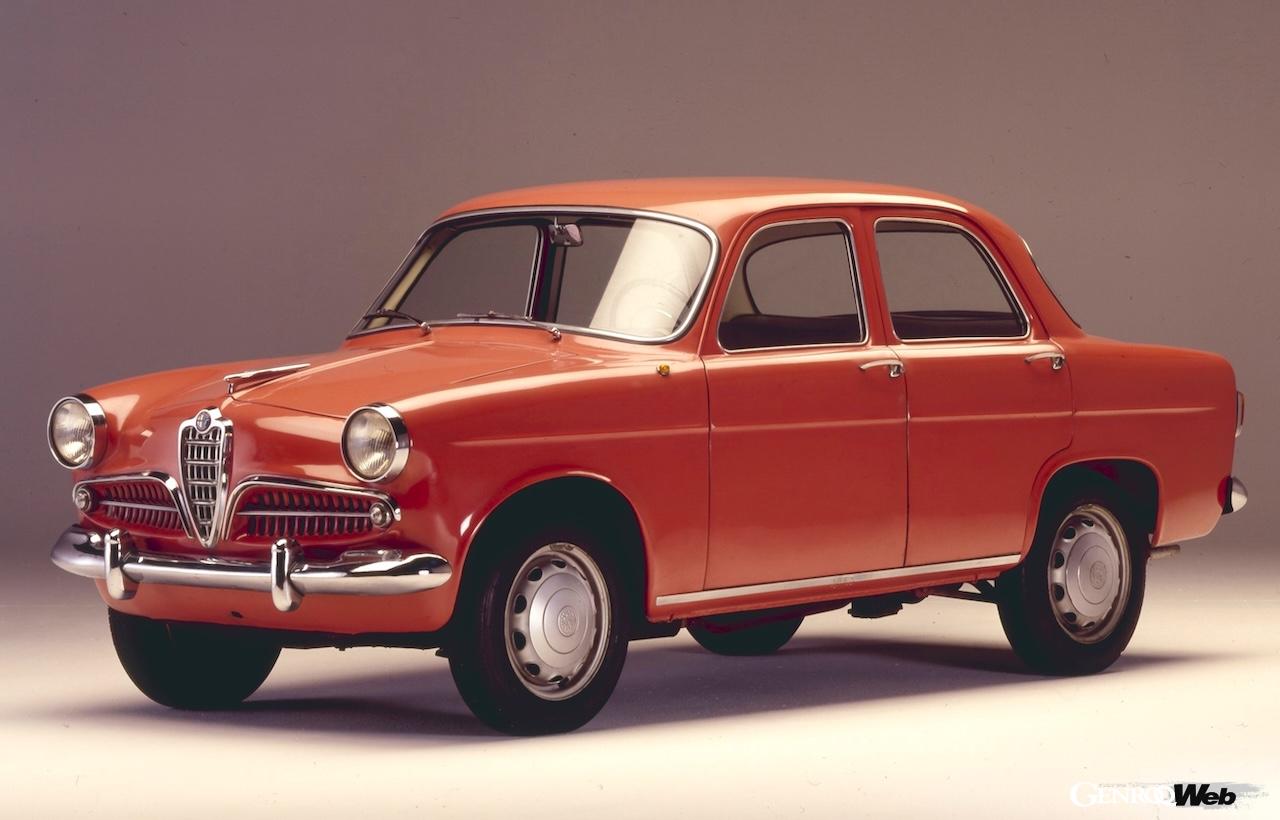
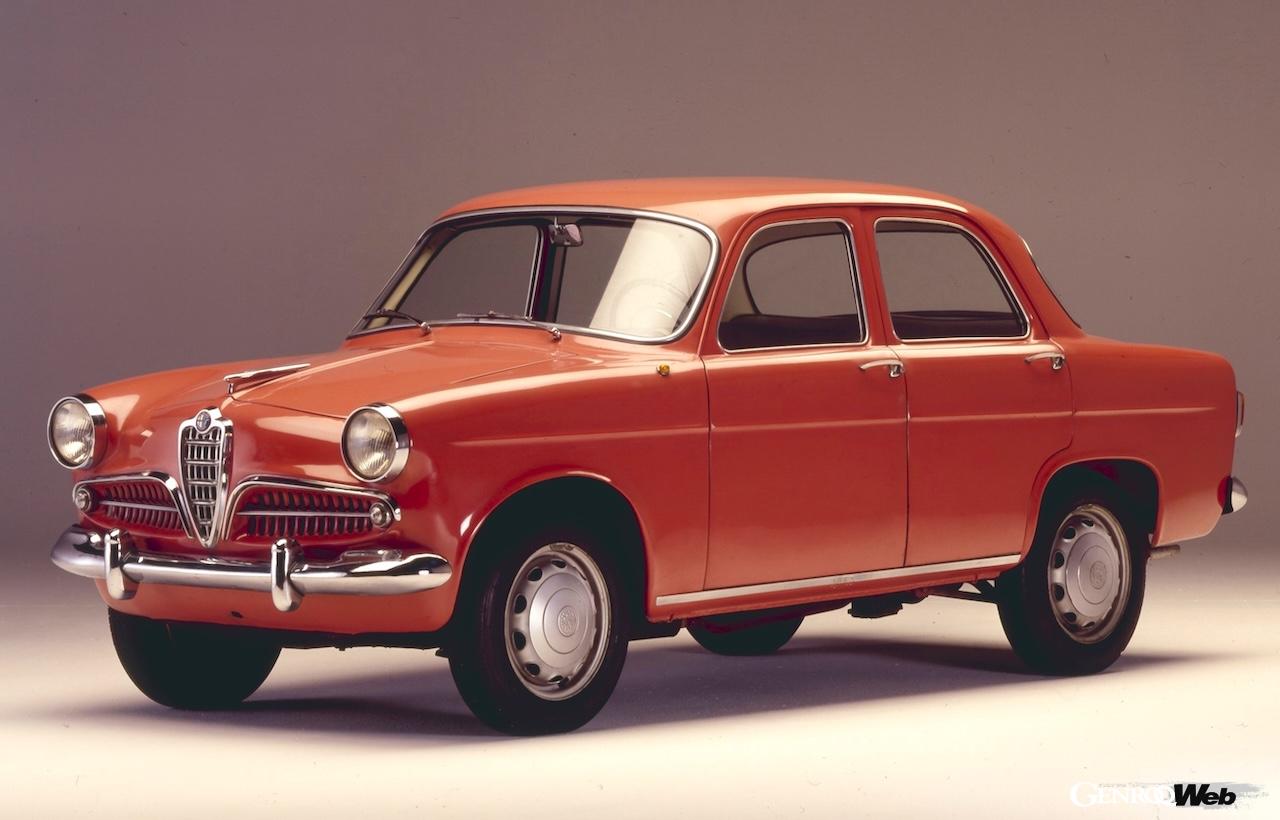
Alfa Romeo Giulietta Berlina
Post-war Italy: An object of desire for the middle class
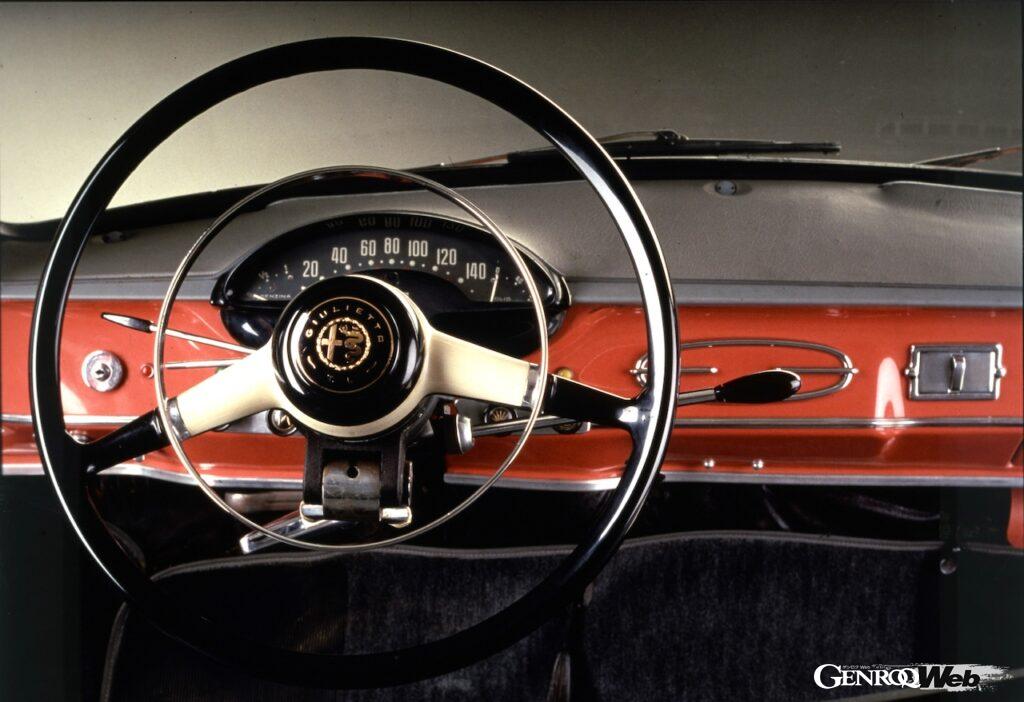
The Giulia Berlina cockpit is simple yet distinctively Alfa Romeo. In Italy, which was recovering economically after the Second World War, the Giulietta Berlina became an affordable and desirable car.
On April 20, 1955, Alfa Romeo gave the Giulietta Berlina its world premiere at the Turin Motor Show. This saloon, generously equipped with cutting-edge technology and sporty and elegant styling, yet affordable, became a symbol of the economic boom in Italy at the time.
Now celebrating exactly 70 years since its debut, the Giulietta Berlina is arguably the most important model during Alfa Romeo’s transition from a custom manufacturer to a mass-produced manufacturer. Roberto Giolito, head of Stellantis Heritage, the historic car division of the Stellantis Group, had this to say about the Giulietta Berlina:
“The Giulietta Berlina brought Alfa Romeo’s sporty DNA into everyday Italian life, creating a premium sports saloon segment at a price point within the reach of the emerging middle class. It combined Alfa Romeo’s heritage with the functionality of a family car, establishing itself as a symbol of progress and regeneration in post-war Italy.”
The coupe “Sprint” debuted first
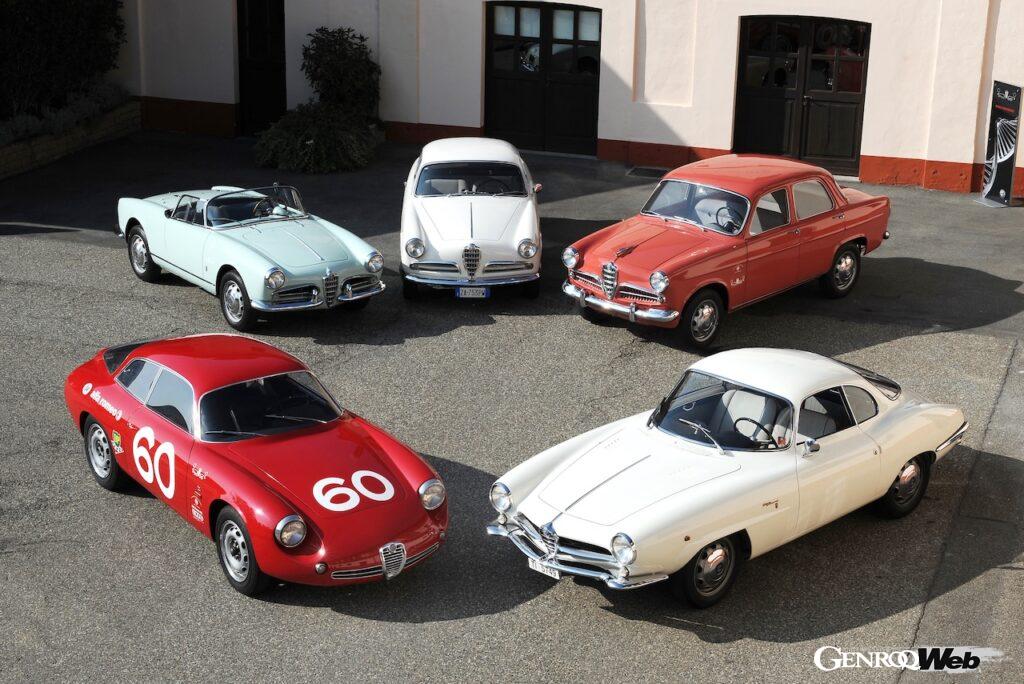
The Giulietta Sprint coupe (pictured back center) made its debut at the 1954 Turin Motor Show and became an instant hit.
Giuseppe Farina brought Alfa Romeo back-to-back F1 titles in 1950 and Juan Manuel Fangio in 1951. In the early 1950s, Alfa Romeo felt the need to expand production and appeal to a wider audience while maintaining its style, technology and high performance.
However, surprisingly, it was not a saloon but a coupe called the Giulietta Sprint that made its debut at the 1954 Turin Motor Show. The Sprint was designed by Franco Scaglione, who was then working for Bertone. This high-performance compact coupe, equipped with a 1.3-liter inline-four engine, was an instant commercial hit, with customers flocking to Alfa Romeo dealerships immediately after its debut at the Turin Motor Show.
Alfa Romeo would use the Sprint’s sporty appeal to generate buzz for the debut of the Giulietta Berlina, a compact, modern, and affordable saloon due to be produced the following year, but with the high performance and refined appeal that are characteristic of Alfa Romeo.
The Giulietta became a new standard in Europe
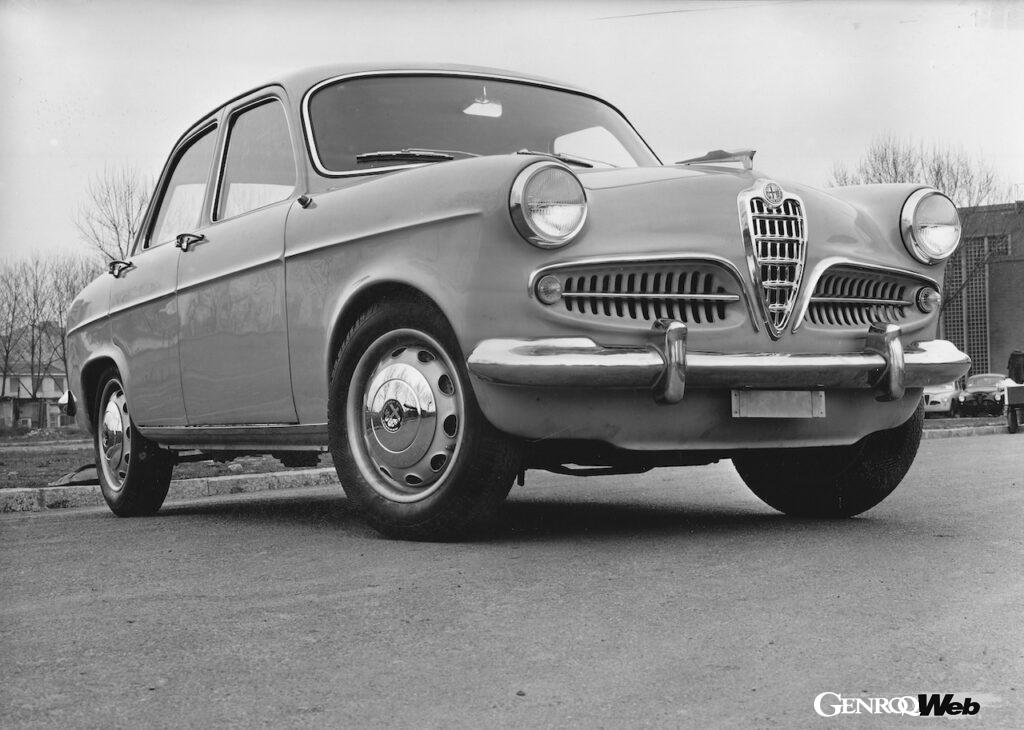
Equipped with a powerful 1300cc inline 4-cylinder DOHC engine, the Giulietta Berlina created a new category of sports car in Europe.
The long-awaited Giulietta Berlina made its debut on April 20, 1955. It packaged the same powertrain as the Sprint into a family car. Following on from the 1900, which was launched in 1950, it established the concept of an affordable, sporty saloon.
Alfa Romeo called the Giulietta Berlina “The family car which wins races.” A new era dawned, and Alfa Romeo pioneered the concept of “a sporty driving car within everyone’s reach.”
The 1290cc inline 4-cylinder water-cooled DOHC engine was made of aluminum, borrowed from motorsports. It produced a maximum output of 53 PS and, thanks to its incredibly lightweight construction at 870 kg at the time, it reached a top speed of 140 km/h. Another distinctive feature was the use of a column shift and a pull-on handbrake located on the left side of the steering wheel.
The Giulietta series created a new category of 1300cc engines, which became the standard in Europe. At the time, there was no mass-produced saloon in the world that could match the Giulietta’s mechanics and performance. The Giulietta was a game changer, establishing Alfa Romeo’s identity, which continues to this day.
Helping Alfa Romeo move to mass production
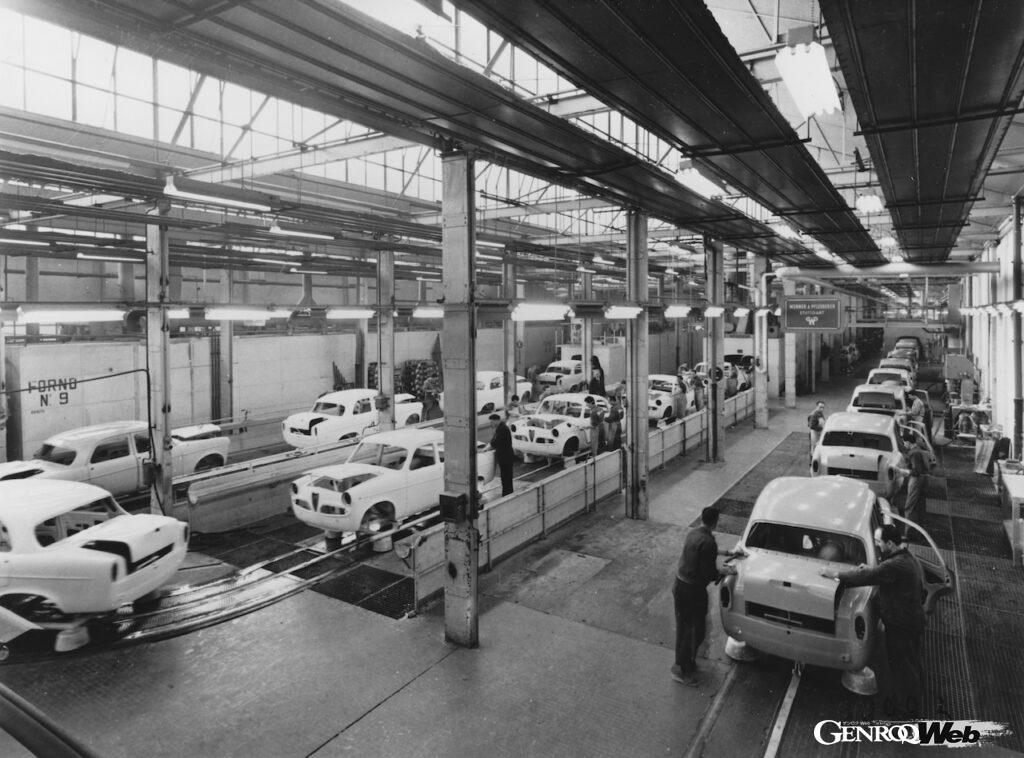
In preparation for the start of production of the Giulietta Berlina, Alfa Romeo rebuilt its Bortello plant, increasing production capacity by fourfold.
The production of the Giulietta Berlina marked a major turning point for Alfa Romeo. Although mass production had begun in the 1900s, the Giulietta Berlina transformed the Portello factory in Milan into a modern facility.
In the early 1950s, the Portello factory was still focused on custom production and had a daily production capacity of no more than 50 cars. Before the start of production of the Giulietta Berlina, Austrian engineer Rudolf Schuelska modernized the factory and redesigned the entire process. New assembly lines were installed, production methods were reorganized, and processes were significantly streamlined.
In just a few years, the Portello plant was able to produce up to 200 cars a day, nearly quadrupling its production capacity. This quantitative evolution of Alfa Romeo was closely linked to Italy’s cultural growth: the country was recovering from the war and becoming wealthy, and Alfa Romeo was no longer just an elite brand, but a leading player in the European automotive industry.
The Giulietta Berlina boasted performance that overwhelmed its rivals, driving dynamics reminiscent of racing cars, and a unique design that was characteristic of Alfa Romeo, and is said to have laid the foundation for modern Alfa Romeo. This compact saloon, with value that transcends its segment, was succeeded by the Giulia, which debuted in 1962.