
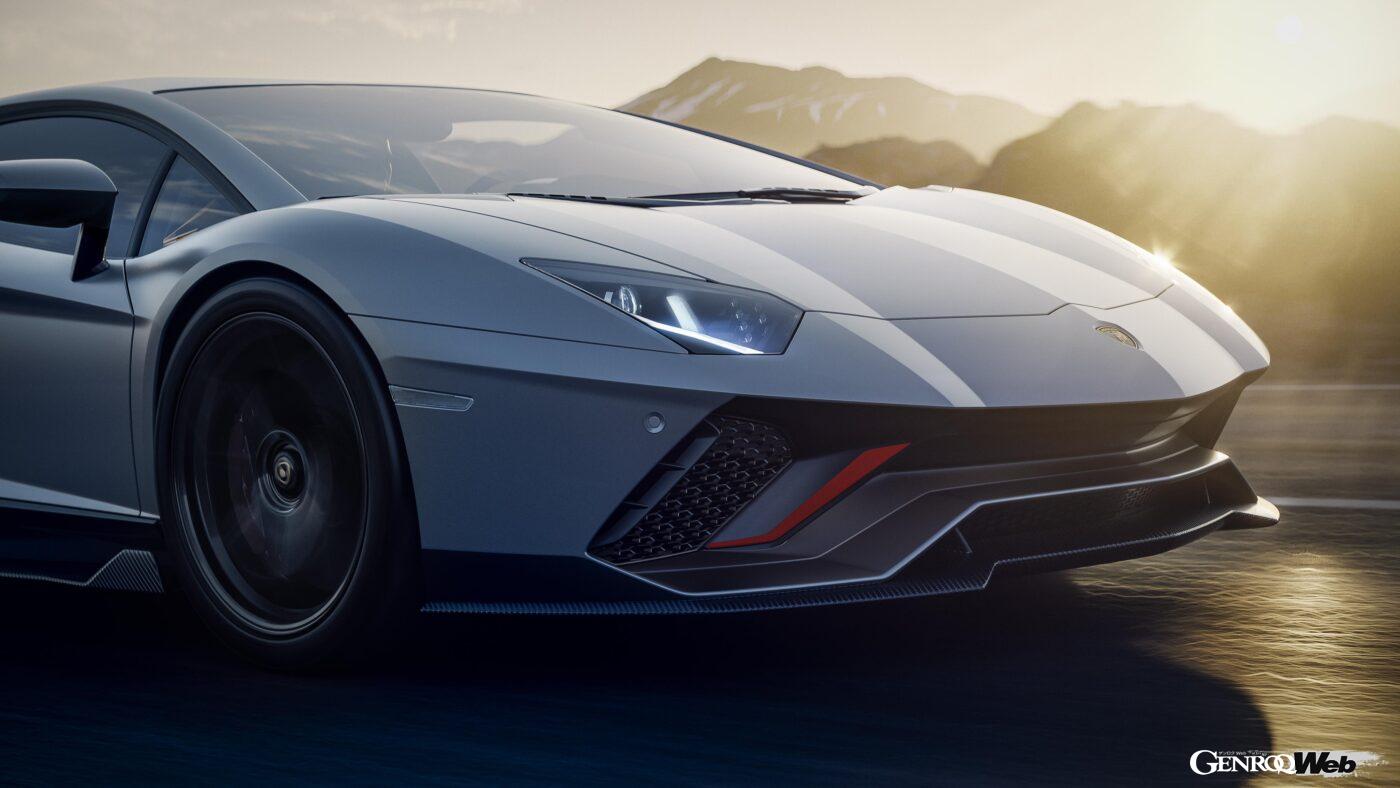
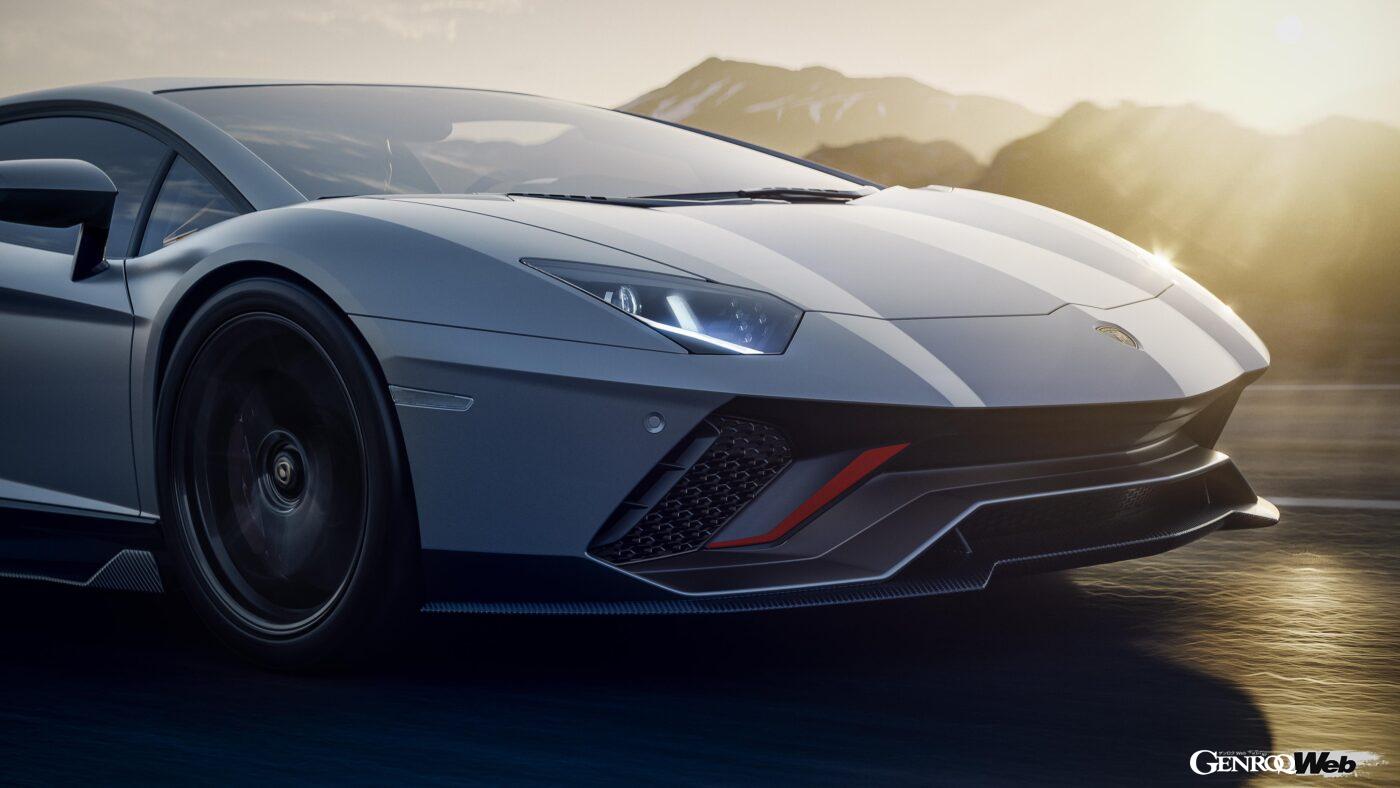
Lamborghini Aventador
What is the Lamborghini Aventador?
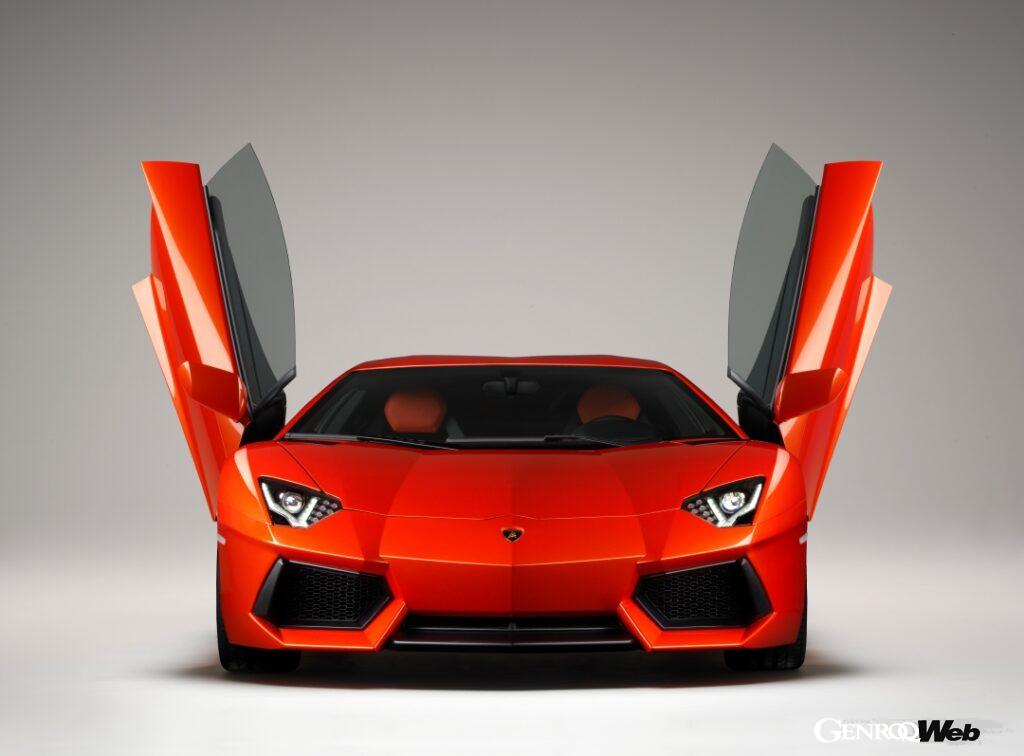
The Aventador was released in 2011 as a model that inherited the Countach’s bloodline.
Lamborghini’s flagship super sports car, the Aventador, is a mid-mounted V12 engine and is a model that inherits the lineage of the iconic supercar, the Countach. The Countach, which was born in 1974, was produced for about 16 years until 1990, and was then succeeded by the Diablo (1991-2001) and the Murcielago (2001-2010). The Aventador took over its position in 2011. Incidentally, like many Lamborghini cars, the Aventador is also named after a fighting bull.
It was the first car from the company to use a carbon fiber chassis, which was groundbreaking at the time of its debut, and the AWD was equipped with a more advanced electronic control system than the previous Murcielago. From the later model “Aventador S” which underwent a minor change in 2016, rear-wheel steering was adopted, achieving high maneuverability. From the Aventador S onwards, it was equipped with an idling stop and cylinder deactivation system for environmental reasons, making it an epoch-making super sports car.
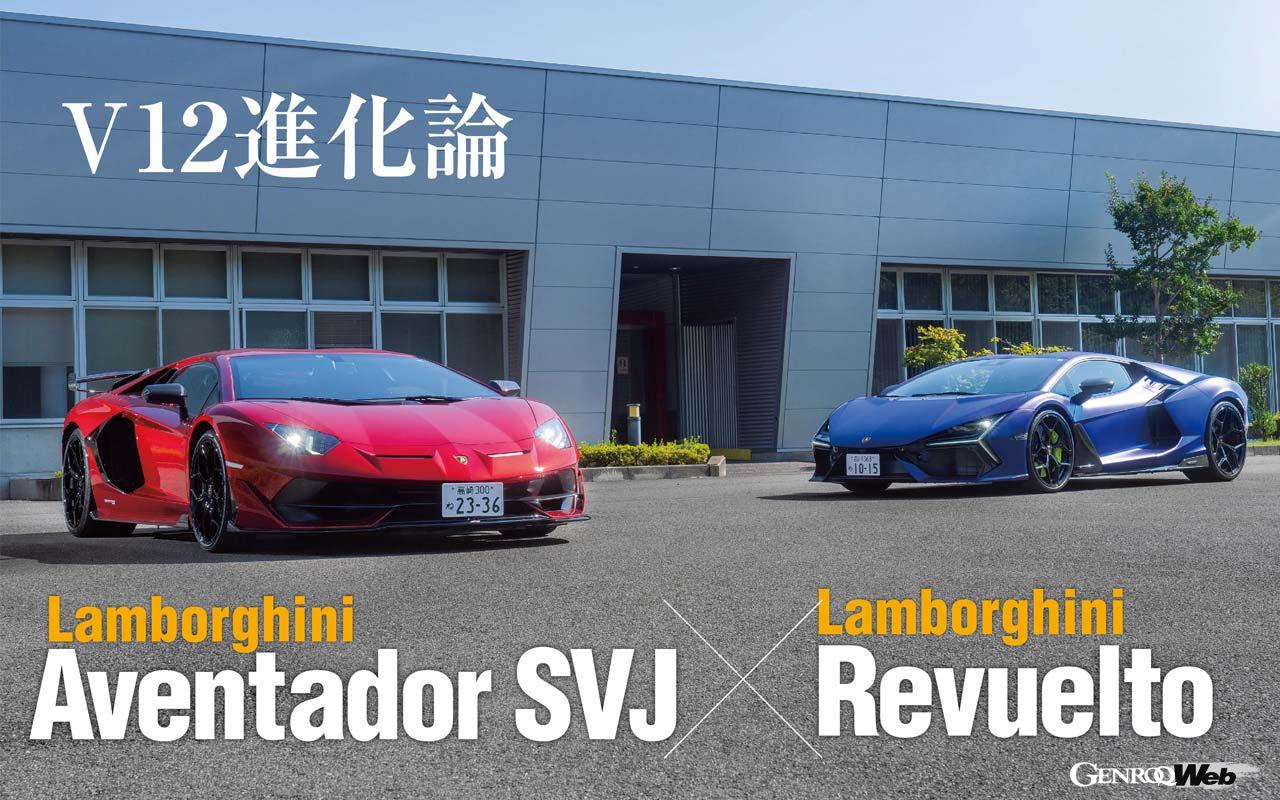
Production ended in 2022, and the flagship position of the Lamborghini brand was taken over by the Revuelto, which was released the following year.
Lamborghini Aventador exterior and interior

[1]

[2]
[1] Lamborghini’s design philosophy is “Form Follows Function.” [2] The interior design is worthy of being called a “cockpit.”
Let’s take a look at the exterior and interior of the Lamborghini Aventador, a representative super sports car. The iconic exterior is instantly recognizable, and the interior is also exotically tailored.
Appearance: A unique world where aggressiveness and beauty meet functionality
One of the great attractions of Lamborghini is its skillful design, which is both aggressive and beautiful. Furthermore, in accordance with Lamborghini’s design philosophy of “Form Follows Function,” the design has some meaning in terms of performance, such as aerodynamics. This is the pride of Lamborghini.
The way the doors open and close is also an important factor in highlighting the car’s exterior. The unique structure, known as “scissor doors” because they open like scissors, creates an overwhelming presence as a supercar, even in a parking lot. At the same time, opening the long, thick doors slightly outward and upwards, rather than to the side, also has the functional benefit of improving accessibility.
Interior: Early adoption of the latest technology
The interior is driver-oriented and worthy of being called a cockpit. The switches are laid out in the incredibly wide center tunnel. While the sheer number of switches is noticeable by today’s standards, the design, reminiscent of an aircraft cockpit, will surely excite the driver.
Carbon fiber is used extensively in the doors and seats, achieving both lightweight and stylish design. Also noteworthy is the early adoption of a TFT LCD display in the instrument panel in addition to the center display.
Lamborghini Aventador size

[3]
![[4] On the other hand, the interior space has been expanded, improving livability (both photos show the SVJ).](https://motor-fan.jp/wp-content/uploads/sites/2/2025/04/524165_v2-1024x682.jpg?v=1744259048)
[4]
[3] The Aventador’s traditional body dimensions make it instantly recognizable as a Lamborghini. [4] However, the interior space has been expanded for improved comfort (both photos show the SVJ).
The Lamborghini Aventador is truly a supercar in terms of size. Its wide and low body proportions and the interior that envelops the driver are symbols of Lamborghini.
Body size: Wide and low, a Lamborghini tradition
The Lamborghini Aventador’s unique dimensions are its extremely wide proportions (LP 700-4) of 4780mm in length and 2030mm in width, as well as its height of just 1136mm. Since its launch in March 2011, various variations have been produced over the 12-year model lifespan, but the overall height and 2700mm wheelbase have remained essentially unchanged (the SVJ and LP 780-4 Ultimae models at the end of the model’s lifespan were 2098mm).
Interior space: A spacious cabin combines cutting-edge technology with Italian craftsmanship
The idea that supercars sacrifice comfort is becoming a thing of the past. The Lamborghini Aventador’s cabin space has been expanded compared to the previous Murcielago to improve comfort. By optimizing the roof shape, the interior space has been increased without sacrificing aerodynamic efficiency. At the world premiere of the LP 700-4, Lamborghini described it as “a spacious interior that combines high-quality materials and Italian craftsmanship with cutting-edge technology and a full range of equipment.”
Lamborghini Aventador’s driving performance and fuel economy
[5]

[6]
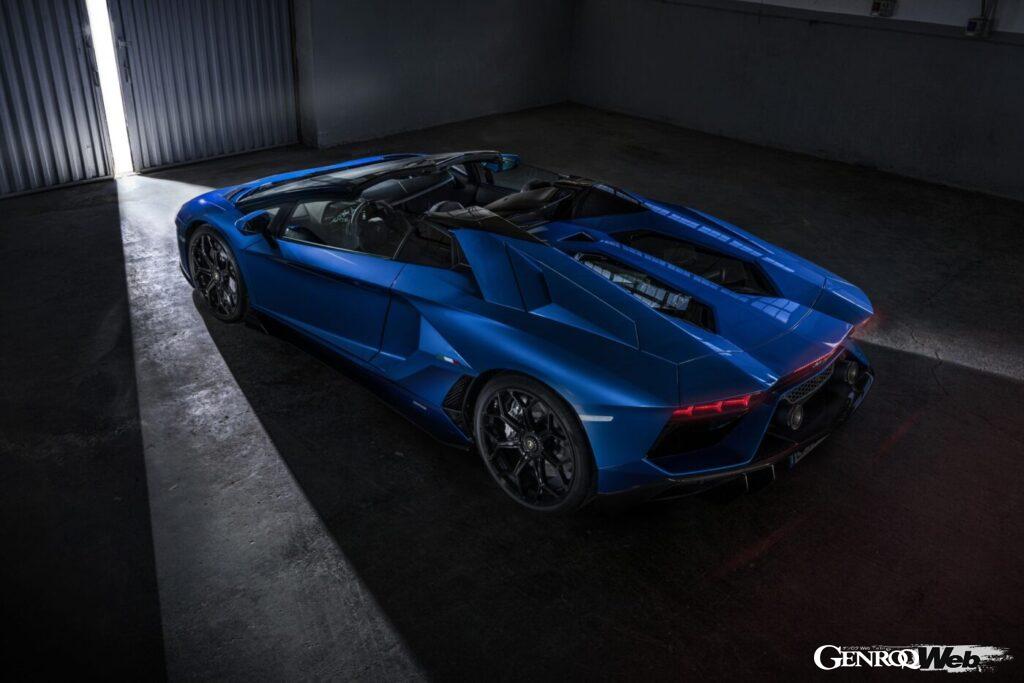
[5] The final model, the Aventador LP 780-4 Ultimae, had a maximum output of 780 PS. [6] Various measures were taken to improve fuel economy, but it was difficult to achieve both increased power output and improved fuel economy with a naturally aspirated engine (both photos are of the Roadster).
The Lamborghini Aventador’s driving performance continued to evolve with new versions released almost every year. The newly developed V12 engine, which initially produced 700 PS, eventually reached 780 PS. However, with a naturally aspirated engine without electric assist, there seemed to be a limit to how much fuel efficiency could be improved.
Driving performance: Originally launched with 700 PS, it was upgraded to 780 PS after 10 years.
The Aventador is equipped with a newly developed 6498cc V12 engine. The LP 700-4, which debuted in 2011, produced a maximum output of 700PS (515kW), as the model name suggests (maximum torque 690Nm/5500rpm). Variations have been added every year, and output has increased, and in 2021 the LP 780-4 ULTIMAE, released in a limited run of 600 units, and the Roadster, have increased their maximum output to 780PS.
Fuel economy: Fuel economy improvement has plateaued for large-displacement multi-cylinder naturally aspirated engines
The LP 700-4’s fuel economy is said to be 17.2 L/100 km, which translates to approximately 5.8 km per liter. The LP 750-4 Superveloce, released in March 2015, achieved improved fuel economy of 16.0 L/100 km (6.3 L/km) despite a power increase of 750 PS. The S model, which underwent a minor change in 2016, was equipped with an idle stop and cylinder deactivation system, but fuel economy dropped slightly to 16.9 L/100 km (approximately 5.9 km/L). The SVJ, released in 2018, received a significant power increase with a maximum output of 770 PS, resulting in a fuel economy of 19.6 L/100 km (approximately 5.1 km/L).
Lamborghini Aventador new car price and maintenance costs

The final model, the Aventador LP 780-4 Ultimae (Coupe), will be limited to 350 units.
The price of a new Lamborghini Aventador started at around 40 million yen for the initial model. The final model, the LP 780-4 Ultimae Roadster, was almost 60 million yen, but as it was a limited edition model of 250 units worldwide (350 for the coupe), it sold out immediately.
New car price: Approximately 60 million yen, final specification sold out immediately
When the Lamborghini Aventador LP700-4 was released in 2011, its manufacturer’s suggested retail price (including consumption tax) in Japan was approximately 41 million yen. The LP 750-4 Superveloce, released in 2015, saw its price rise significantly due to its increased power and lighter weight, with the coupe priced at 47,955,883 yen and the roadster priced at 52,389,883 yen. The final model, the LP 780-4 Ultimae, produced in 2021 with a total of 600 units, was priced at 54,543,088 yen and 59,864,236 yen, respectively, but its allocation to Japan was immediately sold out.
Maintenance costs: Will the Aventador cost around 1.5 million yen per year?
In the case of the Lamborghini Aventador, which is equipped with a 6.5-liter V12 engine, automobile tax, which is levied according to engine displacement, reaches the highest rate and exceeds 100,000 yen per year. A 12-cylinder engine also requires 13 liters of engine oil (for the Aventador S). Voluntary insurance, the cost of parts required for maintenance, and the amount of labor required are expensive, so although this is only a rough estimate, annual maintenance costs are estimated to be around 1.5 million yen. The rear tires are also a unique size, 335/25, and even when purchased online, they are said to cost over 100,000 yen each. Below are some rough estimates.
| classification | item | Annual cost (yen) | remarks |
| Taxes and insurance | automobile tax | 111,000 | Displacement 6.5L, highest tax rate applicable |
| weight tax | 16,400 | Weight: 1.6t (32,800 yen for 2 years) | |
| Compulsory automobile liability insurance | 8825 | 17,650 yen for 2 years | |
| Voluntary insurance | 250,000* | Approximate cost for a gold license holder in their 30s | |
| maintenance | Oil change | 100,000* | Oil volume: 13L (varies depending on brand, etc.) Assuming annual change |
| Tire change | 400,000* | PIRELLI P ZERO (F: 255/30 ZR20, R: 355/25 ZR21) Expected to be replaced every 4 years | |
| Consumables replacement | at any time | Regular replacement and maintenance costs for brake pads, brake fluid, batteries, etc. | |
| Daily expenses | gasoline | 40,000* | Calculation based on 1000km driven per year, fuel economy of approximately 5km/L, and gasoline cost of 200 yen/L |
| parking | 600,000* | Assuming a tower parking lot attached to an apartment building in Tokyo (50,000 yen/month) | |
| total | Approximately 1.5 million | * = Approximate figures excluding taxes and compulsory automobile liability insurance premiums |
Lamborghini Aventador model explanation

[7]

[8]

[9]
[7] The LP 780-4 Ultimae is equipped with a 6.5-liter naturally aspirated V12 engine that can produce 780 PS by increasing the engine speed. [8] The LP 780-4 Ultimae Roadster allows you to enjoy its superpower in an open-air setting. [9] Before the Ultimae was released, the SVJ was the most powerful Aventador, producing 770 PS.
The Lamborghini Aventador was released in March 2011 as a flagship model equipped with a V12 engine. After undergoing a minor change in 2016, it evolved into the SVJ in 2018. Production of the Ultimae model will end in September 2022, bringing to a close a history spanning more than 10 years.
Lamborghini Aventador SVJ
The SVJ was announced in August 2018 as the most powerful Aventador model (at the time), with a limited production run of 900 units. “SV” stands for “Super Veloce” (Super Fast) in Italian, and the “J” stands for “Jota.” With increased power and reduced weight, the SVJ boasts a power-to-weight ratio of 1.98 kg/PS and a 0-100 km/h acceleration time of 2.8 seconds. Aerodynamic performance has also been improved, with downforce increased by 40% compared to the Super Veloce, while drag has been reduced by 1%. This “ultra-fast” version truly lives up to its name, recording a time of 6 minutes 44.97 seconds on the 20.6 km Nürburgring Nordschleife, breaking the then-record lap time for a production car.
| announcement | 2018 |
| Overall length/width/height/wheelbase | 4943/2098/1136/2700 |
| engine | 60-degree V12 DOHC |
| Total displacement | 6498cc |
| Compression ratio | 11.8 |
| Maximum power and torque | 566kW (770PS)/8500rpm, 720Nm/6750rpm |
| Transmission, drive system | 7-speed semi-automatic (ISR: independent shift rod), AWD |
| Vehicle dry weight | 1525kg |
| 0→100km/h acceleration | 2.8 seconds |
| maximum speed | >350km/h |
| New car price (excluding tax) | 51,548,373 yen |
Lamborghini Aventador SVJ Roadster
This limited-edition model, produced in 800 units, was unveiled at the Geneva Motor Show in Switzerland in March 2019. The carbon fiber reinforced plastic (CFRP) rooftop can be easily removed by operating a lever inside the cabin. The rear window can be lowered by operating a switch inside the cockpit, allowing drivers to enjoy the sound of the 6.5-liter V12 naturally aspirated engine. The open-top design adds 50 kg to the car’s weight, resulting in an acceleration time of 0-100 km/h of 2.9 seconds for the Roadster, down from 2.8 seconds for the Coupe. As befits Lamborghini’s flagship model, and a luxurious open-top model at that, the price at the time of its announcement was over 57 million yen (excluding consumption tax).
| announcement | 2019 |
| Overall length/width/height/wheelbase | 4943/2098/1136/2700 |
| engine | 60-degree V12 DOHC |
| Total displacement | 6498cc |
| Compression ratio | 11.8 |
| Maximum power and torque | 566kW (770PS)/8500 rpm, 720Nm/6750 rpm |
| Transmission, drive system | 7-speed semi-automatic (ISR: independent shift rod), AWD |
| Vehicle dry weight | 1575kg |
| 0→100km/h acceleration | 2.9 seconds |
| maximum speed | >350km/h |
| New car price (excluding tax) | 57,143,135 yen |
Lamborghini Aventador LP 780-4 Ultimae (Coupe)
The Ultimae can be said to be the culmination of the Aventador. It boasts the most powerful output in the series, 780 PS, by squeezing an additional 10 PS out of the naturally aspirated V12 engine that reached a maximum output of 770 PS in the SVJ. The final model, “Ultimae” (“Ultimate”), was unveiled at the Goodwood Festival of Speed in July 2021. The Revuelto, which took over the flagship position from the Aventador, uses a plug-in hybrid system combining three motors, so the Aventador can be said to be the last Lamborghini model with a pure naturally aspirated V12 engine. The coupe body was sold in limited quantities of 350 units for approximately 55 million yen.
| announcement | 2021 |
| Overall length/width/height/wheelbase | 4868/2098/1136/2700 |
| engine | 60-degree V12 DOHC |
| Total displacement | 6498cc |
| Compression ratio | 11.8 |
| Maximum power and torque | 574kW (780PS)/8500 rpm, 720Nm/6750 rpm |
| Transmission, drive system | 7-speed semi-automatic (ISR: independent shift rod), AWD |
| Vehicle dry weight | 1550kg |
| 0→100km/h acceleration | 2.8 seconds |
| maximum speed | 355km/h |
| New car price | 54,543,088 yen |
Lamborghini Aventador LP 780-4 Ultimae Roadster
The Aventador Roadster features a removable carbon fiber rooftop. The trade-off for enjoying the open air is that the Ultimae’s dry weight is 1,600 kg, 50 kg heavier than the coupe’s 1,550 kg. Acceleration from 0 to 100 km/h is also 0.1 seconds slower at 2.9 seconds, but this should not disappoint roadster buyers. The price is also “super” at almost 60 million yen, but the limited run of 250 units sold out immediately. Both the coupe and roadster feature special bumpers designed for aerodynamics and cooling performance, as well as a lightweight rear bumper incorporating a large diffuser. The basic structure is a CFRP monocoque, like other Aventadors, but weight is reduced by using numerous carbon fiber parts.
| announcement | 2021 |
| Overall length/width/height/wheelbase | 4868/2098/1136/2700 |
| engine | 60-degree V12 DOHC |
| Total displacement | 6498cc |
| Compression ratio | 11.8 |
| Maximum power and torque | 574kW (780PS)/8500rpm, 720Nm/6750rpm |
| Transmission, drive system | 7-speed semi-automatic (ISR: independent shift rod), AWD |
| Vehicle dry weight | 1600kg |
| 0→100km/h acceleration | 2.9 seconds |
| maximum speed | 355km/h |
| New car price | 59,864,236 yen |
Lamborghini Aventador new and used car prices
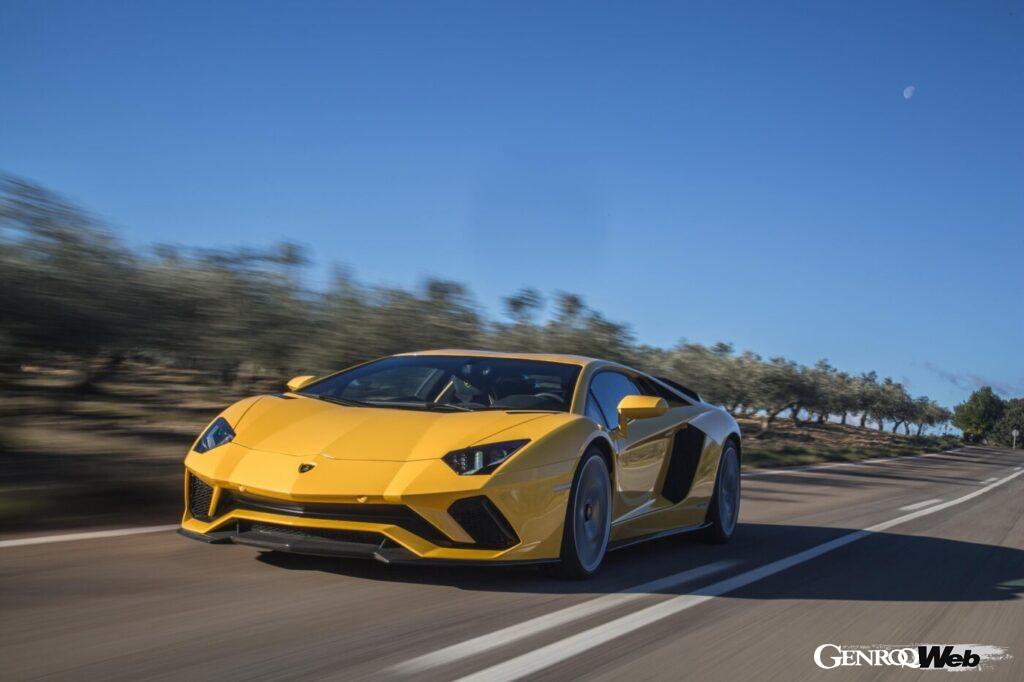
Used LP 700-4 cars, the early model released in 2011, are likely to be found for around 35 million yen (the photo shows the “S” model, which underwent a minor change in 2016).
As the flagship model among Lamborghinis equipped with a 12-cylinder engine, the new Aventador’s price exceeded 50 million yen even for the early 2011 model. Used cars, such as the Ultimae and SVJ, are often priced higher than new cars due to their newer model years and limited production. The early model LP 700-4 (2011-2012 model) can be found for around 35 million yen.
| Model | New car price | Used price |
| Lamborghini Aventador SVJ | 51,548,373 yen (excluding tax) | 85 million to 100 million yen |
| Lamborghini Aventador SVJ Roadster | 57,143,135 yen (excluding tax) | 85 million to 100 million yen |
| Lamborghini Aventador LP 780-4 Ultimae | 54,543,088 yen | 75 million to 95 million yen |
| Lamborghini Aventador LP 780-4 Ultimae Roadster | 59,864,236 yen | 75 million to 95 million yen |
Frequently asked questions about the Lamborghini Aventador
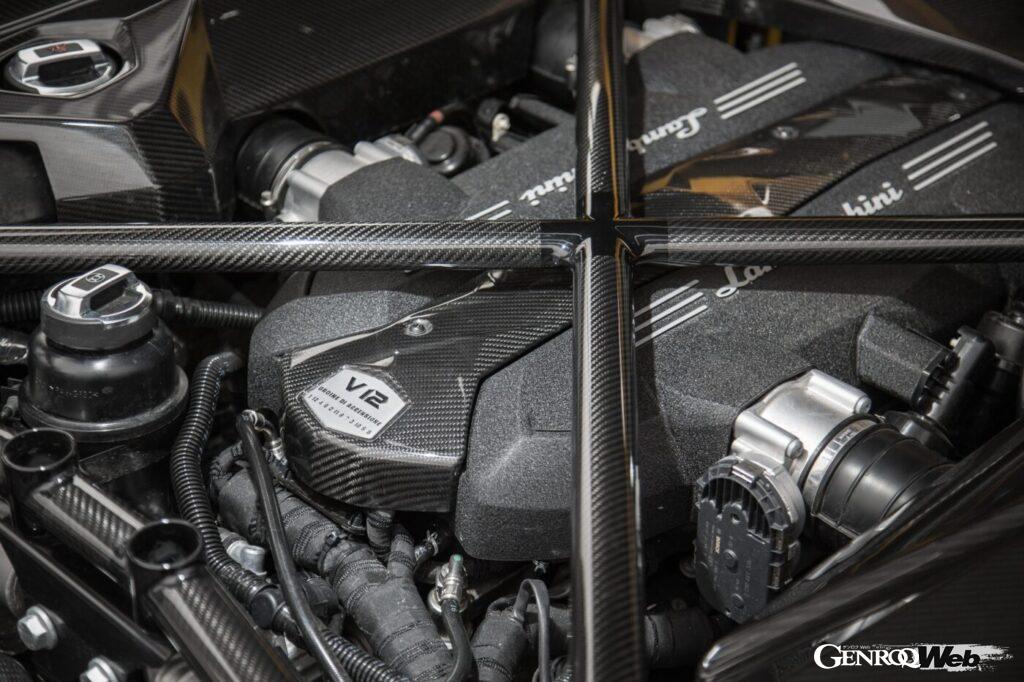
The Aventador’s powertrain remained a “pure” V12 naturally aspirated engine until the very end, without the addition of a turbo or electric assist.
Below, we answer some of the most common questions about the Lamborghini Aventador.
Q. Why wasn’t the Aventador turbocharged?
Lamborghini still considers naturally aspirated engines to be the best in terms of acceleration feel and sound. In particular, the 60-degree V12 engine is said to be a perfect engine due to the excellent balance achieved by evenly spaced firings. Turbochargers are not used in any car other than the Urus SUV, as they interfere with the natural sound of the engine. The Revuelto, the successor to the Aventador, maintains the naturally aspirated V12 engine while complying with environmental regulations by adopting a hybrid system.
Q. What are the major differences between this model and its successor, Revuelto?
While the Aventador stuck with a purely naturally aspirated engine until the very end, the Revuelto, which debuted in 2023, became a plug-in hybrid. Combining a V12 engine with three electric motors, it evolved into a supercar for a new era. The newly developed 6.5-liter naturally aspirated V12 engine is designed for higher rotation, producing a maximum output of 825 PS (607 kW) at 9250 rpm and a maximum torque of 725 Nm at 6750 rpm, for a total system output including the electric motor of 1029 PS (746 kW). In comparison, the Aventador LP 780-4 Ultimae’s engine produces 780 PS (574 kW) at 8500 rpm and 720 Nm at 6750 rpm.
Q. Why didn’t you adopt DCT?
The Aventador uses a single-clutch 7-speed automatic transmission (RMT) called “Independent Shifting Rod” (ISR). This is thought to be due to the emphasis on supercar-like characteristics, achieved by deliberately reducing weight and reducing shift shock. The structure, “single clutch + electronically controlled hydraulic actuator + multiple shift rods,” is derived from F1 transmission technology, and its main advantage is that it allows for a lightweight and compact design.
How to buy a Lamborghini Aventador

Sales of new cars have ended, so used cars will have to be purchased from authorized dealers or specialist dealers.
Production of the Lamborghini Aventador ended in September 2022, and it is no longer available to purchase as a new car. There are showrooms operated by authorized Lamborghini dealerships in Tokyo, Yokohama, Osaka, and Kobe. We recommend inquiring about the availability of used cars, including those owned by other dealerships. It is also a good idea to search online, as used car dealerships that specialize in imported cars also carry them.