
![Why was the M6 super coupe with a V10 engine derived from F1 born? [The history of BMW M]](https://wheelfeed.com/wp-content/uploads/2025/05/1873-1761190618231.jpg)

M6 (E63/64)
The nose features a Sauber BMW V10
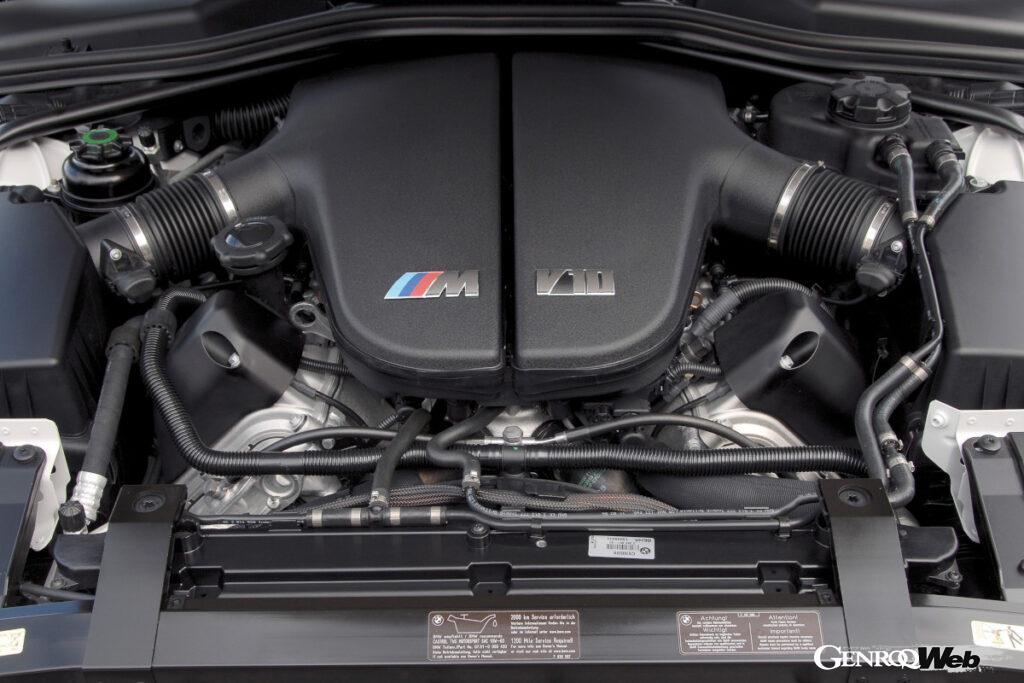
4999cc V10 DOHC “S85B50A” unit
The E31 “8 Series” succeeded the E24 “6 Series” and debuted in 1990. A prototype M8 was soon produced, equipped with a 6064cc V12 DOHC “S70/1” unit producing 640 PS and equipped with blister fenders, but due to environmental and economic issues, the project was cancelled in 1991 and the car was never put on the market.
Instead, BMW M produced the 850CSi, a de facto successor model equipped with a 5576cc V12 “S70B56” unit producing 381 PS, reinforced suspension, four-wheel steering, etc., but no “M” badge was attached to the body or anywhere else.
After that, the lineage of big coupes came to a halt for a while, but when the E63 6 Series was released in 2003, a high-performance coupe manufactured by BMW M was developed for the first time in a long while.
This was the M6, which was announced in 2005. Just as the base model, the 6 Series, was a coupe version of the E60 5 Series, the M6 was also based on the E60 M5, and its nose was equipped with a newly developed 4999cc V10 DOHC S85B50A unit linked to the Sauber BMW F1 program.
0-100km/h acceleration that beats the M5

[1]

[2]
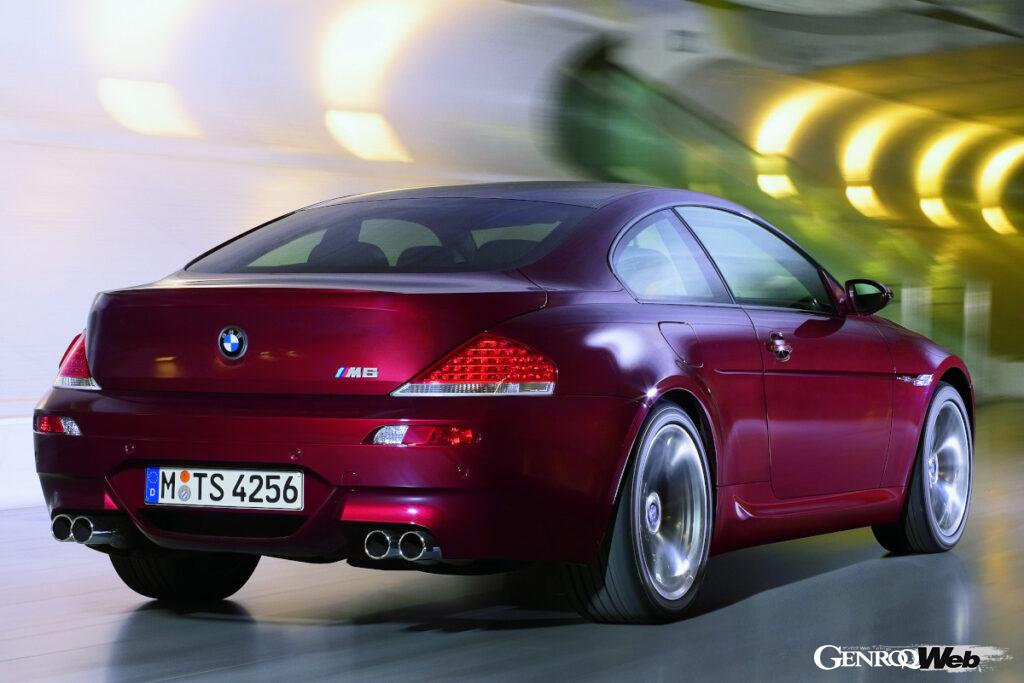
E63 type “M6”
[1] The only gearbox available is the 7-speed SMG-III semi-automatic. [2] The weight has been significantly reduced by using a carbon fiber roof panel, front and rear bumper carriers, and aluminum hood and doors.
The block and cylinder head of the S85B50A engine are made of aluminum, weighing 240 kg. Each cylinder has four valves, a double VANOS (variable valve timing system), and a throttle valve. The control system uses the Siemens MS S65 engine, which produces the same maximum power output as the M5: 507 PS/7750 rpm and maximum torque of 520 Nm/6100 rpm.
The only gearbox available is a 7-speed SMG-III semi-automatic, and thanks to the use of a carbon fiber roof panel that is 50% lighter than steel, front and rear bumper carriers, and an aluminum bonnet hood and doors, the body has been significantly lightened to just 1,710 kg, resulting in a 0-100 km/h acceleration time of 4.6 seconds, beating the M5.
Meanwhile, the chassis is essentially the same as the 6 Series, though it has a special setup. However, it is fitted with special 19-inch light alloy wheels, and the tires are not run-flat, but rather Continental SportContact 2, with 255/40ZR19 in the front and 285/35ZR19 in the rear, as standard. The brakes have also been enlarged, with 374 x 36mm diameter drilled and ventilated discs in the front and 370 x 24mm diameter in the rear. Like the M5, the M6 does not feature active steering.
In contrast to these changes to the interior, the changes to the body are modest, such as the addition of a large front intake, side skirts, and a rear spoiler, and no flashy over fenders or aero parts have been installed.
A year after the coupe, the cabriolet also came out
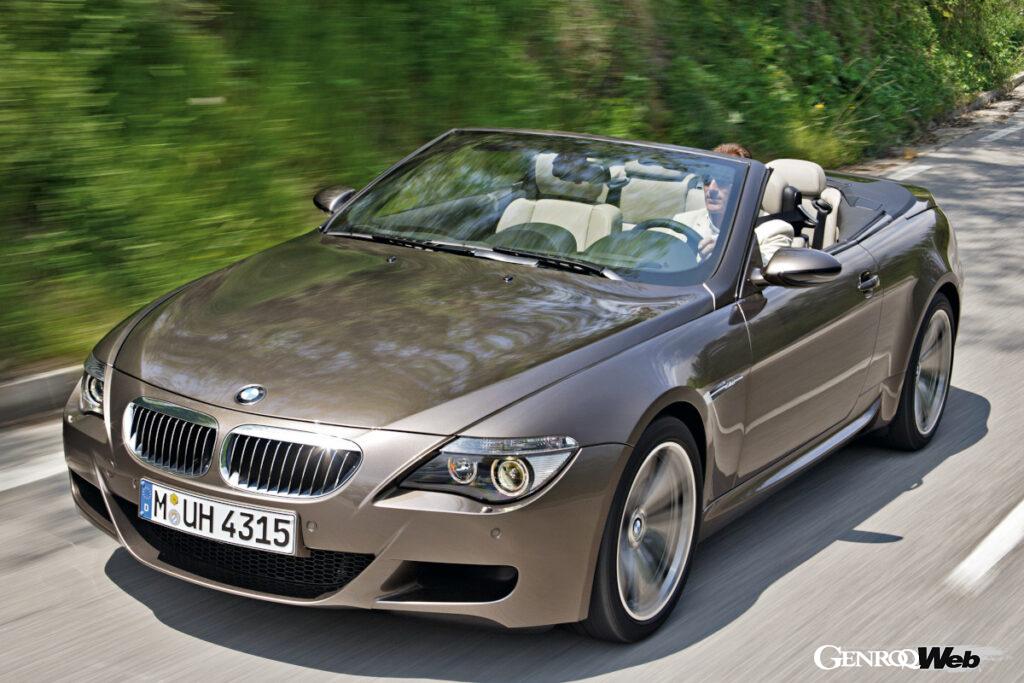
E64 M6 Cabriolet
One year after the introduction of the coupe, the M6 Cabriolet (E64 type) was added. In 2009, a Competition Package was offered, equipped with a lowered suspension, wide-rim wheels, Pirelli P Zero Corsa, and more. In addition, a Competition Special Edition with a special Frozen Gray Metallic body color was also released, limited to 100 units.
However, just like the M5, the prized V10 unit was plagued by problems with rod bearings, double VANOS, throttle actuators, and so on, and in the end, only 9,087 coupes and 5,065 convertibles were produced by 2011. This includes the 6-speed manual coupes (323 units) and convertibles (378 units), which were only available in North America.











![The S-Type, widely regarded as Bentley’s masterpiece post-war saloon [Bentley 100 Years of Car History]](https://wheelfeed.com/wp-content/uploads/2025/11/4703-1762127546348.jpg)