
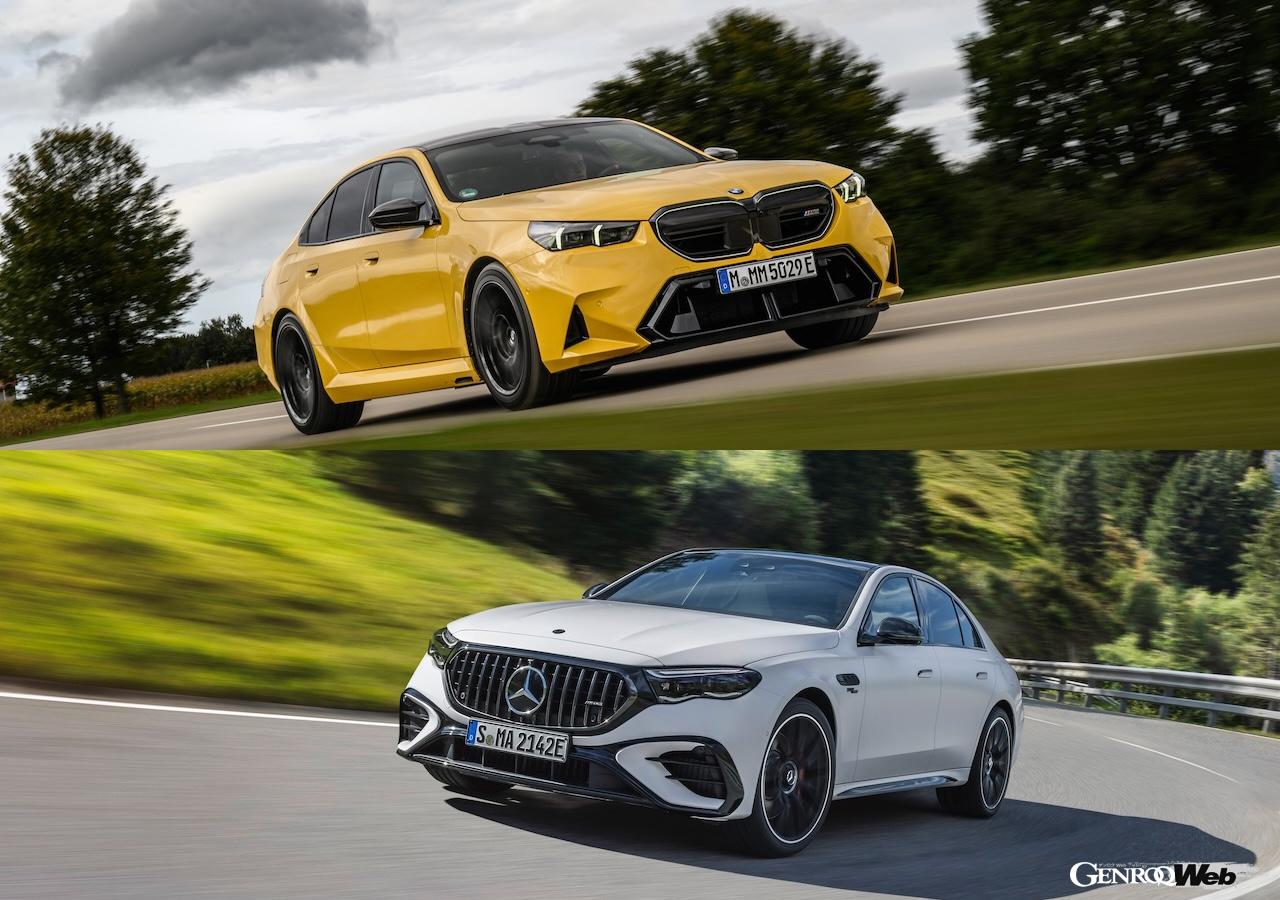

BMW M5
×
Mercedes-AMG E 53 HYBRID 4MATIC+
The relaxed M5 and the taut E 53

BMW M5

Mercedes-AMG E 53 Hybrid 4MATIC+
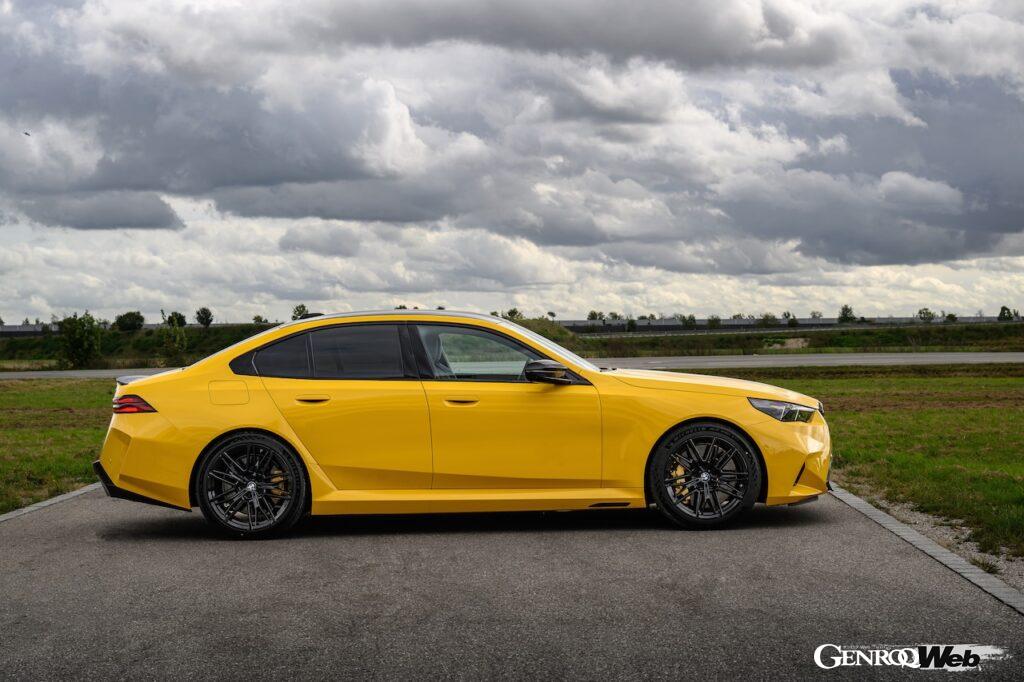
BMW M5

Mercedes-AMG E 53 Hybrid 4MATIC+
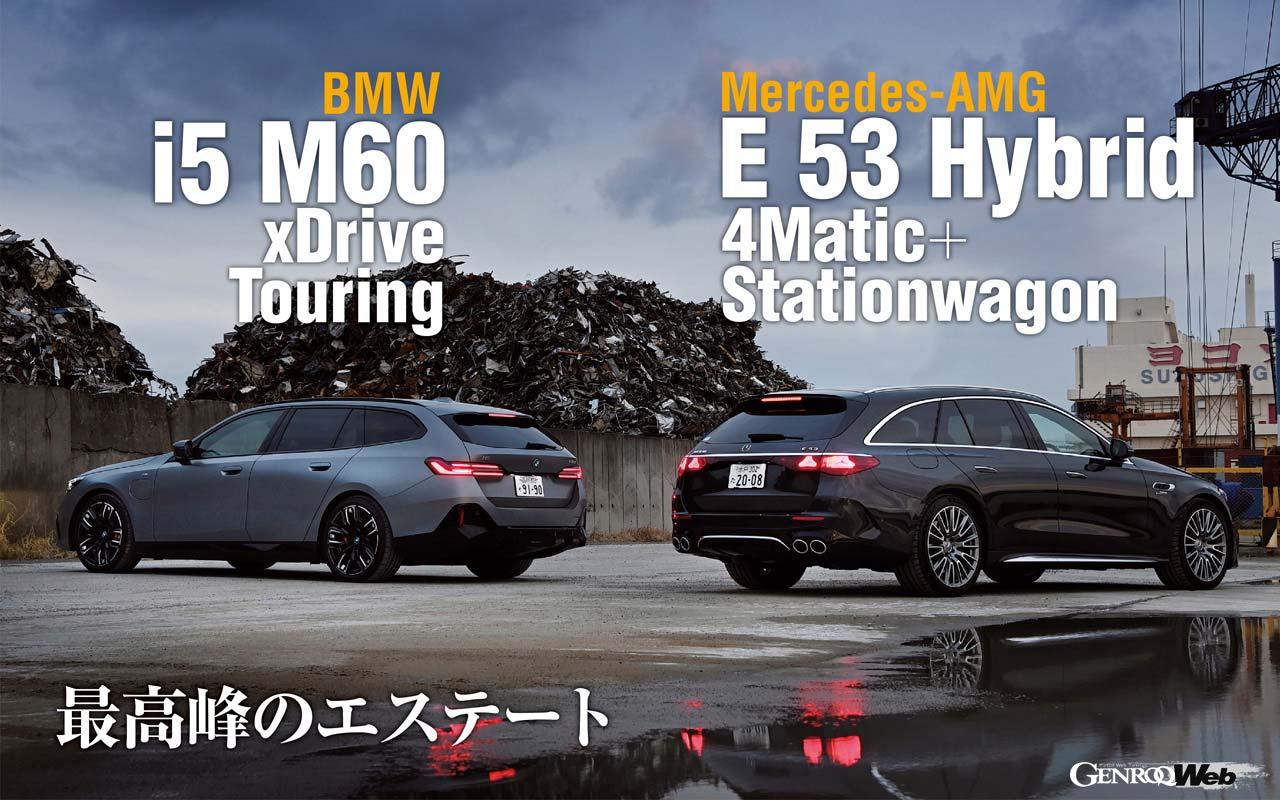
Like the BMW 5 Series on which it is based, the M5 also incorporates BMW’s latest design language, featuring a prominent kidney grille. Its deeply sculpted front apron and massive wheel arches give it a modern impression. The Mercedes-AMG E 53 Hybrid 4MATIC+ is 30mm wider than the E-Class on which it is based, and features an aggressive front section that is instantly recognizable as an AMG.
Comparing the sizes, the M5 is 125mm longer, 70mm wider, and 35mm taller than the E53. The E53 may seem more compact compared to the large M5. The weight is almost the same. The 5 Series and E-Class are rivals that have competed in the same segment for many years, but the M5 is one size larger in terms of the size of the current model.
BMW M5
Body size = Length 5095mm x Width 1970mm x Height 1510mm
Wheelbase = 3005mm
Vehicle weight = 2400kg
Tire size = 285/40R20 (front), 295/35R21 (rear)
Mercedes-AMG E 53 Hybrid 4MATIC+
Body size = Length 4970mm x Width 1900mm x Height 1475mm
Wheelbase = 2960mm
Vehicle weight = 2390kg
Tire size = 265/40R20 (front), 295/35R20 (rear)
The M5’s hybrid system boasts overwhelming power

BMW M5
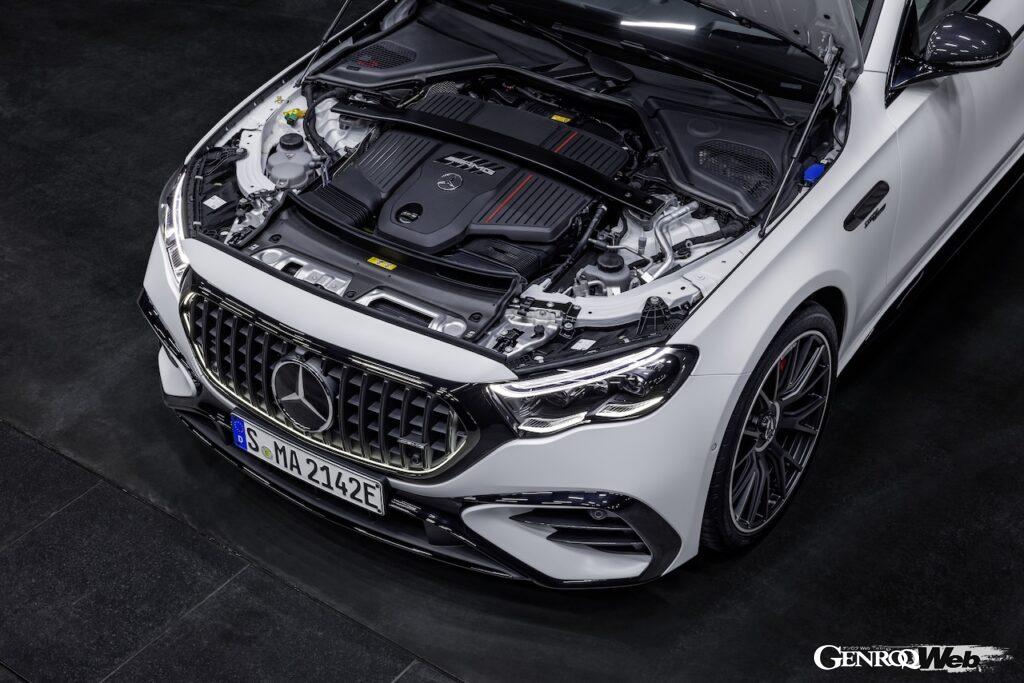
Mercedes-AMG E 53 Hybrid 4MATIC+
Both the M5 and E 53 are equipped with plug-in hybrid powertrains that include lithium-ion batteries. As for the base ICE (internal combustion engine), the M5 is equipped with a 4.4-liter V8 gasoline turbo, while the E 53 is equipped with a 3.0-liter inline 6-cylinder gasoline turbo, a difference of 1.4 liters in displacement alone.
As a result, the M5’s maximum system output is 727 PS, overwhelming the E 53’s 612 PS. The M5 also surpasses the E 53 in top speed and 0-100 km/h acceleration. However, in terms of EV mode, the E 53’s range is over 100 km, while the M5’s range is only 69 km.
BMW M5
Engine type = V8 gasoline + motor
Displacement = 4394cc
Maximum output = 585PS / 6000rpm
Maximum torque = 750Nm / 1800-5400rpm
System maximum output = 727PS / 6000rpm
Maximum system torque = 1000Nm / 1800-5400rpm
Transmission = Electronically controlled 8-speed AT
Drive system = AWD
Top speed = 305km/h
0-100km/k acceleration = 3.5 seconds
Mercedes-AMG E 53 Hybrid 4MATIC+
Engine type = Inline 6-cylinder gasoline + motor
Displacement = 2996cc
Maximum output = 449PS / 5800-6100rpm
Maximum torque = 560Nm / 2200-5000rpm
Maximum motor output = 120kW
Maximum motor torque = 480N
Maximum system output = 585PS
Maximum system torque = 750Nm
Transmission = Electronically controlled 9-speed AT
Drive system = AWD
Maximum speed = 280km/h
0-100km/k acceleration = 3.8 seconds
There are many similarities, but the M5 is more serious

BMW M5

Mercedes-AMG E 53 Hybrid 4MATIC+

BMW M5

Mercedes-AMG E 53 Hybrid 4MATIC+
Both cockpits are equipped with the latest infotainment systems with large screens. The E 53 can be equipped with the optional MBUX Superscreen with passenger monitor. The M5 also features an M control panel in the center console with dedicated setup buttons for the drive system, chassis and recuperation levels.
The M5 and E 53 share many common features, being German sports sedans in the E segment and equipped with the latest plug-in hybrid powertrains, but the price difference between them is 3.5 million yen. Both models boast quality befitting their segment, including the interior quality and comfort features, and the price difference can be attributed to the performance level of the power unit.