
![Experience the versatile off-road capabilities of the Land Rover Range Rover Sport on a dedicated course test drive [Video]](https://wheelfeed.com/wp-content/uploads/2025/05/1815-1761189785170.jpg)
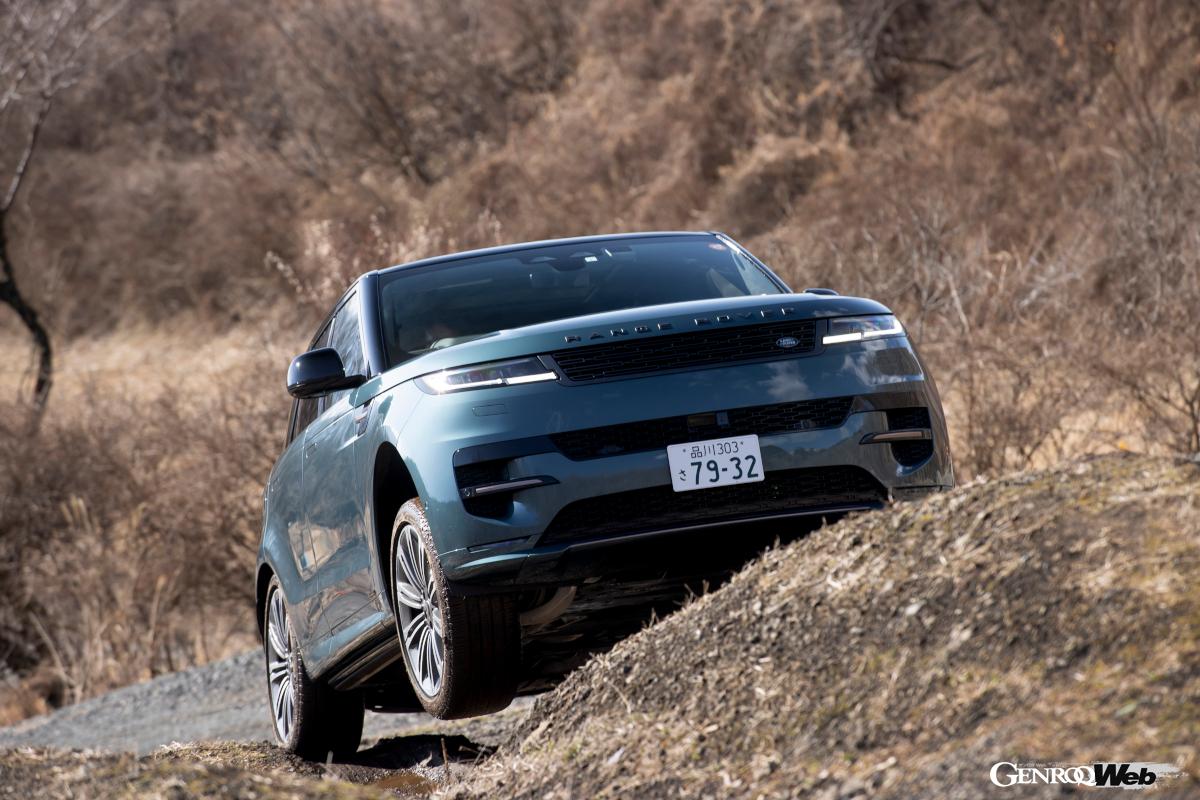
Range Rover Sport Autobiography D300
Off-road course with 23-inch summer tires


The car was fitted with approved 23-inch Pirelli Scorpion MS tires.
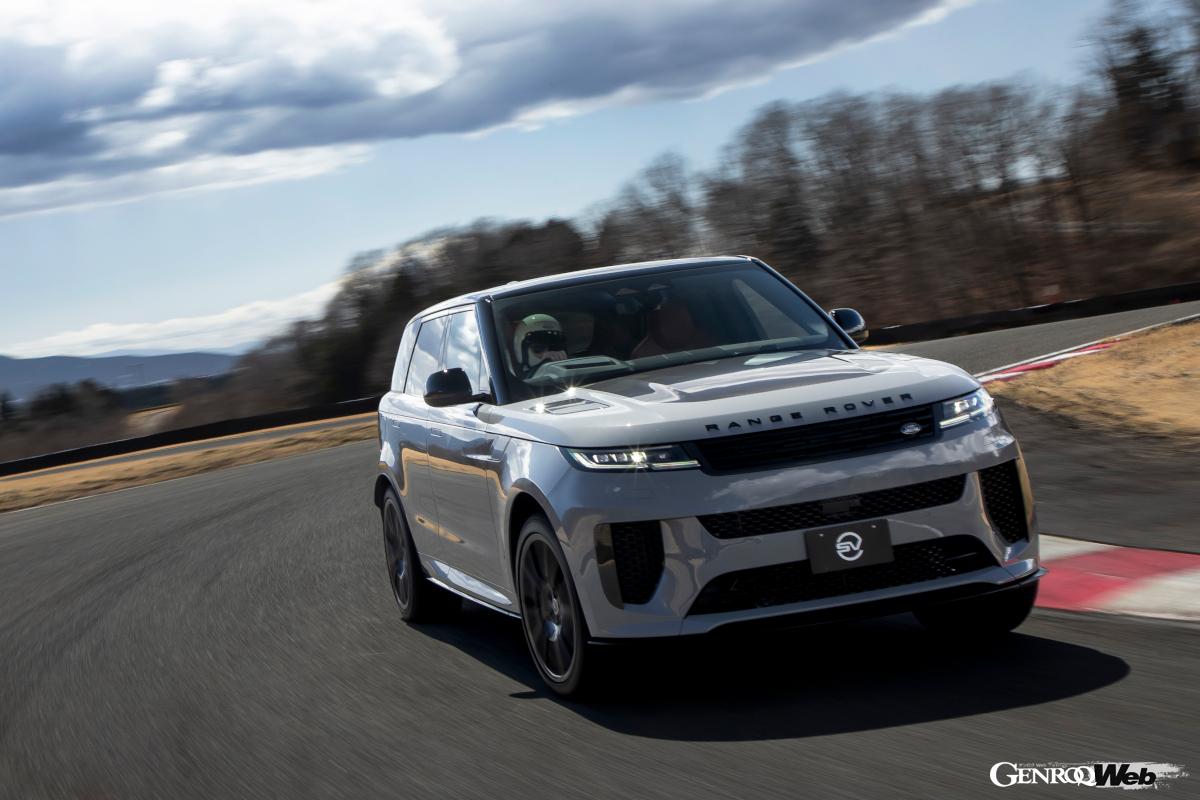
After enjoying the Range Rover Sport SV, Land Rover’s most powerful on-road model, on the short course at Fuji Speedway , we also visited the adjacent off-road course. However, the test drive here was not the SV, but the Range Rover Sport D300, equipped with a 3.0-liter inline-6 twin-turbo diesel engine.
Due to rain the day before, the test drive off-road course was quite muddy. These were ideal conditions for testing the Range Rover Sport’s off-road capabilities, but the vehicle was fitted with 23-inch summer tires. The Pirelli Scorpion MS tires were LR-certified with the M+S (mud and snow) stamp, but from the outside they didn’t look like they were designed for off-road use.
First, switch to off-road mode.


It is equipped with a 3.0-liter inline-6 turbo diesel engine that produces a maximum torque of 650Nm.
The test drive began with a professional driver instructor in the passenger seat. The car was switched to off-road mode, the vehicle height was raised, and the gear was set to low. Of course, it may be possible to drive on an off-road course without switching modes, but to fully utilize the car’s performance, it is best to switch the driver’s mindset along with the driving mode.
Terrain Response 2 has seven modes, including “Comfort,” “Dynamic,” “Eco,” “Grass/Gravel/Snow,” “Mud/Ruts,” “Sand,” and “Rocks.” Following the instructor’s recommendation, we selected “Mud/Ruts” and “Rocks.” The settings of the engine, transmission, differential, and chassis are optimized, allowing the car to travel at a speed that is just right (20-30km/h).
In fact, the powerful torque of the 3.0-liter inline-six diesel turbo prevented the car from going over obstacles too quickly, and the increased throttle response in low gear was kept mild, allowing for extremely smooth driving. Just by gently pressing the accelerator pedal, precise throttle control was activated, gradually clearing large bumps. It had been so long since I last drove off-road that I could no longer remember the last time, but it was a moment when I truly experienced the evolution of technology.
Check your surroundings with the 3D surround camera


By utilizing the 3D surround camera with a 360-degree view, it is easy to identify obstacles in blind spots. The two photos above are from different scenes, so the scenery shown is different.
The course included some narrow forest roads with poor visibility, but the 360-degree 3D surround camera was a reliable tool in these situations. The 3D image, which combines images from cameras mounted on the front, rear, left and right sides of the vehicle, allows the driver to grasp the distance to the cliff right next to the vehicle. Furthermore, the trajectory of the rear wheels is displayed according to the steering angle, allowing the driver to instantly determine whether there is a risk of hitting an obstacle or going off the road due to a difference in the inside turning radius.
Hill descent control is effective on steep downhill slopes. Like ACC (adaptive cruise control), you can set the speed and descend at a constant speed. It can be set to 20-30km/h in low gear and up to 40km/h in high gear, and it automatically activates in the “Mud/Rut” mode, which is nice.
It’s a Range Rover Sport
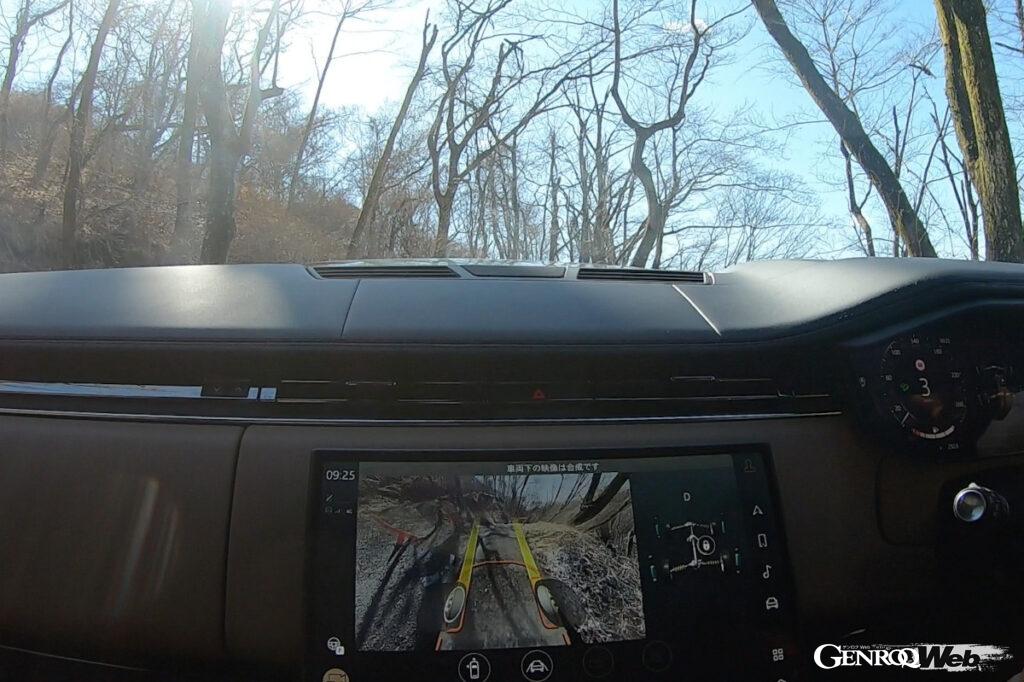

ClearSight Ground View, which combines images from the front camera and projects what’s under the hood, is a feature that can be used off-road.
ClearSight Ground View is also useful on terrain with lots of ups and downs. The image from the front camera lets you see what’s ahead on a steep climb. If you’re concerned about distortion caused by the wide lens, you can adjust the camera angle to get a more natural view.
In addition, the driver can control the speed on downhill slopes by braking. In addition, the ATPC (All Terrain Progress Control) is also equipped to maintain a constant speed on flat off-road surfaces, which is a great feature.
Even with the ability to easily handle such challenging terrain, it’s unlikely that any owner would ever venture into such a place. This is a Range Rover Sport, not a Defender, after all. However, the fact that it has such performance is sure to inspire pride in ownership, further increasing trust and attachment to the car.
PHOTO/Kenji ICHI
Check out the Range Rover Sport’s off-road driving capabilities in this video!
SPECIFICATIONS
Land Rover Range Rover Sport Autobiography D300
Body size: Length 4960mm x Width 2005mm x Height 1820mm
Wheelbase: 2995mm
Vehicle weight: 2570kg
Engine: Inline 6-cylinder DOHC twin turbo
Total displacement: 2993cc
Maximum output: 221kW (300PS) / 4000rpm
Maximum torque: 650Nm (66.3kgm) / 1500-2500rpm
Transmission: 8-speed AT
Drive system: AWD
Suspension type: Front double wishbone, rear multi-link
Tire size: Front and rear 285/40R23
Vehicle price: 15.79 million yen