
Bugatti Veyron 16.4
Piëch’s vision of a new Bugatti
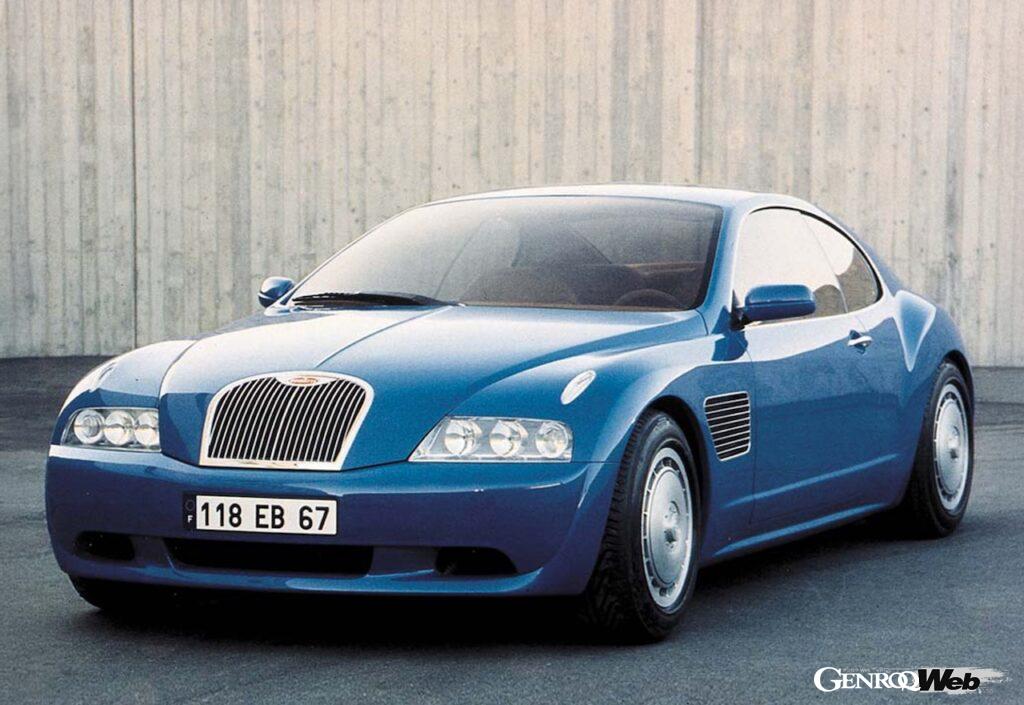
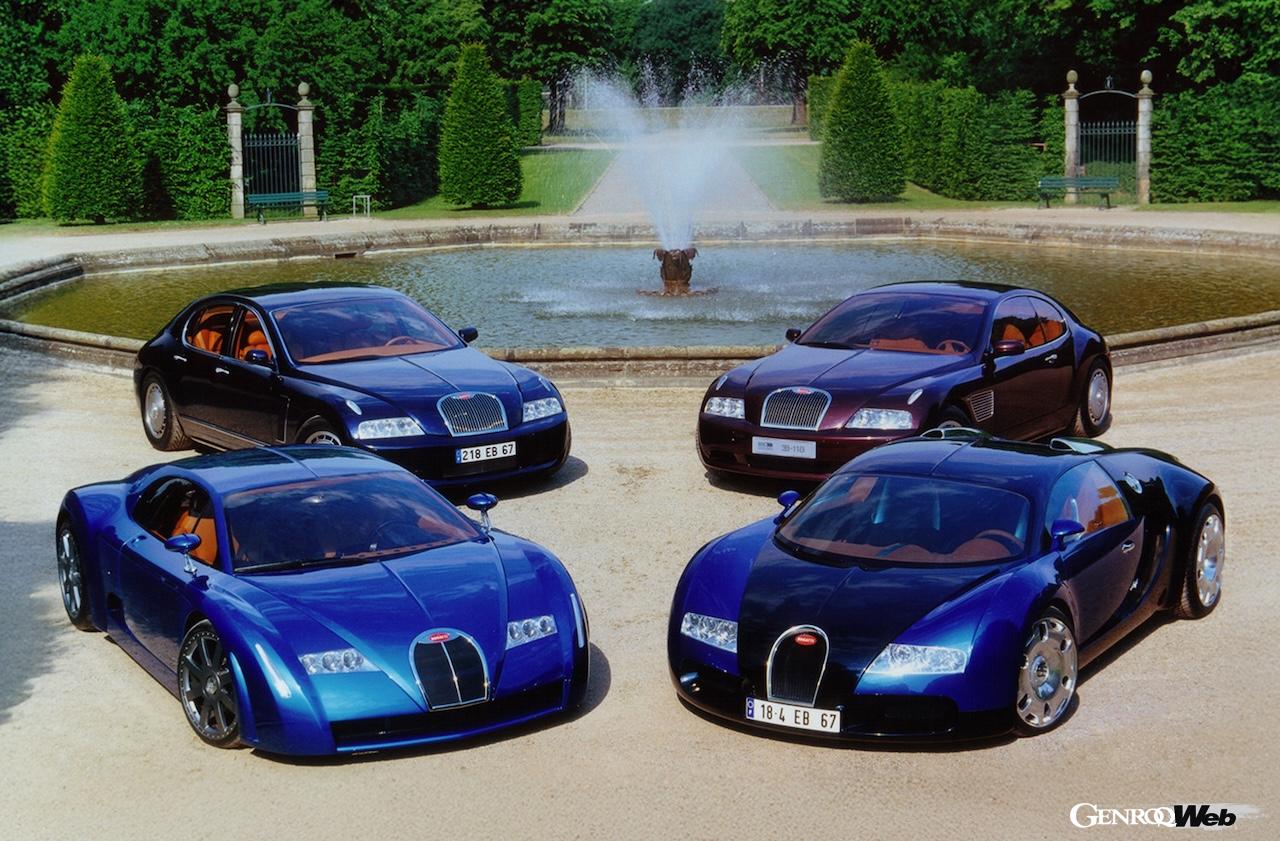
Ferdinand Piëch, who was in charge of Volkswagen at the time, began to refine the concept for the new Bugatti from the inspiration of the W18 engine. The photo shows the first concept car, the EB 118, which was unveiled in 1998.
Few names in the history of the automobile evoke awe for performance, luxury and groundbreaking engineering more than Bugatti. When the Bugatti Veyron 16.4 was introduced in 2005, it was a hyper sports car born from a bold vision that pushed the boundaries of what was previously possible.
The origins of modern Bugatti lie in the extraordinary ambition of Ferdinand Piëch, then chairman of the Volkswagen Group. In 1997, driven by a desire to “create a car with unprecedented power and refinement,” Piëch envisioned the revolutionary W18 engine while traveling on a bullet train in Japan.
The W18 engine, which Piëch, an engineer, sketched on an envelope, became the core of Bugatti’s revival after Volkswagen AG acquired the brand rights in May 1998. Piëch sought not only speed and performance with a top speed of 400 km/h, but also the comfort, elegance, and ease of use expected of a Bugatti.
To realize this vision, Piëch appointed Giorgetto Giugiaro of Italdesign to develop a new vehicle concept, and the first result of their collaboration, the EB 118, was unveiled at the Paris Motor Show in September 1998.
The EB 118 was unveiled as an elegant and imposing two-door coupe, embodying the essence of Gran Turismo. Its design featured a long, streamlined bonnet that reflected the size of the 6.3-liter W18 naturally aspirated engine (555 PS) mounted in the front.
The bulge in the center of the hood pays homage to the spiral lines of iconic Bugatti historic models such as the Type 57 SC Atlantic. The interior is influenced by Art Deco, emphasizing luxury, comfort, and craftsmanship.
Introducing the 4-door saloon “EB 218”
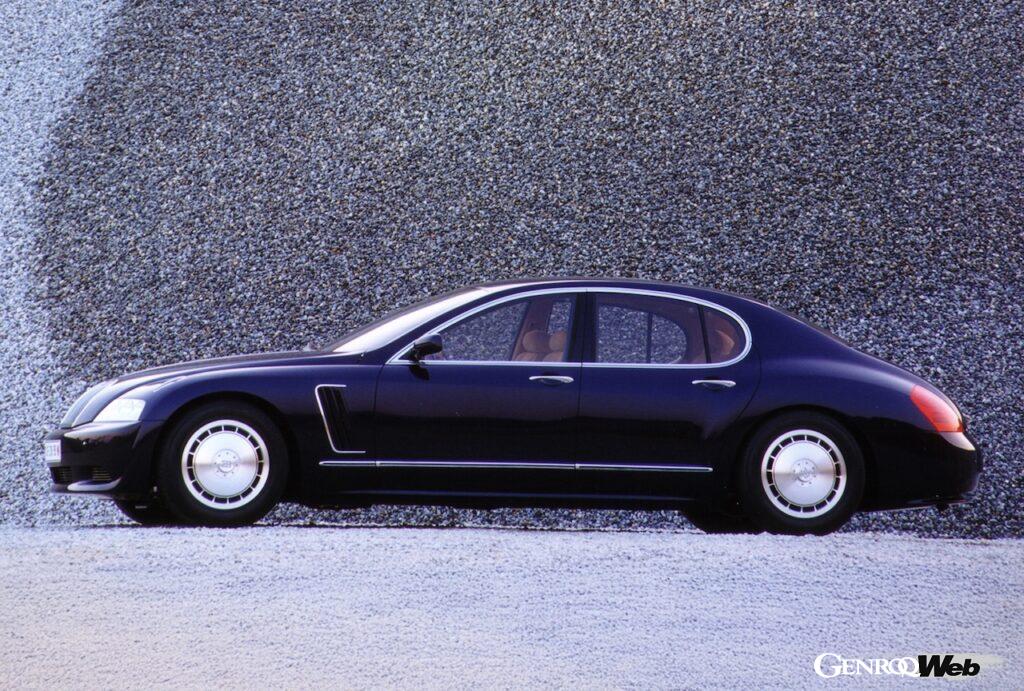
The four-door saloon “EB 218” was unveiled at the Geneva Motor Show in 1999 as a concept car following the “EB 118”.
The luxury saloon EB 218 debuted at the Geneva Motor Show in March 1999. Also designed by Giugiaro, the EB 218 was an evolution of the EB 112 concept model from the Artioli era, and like the EB 118, it was equipped with a powerful W18 engine in the front.
This four-door saloon focused on ultimate luxury and presence, exploring a different side of Bugatti’s identity. Larger than the EB118 (5375mm), it featured subtly revised curvatures for the bumpers, lights and bonnet, adapting the packaging requirements of the W18 to a saloon format, highlighting Bugatti’s ability to produce full-size saloons as well as coupes.
“EB 18/3 Chiron” transition to mid-engine sports car
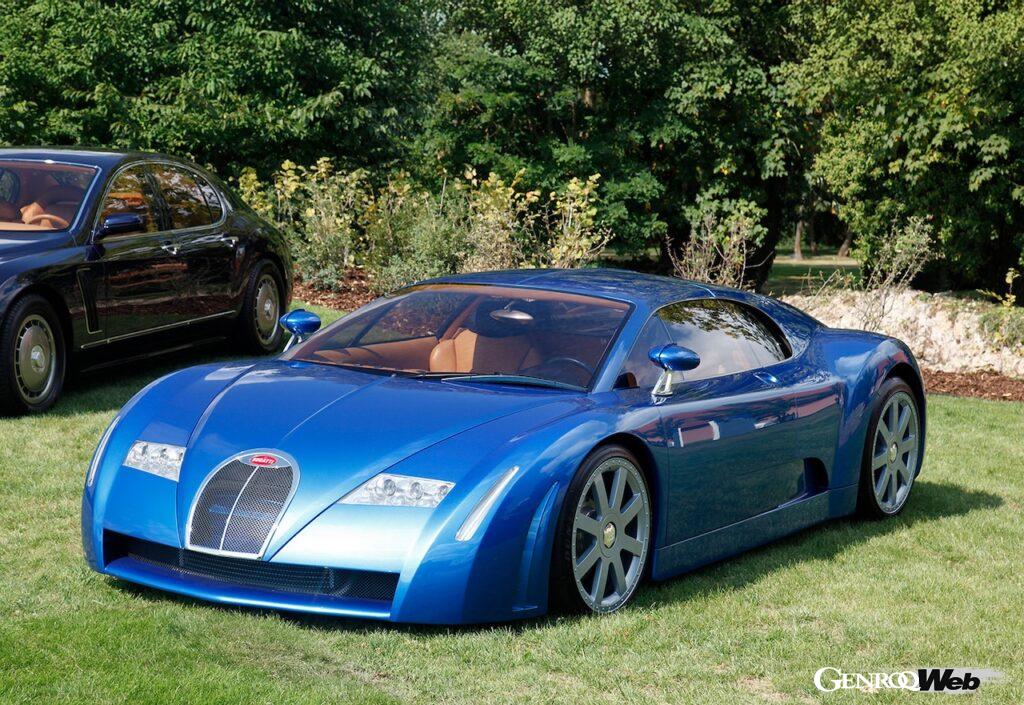
The EB 18/3 Chiron, which had its world premiere at the 1999 Frankfurt Motor Show, marked a major shift from the previous front-engine to a rear-mid configuration.
Bugatti held the world premiere of the EB 18/3 Chiron at the Frankfurt Motor Show in September 1999. Designed by Fabrizio Giugiaro under the guidance of his father, Giorgetto Giugiaro, this concept car broke away from the previous front-engine layout and instead featured a W18 in a mid-engine layout, making it a pure two-seater super sports car concept.
This change in concept dramatically altered the vehicle’s proportions, giving it a more aggressive, cab-forward stance befitting a high-performance sports car. While the 6.3-liter W18 engine, producing 555 PS, and all-wheel drive remained, the styling was more aerodynamically focused.
Named after the legendary Bugatti racing driver Louis Chiron, the concept hinted at the Veyron’s eventual transition to hyper sports car status.
“EB 18/4 Veyron” with a W16 cylinder
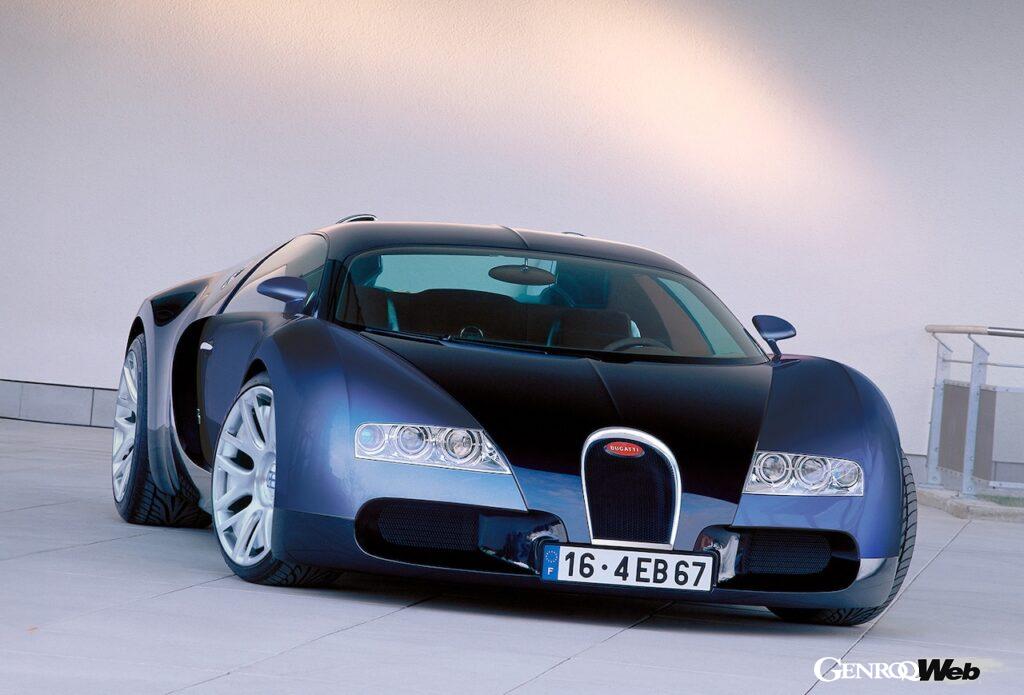
The EB 18/4 Veyron was designed in-house by Volkswagen, replacing the previous Italdesign, and the power unit was also changed to an 8.0-liter W16 quad-turbo engine.
In October 1999, the EB 18/4 Veyron was unveiled as the final evolutionary step before the production Veyron debuted at the Tokyo Motor Show. This concept car marked a major shift in design. Developed in-house by Volkswagen Group’s Hartmut Warcks, the EB 18/4 left Italdesign and featured a young Joseph Cavani as its exterior designer.
The car achieved a more compact and concentrated mid-engine hyper sports silhouette. Its styling strongly predicted the iconic shape, proportions and key design elements of the production model. Initially, it was unveiled with the W18 engine, but the naturally aspirated W18 proved extremely challenging to reliably produce over 1000 PS while managing the heat and complex multi-cylinder configuration. As a result, by 2000 the decision was made to develop a new engine.
That engine was the 8.0-liter W16 quad-turbo engine, which, thanks to the incorporation of an unprecedentedly advanced cooling system, was able to more efficiently achieve Piëch’s extreme performance targets of 1,001 PS and a top speed of 400 km/h.
Pierre Veyron was adopted as the car name

The first mass-produced model, the Veyron 16.4, was named after Pierre Veyron, winner of the 1939 24 Hours of Le Mans.
The choice of the name “Veyron” for the final concept and subsequent production version is a deliberate nod to Bugatti’s rich heritage: Pierre Veyron (1903-1970) was not just a racing driver, but also served as Bugatti’s development engineer and official test driver in the 1930s.
In 1939, Pierre Veyron, together with Jean-Pierre Wimille, drove the Type 57C Tank to victory for Bugatti at the 24 Hours of Le Mans. Giving the Veyron name to this groundbreaking hyper sports car was a key direct link between Piëch’s modern vision and Bugatti’s golden age in motorsport.
The journey from Ferdinand Piëch’s first sketches of the W18 to the Veyron 16.4, the pinnacle of excellence at the time, is marked by constant innovation, iterative design adjustments and a deep respect for Bugatti’s heritage.
Concept cars such as the EB118, EB218, EB18/3 Chiron and EB18/4 Veyron were not just design studies but important stepping stones on the way to production models, each exploring different styling directions (grand tourer, luxury saloon, mid-engine sports car) and serving as test beds for the ambitious W18 engine that would lead to the W16.