

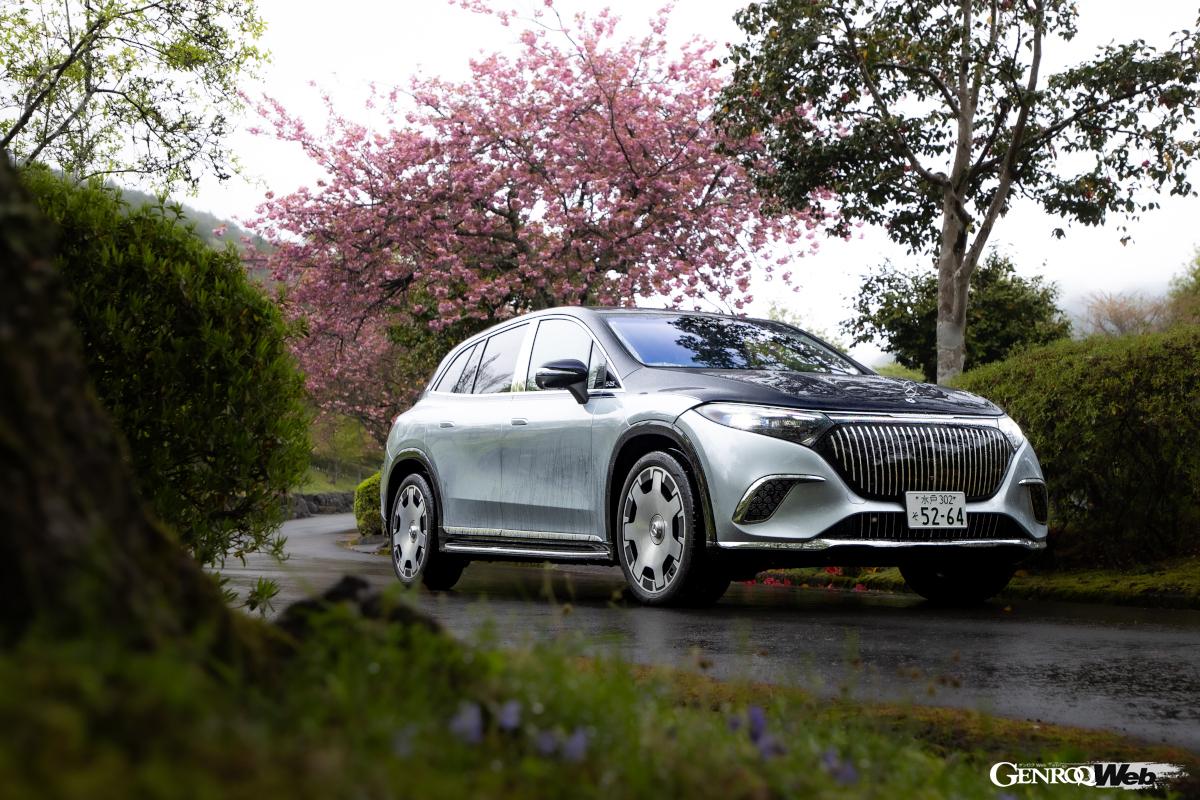
Mercedes-Maybach EQS 680 SUV
Creating a hierarchy through electric vehicles
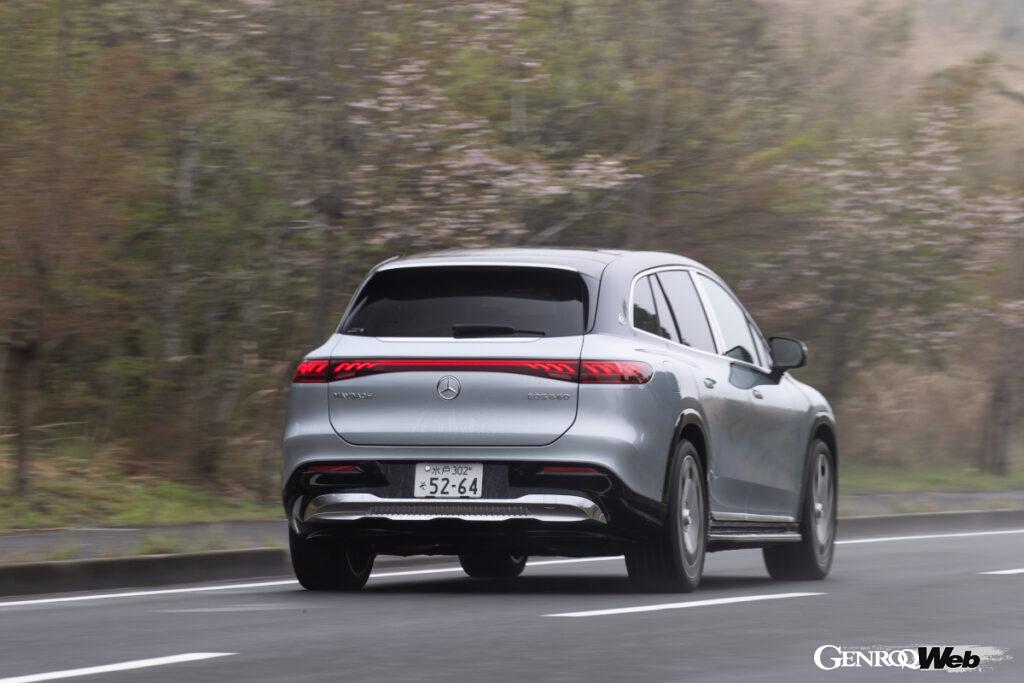
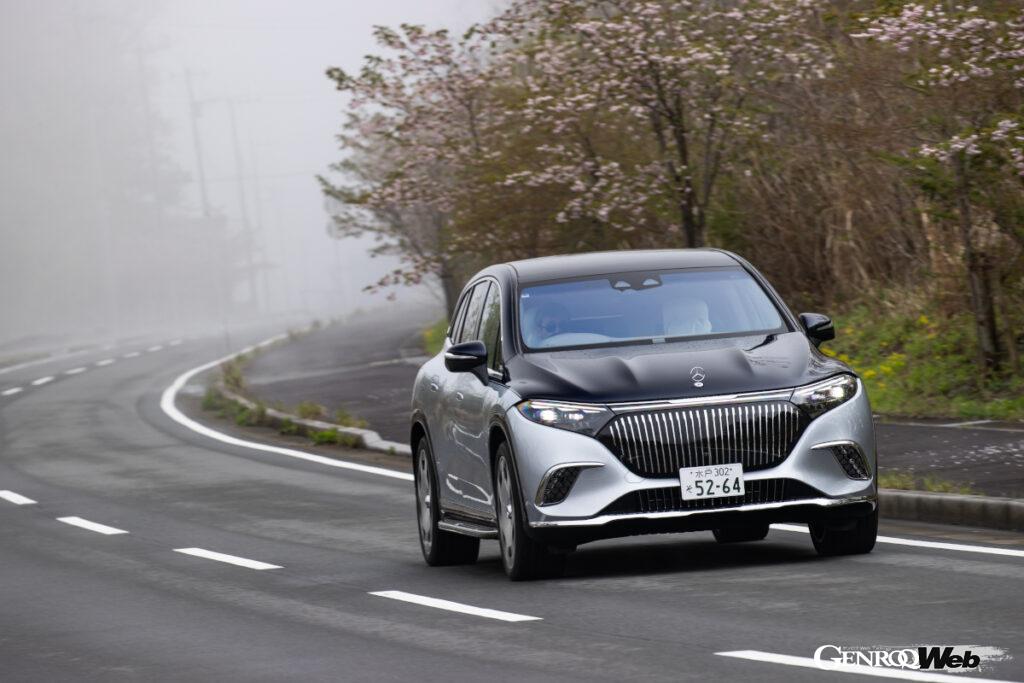
The Mercedes-Maybach EQS 680 SUV boasts a maximum system output of 658 PS and a maximum torque of 955 Nm.
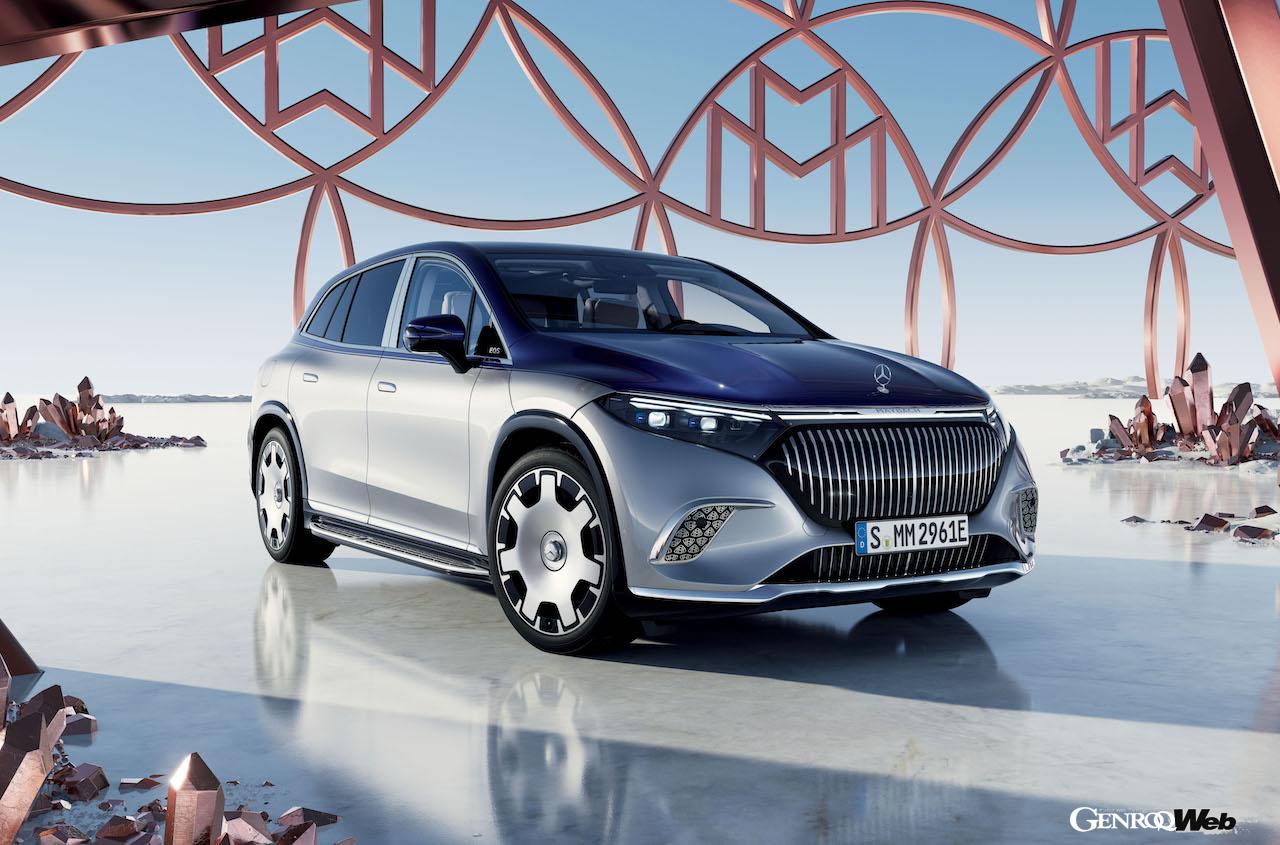
Mercedes-Maybach currently offers three models based on Mercedes-Benz’s high-end models. We test drove their first fully electric SUV, the EQS 680 SUV. While based on the Mercedes-Benz EQS SUV, it redefines luxury in all aspects, from interior and exterior to equipment and ride quality, making it a car worthy of a chauffeur.
The vehicle’s base price is 27.9 million yen, which is about 1.7 times that of the Mercedes-Benz EQS 450 4Matic SUV (16.29 million yen), but there is a big difference in performance as well as the interior design, which will be discussed later. The two cars are both AWD with motors on the front and rear axles, but while the 680 has a maximum system output of 658 PS and a maximum torque of 955 Nm, the 450 only has 360 PS and 800 Nm. Well, these specs are still more than sufficient. In any case, it is difficult to create a hierarchy with electric vehicles that do not have engines (displacement).
The exterior, which exudes a majestic presence, features a special Maybach grille and rear bumper, as well as 22-inch wheels, putting the Maybach character front and center. Furthermore, the test car was equipped with numerous options, including hand-painted two-tone paint (2,859,000 yen!), bringing the total price including options to approximately 34.5 million yen.
A majestic atmosphere with a friendly side

[1]

[2]

[3]
[3]

[4]
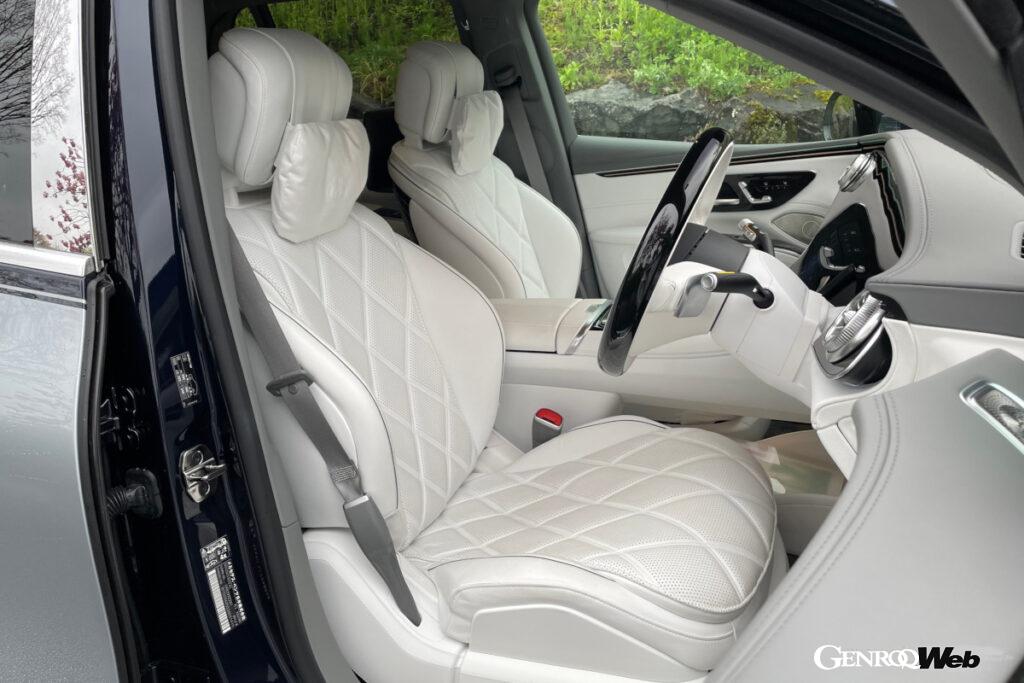
[1] The electric doors open and close with a majestic atmosphere and can be operated from the center display. [2] Rear axle steering (RWS) can be turned up to 10.5 degrees. [3] The high-quality Crystal White Nappa leather interior is an option for 2,247,000 yen. [4] An advanced instrument panel equipped with the MBUX Hyperscreen.
Apparently, buyers of this type of luxury SUV tend to be relatively young and don’t mind driving themselves. First, I open the electric door, which opens and closes with a solemn atmosphere, and climb into the driver’s seat. The advanced instrument panel equipped with the MBUX Hyperscreen and the high-quality crystal white nappa leather interior intimidate an ordinary person (me). My first impression is that the driver’s seat feels enclosed and surprisingly narrow considering the car’s massive body size. I feel a sense of pressure, especially around my left knee around the center console. Despite being a fully-fledged luxury car, it feels very cockpit-like. Perhaps being a chauffeur requires patience.
Its body dimensions are 5125mm long, 2035mm wide, and 1720mm high, but once you start driving it, you get a completely different impression. Equipped with rear-axle steering as standard, it achieves surprisingly easy maneuverability with a minimum turning radius of 5.1m. Its friendly side, which allows it to exit even a small parking lot in one go, is a pleasant surprise, like meeting someone you thought was a tough, complicated person when you first met them, only to find out they’re actually a thoughtful, wealthy person.
As you’d expect from an electric vehicle, the car is extremely quiet while driving. The accelerator pedal feels a little heavy, but that could be said to suit the car’s character. However, once you step on it, it accelerates from 0 to 100 km/h in just 4.4 seconds, boasting speed that doesn’t even consider its massive body of over 3 tons. Even at the height of luxury, it delivers the instantaneous acceleration you desire, just like an electric vehicle.
The best seat might be the passenger seat

[1]

[1]

[1]

[2]

[3]

[3]

[1] Equipped with the optional First Class Package (1,236,000 yen). The seat can be fully reclined with the flick of a switch. A retractable table and cooler box are also included. [2] The side step area is small. [3] The cooler box is located in the center of the rear seat. This reduces trunk capacity.
Now, I timidly step into the back seat, only to find it a mobile suite, fully equipped to pamper the occupants, with wood trim and powered comfort doors that open and close automatically.
As mentioned above, the car has a long wheelbase of 3.2m. The test vehicle was equipped with the optional First Class Package (1,236,000 yen), which means the rear seats are individual seats for two. A retractable table and cooler box are also included. The seats, which are equipped with a relaxation function, can be reclined almost fully with the flick of a switch. An ottoman and cooler/heater are also provided. Due to the test drive time, we were only able to try out the full range of features, such as hot relaxation and calf massage, in short bursts of 10 seconds each.
On the other hand, perhaps because of the heavy body, the rear seats (which are the key) tend to feel the jolts of normal roads, and the front seats felt more comfortable. The passenger seat may be the best seat in this car. The only thing that bothered me was the ease of getting in and out in the rain. It was raining on the day of the interview, and the side steps only protruded slightly, making them small and slippery, plus there was a risk of getting your skirts dirty. However, this shouldn’t be a problem if the chauffeur or the hotel bellboy provided a step stool.
10-year or 250,000km battery performance guarantee
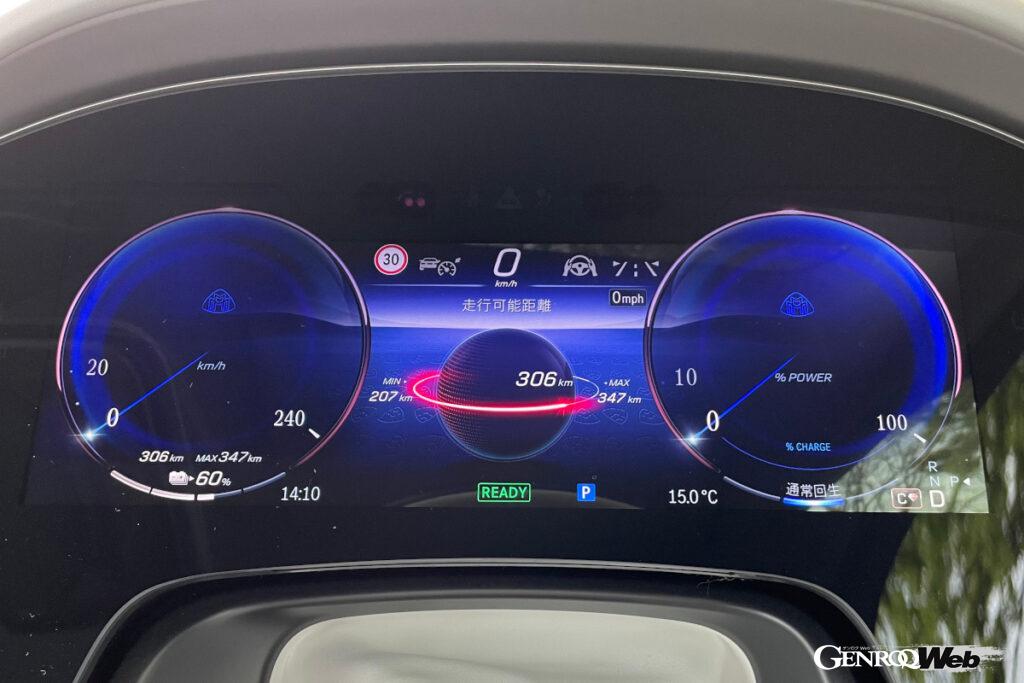
The average electricity consumption shown on the meter display during a one-hour test drive was 3.6km/kWh. The battery level was 60% (which was low to begin with), but the remaining driving range was still 306km, and below that the display showed a maximum of 347km and a minimum of 207km. Equipped with a large-capacity 118kWh lithium-ion battery, the car boasts a maximum driving range of 640km (WLTC), which is quite impressive. I will report on the actual fuel consumption at a later date after taking it on a long tour of several hundred kilometers. Incidentally, the Japanese model comes standard with V2H and V2L functions, allowing for external power supply in emergencies.
So, who should we recommend the EQS 680 SUV to? The early adopters who were interested in fully electric vehicles have now all but died out, and with turbulent factors like the Ukraine war and Trump’s tariffs, the EV market is inevitably slowing down. Many users are still hesitant to buy EVs due to the inconvenience of charging, and even if they do buy one, they usually sell it after a year, or at most two.
Mercedes-Benz Japan guarantees 70% battery performance for the EQS SUV after 10 years or 250,000 km (or whatever the condition is), but on the other hand, it can also be said that this state will be reached after that distance and time. The conclusion is that it is for people who enjoy the moment.
PHOTO/Akio HIRANO, GENROQ, Mercedes-Benz Japan
SPECIFICATIONS
Mercedes-Maybach EQS 680 SUV
Body size: Length 5135 x Width 2035 x Height 1725 mm
Wheelbase: 3210 mm
Vehicle weight: 3050 kg
Motor: AC synchronous motor
Motor maximum output: Front 174 kW (237 PS), Rear 310 kW (422 PS)
Motor maximum torque: Front 346 Nm, Rear 609 Nm
System maximum output: 484 kW (658 PS)
System maximum torque: 955 Nm
Transmission: 1-speed AT
Drive system: AWD
Suspension type: Front 4-link, Rear multi-link
Brakes: Front and rear ventilated discs
Tire size: Front 275/40R22, Rear 275/40R22
Vehicle price: 27.9 million yen