
![Looking back at the fifth-generation M5, the first turbocharged car to reach 600 horsepower [BMW M History]](https://wheelfeed.com/wp-content/uploads/2025/05/1729-1761188568963.jpg)
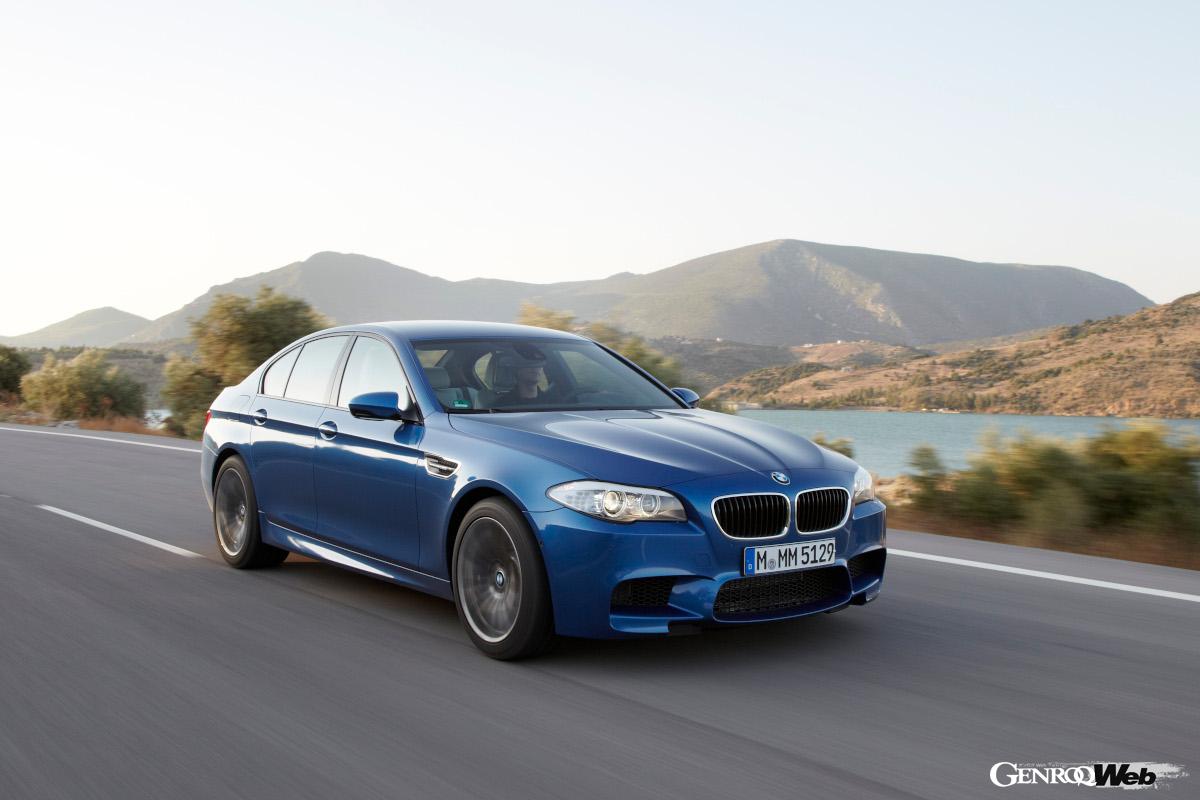
M5 (F10)
First turbocharger, first DCT

The fifth generation F10 model “M5”.
The sixth-generation 5 Series (F10) made an unusual debut when the five-door hatchback F07 Gran Turismo was unveiled at the Frankfurt Motor Show in September 2009, ahead of the conventional sedan and Touring (wagon). The sedan was unveiled in November, and the Touring in 2010, but both use the same platform as the fifth-generation F01 7 Series or the F06 6 Series Gran Coupe.
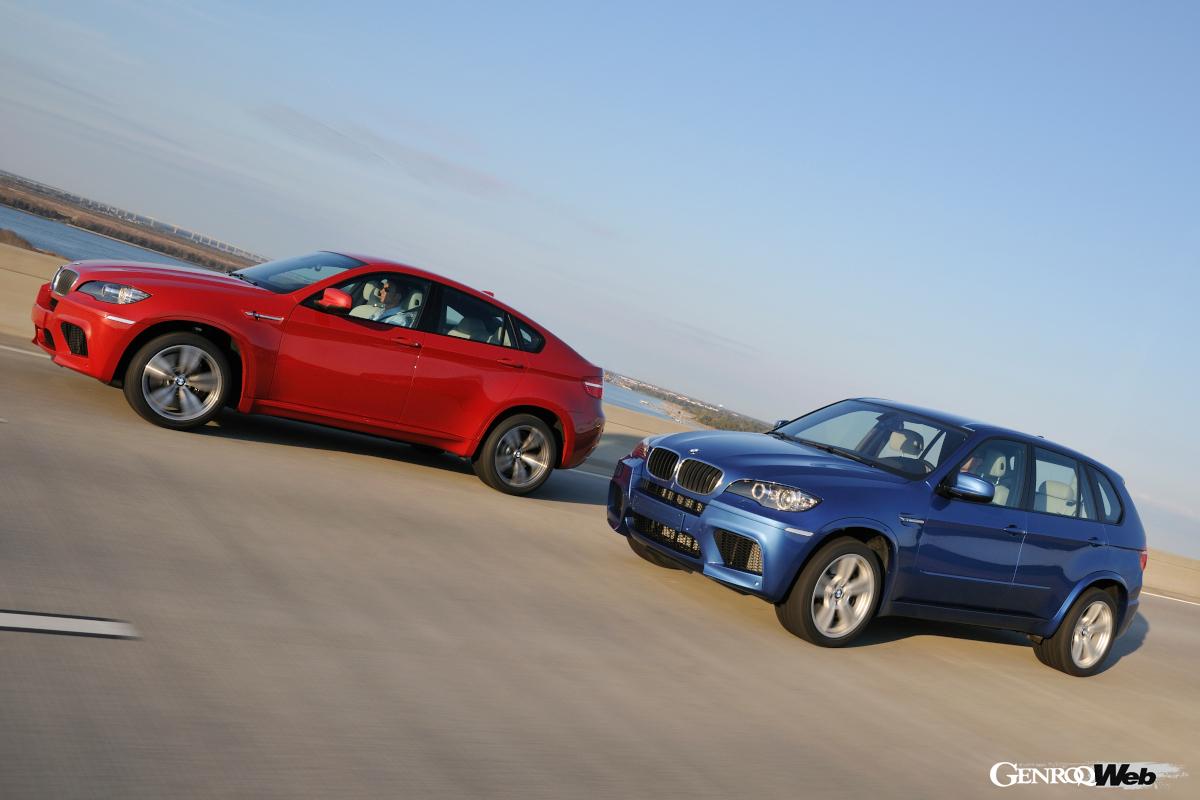
The sixth-generation 5 Series was joined by the M5 in 2011. Only the four-door sedan was available as a base model, and unlike the E60, it was equipped with a 4.4-liter V8 DOHC 32-valve twin-scroll twin-turbo “S63B44TU” engine. This was an updated version of the engine already installed in the X5 M and X6 M, and was the first turbocharged engine for the M5.
This V8, the first BMW M model to feature Valvetronic, increased the compression ratio from 9.3:1 in the X5M to 10.0:1. Boost pressure was also increased from 1.3 bar to 1.5 bar, producing a maximum output of 560 PS/6000-7000 rpm and a maximum torque of 680 Nm/1500-5750 rpm. The gearbox was the first for the M5, a 7-speed DCT (Getrag 7DC1600), and it boasted a 0-100 km/h acceleration time of 4.4 seconds.
The chassis also features a specially set-up front strut and rear multi-link suspension, as well as DDC (Dynamic Damping Control) and M Servotronic electric power steering. It also comes equipped with M Dynamic Mode, which limits the intervention of DSC (Dynamic Stability Control) and leaves the driving experience to the driver’s skill, and M Drive, which can change DSC, DDC, engine response, etc.
Carbon ceramic disc brakes are also available as an option.

[1]

[2]
[1] 4.4-liter V8 DOHC 32-valve twin-scroll twin-turbo “S63B44TU” engine. [2] Front 6-pot calipers are standard equipment.
One of the features of the M5 is that it comes standard with the Active M Differential, a specially developed electronically controlled limited-slip differential (LSD) that uses a variable locking mechanism on the rear axle to appropriately control the engine power distributed to the left and right rear tires, achieving maximum traction.
Other options available include Michelin Supersports with 265/35-20 front and 295/30-20 rear wheels, as well as carbon ceramic disc brakes that are paired with the standard front 6-pot calipers, making for a menu worthy of the M5 name.
The exterior features a front bumper with a large, three-section intake, side skirts, a rear spoiler, a rear diffuser, and four exhaust pipes. The interior is elegant and lavishly decorated with leather, including a nappa leather sports steering wheel with an M logo.
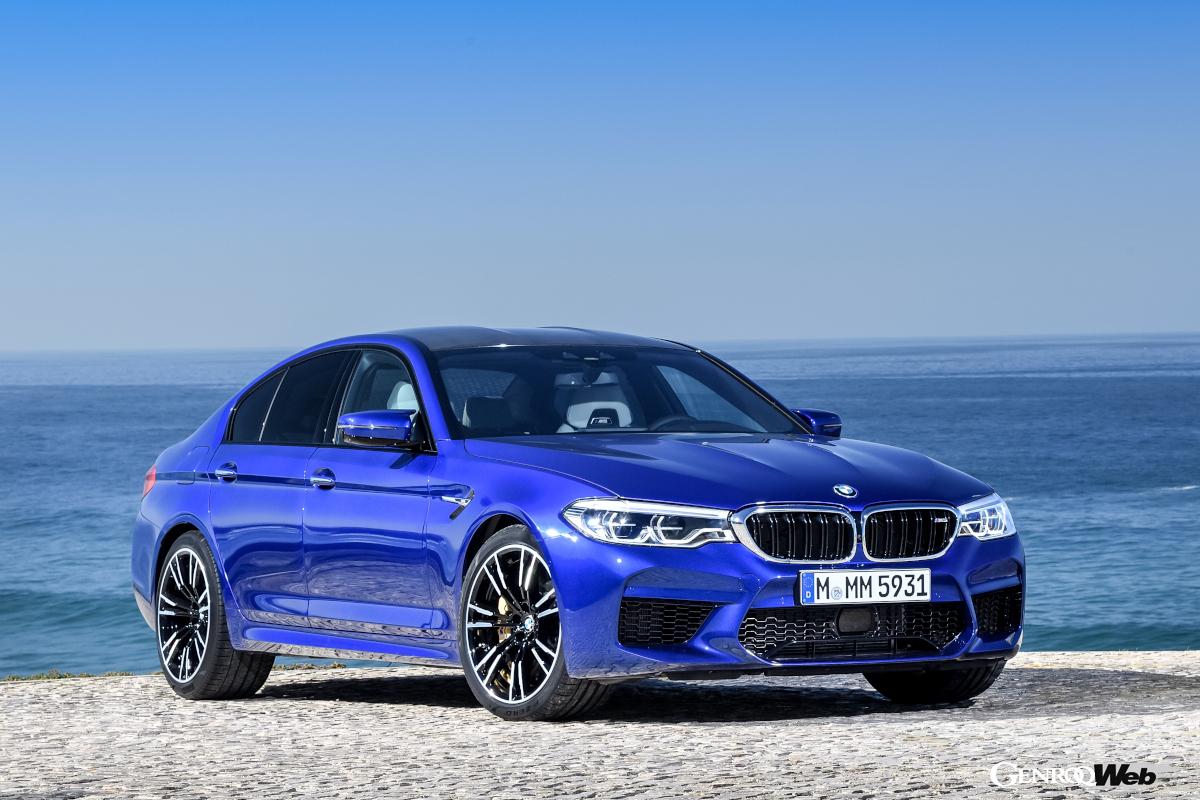
The 2015 model reaches a maximum output of 600 PS


In 2014, the company added the “M5 Competition Package,” which featured a twin-turbo V8 engine tuned to 575 PS, improved bushings, springs, dampers, anti-roll bars, and a 10mm lower ride height. The 2015 model saw the engine output further fine-tuned to 600 PS.
In 2015, the company released the 30th anniversary of the M5’s birth, a limited edition of 300 cars, the “30 Jahre BMW M5.” The interior is based on the M5 Competition Package, and the body color is a special BMW Individual Frozen Dark Silver. Only 11 units, including both left- and right-hand drive models, have been imported to the Japanese market.
Incidentally, the F10 M5 is not produced at BMW M’s Garching plant, but at the Dingolfing plant in Germany, the same plant that produces the standard 5 Series. As of October 2016, 19,533 units have been produced, of which 577 for the North American market are equipped with the rare 6-speed manual transmission.











![The S-Type, widely regarded as Bentley’s masterpiece post-war saloon [Bentley 100 Years of Car History]](https://wheelfeed.com/wp-content/uploads/2025/11/4703-1762127546348.jpg)