
![The second-generation high-performance coupe “M6” surpasses the M5 in performance [BMW M’s history]](https://wheelfeed.com/wp-content/uploads/2025/06/1699-1761188138924.jpg)
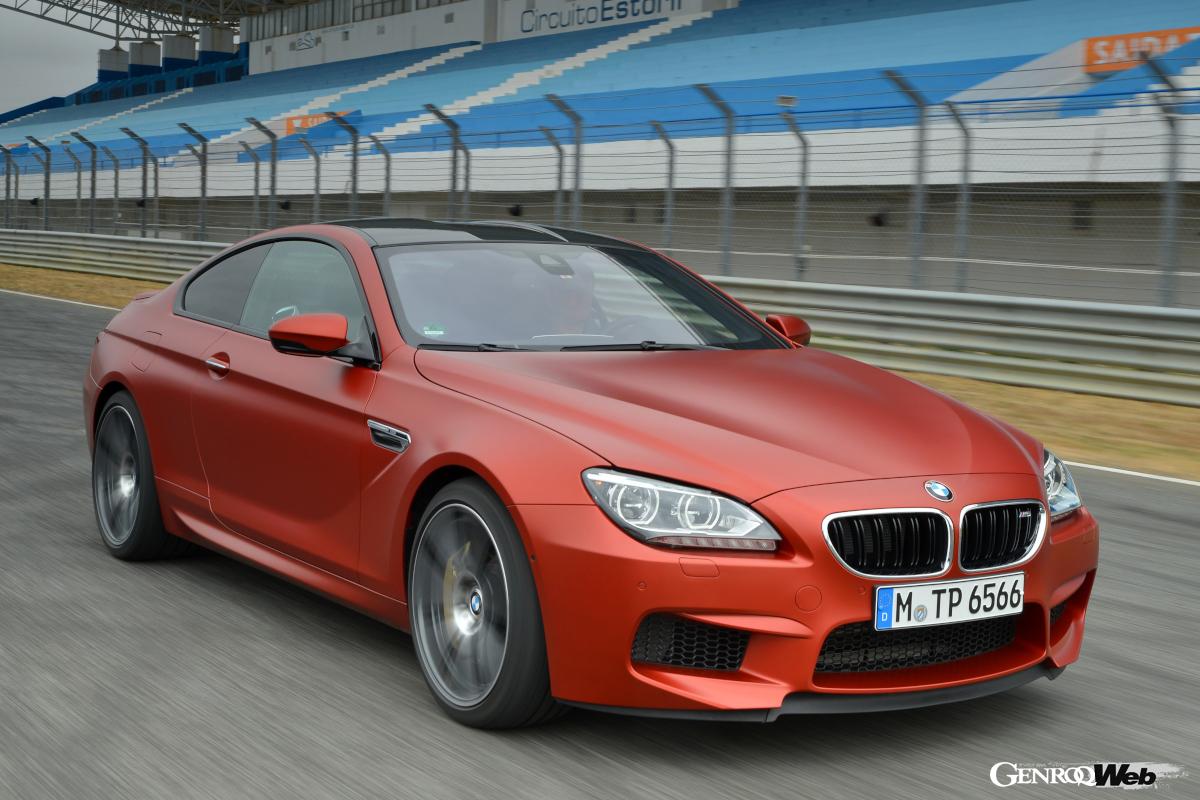
M6 (F12)
With the introduction of the four-door Gran Coupe
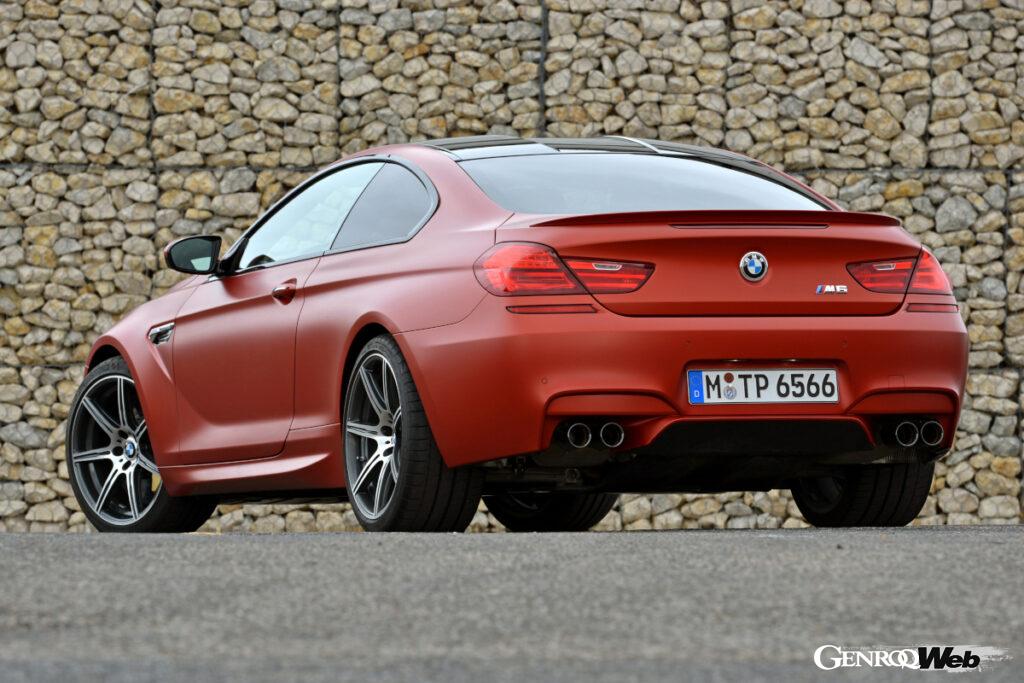
F12 type M6.
BMW’s flagship coupe, the 6 Series, was announced in January 2011 as a two-door convertible (F12), followed by a two-door coupe (F13) in April. At first glance, the exterior design remains the same concept, so much so that it looks like a major facelift of the previous E63 model, but the platform has evolved to the same generation as the F10 5 Series and F01 7 Series. The body size has also grown to 4820mm in length, 1855mm in width, and 1374mm in height, and the wheelbase has also been extended from 2780mm to 2855mm.
The biggest feature of the F12-type 6 Series is that in 2012, a four-door Gran Coupe was added to the lineup, which has the same 2970mm wheelbase as the F10-type 5 Series, but a body that is longer than the 5 Series and lower than the 6 Series Coupe.
Along with the arrival of the Gran Coupe, the long-awaited M6 Coupe, M6 Convertible, and M6 Gran Coupe were also announced.
Improved maximum power and torque

[1]

[2]

[3]
[1] M6 Convertible. [2] M6 Gran Coupe. [3] 4.4-liter V8 DOHC 32-valve twin-scroll twin-turbo.
All three models are equipped with the same “S63B44TU” engine as the M5, which is based on the 4.4-liter V8 DOHC 32-valve twin-scroll twin-turbo engine found in the X5 M and X6 M, but with an increased compression ratio of 10:1 and boost pressure of 1.5 bar. The specs are the same as the M5, with a maximum output of 560 PS/6000-7000 rpm and maximum torque of 680 Nm/1500-5750 rpm. The 7-speed DCT (Getrag 7DC1600) delivers 0-100 km/h acceleration of 4.2 seconds for the M6 Coupe, 4.3 seconds for the M6 Convertible, and 4.2 seconds for the M6 Gran Coupe, all of which are faster than the M5.
By the way, the vehicle weight is 1,850 kg for the coupe, 2,055 kg for the convertible, and 1,950 kg for the Gran Coupe, and the lower height compared to the M5, which weighs 1,980 kg, means less air resistance, which leads to improved performance.
Furthermore, this 4.4-liter V8 twin-turbo engine not only has improved power and torque compared to the 5.0-liter V10 unit of the previous M5/M6, but also boasts an approximately 30% improvement in CO2 emissions and fuel economy thanks to the adoption of Efficient Dynamics technologies such as an auto start-stop (idling stop) mechanism and a brake energy regeneration system.
Carbon ceramic brakes are also available as an option.


Meanwhile, the chassis has a 30mm wider front track than the standard 6 Series. The suspension uses forged aluminum parts, and reinforcement plates have been added to improve rigidity, along with a rigid rear subframe and hydraulic power steering. Of course, the front MacPherson strut and rear multi-link suspension are also specially set up, and like the M5, the Active M Differential is a specially developed electronically controlled limited-slip differential (LSD) that uses a variable locking mechanism on the rear axle to appropriately control the engine power distributed to the left and right rear tires for maximum traction.
The front brakes were equipped as standard with a compound brake system consisting of opposed six-piston calipers, drilled ventilated discs, and aluminum brake covers, and M carbon ceramic brakes were also available as an option.
Equipped with standard aero parts
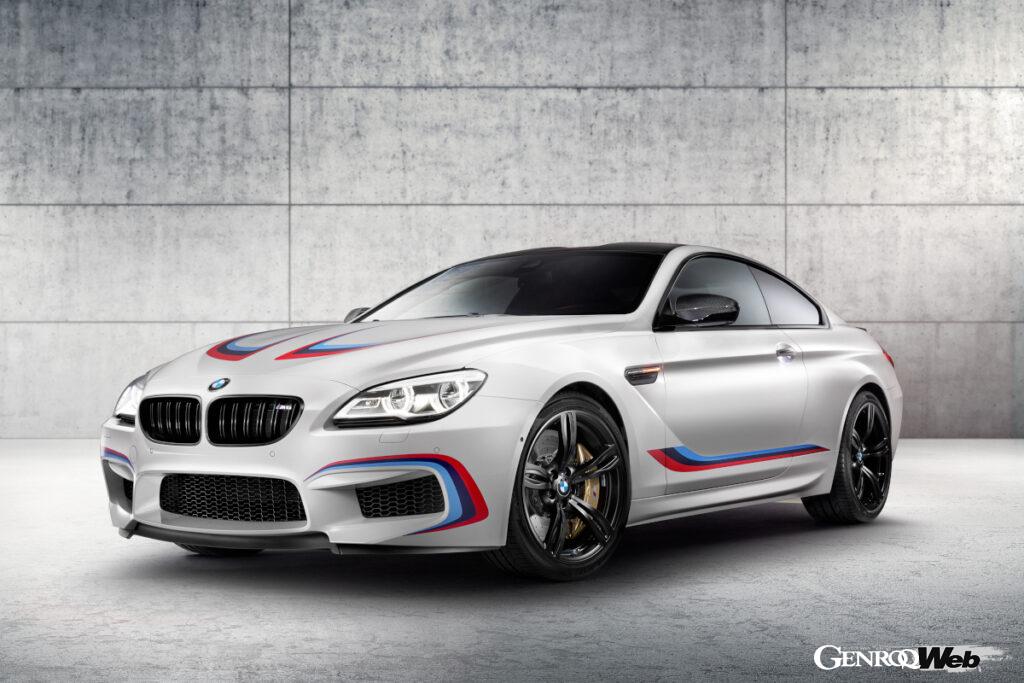
M6 Competition Package.
The body is equipped with standard aero parts for the M series, such as a front bumper with a large intake, side skirts, a rear spoiler, and a rear diffuser. In addition, the coupe and gran coupe are equipped with a CFRP double bubble roof, and all models feature thermoplastic front fenders, aluminum bonnet hood and doors, and an SMC (sheet molding compound) trunk lid (the convertible is a soft top fairing), which contributes to weight reduction.
In 2014, the V8 twin-turbo engine was tuned to 575 PS (600 PS in 2015), and each model was equipped with an “M6 Competition Package” that included improved bushings, springs, dampers, anti-roll bars, etc.
Furthermore, in 2016, the M6 GT3 made its racing debut as the successor to the Z4 GT3. It won the Spa 24 Hours that same year and came in second in the GT300 class of the Super GT in 2018, performing well in races around the world and becoming BMW M’s flagship model in both name and reality.











![The S-Type, widely regarded as Bentley’s masterpiece post-war saloon [Bentley 100 Years of Car History]](https://wheelfeed.com/wp-content/uploads/2025/11/4703-1762127546348.jpg)