
![The 1 Series M Coupe, based on the 1 Series Coupe and not yet available in Japan [BMW M’s history]](https://wheelfeed.com/wp-content/uploads/2025/06/1629-1761187140601.jpg)
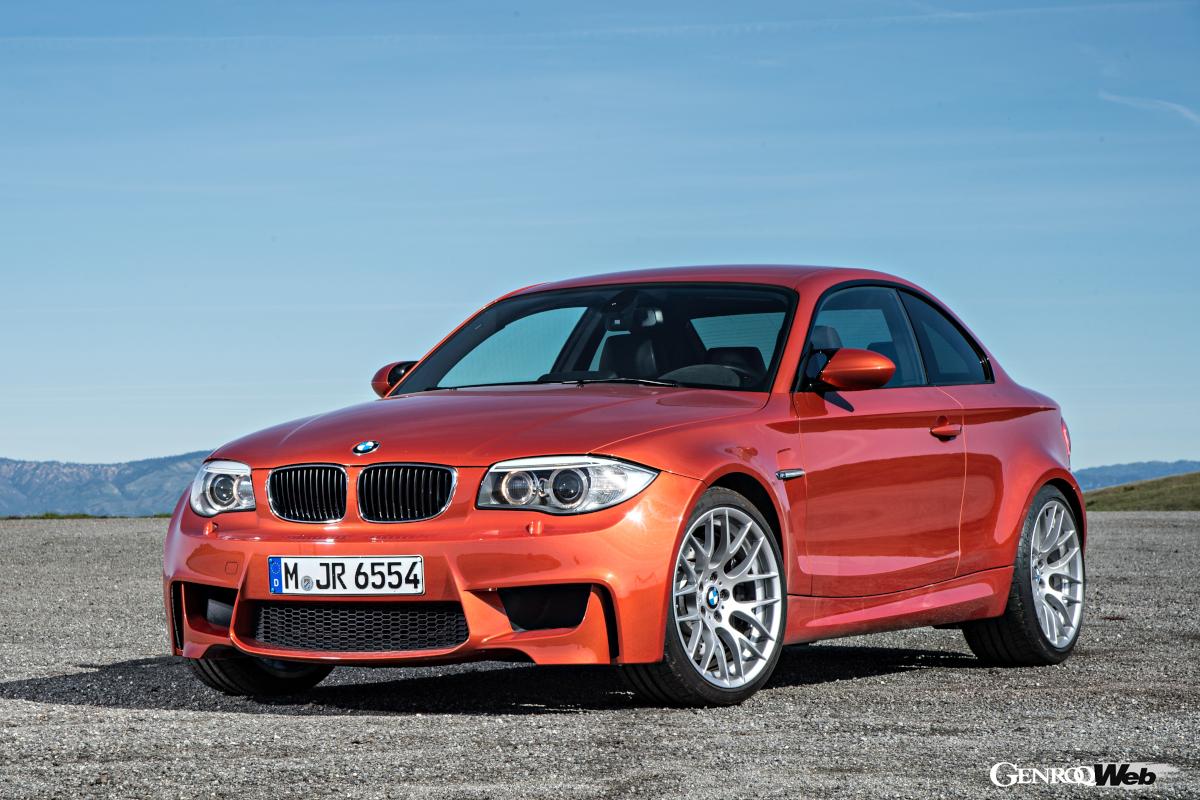
1 Series M Coupe
As a valuable compact FR coupe
The E87 “1 Series” debuted in 2004 as BMW’s bottom-range compact model, following the E36 “3 Series Compact” and E46 “3 Series ti.” Based on the platform of the E90 “3 Series” with a shortened wheelbase of 2660mm, it shared approximately 60% of its components and inherited a longitudinally mounted FR layout, rare in the C-segment, and was well-received for its high driving quality from the moment it was released.
Responding to these expectations, BMW released a two-door coupe (E82 model) and a two-door convertible (E88 model) in 2007. Among them, the 135i Coupe, equipped with a 2979cc inline six-cylinder DOHC twin-turbo engine producing 306 PS, became popular as a rare compact FR coupe at the time.
The real star of the show was the 1 Series M Coupe, which was released by BMW M at the end of 2010 and is essentially the production version of the 1 Series tii Concept unveiled at the 2007 Tokyo Motor Show.
Transformed into a powerful exterior


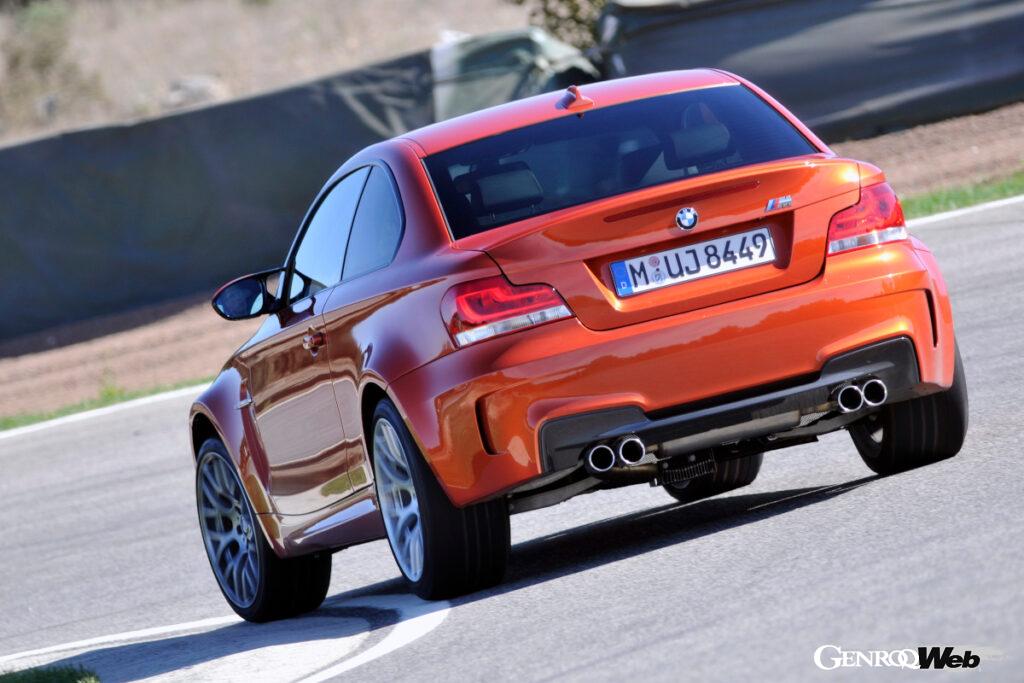
The base model is the 135i, but while the wheelbase remains the same, the front and rear tread has been widened to 1542mm, and the tire sizes have been increased to 245/35R19 in the front and 265/35R19 in the rear. The body has also been modified, with bold blister fenders on the front and rear, and a large front spoiler called an air curtain, which aims to streamline the front wheel arches, resulting in a more powerful style that is longer and wider than the base model, with a total length of 4380mm, width of 1803mm, and height of 1420mm. Despite the slightly larger body, the vehicle weight has been reduced to 1495kg, some 35kg lighter than the 135i, due to factors such as the elimination of the moonroof.
The suspension is a combination of front MacPherson struts and rear five-links, but it’s borrowed from the E90 M3 GTS and has been extensively modified, including replacing the front and rear subframes with aluminum ones. It’s also equipped with a variable M differential lock that distributes torque appropriately to the rear tires, as well as DSC (Dynamic Stability Control), ABS, ASC (Anti-Slip Control), DBC (Dynamic Brake Control), and CBC (Cornering Brake Control), and the brakes are equipped with 360x24mm front and 350x24mm rear drilled and ventilated discs.
Although it was announced as a limited edition


MotoGP Safety Car
The inline 6-cylinder DOHC twin-turbo “N54” engine that fits in the nose has the same displacement of 2979cc, but has been significantly upgraded to a maximum output of 340PS/5900rpm and a maximum torque of 450Nm/1500-4500rpm (500Nm when overboost is used). The gearbox is only available as a 6-speed manual.
With these improvements, the 1 Series M Coupe recorded a 0-100km/h acceleration time of 4.9 seconds, significantly faster than the 135i’s 5.3 seconds. It also received high praise for its handling, surpassing the 135i, which was well-received. However, due to homologation issues, the 1 Series M Coupe never participated in a race (instead, it was adopted as the official safety car for MOTO GP).
The 1 Series M Coupe, which was also equipped with exclusive interior features such as sports seats, Boston leather, Alcantara trim, an M-specification instrument panel, and a sports steering wheel, was initially announced as a limited edition of 2,700 units, but orders flooded in from all over the world, coupled with the price of 50,500 euros (approximately 5.6 million yen at the time). Unfortunately, it was not officially imported to the Japanese market, but the final production number was raised to 6,309 units.












![The S-Type, widely regarded as Bentley’s masterpiece post-war saloon [Bentley 100 Years of Car History]](https://wheelfeed.com/wp-content/uploads/2025/11/4703-1762127546348.jpg)