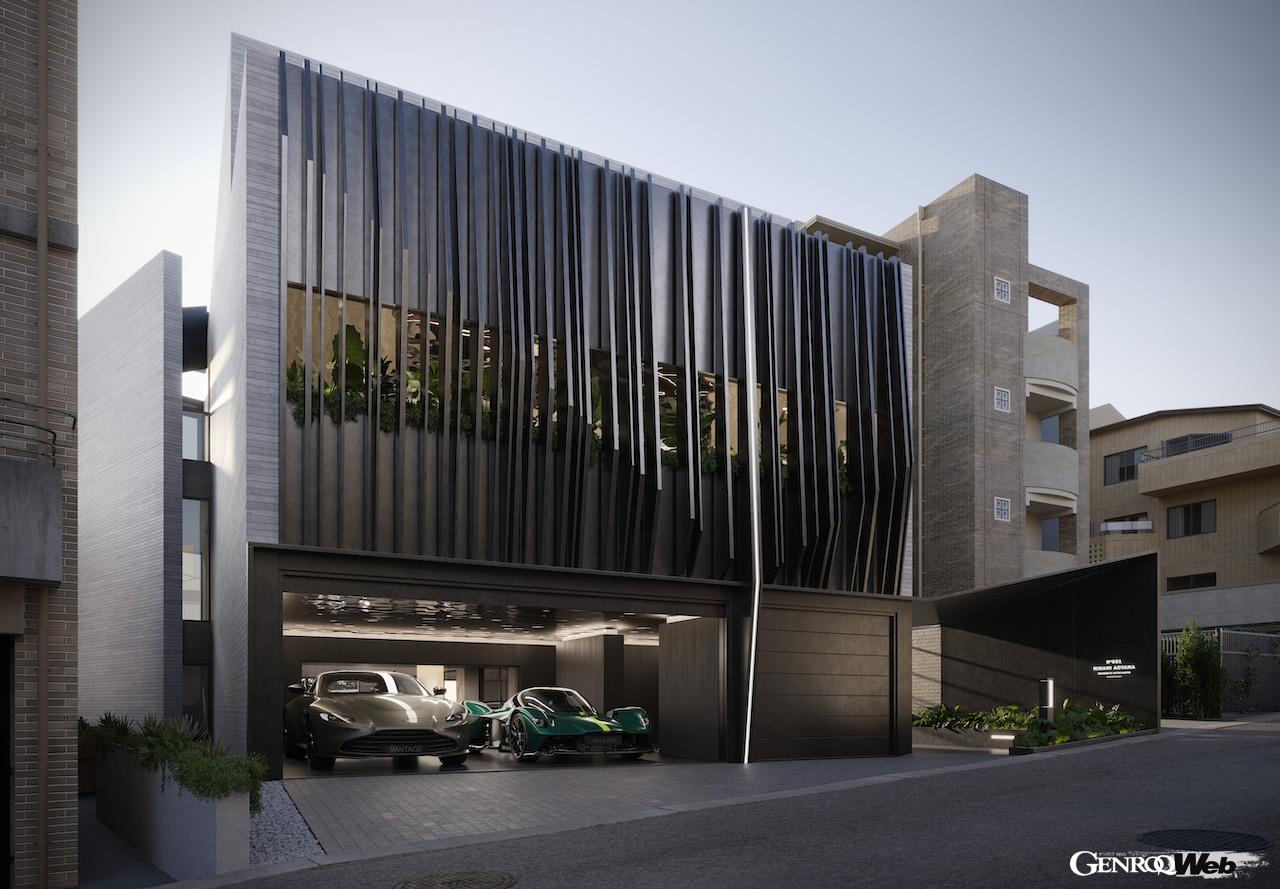


No. 001 Minami Aoyama
Exclusive residential development project

[1]
[2]

[3]
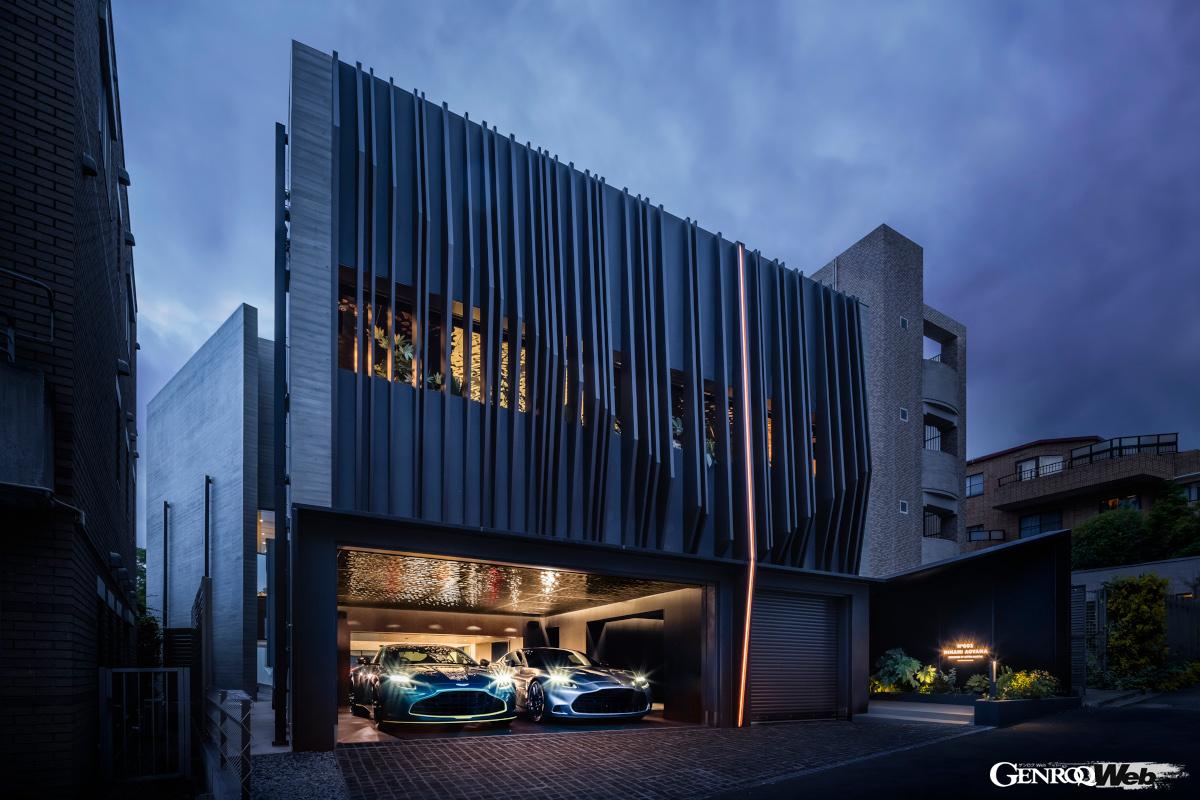
[1] Minami-Aoyama, one of Japan’s most prestigious residential areas. Also close to Omotesando. [2] An open and spacious living room. [3] The Automotive Gallery is located on the ground floor, just inside the building.
Aston Martin has announced the completion of its first private residence in Asia, No. 001 Minami Aoyama. The owner is of course keeping the details of the residence a secret, but has revealed the interior of the residence to some media outlets. Located in Minami Aoyama, one of Japan’s most exclusive residential areas, the residence boasts a total floor area of 724m² and has three floors above ground and one below. It was made possible through a partnership with VIBROA, a leading concierge company in Japan.
The residence is part of Aston Martin’s exclusive residential development project, following last year’s Aston Martin Residences Miami and The Astera in Ras Al Khaimah, UAE. The design was completed in close collaboration between Aston Martin’s design team, led by Chief Creative Officer Marek Reichman, and VIBROA.
No. 001 Minami Aoyama boasts a work that projects into a residential space the sincerity of materials unique to Japan, perfect proportions, and the elegant beauty shared with each model of Aston Martin, the iconic British sports car. As a tranquil residence isolated from the hustle and bustle of the city, it fuses urban style and aesthetic sense at a high level.
Japanese characteristics and detailed spatial composition

Master bedroom.

Walk-in closet.
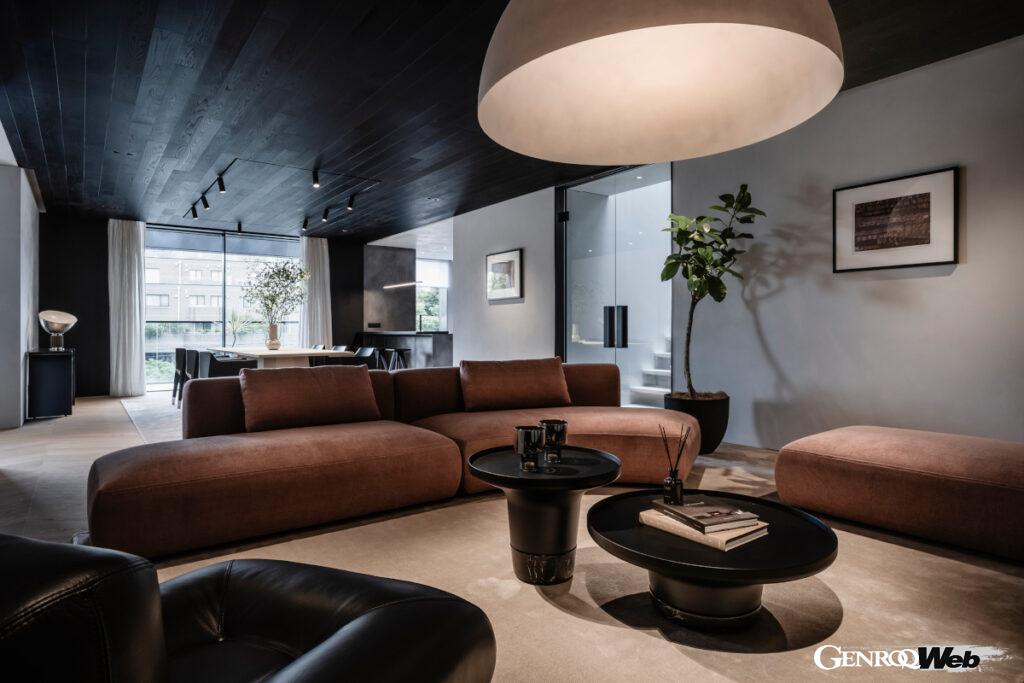
Open and spacious living room.
The exterior is characterized by a facade made of vertical louvers, which reflect light and change appearance depending on the time of day. While this facade blocks the view, it also plays a sculptural role, offering a glimpse of the mirrored ceiling and plants on the spa terrace.
We were allowed to tour the house, and the highlight was the Automotive Gallery, located on the ground floor immediately upon entering. This is a space for displaying two Aston Martin cars like works of art, and its sculptural appeal is enhanced by a corrugated metal ceiling reminiscent of the water surface of a Japanese garden and theatrical lighting. The house is designed so that the cars can be seen through glass from the living room and meeting room, truly embodying the “fusion of home and car.”
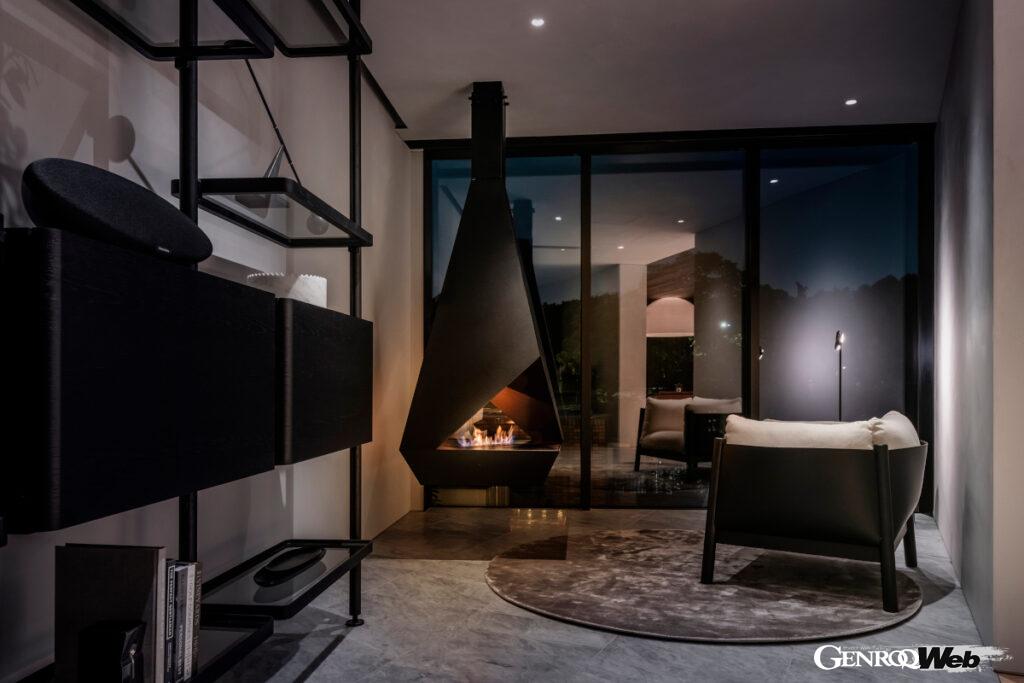
The interior features a gradation of materials from dark to light, visually evoking a sense of flow. Heading up to the rooftop, you’ll find a green roof terrace offering a magnificent view, complete with a kitchen and outdoor lounge, and a luxurious space overlooking Tokyo Tower. The basement also offers amenities such as a wine cellar, a gym with a golf simulator, and a private spa, as well as three suite bedrooms.
The entire residence has been meticulously designed down to the last detail. The acoustics are provided by Bowers & Wilkins, the same company that equips all Aston Martin models. The furniture and kitchen cabinets are custom-made by the Italian luxury brand Molteni&C, and the obsidian-like lava stone countertops and Nebula Steel accents complete the space.
The pinnacle of craftsmanship and equipment

Steel spiral staircase
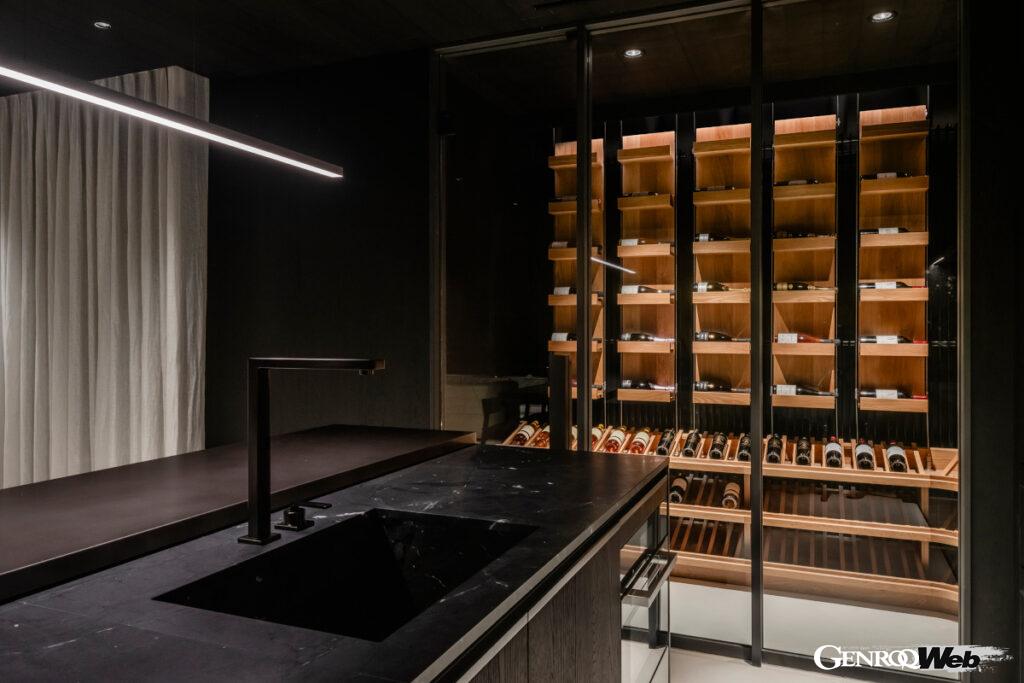
A wine cellar connects to the kitchen.

A cypress bath behind the facade.
The spa on the second floor not only has a sauna and bath, but also an impressive cypress bath and terrace, creating a relaxing atmosphere. The hotel’s pursuit of architectural beauty, which could be described as Japanese modern, is an interesting attempt, with features such as a spiral staircase made of steel plates with an origami motif and pendant lighting linked to the internal garden. CCO Marek Reichman, who gave a presentation at the preview, commented as follows:
“Tokyo has always been a source of inspiration for our design studio, and this project fully incorporated Japanese culture, history and style. Design is not limited to cars, but also extends to architecture, fashion and food culture.”
“Given the characteristics of the region, it was of course necessary to combine these elements in this project. If you look at some areas of London, you will see many examples of how modernity is expressed by skillfully mixing materials on a site with many constraints. The Japanese elements are expressed in a relatively clear way, but I think it is the combination of materials used that determines whether a British flavor is added. This time, we did not aim for a 50:50 balance between Japanese and British; after all, this is Tokyo, so we reflected the cultural essence of the city while adding a British sense of style to it.”
VIBROA CEO Toshiyuki Yoshida was also present and commented as follows:
“There were challenges in designing in the UK and building in Japan, but we were able to resolve each issue one by one through thorough discussions. Ultimately, with the owner’s understanding, we were able to create a project that satisfied all parties involved upon completion.”
No. 001 Minami Aoyama is not just a home, but a very important icon as a “stage for a luxurious life” that embodies the brand’s aesthetics and craftsmanship. As the name 001 suggests, it is expected that similar projects will be launched all over the world in the future. We will also be paying close attention to who will secure the most important “007” that CCO Reichman mentioned.