

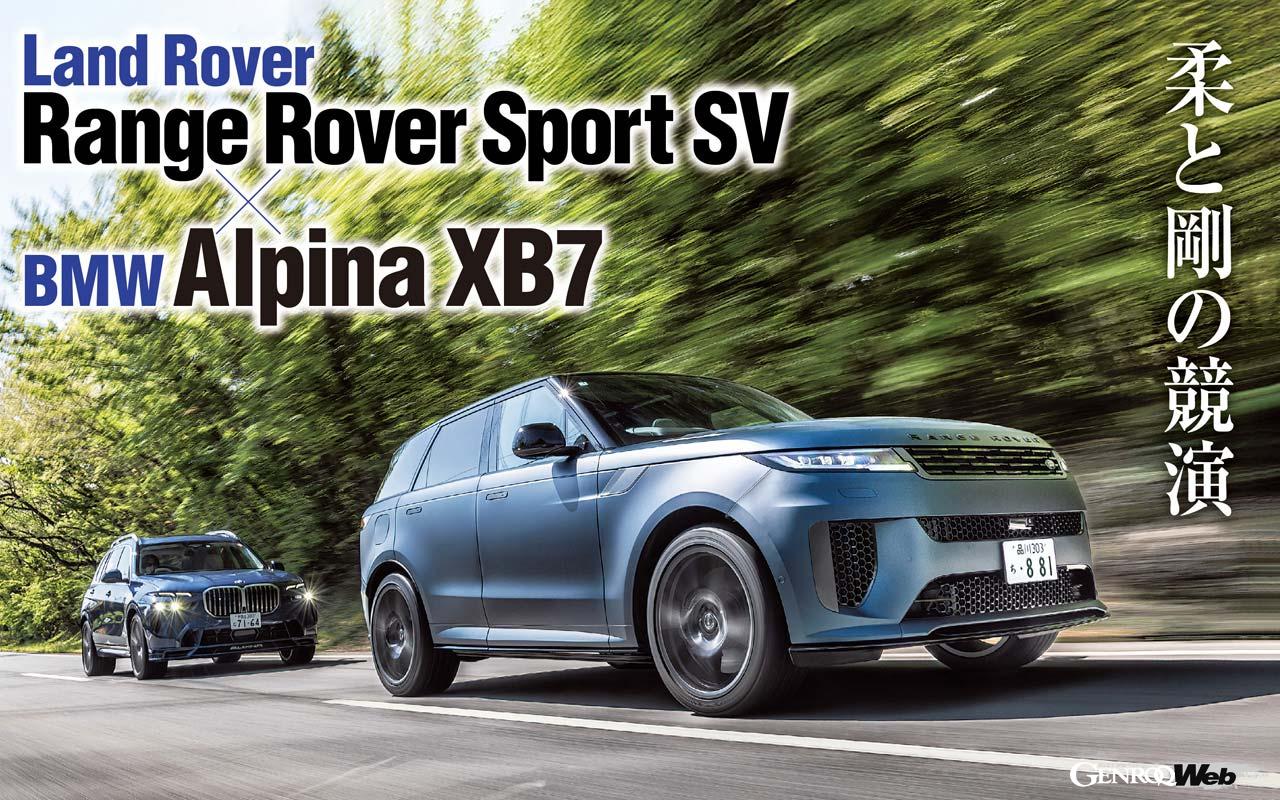
Land Rover Range Rover Sport SV
×
BMW Alpina XB7
A contest between softness and hardness
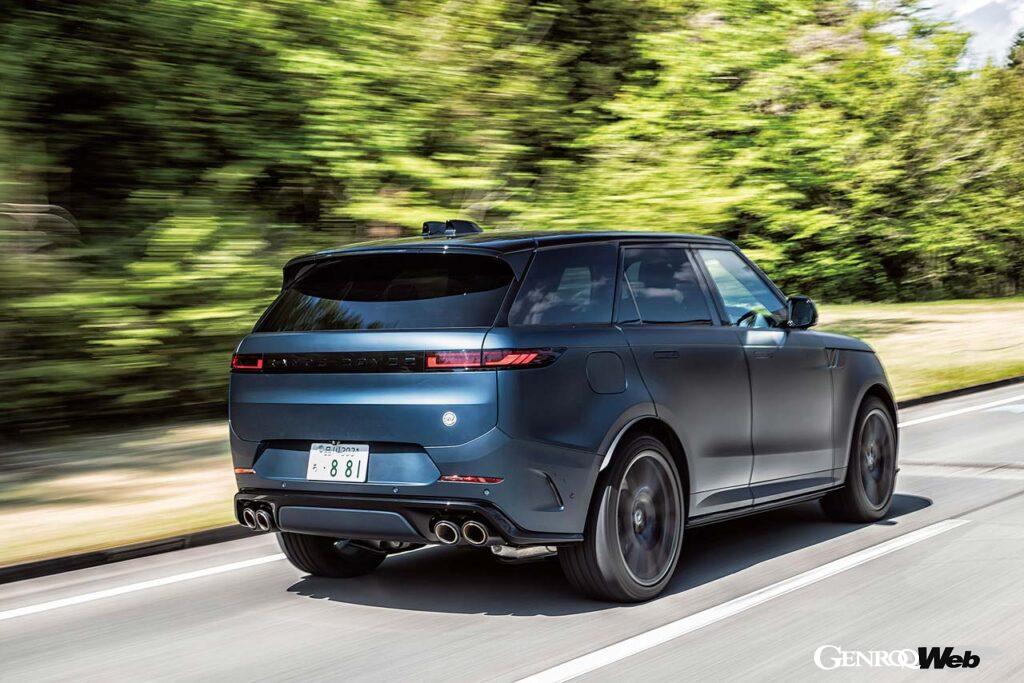
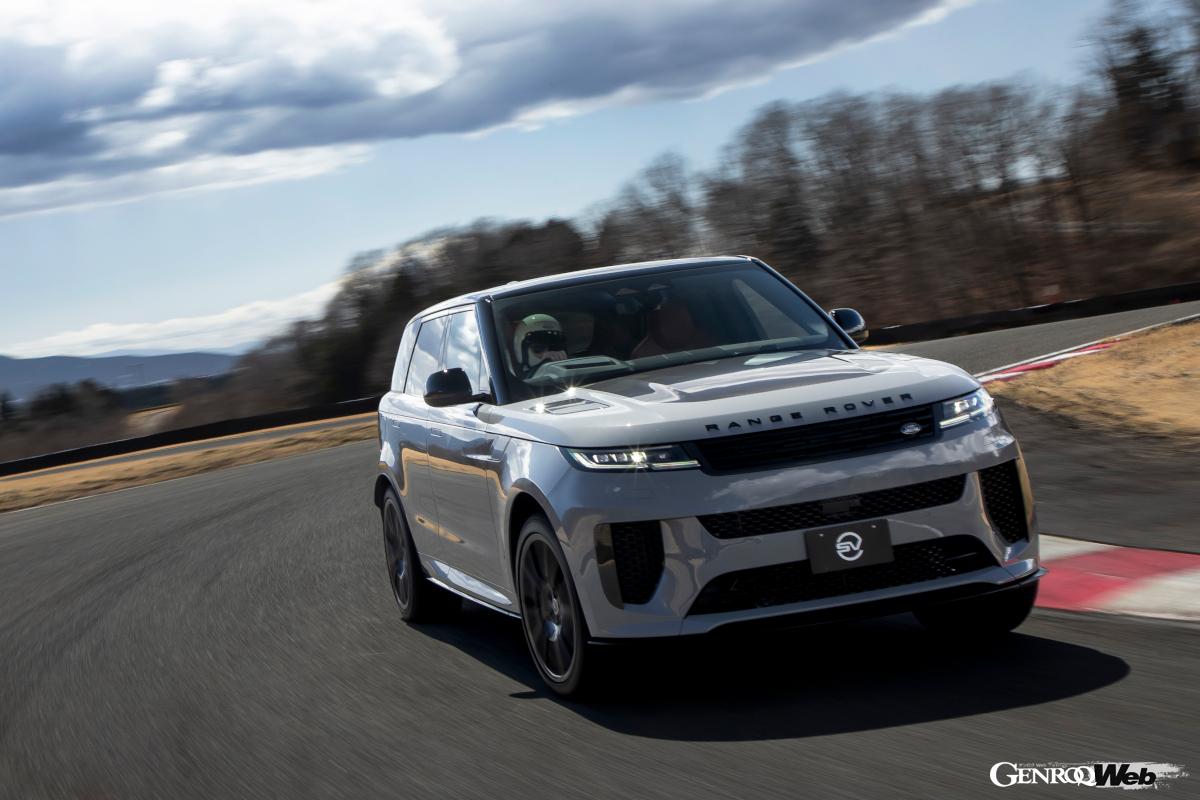
The highlights of the Range Rover Sport SV are its 4.4-liter V8 twin-turbo engine that produces 621 PS and its newly developed 6D Dynamics suspension system.
The Range Rover Sport SV succeeded its predecessor, the SVR, as the fastest Range Rover ever. The Edition 1, released in 2023, was a huge success, with 75 units allocated to Japan out of a worldwide limited run of 2,500 sold out immediately.
Now, the Edition 2 will be re-released in the Japanese market with an allocation of 95 units.
The appeal of the Range Rover Sport SV is that it takes the dynamic feel and performance of a high-end British SUV to the extreme. And this time, the Alpina XB7 was used as a benchmark, making for a very interesting comparison.
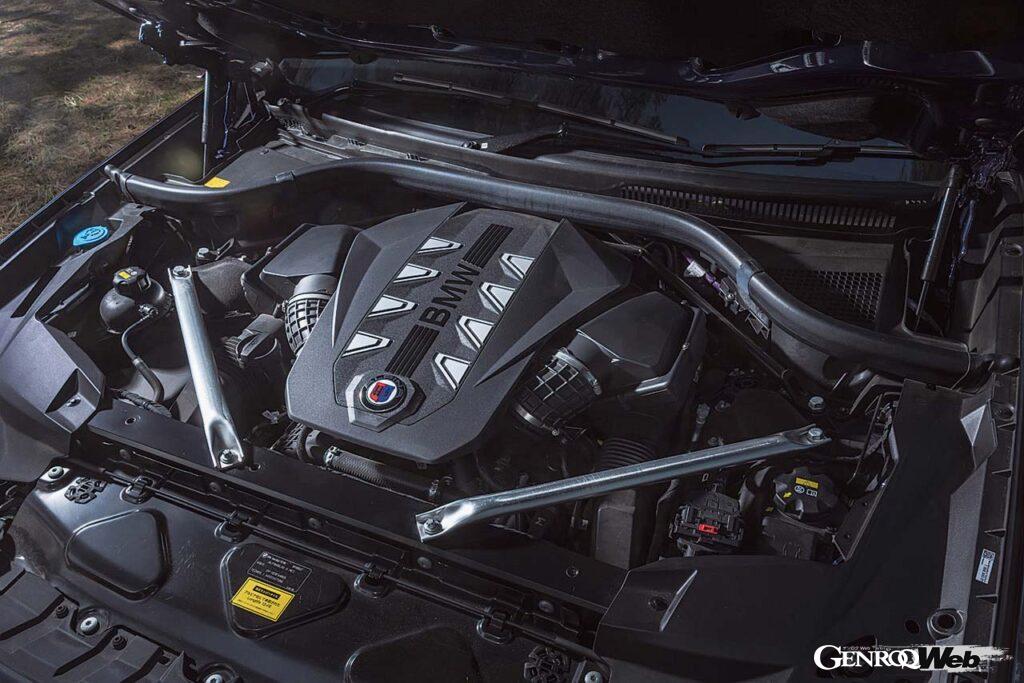
The highlight of the Range Rover Sport SV is that its power unit has been changed from a Ford/Jaguar-derived 5.0-liter V8 supercharger to a BMW-made 4.4-liter V8 twin-turbo (MHEV). Yes, this is the exact same “S68B44” unit as the Alpina XB7 it will be competing against this time.

[1]

[2]

[3]
[1] [2] The Range Rover Sport SV’s driving modes include various “off-road” modes (grass, mud, river crossings, etc.), “Comfort,” “Dynamic,” “Configurable (Custom),” and the most powerful “SV” mode. When selected, not only the engine and suspension but also the ESC control are set to optimal settings for circuit driving. [3] The 5.0-liter V8 supercharger, which has reigned as the high-end model for Jaguar and Land Rover vehicles for many years, is nearing the end of its usefulness, and the latest generation is equipped with a 4.4-liter V8 twin-turbo engine made by BMW.
What’s interesting is that the Alpina produces a maximum output of 621 PS/5500-6500 rpm and a maximum torque of 800 Nm/1800-5400 rpm, while the Range Rover Sport SV’s maximum output is 635 PS/6000-7000 rpm and maximum torque is 750 Nm/1800-5855 rpm, so the output characteristics are slightly different. Although it’s just a figure, Alpina’s emphasis on torque and Range Rover’s pursuit of power was surprising given the image of both brands.

[1]

[2]
[3]
[1] [2] The Alpina XB7’s driving modes include BMW’s familiar “Sport,” “Sport Plus,” “Sport Individual,” and “Comfort,” as well as Alpina’s own “Comfort Plus.” Ride height can be adjusted using a switch on the center console. [3] The S68B44 4.4-liter V8 twin-turbo engine, with the “S” in its model number, can be said to be derived from the M model. Compared to the X7 M60i, it has an extra 91 PS of maximum power and 50 Nm of maximum torque.
By the way, the 0-100km/h acceleration time for the 2660kg Alpina is 4.2 seconds, while the 2560kg Range Rover Sport SV is 3.8 seconds. The Range Rover Sport SV’s acceleration is superior, likely due to its weight being about 100kg lighter than its appearance.
SVO (Special Vehicle Operations), which built this car, has incorporated a generous amount of carbon fiber into body parts such as the hood, side skirts, and rear spoiler. Of particular note are the 23-inch carbon fiber wheels, which, while the front wheels have what appears to be an aluminum-cast frame from the hub to the spokes, likely due to their strength, are approximately 36 kg lighter than forged wheels of the same size. Furthermore, the front wheels are fitted with 440 mm carbon ceramic rotors inside, reducing the unsprung weight of all four wheels by 34 kg.

[1]

[2]
[1] The Range Rover Sport SV test vehicle is fitted with 23-inch carbon fibre wheels, a first for a mass-produced vehicle (a 1.12 million yen option). The tyres are the Land Rover-approved Michelin Pilot Sport All Season 4. [2] The XB7 is fitted with Alpina’s classic 20-spoke wheels, which are 23 inches in size. The tyres are Pirelli P Zero and bear the Alpina-approved ALP mark.
Alpina allows for more aggressive driving
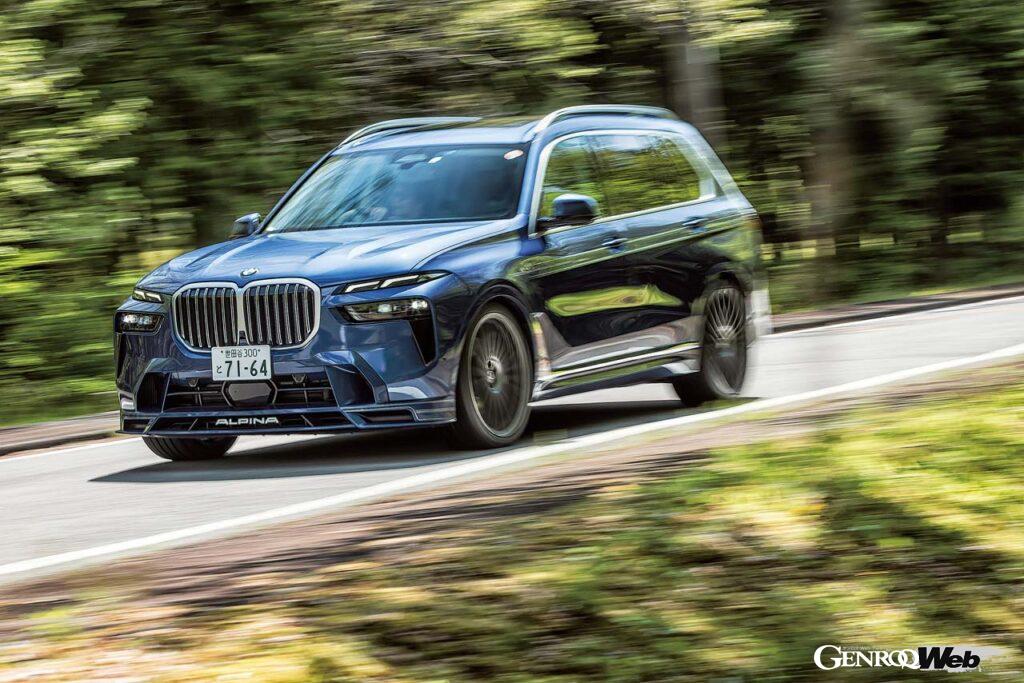
All Alpina cars use genuine BMW parts, but have their own control programs built specifically to achieve the perfect balance between sportiness and comfort.
However, when we actually drove it, we were surprised to find that despite these aggressive modifications, the Range Rover Sport SV had a more conservative chassis setting. The basic ride quality of both cars is comfortable, as befits an ultra-luxury SUV. However, once we stepped in, it was clear that the narrower and taller Alpina XB7 was more aggressive in taking corners.
The biggest reason for this is probably because the Range Rover Sport SV is equipped with all-season tires. I’m impressed by the Range Rover’s commitment to its off-road character, but because of this, on low-load open roads, the car’s movements are a bit busy and sensitive. It feels like the tires don’t quite keep up with the weight of the car and its high cornering performance.
Prior to this test drive, I drove the Range Rover Sport SV on the short course at Fuji Speedway, and even when pushing it to its limits, the chassis settings were clearly very safety-oriented. The 6D Dynamic Suspension system, which coordinates the air suspension and variable dampers, utilizes the stroke characteristic of British cars to control the car’s massive body. It maintained its position without bouncing even when going over curbs, and the rear-wheel steering turned the nose so smoothly that you almost forgot there was a V8 in the nose. The braking performance was impressive; no matter how many times I undertook ferocious acceleration, there was not a single sign of pedal fade. The feel when releasing the brakes was also good, allowing me to actively manipulate the vehicle’s position.
However, when the car starts to oversteer during turn-in, the sport mode is cancelled. Of course, if you balance the throttle and keep the car in neutral steering, the control won’t work, but it still feels like you’ve been put on hold.
Perhaps the course was too narrow for the Range Rover Sport SV, but I think a wider course would have allowed us to enjoy the dynamic balance.
And it makes sense that SVO would give it such extreme stability-oriented control: when delivering an SUV of this speed (and weight) to a customer, it makes sense to be overly cautious.
On the other hand, if purely sports tires had been fitted, the threshold would probably have been raised and the car’s handling capabilities would have been more fully realized. And it turns out that this was done by the Alpina XB7.
There’s no point in deciding which of the two is better,
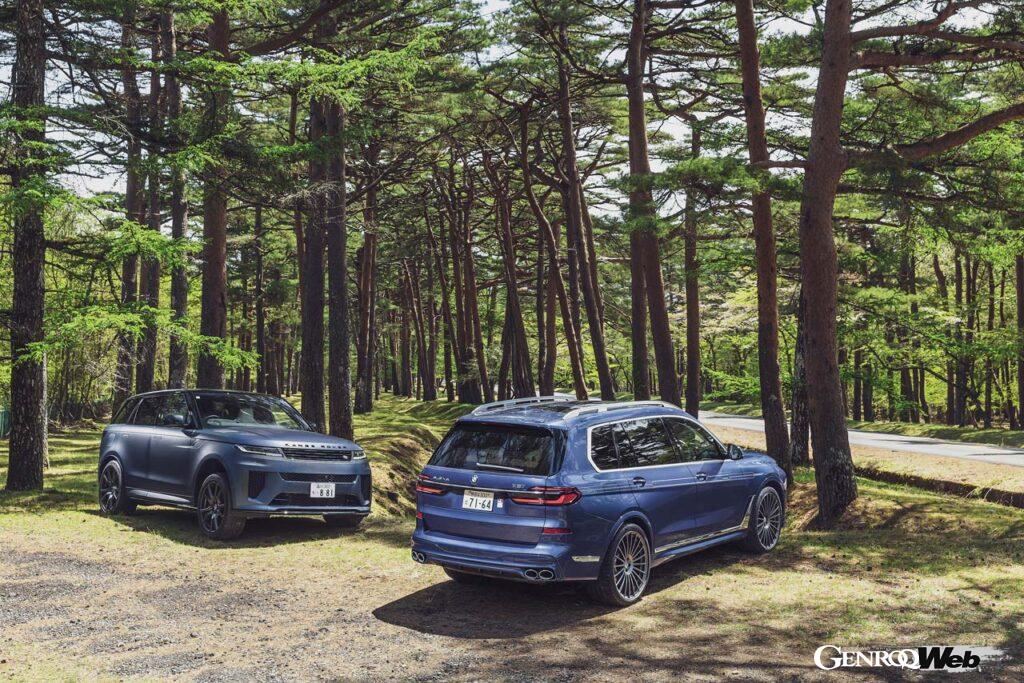
The suspension, known as “Alpina Magic,” uses genuine BMW parts throughout, but even the bushings are carefully selected and assembled from all grades to suit the needs of the car. The control systems, including the power steering, damping logic, and rear-wheel steering, have all been reset to the Alpina style. Finally, the Pirelli P Zero tires, which grip the road, do an astonishingly good job. As you can see from the “ALP” letters on the sidewall, they are tires jointly developed by Alpina and Pirelli.
The Alpina XB7’s behavior from braking to turning in is incredibly natural. There’s nothing flashy about it, so much so that some drivers will probably find it too ordinary and uninteresting. Even mid-turn, the presence of the rear-wheel steering is not even noticeable. Yet it neatly maneuvers its massive body around tight curves. We tend to think that a car’s ride comfort is determined by the suspension and body, but the steering handling of this rear-wheel steering must also have a major impact on the dynamic feel.
And the output of the BMW unit is an excellent match for the smooth movement of the body that connects all of this. The power output follows the movement of the toes perfectly, and when you step on the pedal, the linear torque curve explodes with overwhelming power, and the Alpina chassis work is a perfect match.


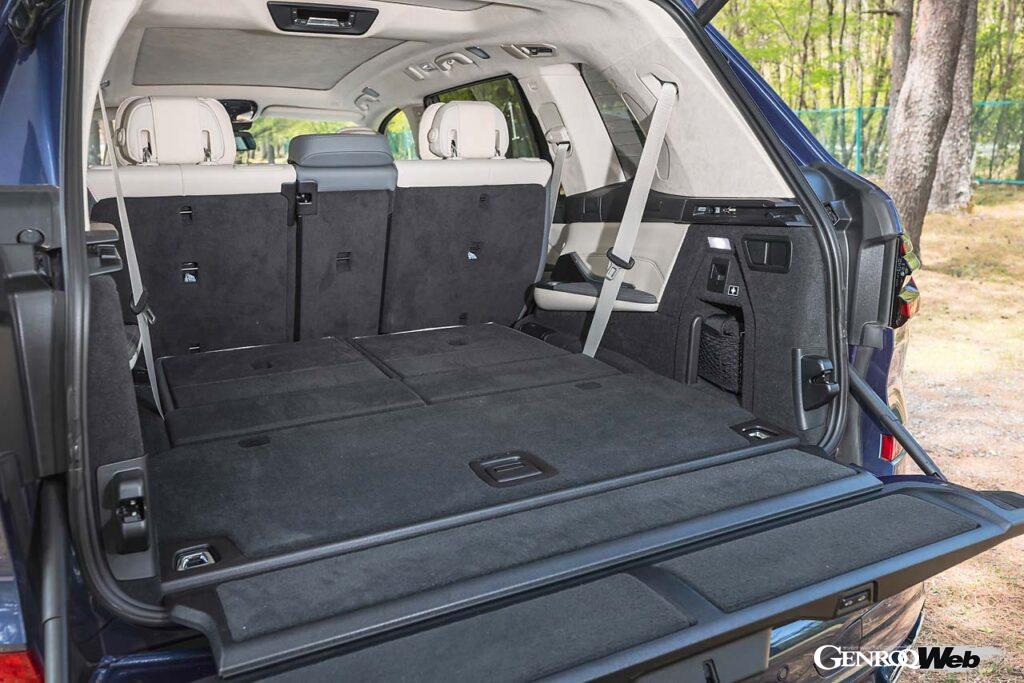
The Alpina XB7 will evolve into the “Manufaktur” model for 2025, with some interior and exterior upgrades. The test vehicle this time is the 2024 model, but the power performance and specifications are exactly the same as the latest model. The body, which has a wheelbase 105mm longer and a total length 210mm longer than the Range Rover Sport SV, has three rows of seats and can accommodate seven people. The luggage compartment capacity is 750 to 2,120 liters.
In that sense, I personally think that the 5.0-liter V8 supercharger, which is brutal and thrills the senses, is the best match for the Range Rover. While there’s nothing to complain about the refined performance and environmental friendliness of the BMW unit, as an old-school writer I believe that the wildness hidden behind the gentlemanly demeanor is what makes British cars unique and their true essence.
Overall, I think that the Range Rover Sport SV, which may look flashy at first glance, is actually the more sensible option, while the Alpina is far worse. Although it may be said that they were born in a country with an autobahn, experienced adults who drive their cars at a high average speed as a matter of course and have experienced the good and the bad choose the Alpina, not just the XB7.
That’s why the car needs a conservative look that looks just like a normal X7 at first glance. These bad guys don’t like to stand out.
On the other hand, if you choose the Range Rover Sport SV, you can clearly show off your modern style. And because it has the solid Range Rover brand, you can also portray yourself as intelligent.
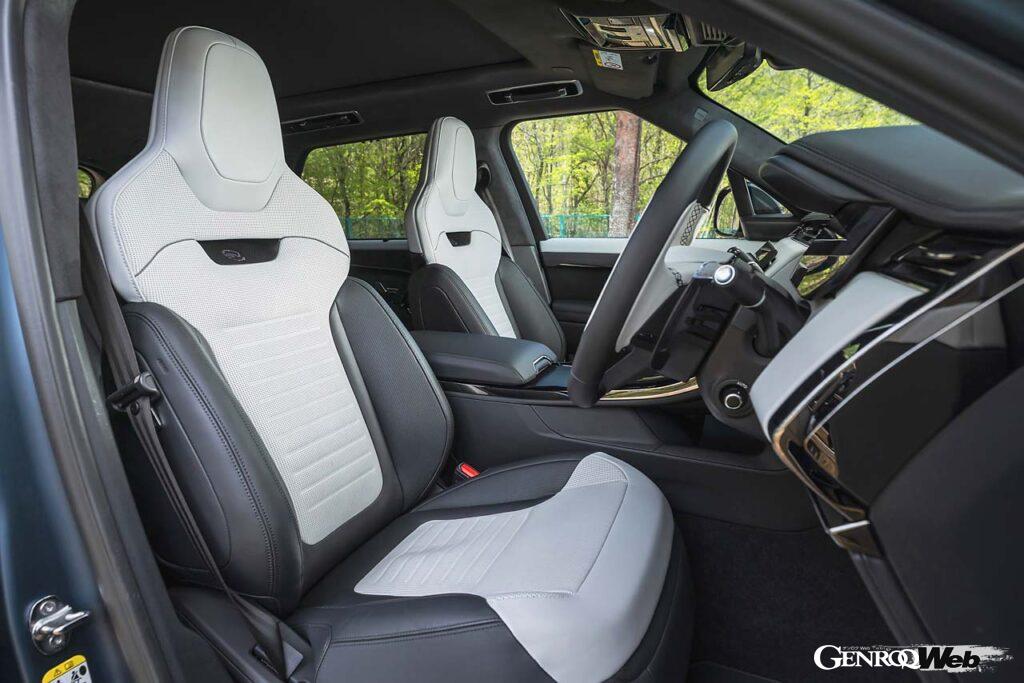


Following on from the first model announced in 2023, the Range Rover Sport SV “Edition 2” is here. As befits the name of the most powerful Range Rover, the interior is also sporty, featuring high-pack seats with integrated headrests front and rear. The front seats also feature a system that uses actuators to vibrate in time with the music, providing a immersive sound experience. Luggage capacity ranges from 647 to 1,491 liters.
When comparing the two, I felt that there was little point in saying which one is better. Both offer comfort and high dynamic performance that far exceed the average. In fact, in a world where everyone is choosing the G-Class, the Range Rover Sport SV will give you a new perspective as an SUV with an off-road feel. And I think the Alpina XB7 will show you that there are SUVs with depth of driving experience that don’t have to be a Porsche Cayenne.
One thing I would add is that I am a little worried about how Alpina will change once it comes under BMW’s umbrella.
REPORT / Kouki Yamada
PHOTO / Ryota Sato
MAGAZINE / GENROQ July 2025 issue
SPECIFICATIONS
Land Rover Range Rover Sport SV Edition 2
Body size: Length 4970, width 2025, height 1815mm
Wheelbase: 3000mm
Vehicle weight: 2560kg
Engine: V8 DOHC twin turbo
Total displacement: 4394cc
Maximum output: 467kW (635PS) / 6000-7000rpm
Maximum torque: 750Nm (76.5kgm) / 1800-5855rpm
Motor maximum output: 14kW (19PS) / 800-2000rpm
Motor maximum torque: 200Nm (20.4kgm) / 250rpm
Transmission: 8-speed AT
Drive system: AWD
Suspension: Front double wishbone, rear multi-link
Brakes: Front and rear ventilated disc Tire
size: Front 285/45R22, rear 305/40R22
Top speed: 290km/h
0-100km/h acceleration: 3.8 seconds
Vehicle price: 24.74 million yen
BMW Alpina XB7
Body size: Length 5180, Width 2000, Height 1835mm
Wheelbase: 3105mm
Vehicle weight: 2660kg
Engine: V8 DOHC twin turbo
Total displacement: 4394cc
Maximum output: 457kW (621PS) / 5500-6500rpm
Maximum torque: 800Nm (81.6kgm) / 1800-5400rpm
Motor maximum output: 9kW (12PS) / 2000rpm
Motor maximum torque: 200Nm (20.4kgm) / 0-300rpm
Transmission: 8-speed AT
Drive system: AWD
Suspension: Front double wishbone, rear multi-link
Brakes: Front and rear ventilated disc Tire
size: Front 285/45R21, rear 285/45R21
Maximum speed: 290km/h
0-100km/h acceleration: 4.2 seconds
Vehicle price: 29.5 million yen (XB7 Manufaktur)
[Inquiries]
Land Rover Call
TEL 0120-18-5568
https://www.landrover.co.jp/
ALPINA CALL
TEL 0120-866-250
https://www.alpina.co.jp/