


A comparative test drive of the GT3 RS and Turbo S is “Rendezvous”

The Porsche 911 Turbo S arrived for a rendezvous with the GT3 RS.
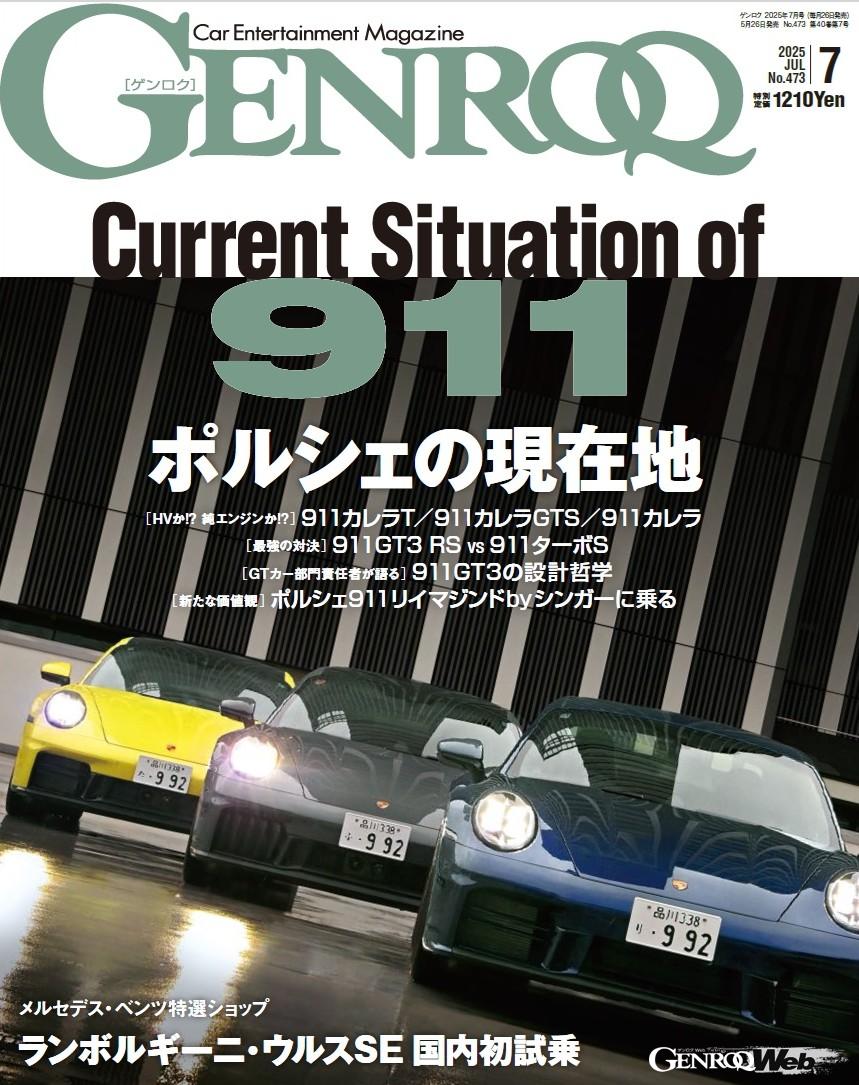
GENROQ magazine describes the Porsche 911 GT3 RS as “a first-class racing car with a license plate” and the 911 Turbo S as “a comfortable sports car for public roads.” The comparison test drive took place on the Nürburgring and the surrounding autobahn and winding roads. In English, it is described as follows:
We invited them to a rendezvous – the Nürburgring welcomes us, and the surrounding Eifel countryside lures us with curves and empty highways.
A literal translation would be, “We invited them (the two 911s) to a rendezvous – the Nürburgring welcomed us, and the Eifel countryside tempted us with corners and empty highways.” The Nürburgring and surrounding roads were ideal for a test drive of these two cars.
What caught my eye was the word “rendezvous.” Its origins are in French, and it is a combination of the imperative form “rendez” of the verb “render,” meaning “to go” or “to go out,” and “vous,” meaning “you.” It literally translates to “you go.” It seems to have originally been a military term, meaning “assemble at this place,” but today it is used in everyday terms to mean meetings or reservations. Incidentally, in French it is spelled rendez-vous, with a hyphen in between.
As this article explains, rendezvous is also used in English as a foreign word with a similar meaning, but in English it has a more lyrical nuance than a simple meeting or appointment. In this context, the gathering of two particularly unique legendary 911s, the GT3 RS and Turbo S, is described as “We invited them to a rendezvous,” evoking a sense of encounter. Additionally, rendezvous is also used in English to describe the docking of a rocket in outer space, suggesting that it is used as a more special word than its original French counterpart.
Foreign words with different nuances from the original

[1]

[2]
[1] A Porsche 911 Turbo S on display at the Porsche Museum with its flat-six engine. [2] The turbocharger used in the same model.
In addition to these, there are many loanwords of French origin in English and Japanese. The word “coup d’état” also originates from the French “coup d’État.” “Coup” means a sudden action or blow, and “État,” which begins with a capital letter, means a country or system, so coup d’état means “a blow to the country/system.” While in Japanese and English, it usually carries a violent or illegal nuance, in French it is not necessarily negative, and can sometimes be used somewhat neutrally to mean “a bold change in the system.”
Although both words originate from French, aventure has very different meanings. In Japanese, it is mostly used in the context of romance. It means cheating, a one-night stand, or other so-called “playing with fire,” but in French it has a wider range of meanings, such as unexpected events or fateful developments.
Incidentally, it is not a foreign word in English, and the word “adventure” is equivalent to the French word “aventure.” The word “aventure” does not have much of a romantic connotation, and often means adventure, exploration, or an exciting challenge. Also, unlike the Japanese word “aventure,” “aventure” generally has a positive meaning.
Even when words have become established in Japanese as foreign words, there are many cases where the nuances are different in other languages. Keeping this in mind will help you accurately understand the writer’s impression of the car.
PHOTO/PORSCHE AG