
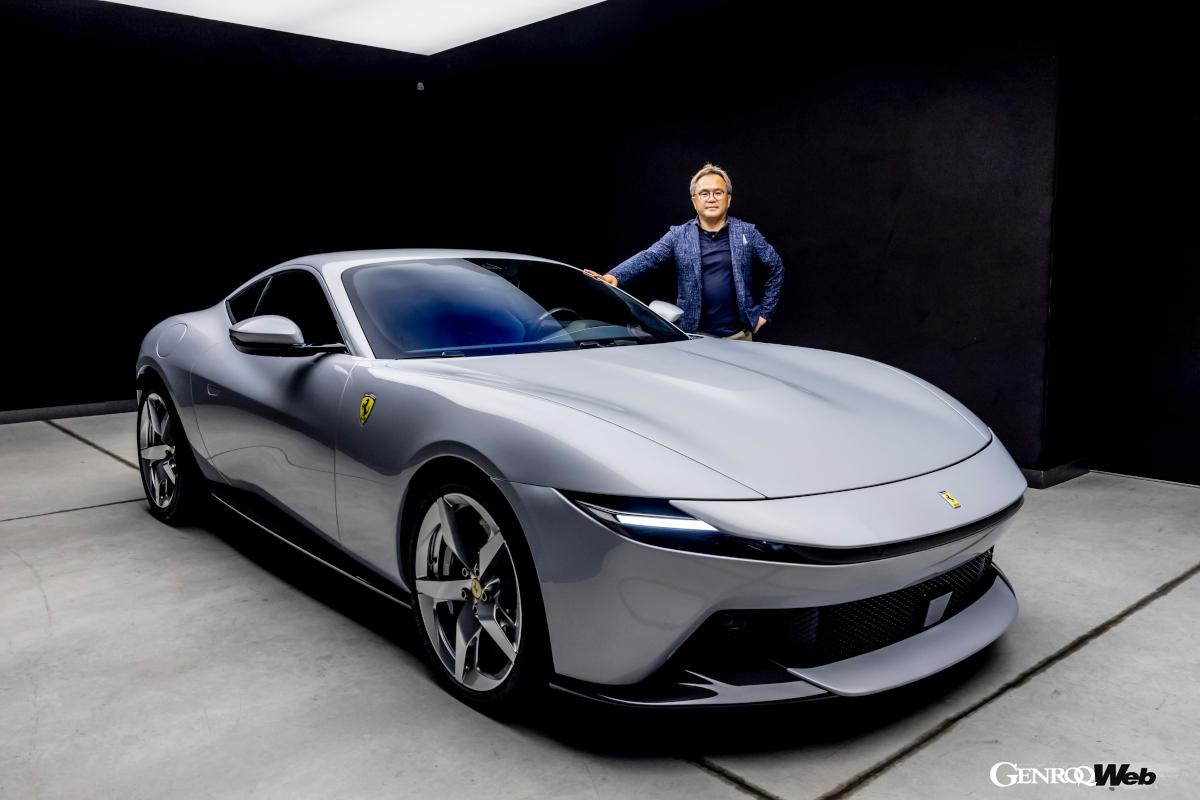

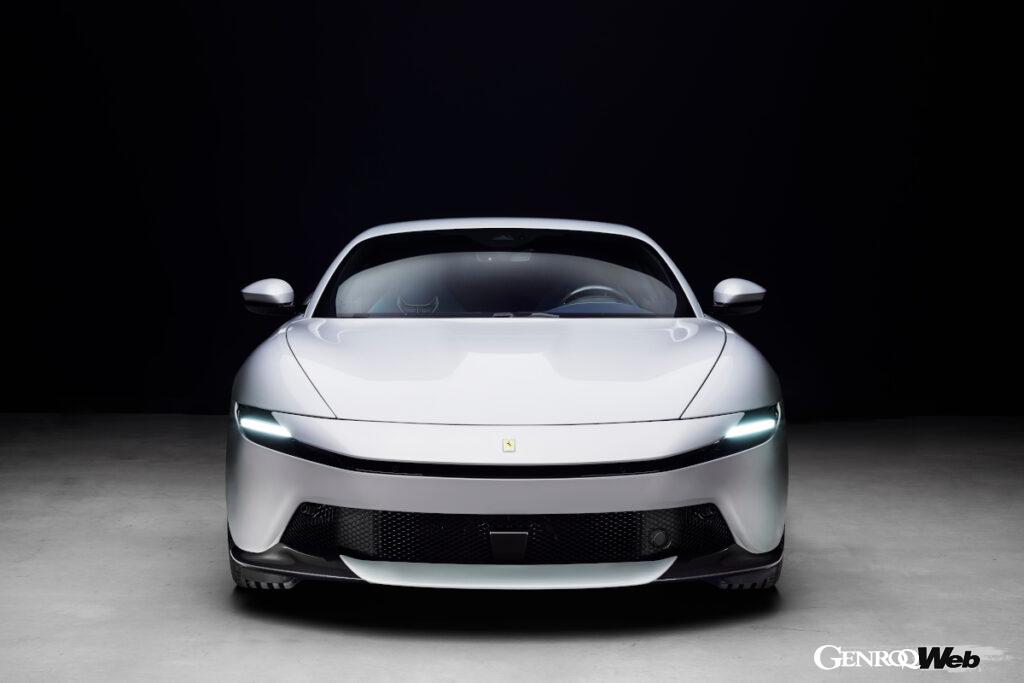
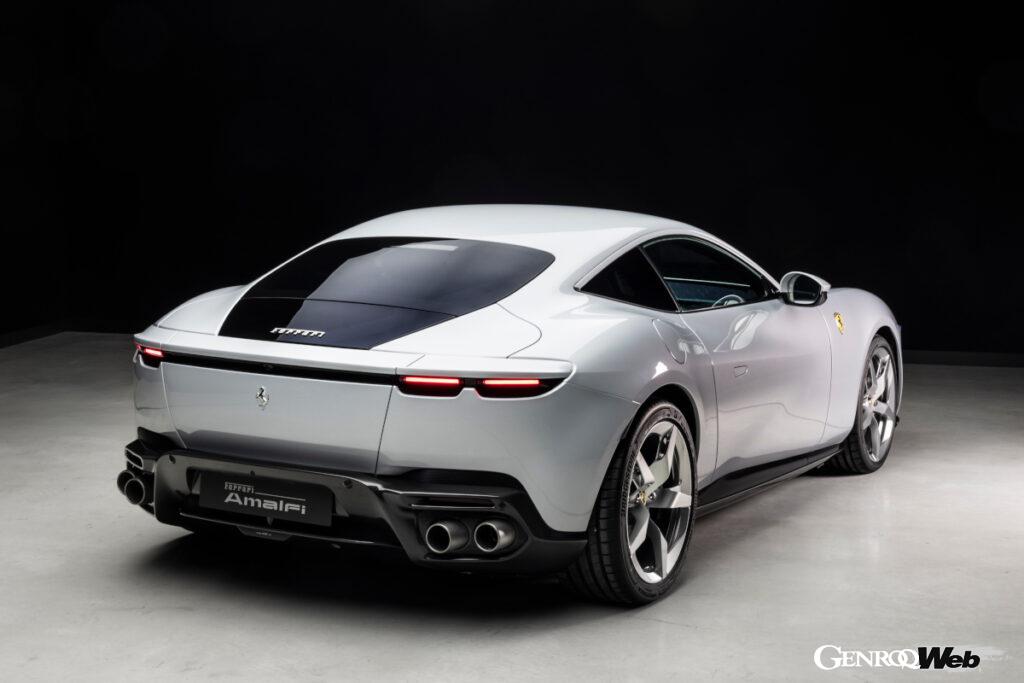
Ferrari Amalfi
Operation Montebianco
Italy is a country of passion. Therefore, when it comes to Italian brands, the emphasis is on their “passion” and they are often thought to lack the calmness of precise calculation and strategy. In the case of automobile brands, while there are successful brands like Ferrari and Lamborghini, there are also many brands with a long history that are not doing well, which may make them seem that way even more.
On the other hand, it is possible to imagine that “brands that are doing well” are likely conducting their business with meticulous strategies that we cannot even imagine. This is not surprising, as Lamborghini is under the umbrella of Volkswagen/Audi. And I think that Ferrari, a purely Italian company (registered as Ferrari NV in the Netherlands, which offers preferential tax treatment for corporations), is actually doing quite well.
I secretly call Ferrari’s strategy “Operation Montebianco” (Mont Blanc in French). When it comes to giant peaks in the automotive industry, Toyota is of course the equivalent of Mount Everest. In terms of number of vehicles, sales, and corporate value, it is the top in the global automotive industry.
If we compare it to mountain climbing, it’s like the fourth station onwards.

Meanwhile, Ferrari, of course, produces about one-thousandth of Toyota’s vehicles and has about one-fiftieth of its sales. However, its corporate value is approaching one-fifth of Toyota’s. This is similar to the famous Monte Bianco. In terms of absolute height, Mont Blanc is thought to be ranked not just within the top 100 but around 500th in the “World’s Highest Mountains Ranking,” but in terms of its prominence on the continent, it jumps to 11th place in the world.
And even now, they continue to strategically grow every day, aiming to become the highest mountain in the area. With F1 at the top, they are constantly working to expand their base (= fan base). A high mountain has a wide base. In other words, the wider the base, the higher the mountain.
From a 1,000 yen sticker to a 1 billion yen F1 car. There are many ways to get your hands on a Prancing Horse, but if we compare it to mountain climbing, you would only become a real modern-day Prancing Horse rider once you reach the fourth station.
There is no other way than to properly complete each level

In fact, when the altitude of Mount Ferrari was not as high as it is now, the summit was of course F1, but just below that, at the 9th station, there was a racing car series, and at the 8th station, there were already road cars.
But that’s no longer the case. From the seventh station onwards, it’s all about circuit cars, from Challenge to XX Program and F1 Cliente. Below that, road cars are categorized into levels, from certified pre-owned car and GT car (new car) customers at the fourth station, to mid-engine car and V12 model customers and classic model collectors at the fifth station, and limited model customers at the sixth station and above (many of which now overlap with the seventh station). Even within the same level, customers can be further subdivided by the order method, such as atelier or tailor-made.
If you become a customer, you have no choice but to climb the mountain by properly climbing each level (except for F1 drivers). In other words, from Maranello’s perspective, by taking advantage of its wide base and meticulously stacking each level, it maintains the shape of a beautiful, towering mountain like Mount Fuji. In order to grow ever higher…
A practical model worthy of being next to the first Ferrari


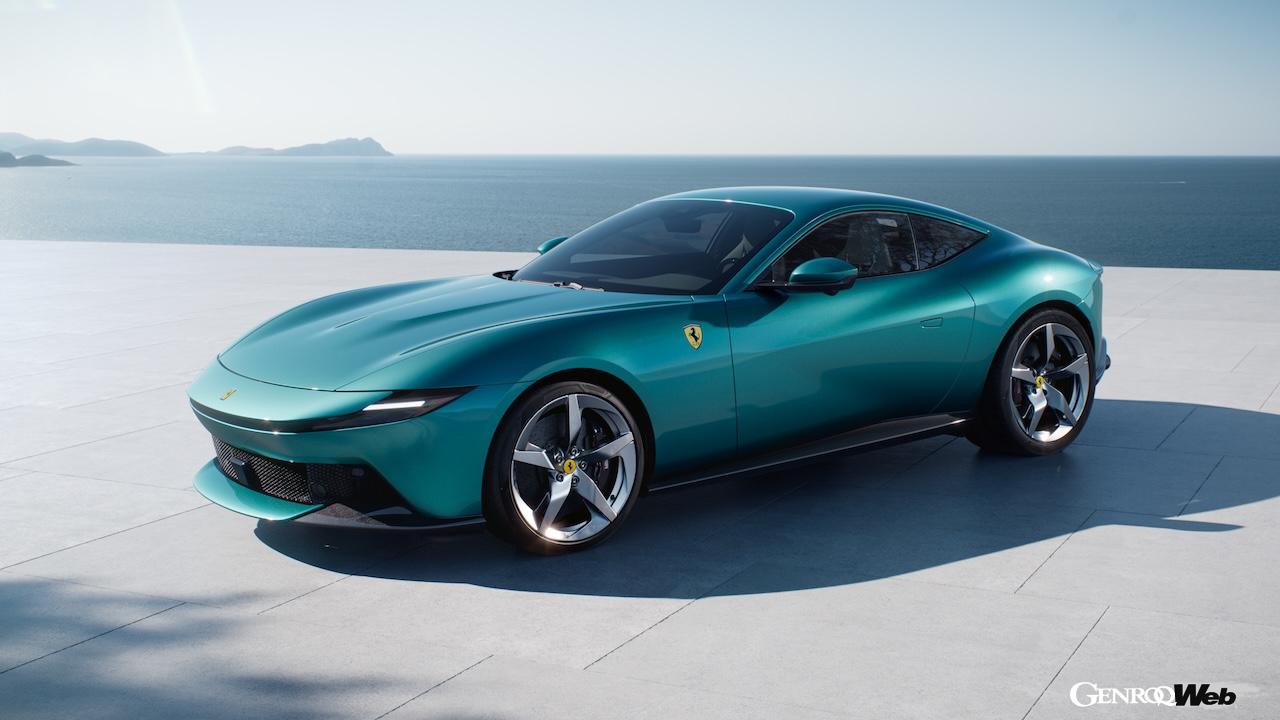
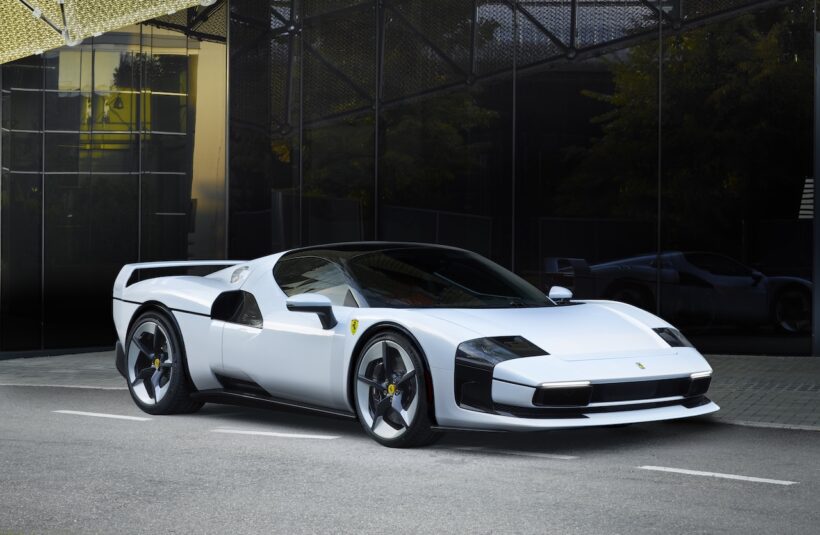
With that in mind, it’s clear that the recently debuted Amalfi plays a very important role within the fourth station. The 2+ GT coupe category began with the California. At the time, the cheapest Ferraris available for purchase new were mid-engine V8 models, and many customers chose luxury GT cars from Germany or the UK for their everyday driving. Survey results also showed that even if people were interested in Ferraris, mid-engine two-seaters were too impractical, making them a high hurdle to purchase.
So the Maranello management at the time came up with an idea: Why not develop a practical model (GT) worthy of being placed next to the first Ferraris in customers’ garages? That’s how the California was born, and the strategy was a resounding success. It replaced the Bentley Continental GT and Mercedes-AMG SL and also succeeded in attracting many new customers. In other words, the sixth-level entry point had expanded to create the fourth and fifth levels. The base had expanded further, without losing its shape.
From certified used cars to the excitement of a new car
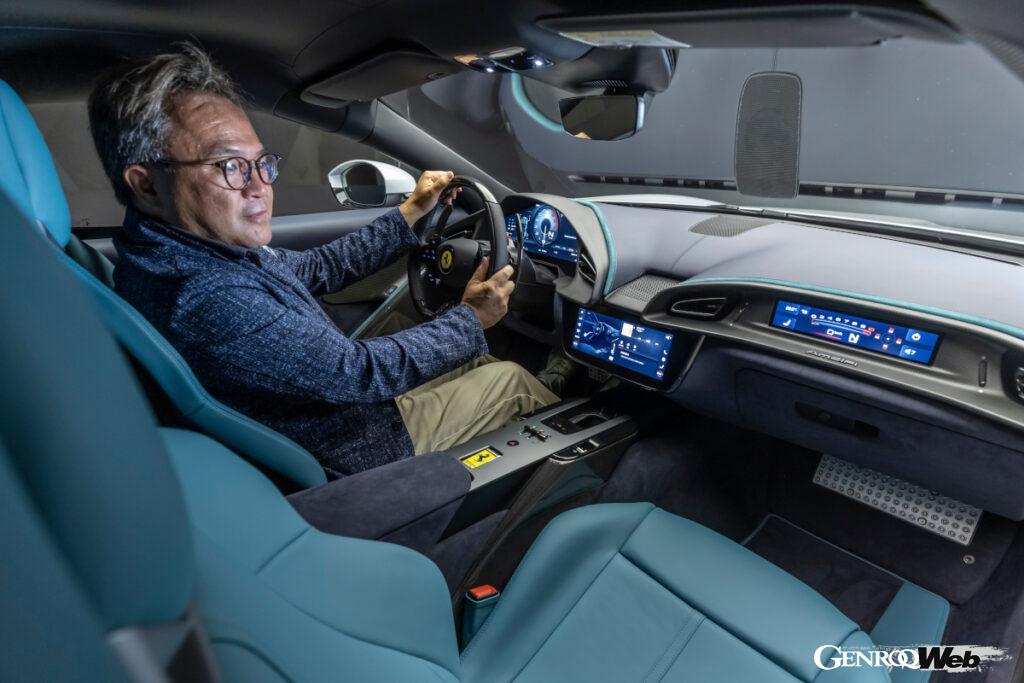
This is why the Amalfi has become one of Maranello’s most important models, as it has the great mission of giving new customers who have joined the Ferrari family with certified pre-owned GT models such as the Portofino and Roma the thrill of once again feeling glad that they bought a Ferrari.
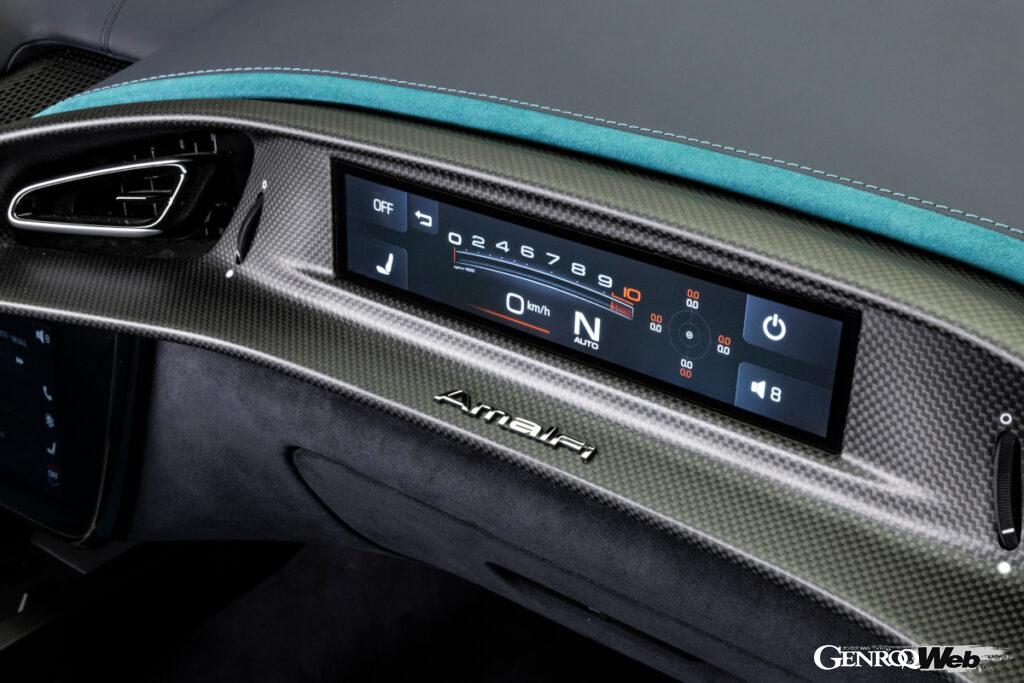
Enrico Galliera, head of marketing, proudly states, “We have been able to evolve the car into one that offers the performance you expect from Ferrari, while also being fully usable for lifestyle enjoyment.” In other words, not only are all previous models available to those looking to get started as certified pre-owned cars, but even if a recent Roma owner switches to an Amalfi, it will be a car that “will impress you the moment you get in.”
From California to Portofino, from Rome to Amalfi, the trend of changing styling every two generations is also in keeping with Maranello’s tradition.