
![The meaning of the red cross and giant snake on the Alfa Romeo emblem [Car Emblem Secrets 12: Alfa Romeo]](https://wheelfeed.com/wp-content/uploads/2025/07/1539-1761185786412.jpg)
A prestigious Italian sports car that Ferrari also drove

[1]

[2]
[1] This car is the same model as the Alfa Romeo 8C 2300 that Ferrari used to win the Spa 24 Hours. [2] Enzo Ferrari also raced in the Targa Florio with an Alfa.
Today’s Alfa Romeo originated as a sports car manufacturer founded in 1910, and has enthusiastic fans around the world thanks to its sensual driving and beautiful designs. It has achieved many glories, particularly in the field of motorsports. As mentioned in the 10th installment of this series, the car used by Scuderia Ferrari, which achieved a 1-2 finish in the 1932 Spa 24 Hours, was actually made by Alfa Romeo.
“Lombardy’s Automobile Factory” Born in Milan

[3]

[4]
[3] The first Alfa to be released was the “24HP.” [4] The company’s name at the time of its founding did not include “ROMEO.”
In June 1910, a company was founded in Milan, Italy. At the time, the company name was “Anonima Lombarda Fabbrica Automobili,” which literally translates to “Anonymous Automobile Manufacturing Company of Lombardy.” Anonima (anonymous company) is similar to what we would call a limited liability company or joint-stock company in Japan, Lombarda refers to the Lombardy region, which includes Milan, and Fabbrica Automobili refers to an automobile manufacturing factory. The initials of the name were taken and abbreviated to “ALFA.”
The pride of Milan, where two symbols intersect

This is the emblem from 1910, but it is still easily recognizable as the “Alfa Romeo logo” today. The two knots in the blue circle are based on the Savoy knot, the coat of arms of the Italian royal family of the time. This was a design that paid homage to the royal family, but was removed from the emblem with the abolition of the monarchy after World War II.
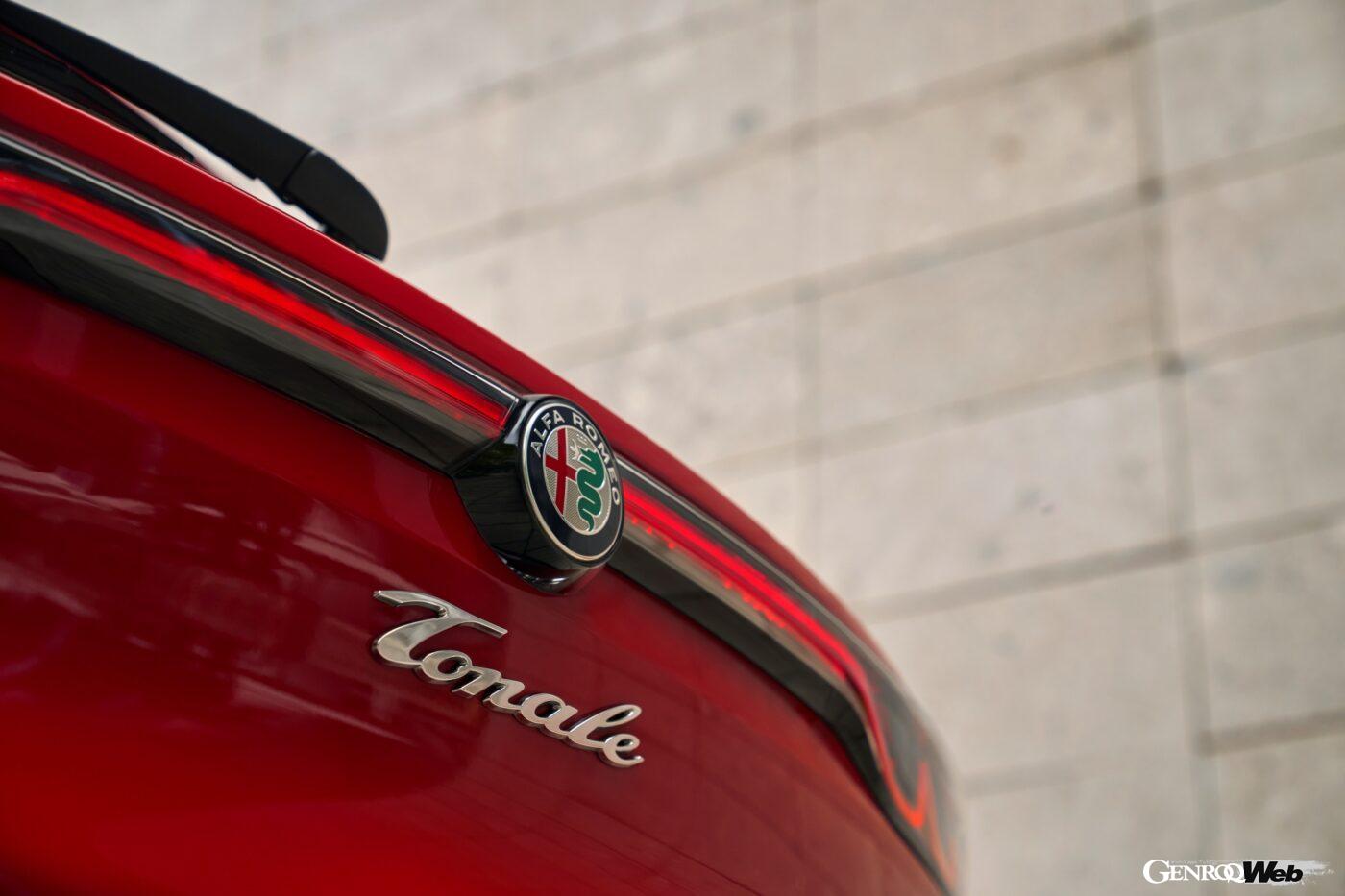
The red cross and giant snake come from Milan, where the company was founded. The emblem was designed jointly by the company’s first chief engineer, Giuseppe Melosi, and the young illustrator Romano Cattaneo. Cattaneo was inspired to design the emblem after he was caught by the Visconti family crest, “Biscione,” painted on the Sforzesco Castle while waiting for a tram.
The Visconti family was an aristocratic family that ruled Milan in the Middle Ages, and the large snake (or dragon) on their coat of arms swallowing an enemy is a symbol of rebirth, power, and victory. Cattaneo combined this design with the red cross of the city of Milan, completing a design with a cross on the left and a snake on the right. By surrounding this with the letters “ALFA” and “MILANO,” it became an emblem that symbolizes the origins of the brand.
The birth of Alfa Romeo
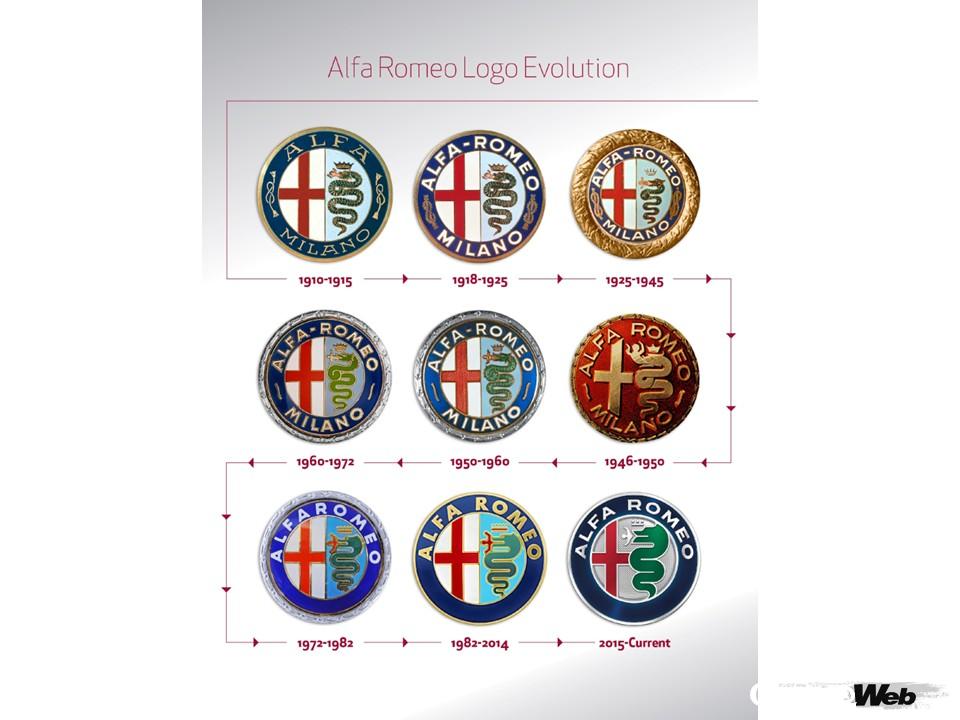
Around 1920, the word “ROMEO” also began to be engraved on the emblem.
With the outbreak of World War I, Alfa was forced to shift to the military industry, and its performance deteriorated. Meanwhile, Neapolitan businessman Nicola Romeo acquired management rights and changed the company name to “Alfa Romeo.” Around 1920, the word “ROMEO” was added to the emblem, and the font was also updated, but the basic structure remained the same.
From Milan to the world

[5]

[6]
[5] The two-door sporty Alfasud Sprint model. [6] The current emblem was introduced with the 2015 Giulia. It is a design that continues the tradition of the company’s founding, even after more than a century.
Since then, the logo has undergone several revisions, such as the addition of a laurel wreath to commemorate achievements in motorsports and a change to a two-tone red and gold color scheme, but the basic layout of a red cross and Biscione on either side, with the brand name written around the outside, has remained the same to this day.
A major change occurred in 1971, when production of the compact car “Alfasud” (sud means “south”) began at the Pomigliano d’Arco plant in southern Italy. To coincide with this, the word “MILANO” was removed from the emblem.
In 1982, the logo was replaced with a clearer color palette of gold and blue, giving the overall graphic a modern and sharp impression. In 2015, Alfa Romeo became part of the Stellantis Group, and the emblem was also redesigned to coincide with the launch of the new Giulia. The vertical dividing line between the red cross and the Biscione was removed, and a seamless design was adopted.
PHOTO/Stellantis NV