
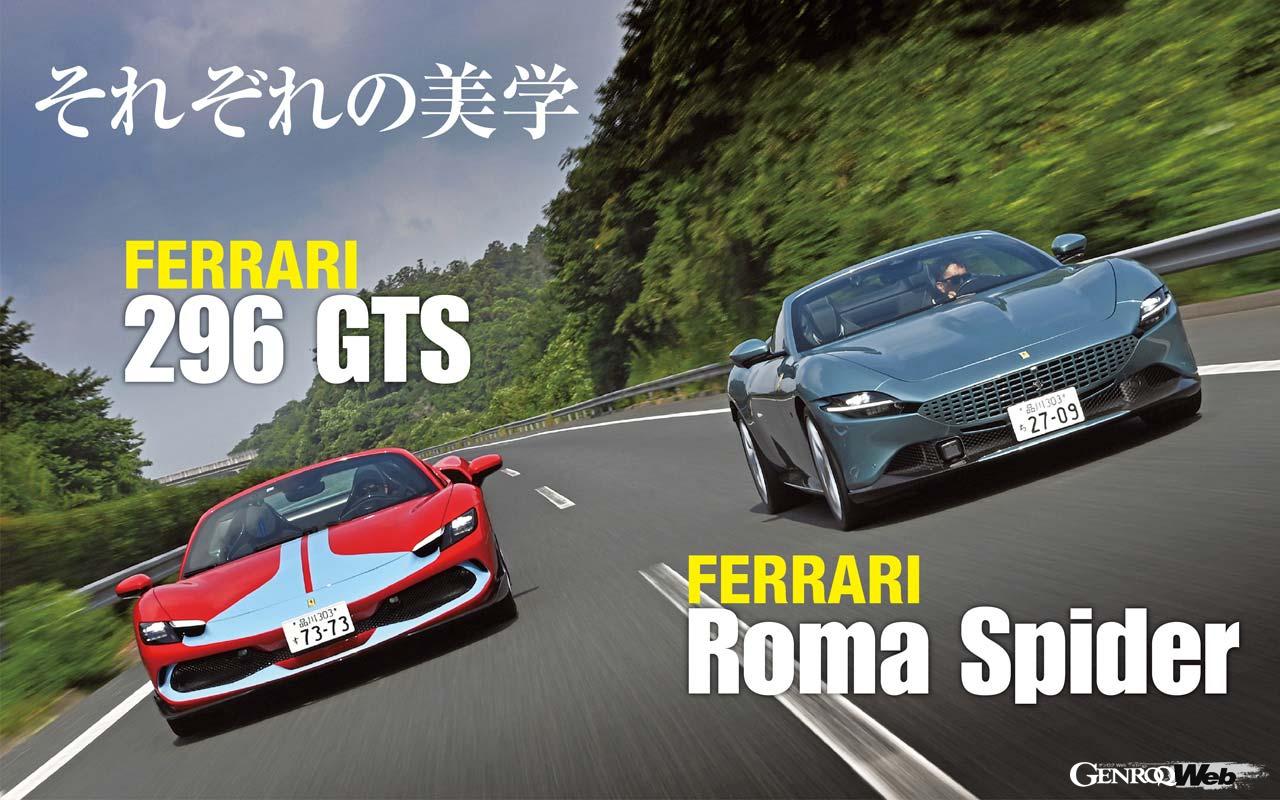
FERRARI 296 GTS / Roma Spider
Two cars that are different except for being open
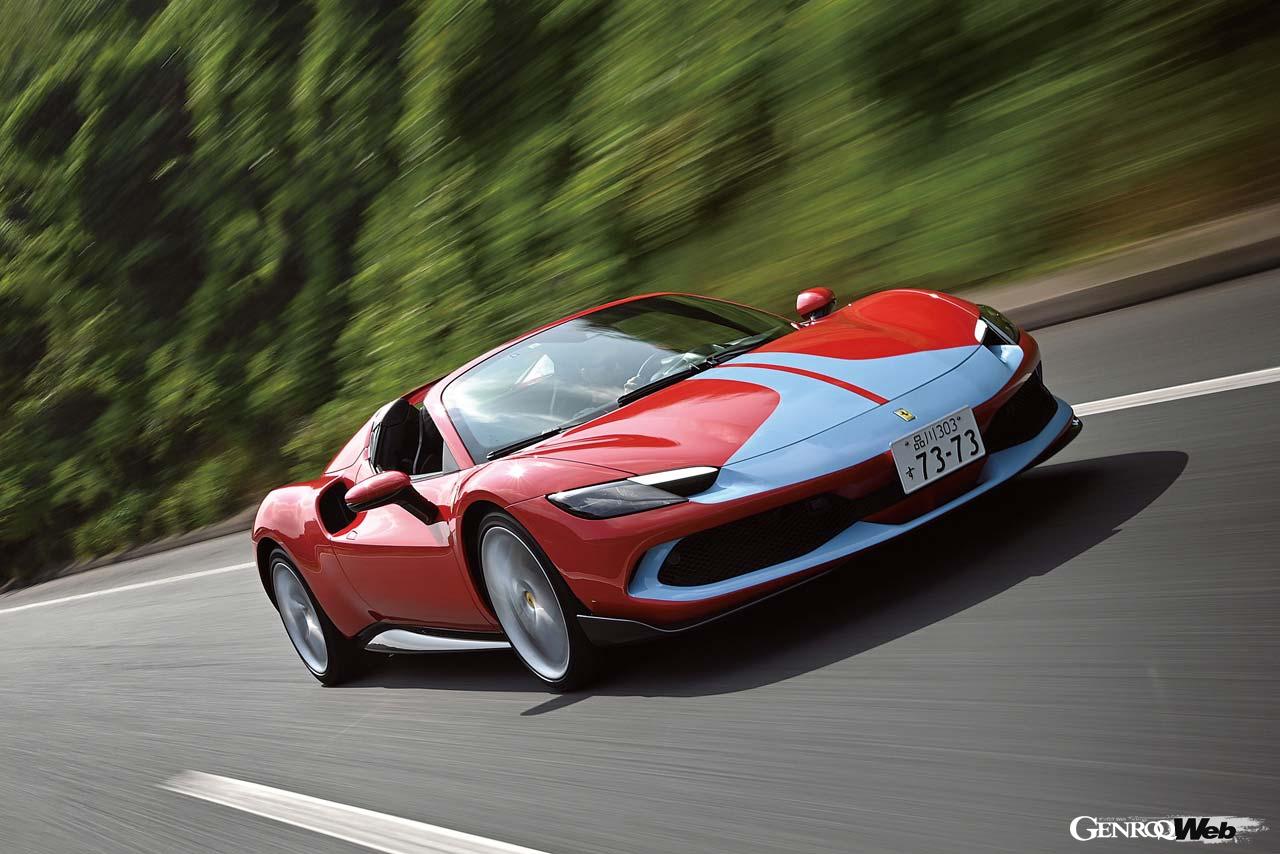
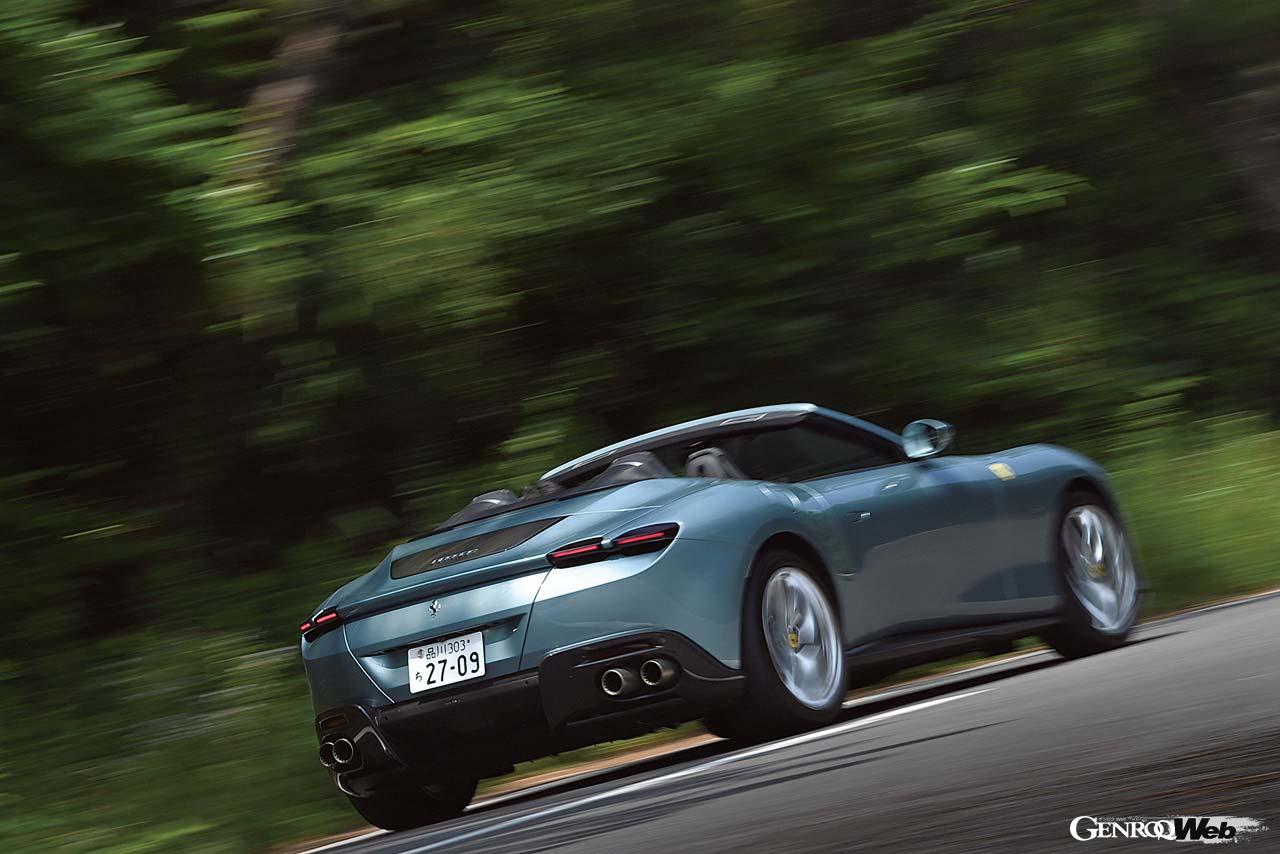
The mid-engine 296GTS and the FR Roma Spider both have open bodies, but their driving styles are different.
I recently bought my first Ferrari. As I expected, it was expensive, but I’m sure it will go up in value in the future! I’m talking about stocks, though.
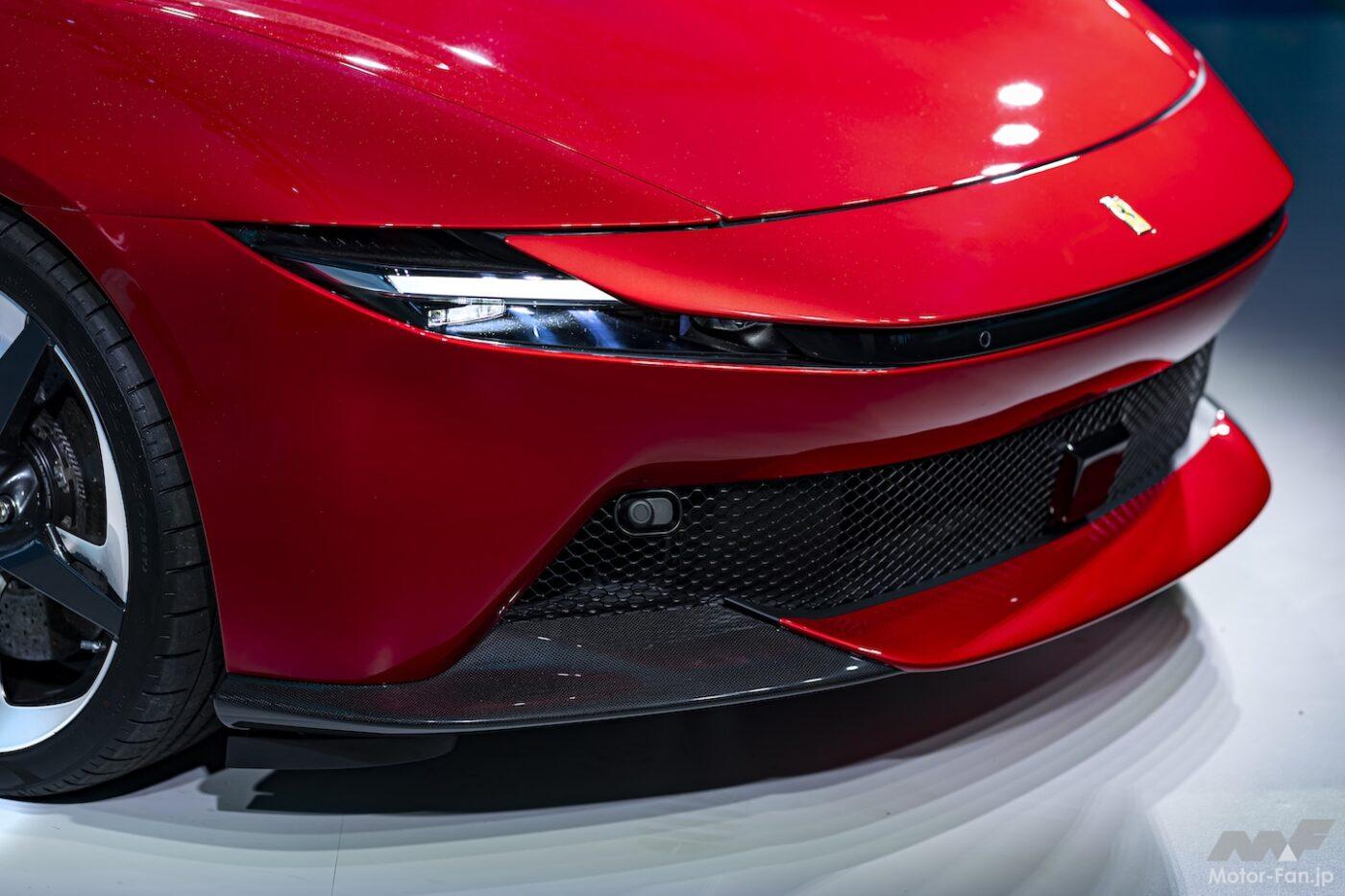
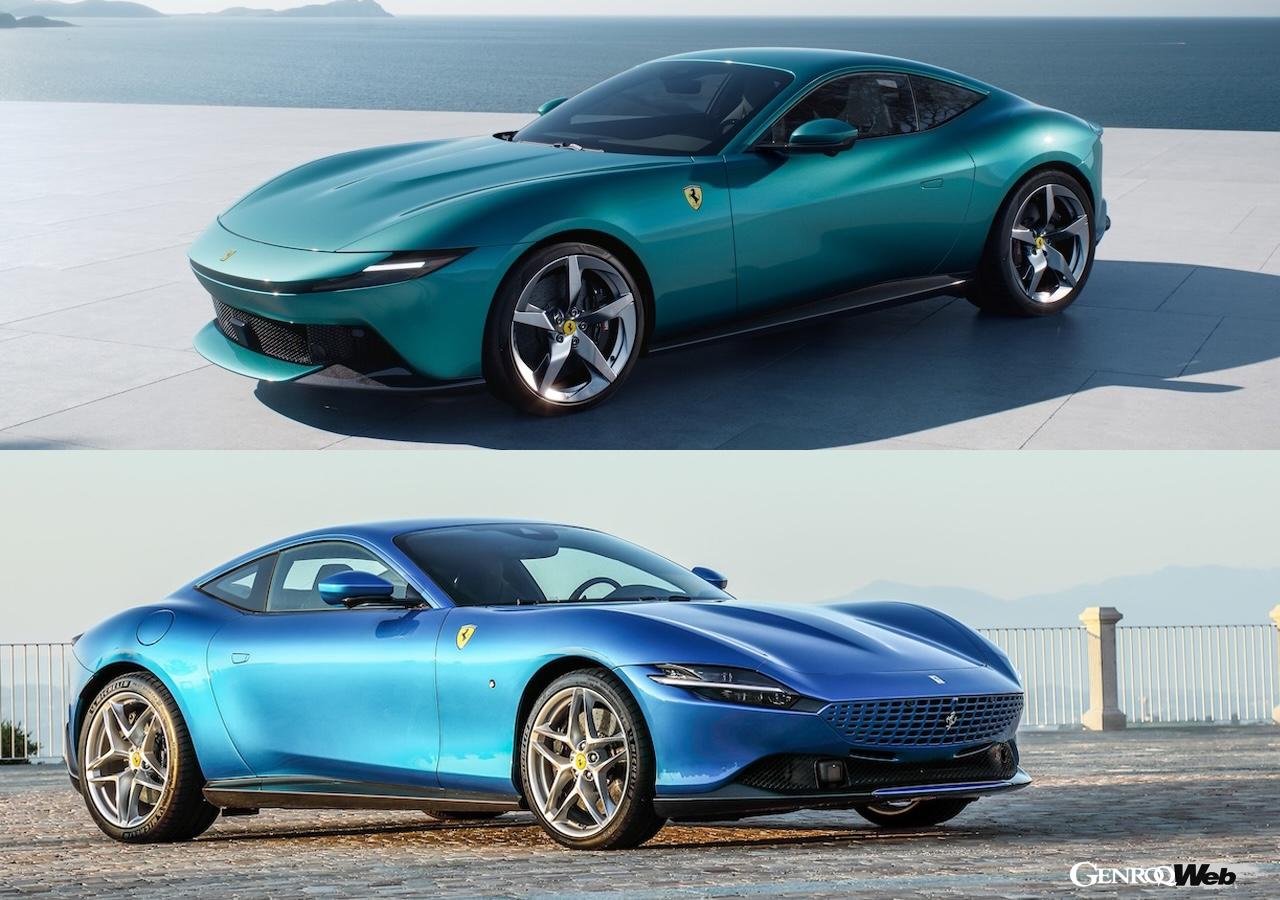
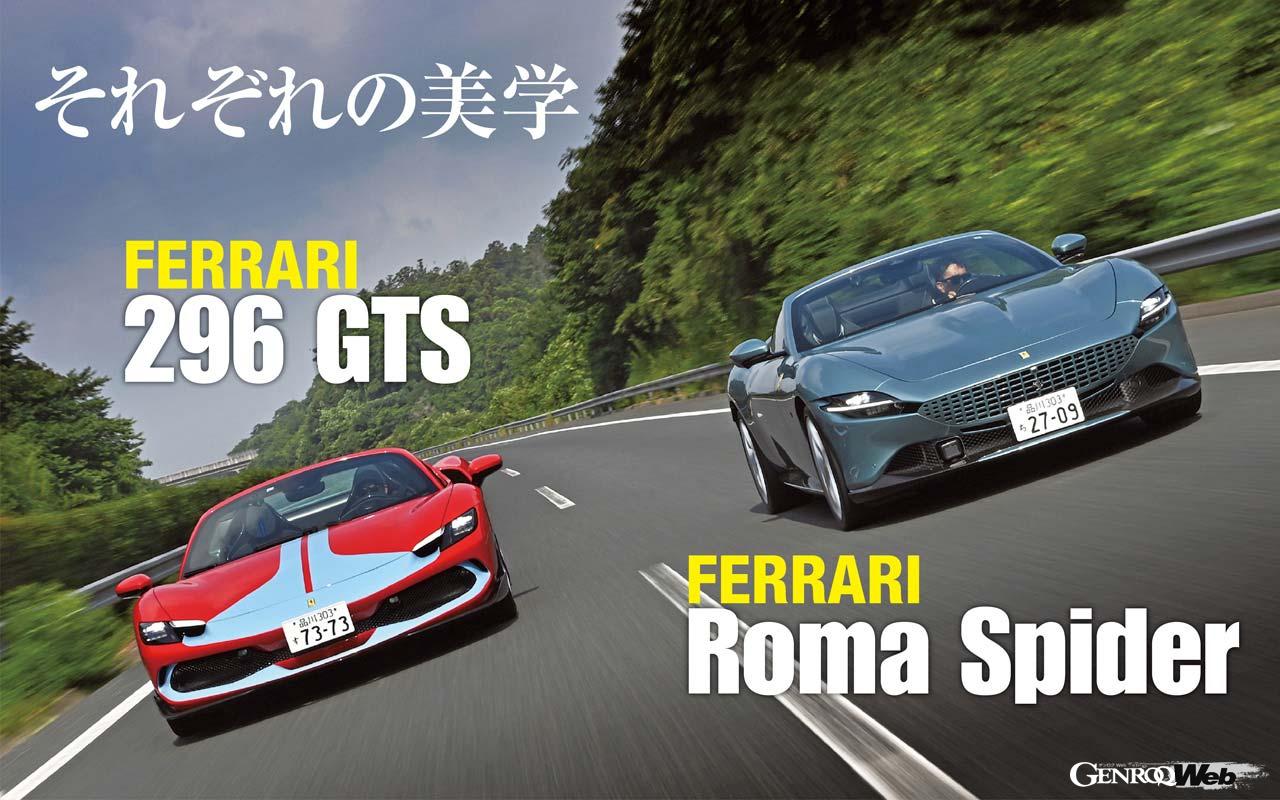
Today’s Ferrari is a real car. The sight of the two Ferraris, the 296 GTS and the Roma Spider, butting head-to-head was a spectacular sight. The Roma Spider, clad in Celeste Trevi, has a long nose, short deck, front-engine, rear-wheel drive layout. Beneath the smoothly curved power bulge is a 3.9-liter V8 twin-turbo engine.
The 296GTS, on the other hand, is a livery modelled on that of Maranello Concessionaires (a British Ferrari dealer and former racing team), with a Rosso Corsa base and bold light blue accents. The V6 twin-turbo is of course mid-mounted.
While the two cars share the commonality of being current open-air Ferraris, they are completely different in every other respect, and that’s the key point of this exhibition. Looking at Ferrari’s archives, we can see that there have long been two lines: GT models and sports models with roots in race cars. Of these, the GT has an elegant history, having been loved by movie stars, royalty, and even businessmen.
Compared to the traditional GT, the mid-engine, two-seater design is a relatively new trend, but in today’s perception, the series that began with the 1980s 308 and continued through to the latest 296 is seen as Ferrari’s flagship model.
The smoothness of the Roman Spider
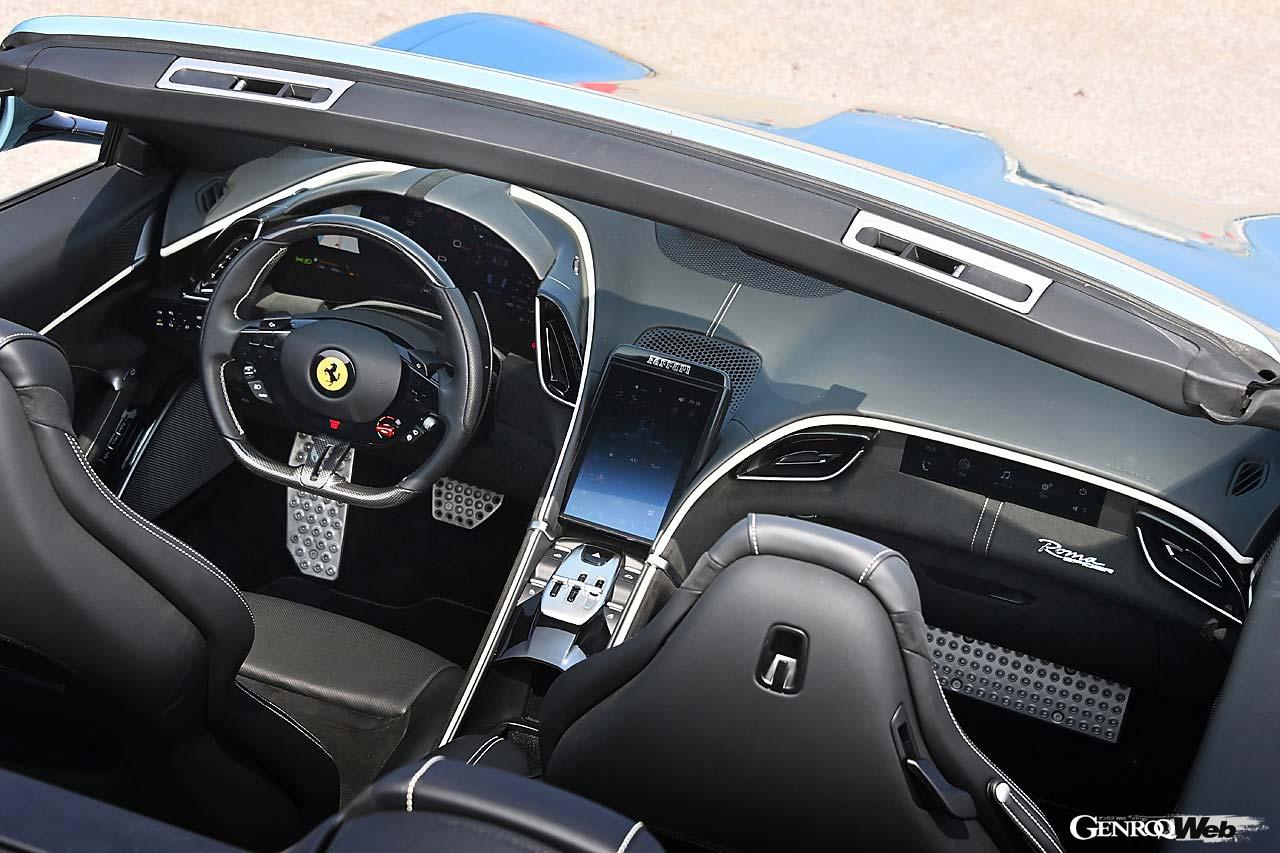
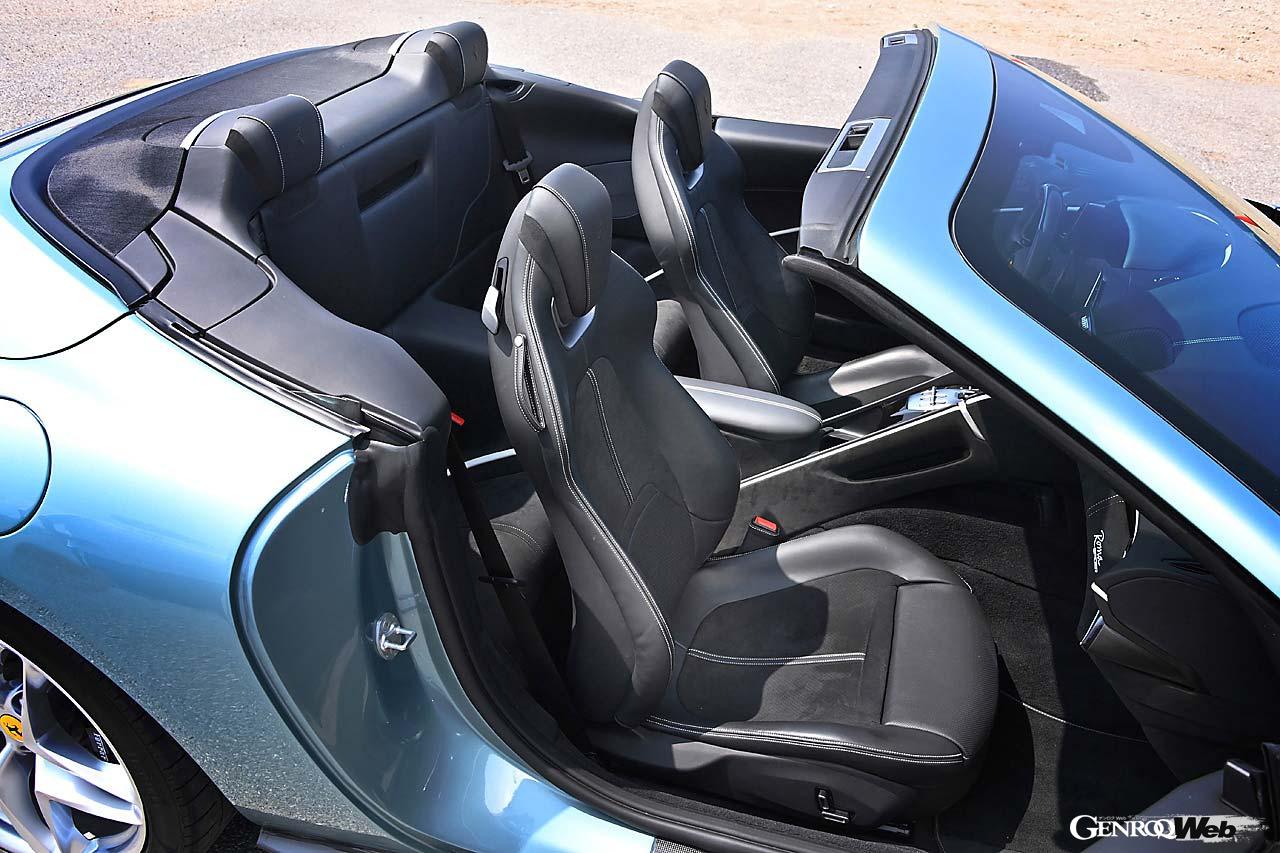
The design separates the occupants to create a personal space. It’s interesting that the design philosophy is completely different from the 296GTS. The rear seats, although quite narrow, are a great feature of the V8 FR Ferraris that have continued since the California. The wind deflectors that rise from the rear seat backs have a significant effect.
I had previously driven the coupe-bodied Roma, but to be honest, it didn’t leave much of an impression on me. However, after taking a closer look at both the interior and exterior of the two cars, I was more drawn to the Roma Spider.
The coloring of the Roma Spider, which is neither red nor yellow, is relaxed and gives off an exquisite feeling of ease. The interior design of the Roma is also elegant. This car is one that should be taken on a trip with a beautiful partner in the passenger seat! Of course, there is no one there this time.
As soon as I started driving, I was amazed by the “smoothness.” This may have been the first time I’ve ever wanted to talk about smoothness while driving a Ferrari. The smooth rise of power the moment I stepped on the throttle, the smooth upshifts, and the carbon ceramic brakes that worked smoothly even when the car wasn’t yet warm! Furthermore, when I selected Comfort mode in the Manettino, I was able to enjoy a truly smooth ride.
You can also enjoy the sensuality that only a Ferrari can offer.
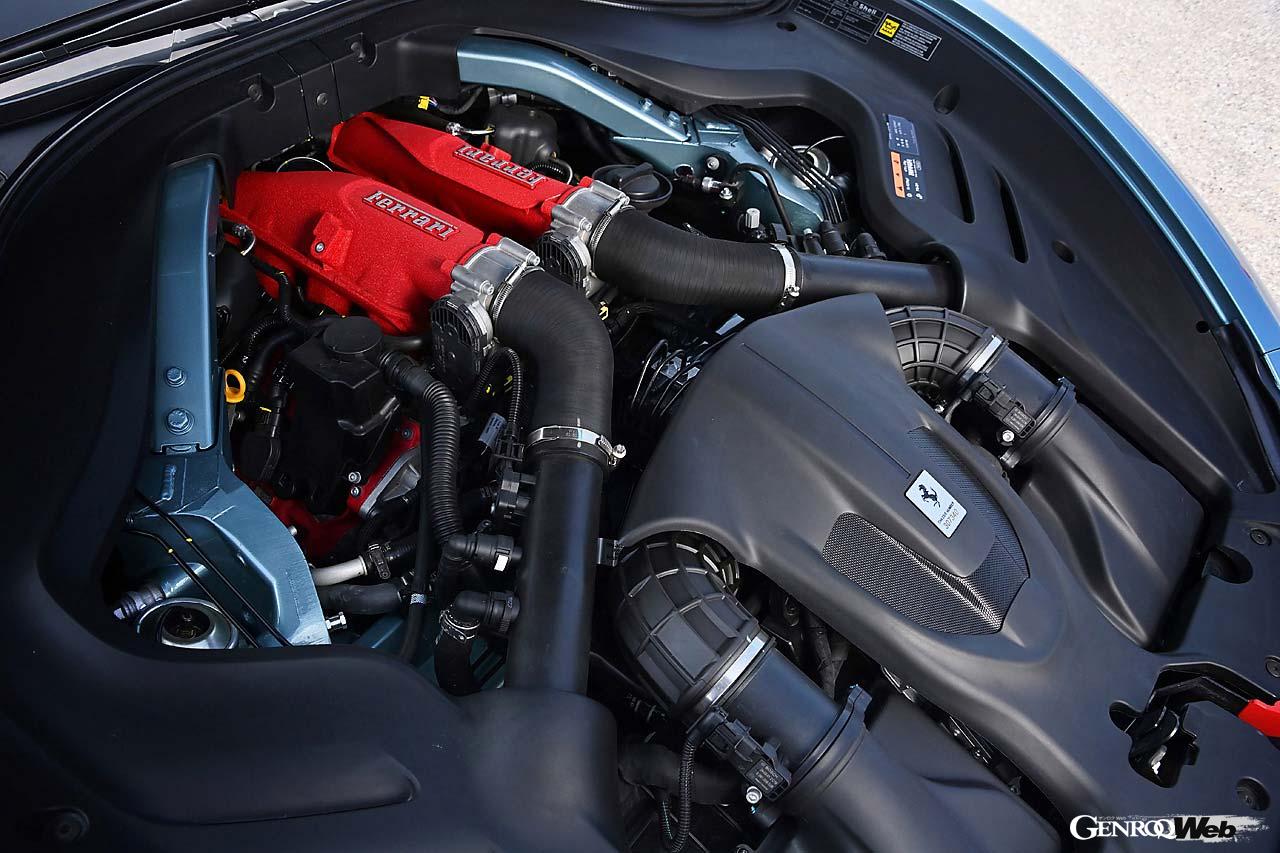
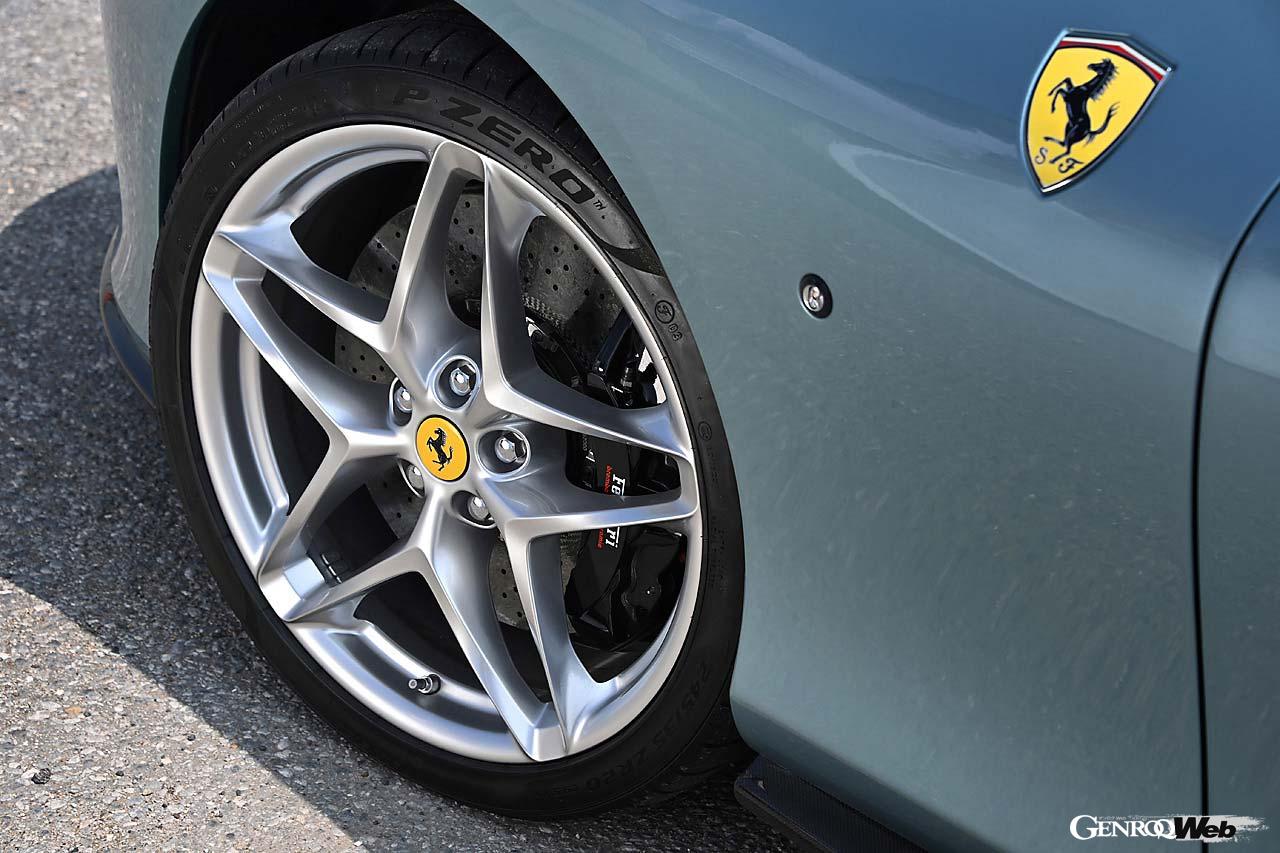
The front is fitted with the F154, a legendary engine that supported an era of Ferrari. It is surprisingly embedded into the bulkhead, revealing that it is a fully front-midship car. Carbon ceramic rotors are combined with 6-pot calipers.
Can you believe that the Roma Spider’s dynamic quality is superior to that of its German rivals? That said, if you just want a car that’s smooth, there are other options. The Roma Spider impressed me because, apart from being smooth, every aspect of it is truly Ferrari-like.
The more you rev the V8 twin turbo, the more linear the power overflows, just like a naturally aspirated engine. The exhaust sound isn’t particularly sensual, but it’s still loud enough to give you the feeling that “this is a flat-plane crank!”
The finishing touch is the open-air drive, where you can gaze up at the blue sky with the flip of a switch. When the time comes, you can quickly lower the top and drive leisurely, feeling the gentle breeze. This kind of driving style is surely the worldview that the Roma Spider advocates.
The open 296GTS is in a fighting position
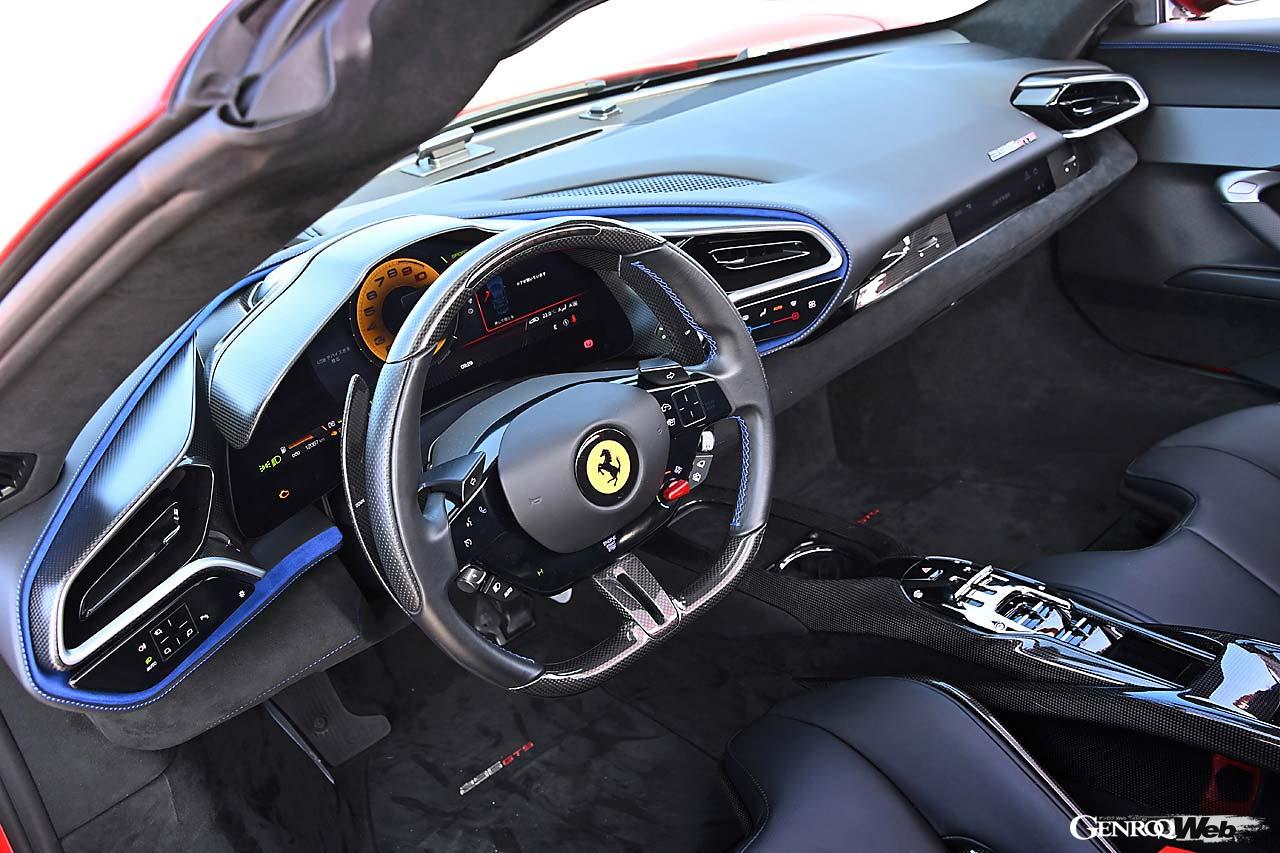
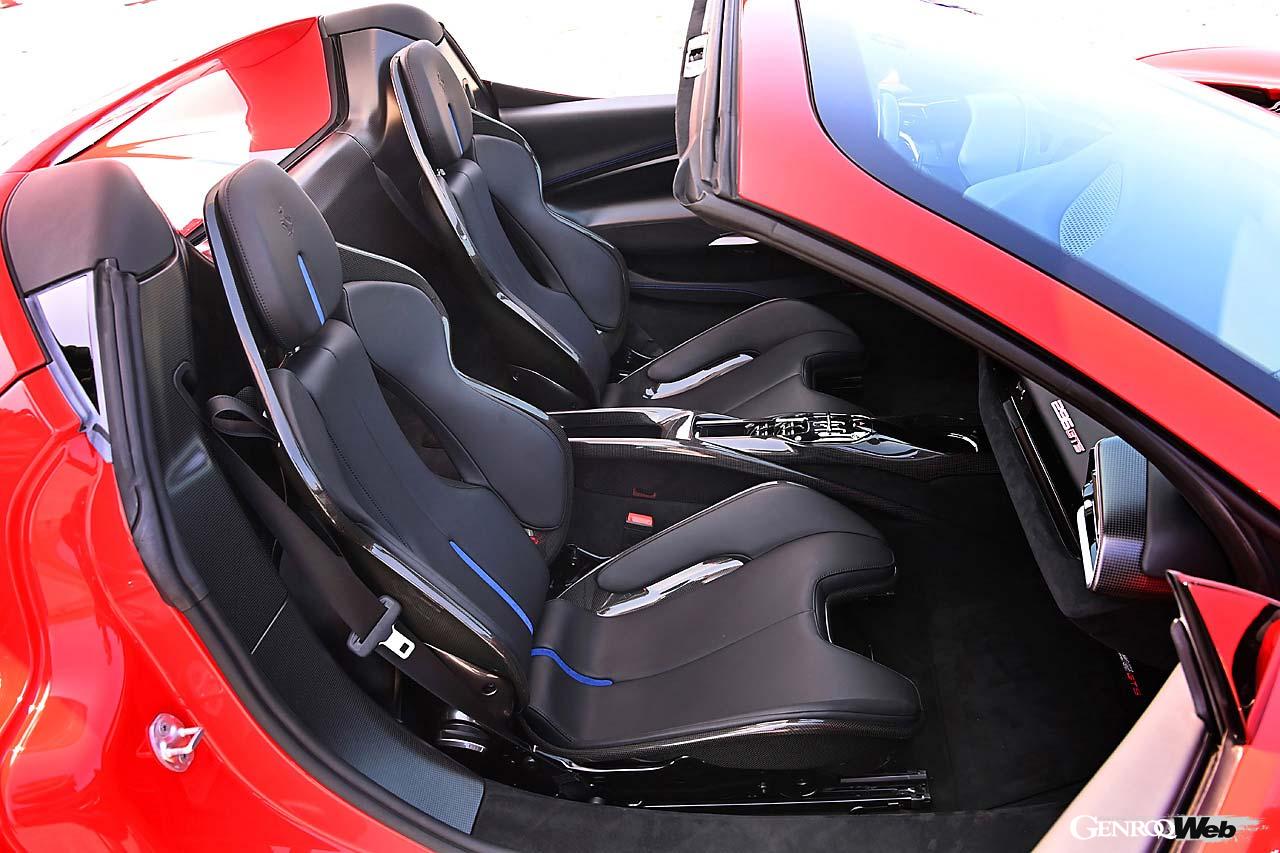
The 296GTS separates the dashboard and center console, concentrating all the necessary information directly in front of the driver, giving it a philosophy that is also common in racing machines. The car used for the photoshoot was fitted with carbon fibre sports seats. Not only do they provide excellent support, but the height can also be adjusted, allowing anyone to find the perfect position. The drive battery is mounted behind the seats.
After being enchanted by the luxurious and taut ride of the Roma Spider, I was awakened when I stepped on the throttle of the 296 GTS. The hard carbon-cased bucket seats included in the Assetto Fiorano package, the low driving position, and the three-dimensional, impactful view of the cockpit. The 120-degree banked, evenly spaced V6 engine has sharp pickup and revs like a spur. Before you know it, a red light starts to light up on the steering rim, prompting you to upshift. The exhaust note is also far more powerful than that of the Roma Spider, reverberating deep in your belly.
The 296GTS can also be opened with the flip of a switch, but the meaning is different from that of the Roma Spider. It is a sequence that lowers the center of gravity and assumes a fighting stance. It makes you feel like you are in the 312P that Maranello Concessionaires raced.
The Manettino doesn’t have a Comfort mode like the Roma: Sport is standard, followed by Race, CT Off, and ESC Off, which are increasingly harsh.
The moment I turned the steering wheel, which provided just the right amount of reaction, I could clearly feel the benefits of the midship layout. It felt as though the steering wheel and the front wheels were directly connected, and the cornering G-forces increased relentlessly. The steering feel of the Roma Spider was sporty enough, but that of the 296 GTS is on a whole different level.
On the other hand, the rear wheels have a sense of unity as if they are directly connected to the powertrain, giving the driver the feeling that they are in perfect control of the load on all four wheels.
A motor that delivers power from the moment you start pedaling

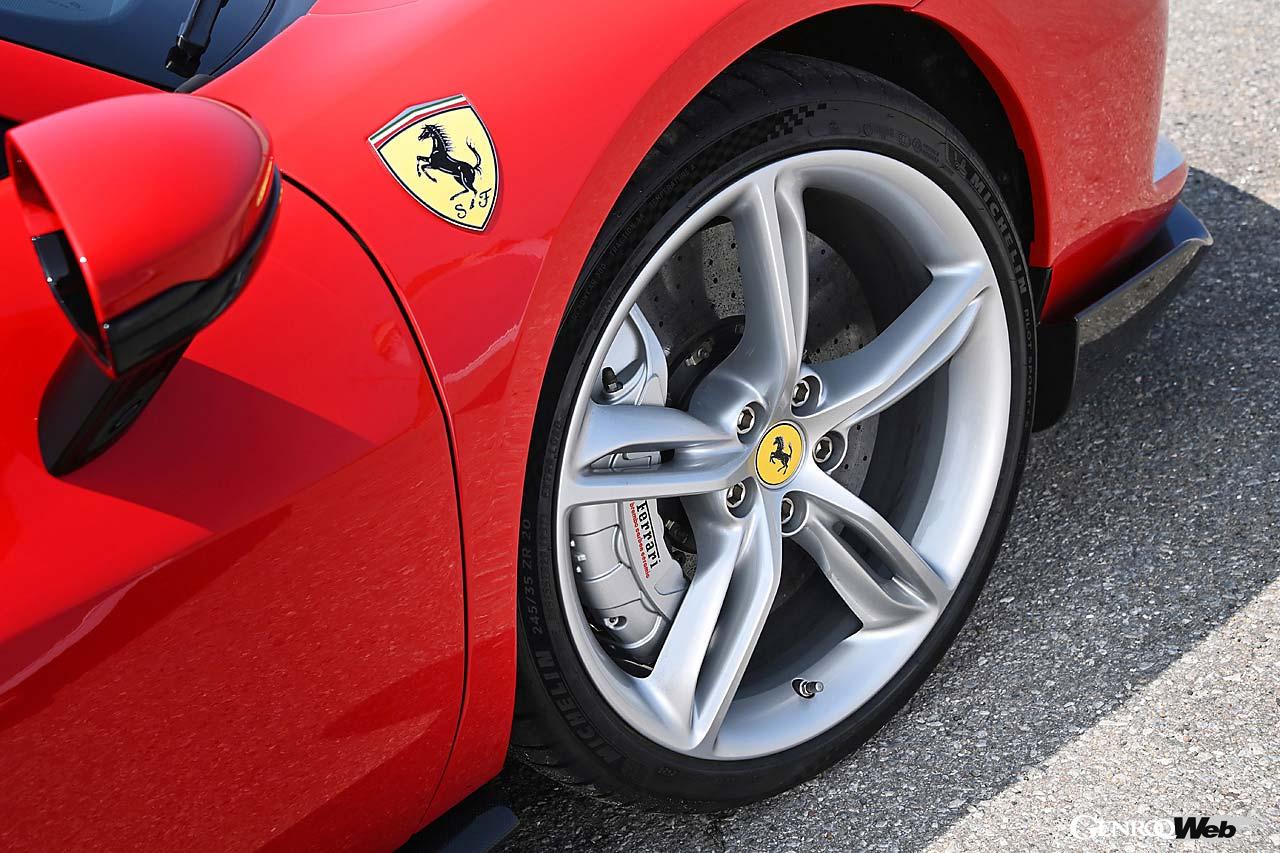
The 120-degree V6 twin-turbo engine has a hot V configuration and achieves a center of gravity 10mm lower than the F8 Tributo. The engine alone produces 663 PS, and when combined with the motor it achieves a total of 830 PS. The brakes use carbon ceramic rotors. Subtle speed adjustments are also possible.
The V6 engine has a maximum output of 663 PS, but the motor is also powerful, releasing 167 PS as soon as you step on the throttle. As with my previous test drive of the 296 GTB, I didn’t feel any disadvantages to the hybrid system. In fact, without this quick recuperation and the hint of boost, it might have seemed a bit lacking for a modern super sports car.
At the same time, this time I took the test drive from the Shuto Expressway to the Boso coast, with the open air in mind, but I was reminded that a circuit or winding road is the best stage to unleash the performance of a mid-engine Ferrari.
I find the Spider more appealing than the Coupe.
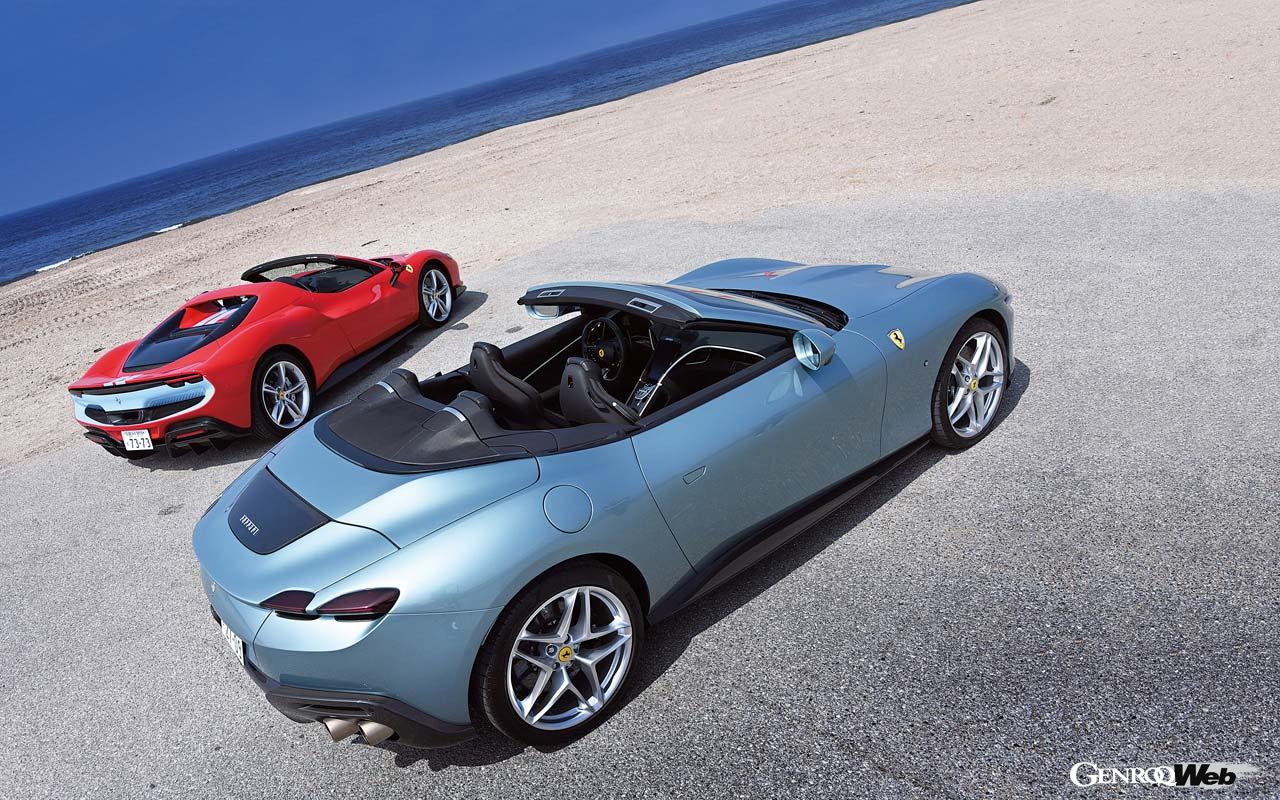
The two cars can be divided into two categories: a circuit-oriented racing machine and a long-distance touring oriented GT.
What I felt after driving both cars this time was that the Spider is more attractive than the Coupe in terms of both atmosphere and driving. And personally, I was strongly attracted to the elegant worldview of the “Roma Spider.”
Until now, my personal favorite Ferrari of the 21st century has been the 812 Superfast, but from now on, I’ll be recommending the Roma Spider. All that’s left now is to wait for the stock price to rise.
REPORT / Takuo YOSHIDA
PHOTO / Wataru TAMURA
MAGAZINE / GENROQ September 2025 issue
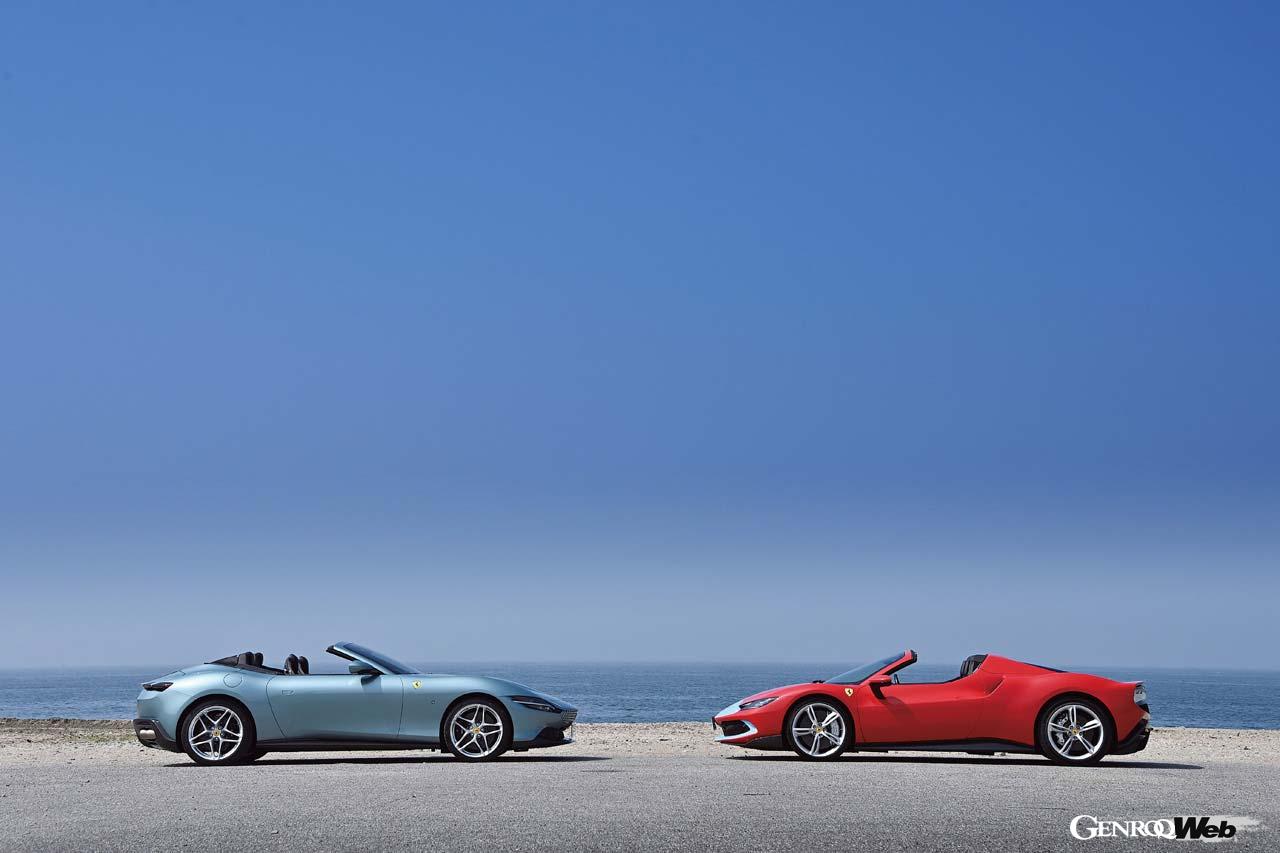
When viewed from the side, the difference in proportions between the mid-engine and FR models is clearly visible.
SPECIFICATIONS
Ferrari Roma Spider
Body size: Length 4656, Width 1974, Height 1306mm
Wheelbase: 2670mm
Dry weight: 1556kg
Engine type: V8 twin turbo
Displacement: 3855
Maximum output: 456kW (620PS) / 5750-7500rpm
Maximum torque: 760Nm (77.5kgm) / 3000-5750rpm
Maximum motor output: –
Transmission: 8-speed DCT
Drive system: RWD
Suspension: Front double wishbone, rear multi-link
Brakes: Front and rear ventilated discs (carbon ceramic)
Tires & wheels: Front 245/35ZR20, rear 285/35ZR20
0-100km/h acceleration: 3.4 seconds
Top speed: 320km/h
Vehicle price: 34.36 million yen
Ferrari 296 GTS
Body size: Total length 4565, total width 1958, total height 1191 mm
Wheelbase: 2600 mm
Dry weight: 1540 kg
Engine type: V6 twin turbo
Displacement: 2992
Maximum output: 610 kW (663 PS) / 8000 rpm
Maximum torque: 740 Nm (91.8 kgm) / 6250 rpm
Maximum motor output: 122 kW (167 PS)
Transmission: 8-speed DCT
Drive system: RWD
Suspension: Front double wishbone, rear multi-link
Brakes: Front and rear ventilated discs (carbon ceramic)
Tires & wheels: Front 245/35ZR20, rear 305/35ZR20
0-100 km/h acceleration: 2.9 seconds
Top speed: 330 km/h
Vehicle price: 43.19 million yen
[Official website]
Ferrari Japan
https://www.ferrari.com/ja_jp/