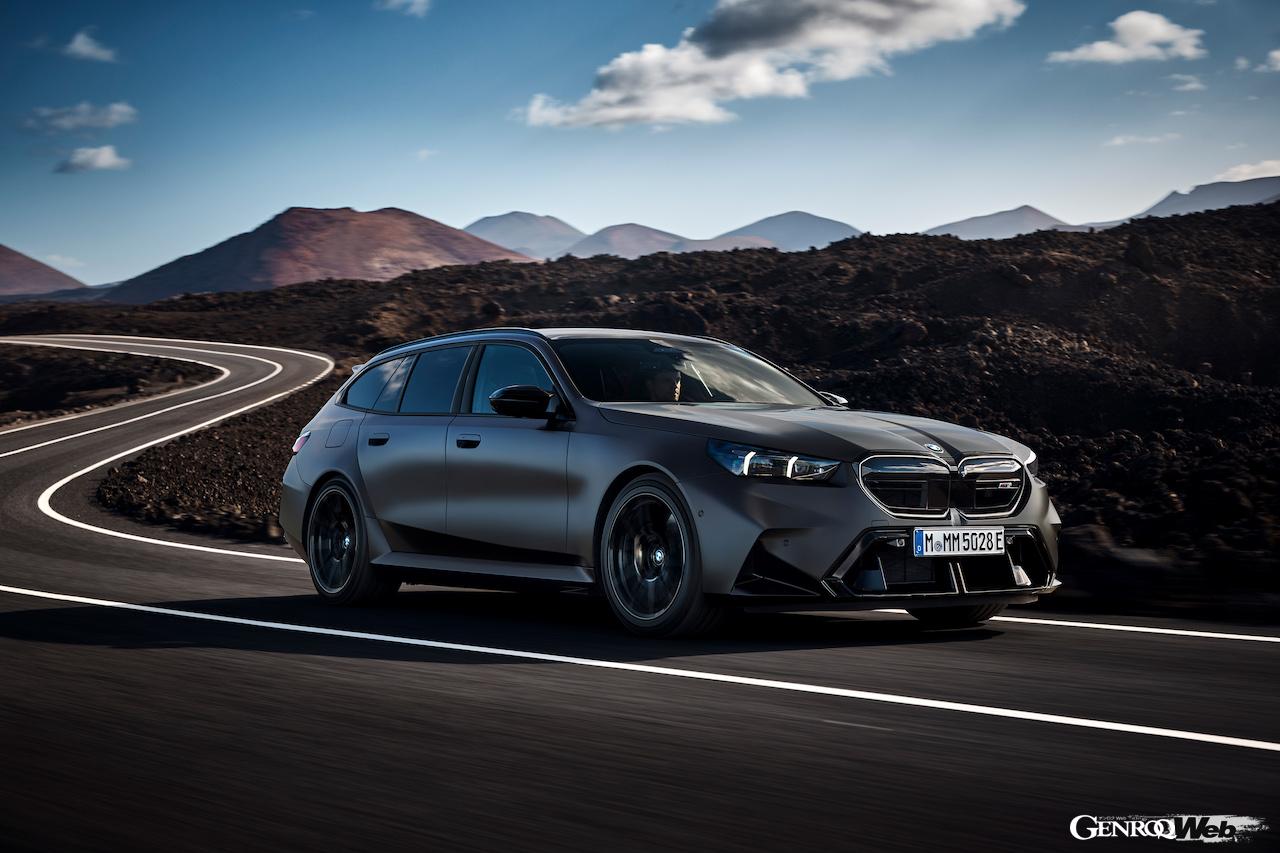

BMW M5 Touring
×
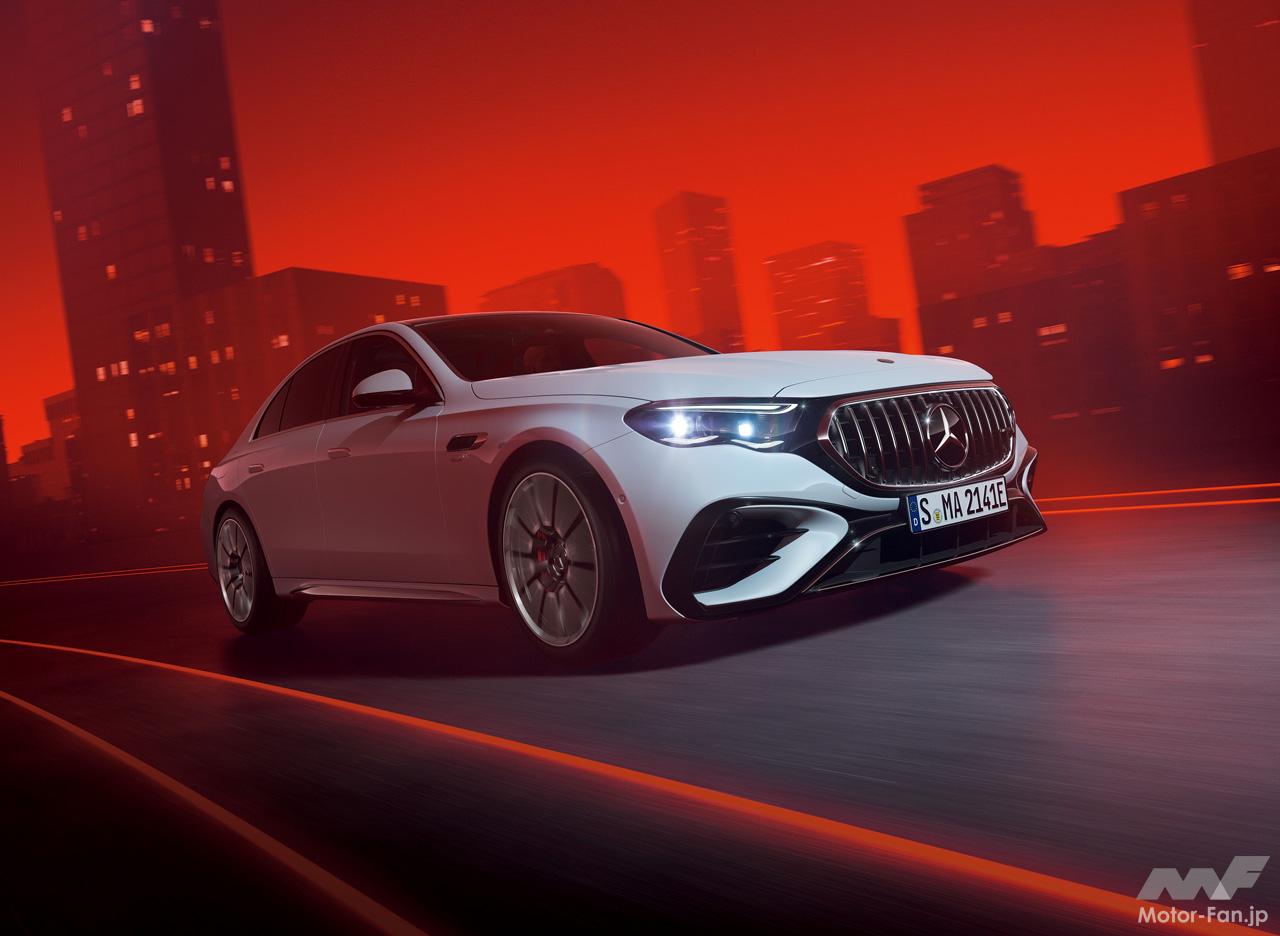
Mercedes-AMG E 53 Hybrid 4Matic+ Stationwagon
Both cars offer uncompromising driving performance

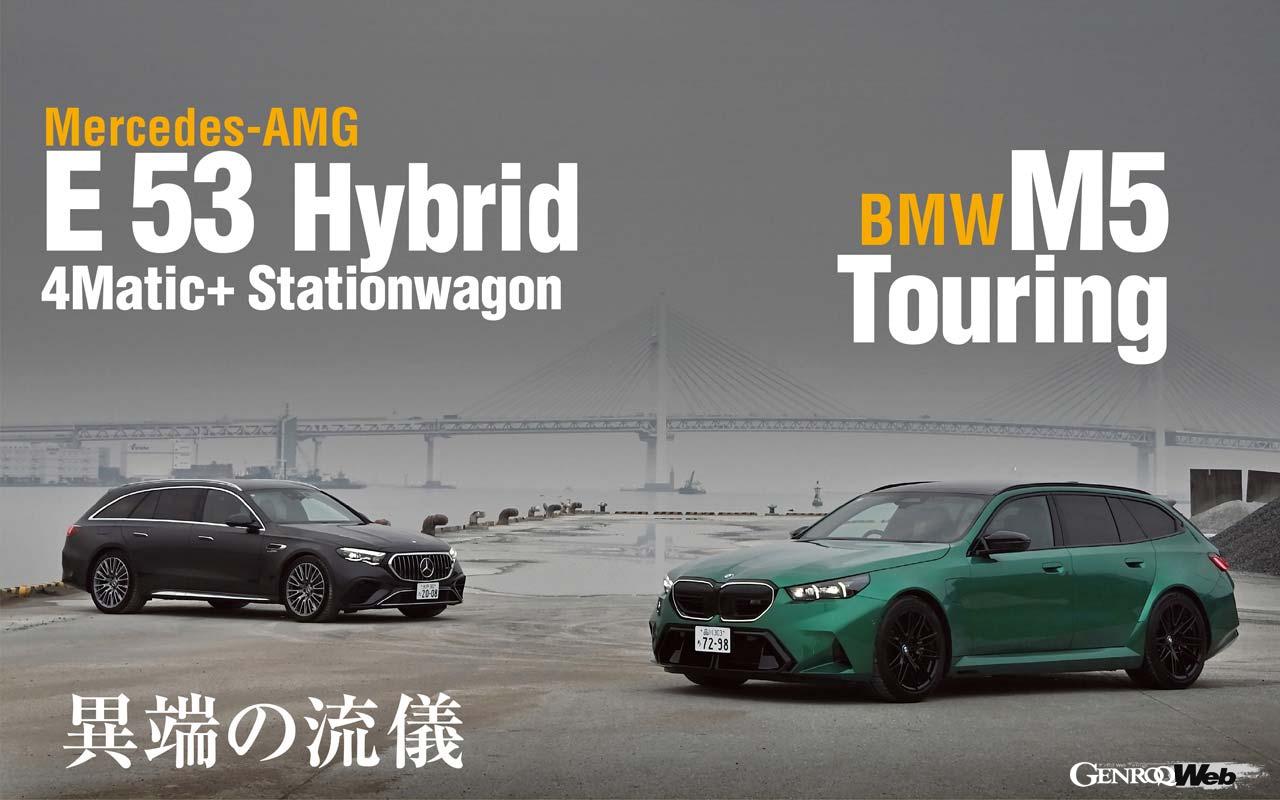
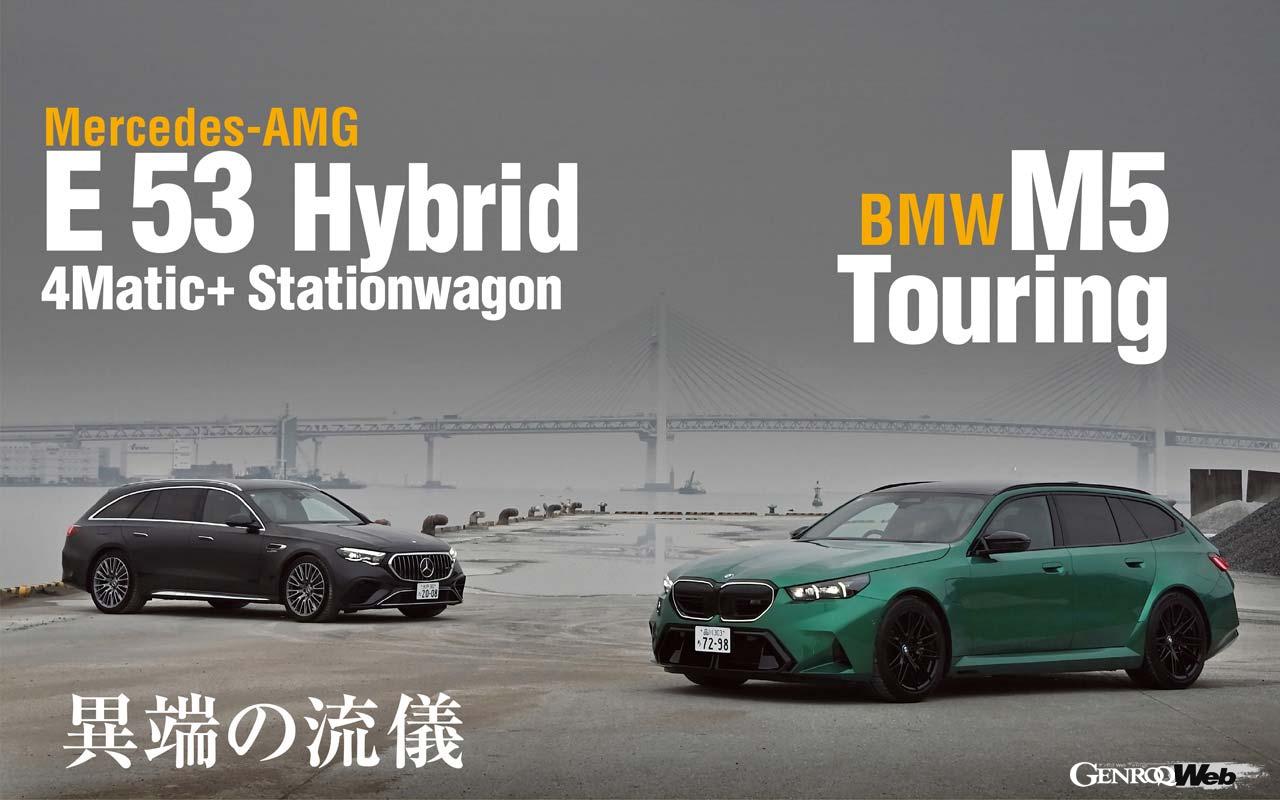
These two hyper station wagons are representative of the European E-segment. Both offer outstanding entertainment value and cargo capacity, allowing you to enjoy driving just as much as a super sports car.
The Touring model has been added to the M5. Speaking of the M5 Touring, it marks the first return in 14 years, three generations since the E60 series, which ceased production in 2010. Many people may be wondering, “Was there really a Touring M5?” This is because the previous M5 Touring was exclusive to Europe and was not officially imported to Japan. As a result, the number of units produced was apparently less than one-tenth of the sedan.
Speaking of “M” Touring, the M3 Touring was also released in 2023. This is the first M3 Touring model ever. On the other hand, “M”‘s arch rivals, Mercedes-AMG and Audi’s RS, are expected to have station wagons as well as sedans. In fact, the RS, which originated as the Avant, has only been available as an Avant in recent years.
A super wagon that can carry a lot of luggage and is fast is, in a sense, the ideal vehicle that satisfies all human desires. Perhaps due to the trauma of the poor sales of the first M5 Touring, M had stubbornly avoided the Touring model, but before long, both the M5 and M3 were available in Touring version. Perhaps it’s just that simple desire cannot be resisted.
So, to test the capabilities of the much-anticipated M5 Touring, we took it up against its rivals in a “world’s fastest super wagon showdown.” However, since one of its potential rivals, the RS 6 Avant, is effectively still waiting for its next-generation model, we decided to go up against the AMG.
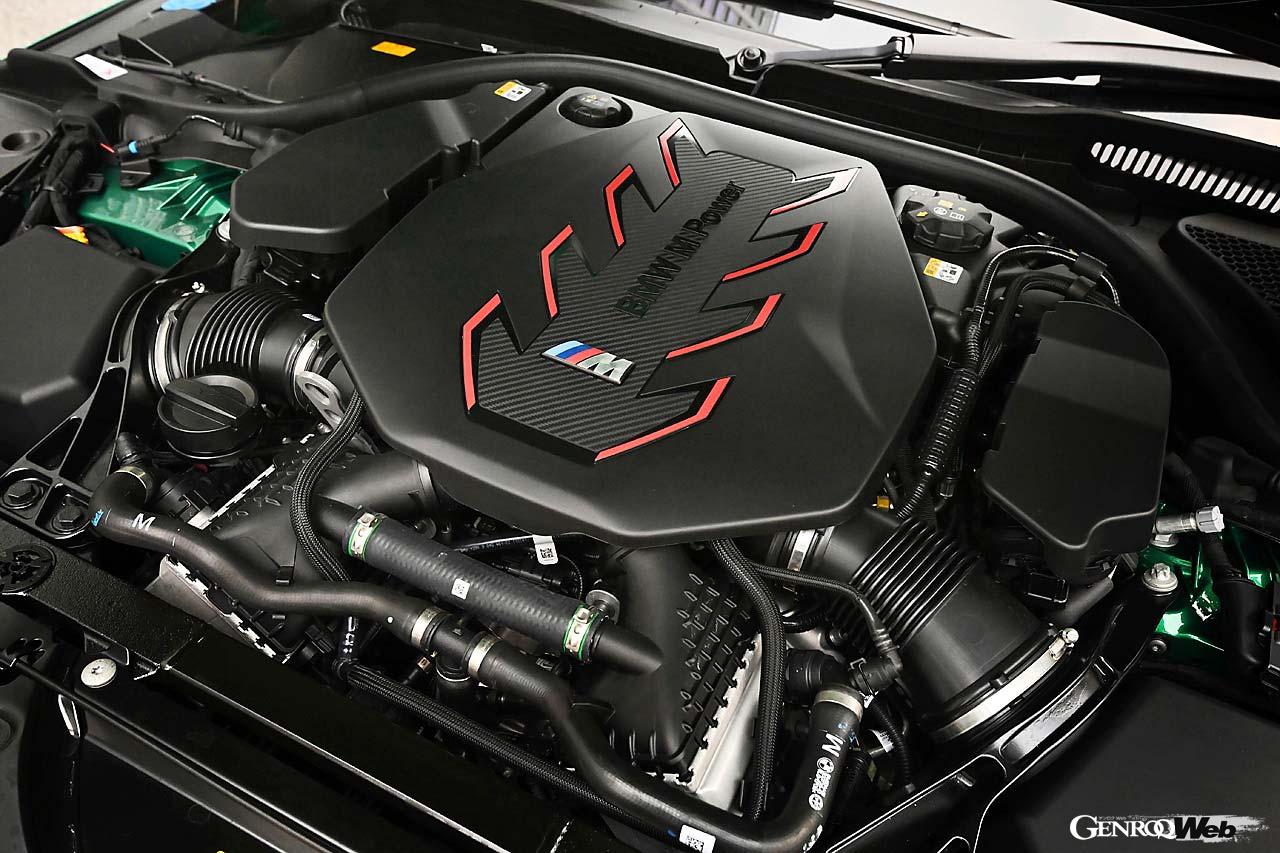
Mercedes sticks to a 3-liter inline-6 engine compared to the 4.4-liter V8 M5
[1]
[2]
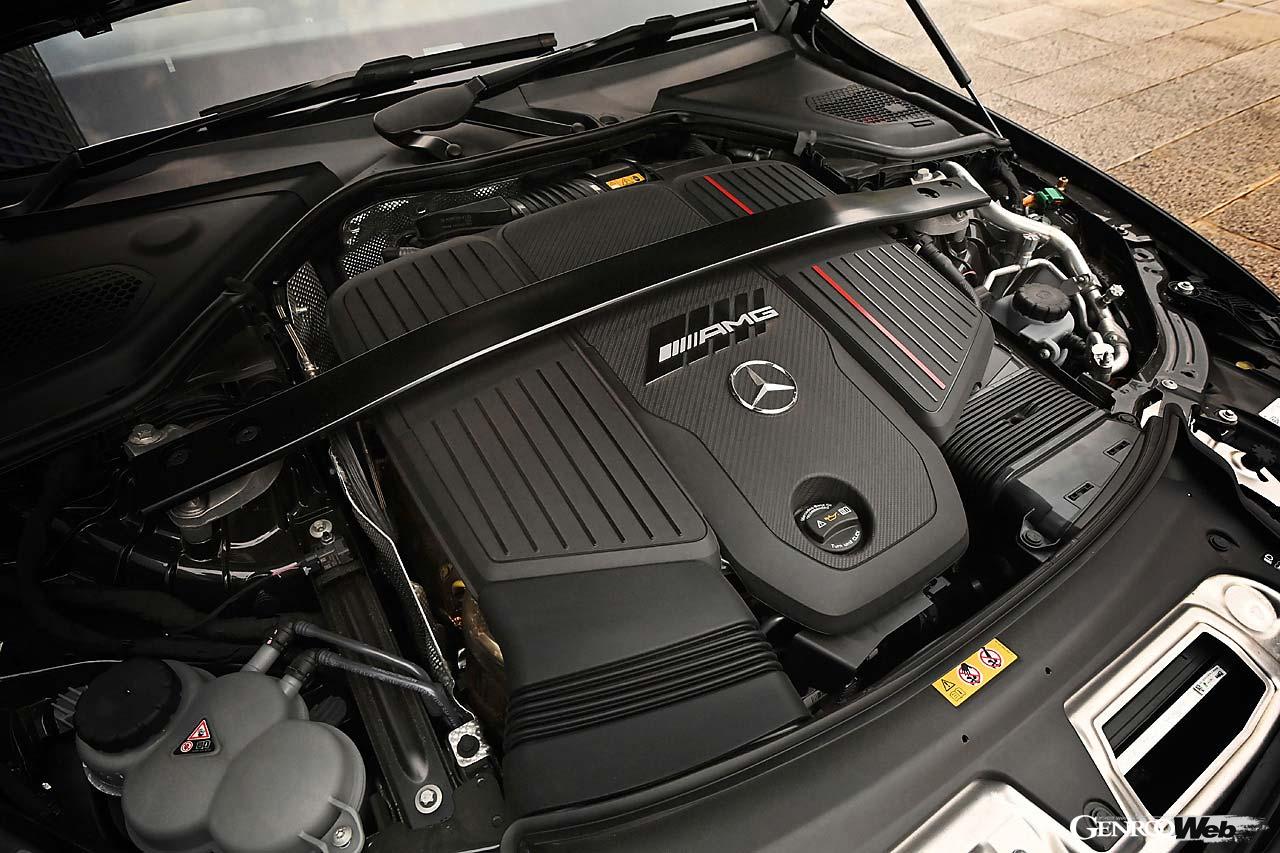
[1] A motor is combined with a BMW-made 4.4-liter V8 twin-turbo engine that produces 585 PS/750 Nm. The system output is an impressive 727 PS/1000 Nm. [2] A motor is combined with a 3.0-liter inline-6 twin-turbo engine that produces 449 PS/560 Nm and shows a pleasant acceleration. The system output is 585 PS/750 Nm.
As enthusiasts who visit this website know, AMG, which directly competes with M high-performance models including the M5, has long used the number “63.” In fact, the top models of the C, S, and GT are still numbered 63, and the latest standard is to combine a high-performance engine with the AMG-exclusive plug-in hybrid “E-Performance” (hereinafter referred to as “E-Perform”).
However, the current AMG E-Class, which rivals the M5, does not have a 63, and the top model is the 53. The engine is a 3.0-liter inline-6, different from the inline-4 of the C 63 SE Performa and the V8 of the S and GT. Like the other 63 E Performa models, it is a plug-in hybrid vehicle (PHV), but while the E Performa has a motor at the rear, the E 53 uses a (somewhat common) layout in which the motor is sandwiched between the engine and a 9-speed automatic transmission. Incidentally, this layout is also used in the latest M5, which has become a PHV.
Although both models feature the latest electric powertrains, it is still the engine that generates the power. The M5’s engine is the same classic 4.4-liter V8 twin-turbo engine with a maximum output of 585 PS and a maximum torque of 750 Nm. Add a 77 PS and 197 Nm motor to that, and the system output boasts 727 PS and 1,000 Nm of torque. In contrast, the E 53’s inline-six turbo engine produces 449 PS and 560 Nm, which is a difference from the M5. In return, the E 53’s motor performance exceeds that of the M5 (168 PS, 480 Nm), but its system output of 612 PS (with the Race Start function activated) and 750 Nm of torque are not as good as the M5’s. After all, it’s the engine that is the source of all power.
The M5 cockpit is attractive for its intuitive operation

[3]
[3]
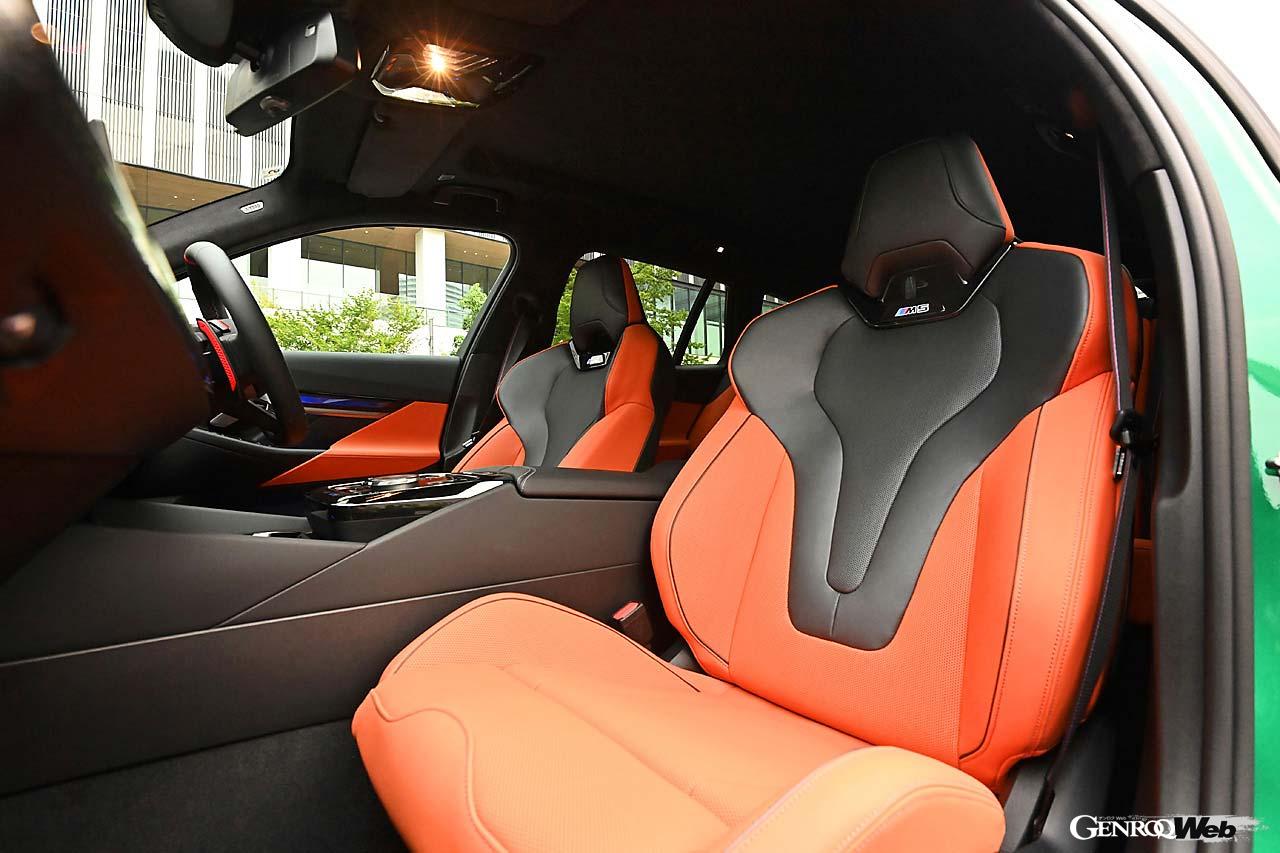
[3] The infotainment system is equipped with a large display that allows for intuitive operation. The system can be operated using voice control, touch operation, or the M-specific controller.
When you first see the M5 Touring, the most eye-catching feature is its large, jutting front and rear fenders. The tread is the same as the sedan, but perhaps because of the larger side panels, the Touring’s rear fenders are more impressive.
The AMG model’s official name is the Mercedes-AMG E 53 Hybrid 4Matic+ Station Wagon (PHV). It’s a little long, but unlike the M5, the only thing that’s extended from the regular E-Class on the E 53 is the front fenders. However, as a middle-aged man in his 50s, the flared fenders remind me of the 500E, and I can’t help but feel drawn to them.
Naturally, with such a large-scale powertrain, space is at a premium in both models. A key feature of a wagon is its luggage compartment, but the luggage compartment floors of these two vehicles are clearly higher than those of the same car with a pure engine (or electric vehicle). However, the current 5 Series was designed with electrification in mind from the initial platform design, and if you look at the M5 Touring alone, you might not think so. However, when you fold down the rear seats, you’ll notice that the luggage compartment is higher than that.
Mercedes adopts third-generation MBUX

[4]
[4]
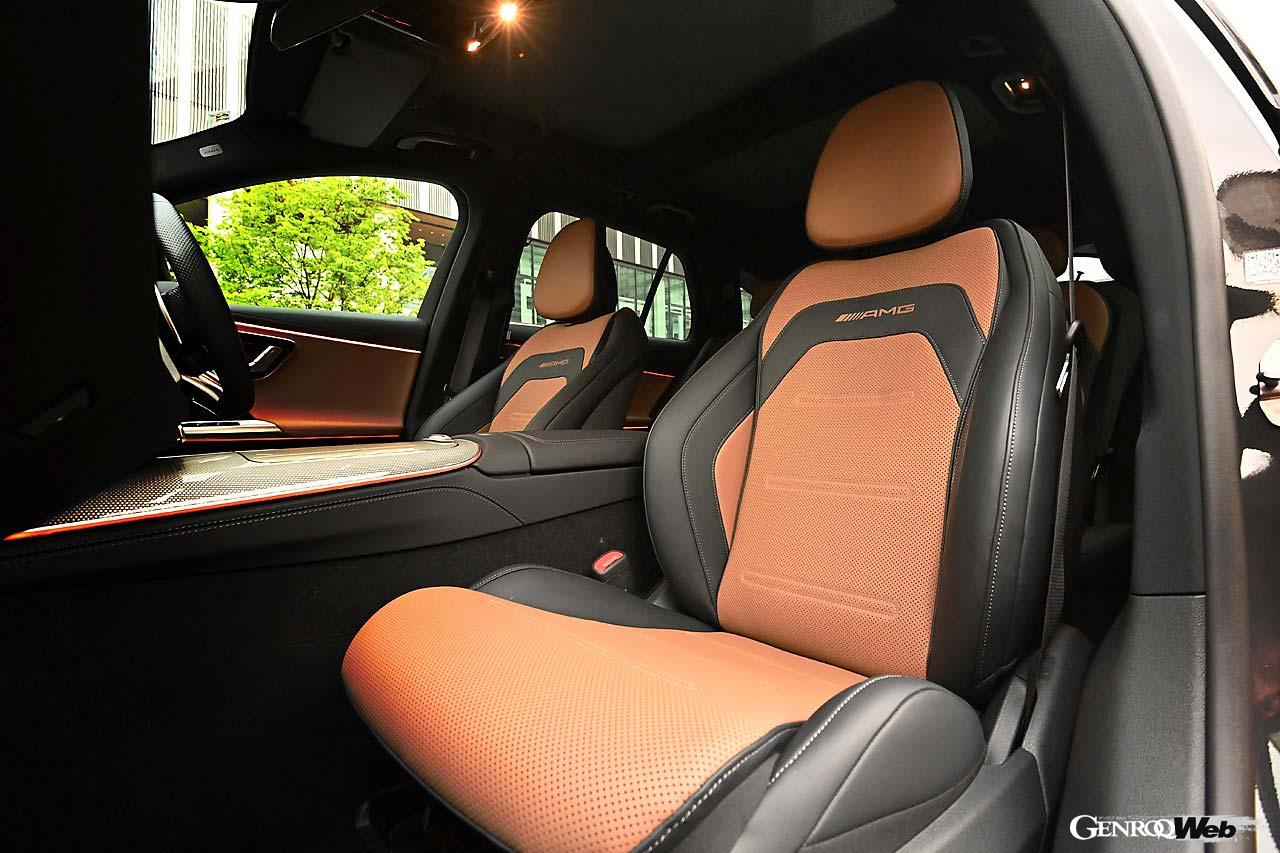
[4] The car will be equipped with the third-generation infotainment system, MBUX. The large-screen infotainment system is extremely easy to use.
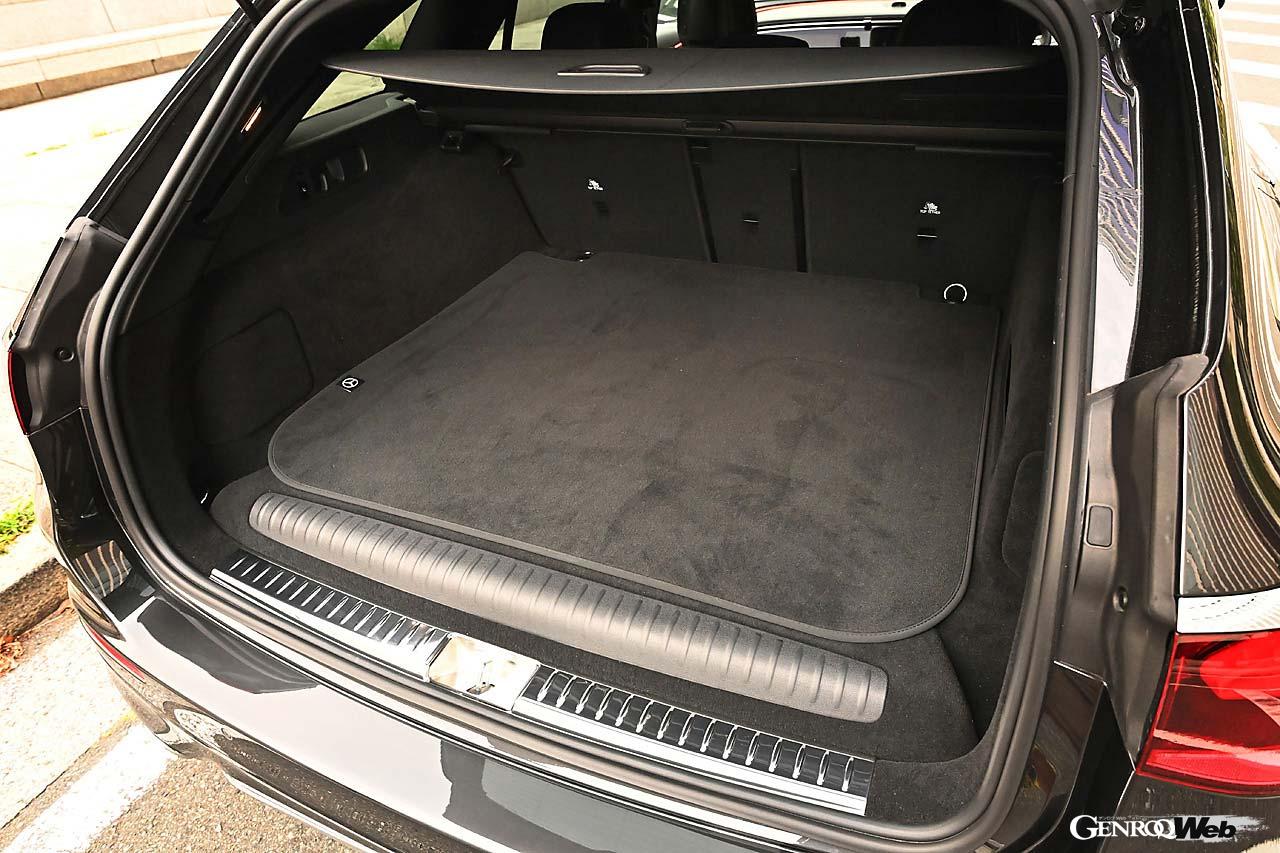
On the other hand, the moment you open the back door of the E53, you notice that the luggage floor is higher than that of a regular E-Class station wagon. The floor is about 6cm higher than the threshold of the opening. Not only is there no EV option for the E-Class, but the total capacity of the lithium-ion battery under the luggage compartment is 28.6kWh, higher than the M5’s 22.1kWh. The EV range is also longer (97km compared to the M5 Touring’s 70km; both in WLTC mode), but the impact on the luggage space is also clear. In fact, when fully loaded, the M5 has a luggage capacity of 500L, while the E53 has a capacity of 460L, giving the M5 Touring the edge.
The M5 is a bit of a flop when the car is in comfort mode and running in EV mode, but when you unleash its full potential through each mode setting, the driving experience is incredible. The engine performance is detuned compared to the previous model, but it more than makes up for it…or rather, thanks to the excess electric power, the speed is so fast that the adjective “ruthless” is the perfect description. Especially on dry roads, an amateur driver like me reaches his or her limits far before the car.
These days, there are few examples of a wagon obviously deteriorating in ride quality, but even taking that into account, I was impressed with the M5 Touring, which barely feels the negative aspects of being a wagon even when unleashing its ruthless power. The 5 Series, which also offers a pure EV version, is said to have very high basic floor rigidity.
Each luggage compartment boasts a capacity of over 460L.

[5]
[6]
[5] The M5 Touring’s luggage compartment boasts a large capacity of 500L under normal conditions. It’s reliable for everyday use and travel. [6] The E 53 Hybrid 4Matic+ Station Wagon boasts a luggage capacity of 460L under normal conditions.
Compared to the M5, the E 53’s ride is more cultured, refined, and mature, as you might imagine from its specs. However, the hardness that permeates the entire car, especially the steering, cannot be hidden, and it’s clear that this is no ordinary car.
The E53’s power performance is clearly more human than that of the M5, but even so, with the race start function activated, its 0-100km/h acceleration time is 3.9 seconds, just 0.3 seconds slower than the M5 Touring. Unless you’re trying to time a race on a circuit, there’s no way it’s lacking.
Both are modern PHVs that can be used as EVs on a daily basis, but the power of the engine when it’s running at full power is priceless. Both include sound enhancement through speakers, but it’s the E 53 that offers the picture-perfect, comfortable sporty sound. The deep bass of the M5’s V8 is hard to give up, but it still falls just short of the cathartic feeling of the E 53, where the straight-six engine sings with all its might.
The final destination for connoisseurs
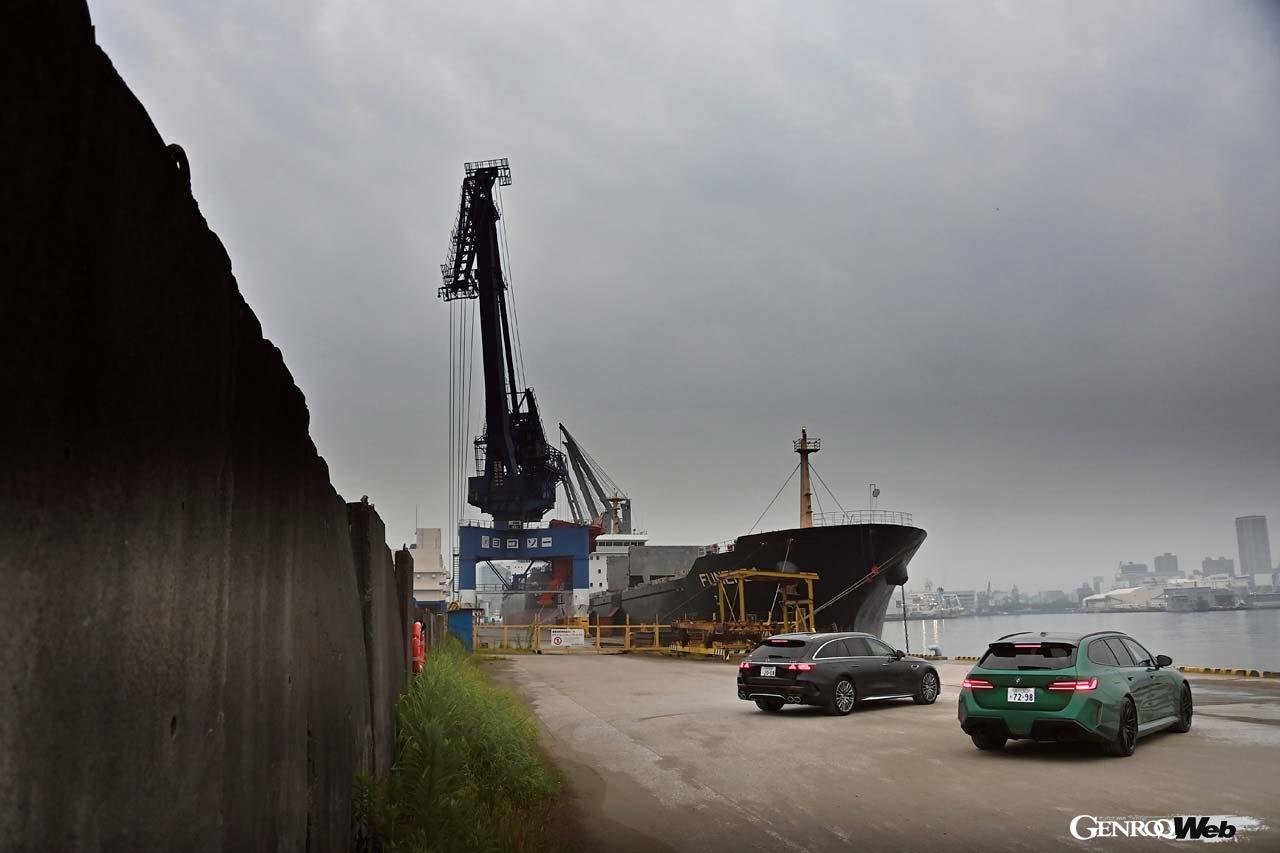
The ruthlessly fast BMW M5 Touring and the sophisticated Mercedes-AMG E 53 Hybrid Station Wagon. Comparing them, it seems to me that these two cars might be the ultimate destination for enthusiasts.
The ruthlessly fast M5 and the refined yet uniquely solid E 53… this composition remains essentially the same whether it’s a wagon like this one or a sedan. However, when I line up these two cars, I think that while SUVs are good, the truly all-around car, including driving performance, is probably this kind of super wagon…
REPORT / Hiromune SANO
PHOTO / Wataru TAMURA
MAGAZINE / GENROQ September 2025 issue
SPECIFICATIONS
BMW M5 Touring
Body size: Overall length 5095, overall width 1970, overall height 1515mm
Wheelbase: 3005mm
Vehicle weight: 2490kg
Maximum system output: 535kW (727PS)
Maximum system torque: 1000Nm (102kgm)
Engine type: V8 DOHC twin turbo
Total displacement: 4394cc
Maximum output: 430kW (585PS) / 6000rpm
Maximum torque: 750Nm (76.5kgm) / 1800rpm-5400rpm
Transmission: 8-speed AT
Drive system: AWD
Suspension: Front double wishbone, rear multi-link
Brakes: Front and rear ventilated disc Tire
size: Front 285/40R20, rear 295/35R21
Vehicle price: 20.48 million yen
Mercedes-AMG E53 Hybrid 4Matic + Station Wagon
Body size: Length 4970, Width 1900, Height 1490mm
Wheelbase: 2960mm
Vehicle weight: 2470kg
Maximum system output: 430kW (585PS)
Maximum system torque: 750Nm (76.5kgm)
Engine type: Inline 6-cylinder DOHC turbo + supercharger
Total displacement: 2996cc
Maximum output: 330kW (449PS) / 5800-6100rpm
Maximum torque: 560Nm (57.1kgm) / 2200-5000rpm
Transmission: 9-speed AT
Drive system: AWD
Suspension: Front and rear multi-link
Brakes: Front and rear ventilated disc
Tire size: Front 265/40R20, Rear 295/35R20
Vehicle price: 17.26 million yen
[Inquiries]
BMW Customer Interaction Center
TEL 0120-269-437
https://www.bmw.co.jp/
Mercedes Call
TEL 0120-190-610
https://www.mercedes-benz.co.jp/