

4 1/2 Liter Blower
It was first sold in 1927 and became a major model.
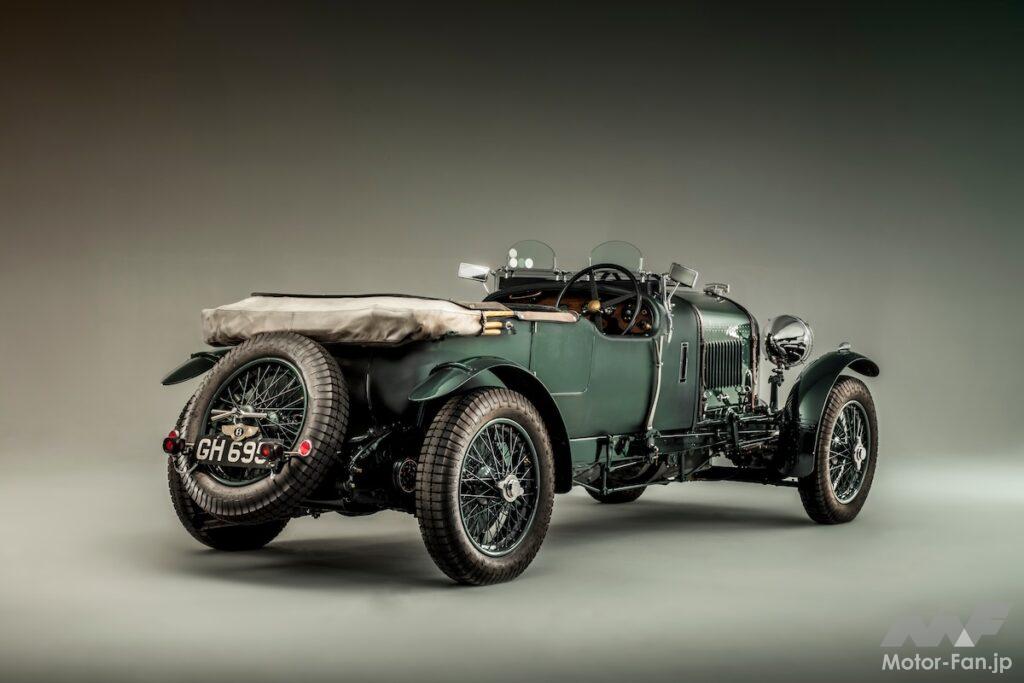
Bentley developed a 4,398cc inline four-cylinder SOHC four-valve engine with a bore of 100mm and stroke of 140mm as a standard model to replace the 3 Liter. It was available on both a standard chassis with a 3,300mm wheelbase and a short-wheelbase chassis with a 2,980mm, and was released for sale as the 4 1/2 Liter in 1927.
Bentley shipped the car on a rolling steel ladder frame chassis, but customers could choose to mount it on a Gurney Nutting saloon body or a Vanden Plas four-seater open tourer body, and by 1931, 720 had been produced, making it a staple of Bentley’s lineup.
On the racing field, the first prototype, driven by Frank Clement and Leslie Cullingham, made its debut at the 1927 24 Hours of Le Mans. Cullingham’s 4.5-liter took off with force at the start, setting a course record of 8 minutes 46 seconds on the second lap, even with the top up, and leading the pack ahead of two Bentleys. Although he was eventually forced to retire after being caught up in a crash between two Bentleys, the car’s superiority was clearly demonstrated.
Equipped with a Roots-type supercharger


Three 4.5-liter cars competed in the following Le Mans in 1928. One of these was the prototype No. 1 “Old Mother Gun” that had retired the previous year. It was driven by Ulf Barnato and Bernard Rubin, who were competing at Le Mans for the first time, and despite encountering various problems, they achieved a brilliant overall victory.
Then in 1929, Sir Henry “Tim” Birkin, one of the Bentley Boys who had won the Le Mans race that year driving a 6 1/2 Litre Speed 6, proposed to WO Bentley the development of a 4 1/2 Litre engine fitted with a Roots supercharger designed by Amherst Villiers in order to achieve even greater power.
However, WO opposed the idea, arguing that supercharging would distort the engine design and impair performance, so Birkin persuaded Woolf Barnato, chairman of Bentley Motors, to approve the production of 50 cars required to obtain homologation.
He was reluctant to participate in the race


4 1/2 Liter Blower Team Car
Thus was born the 4 1/2 Liter Blower Bentley. With a crankshaft-driven Roots-type supercharger mounted in front of the radiator, and equipped with a reinforced crankcase and cylinder block, high-strength connecting rods, special piston pins, and improved engine mounts, the 4 1/2 Liter inline-four engine produced 175 HP, a significant increase over the previous 130 HP. The specially tuned racing engine even produced 240 HP.
In the end, Bentley produced 50 units of the 175 HP road version (the price of the Blower, which had a Vanden Plas four-seater open tourer body, was 1,720 pounds in 1930), and five units of the 240 HP race version. However, due to high production costs, the Blower was sold in small numbers, which put a strain on Bentley’s financial situation.
As WO itself was reluctant to enter a Blower race for the reasons mentioned above, Birkin received financial support from wealthy female philanthropist Dorothy Paget and built four team cars at Birkin & Co’s workshop in Welwyn Garden City. Two of these cars competed in the 1930 24 Hours of Le Mans, setting a course record of 6 minutes 48 seconds, but both cars were forced to retire due to engine trouble.
A continuation vehicle for the modern era
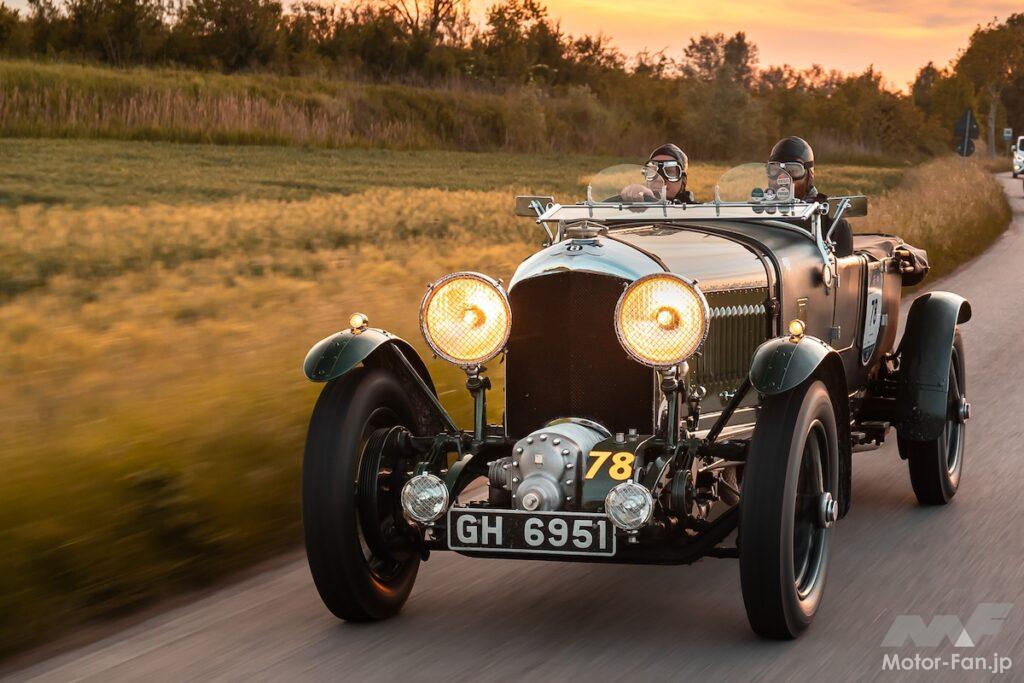
Although the Blower failed to achieve success in races due to the engine’s unreliability, female driver Mildred Bruce set a 24-hour distance record (average speed of 143.9 km/h) at the Montlhéry Circuit in France in 1929. Kay Donn and Tim Birkin also set the fastest records at the Brooklands Circuit in England in 1930 and 1932, respectively.
Then in 2019, Bentley announced that it would produce 12 4.5 Blowers, based on the 1929 team car, chassis number HB 3403, as the world’s first continuation (continuous production) of a pre-war car.
HB 3403 was completely disassembled by Mulliner, the manufacturer in charge of production, and scanned and digitized to perfectly recreate its original appearance. A total of 12 Blower Continuation Series cars will be manufactured by 2023.











![Will the second-generation Azure be the last big Bentley convertible? [Bentley 100 Years of History]](https://wheelfeed.com/wp-content/uploads/2026/01/4739-1768026248200.jpg)